This article contains advertising. Our booking links are routed through a partner that adds commission tracking automatically, so if you book through one we earn a commission from the provider, at no extra cost to you. It never affects what we recommend. Affiliate disclosure
Walk across St George’s Plateau on an ordinary Tuesday and you are standing on a set. Those cobbles have been 1920s New York, wartime Berlin and Gotham City, sometimes within the same eighteen months, and the colonnade behind you has been a courthouse, a bank and a wizarding ministry. Hunting liverpool film locations is not a niche pursuit here — Liverpool established the first film office in Europe and is now the second most-filmed city in the UK after London, which means a surprising amount of what you have watched was shot within a mile of Lime Street.
This guide sorts the locations by where they actually are rather than by production, so you can walk a route rather than chase a list. It covers what was filmed where, what you will and will not recognise on the ground, which buildings you can go inside, and which of the “film location tours” are worth paying for. Details were checked in September 2026; productions come and go, so a location that was dressed for a shoot last year will look like an ordinary street today, and that is rather the point.
Why Liverpool, and Why So Much of It
The city’s appeal to a location manager comes down to four things, and understanding them makes the locations make sense.
- The buildings are the right period and the wrong city. Liverpool’s commercial district went up between 1830 and 1910 on money from a global port, which means it has the granite banking halls, the classical porticos and the tall stone frontages that read as New York, Chicago or London without any of the recognisable landmarks getting in the way.
- The docks survived. Miles of Victorian red brick warehouse and cobbled quayside that most British ports demolished in the 1970s are still standing here, much of it empty and hireable.
- It is genuinely cheap and genuinely cooperative. The Liverpool Film Office was the first in Europe and its whole function is closing roads and unlocking buildings. That reputation is why productions come back.
- Everything is close together. A unit can shoot a Georgian terrace, a dock, a neoclassical civic building and a beach within a twenty-minute drive.
The Central Cluster: St George’s Quarter
If you have one hour, spend it here. Four or five separately famous locations sit within three minutes of each other, directly opposite Lime Street station.
St George’s Hall and the Plateau
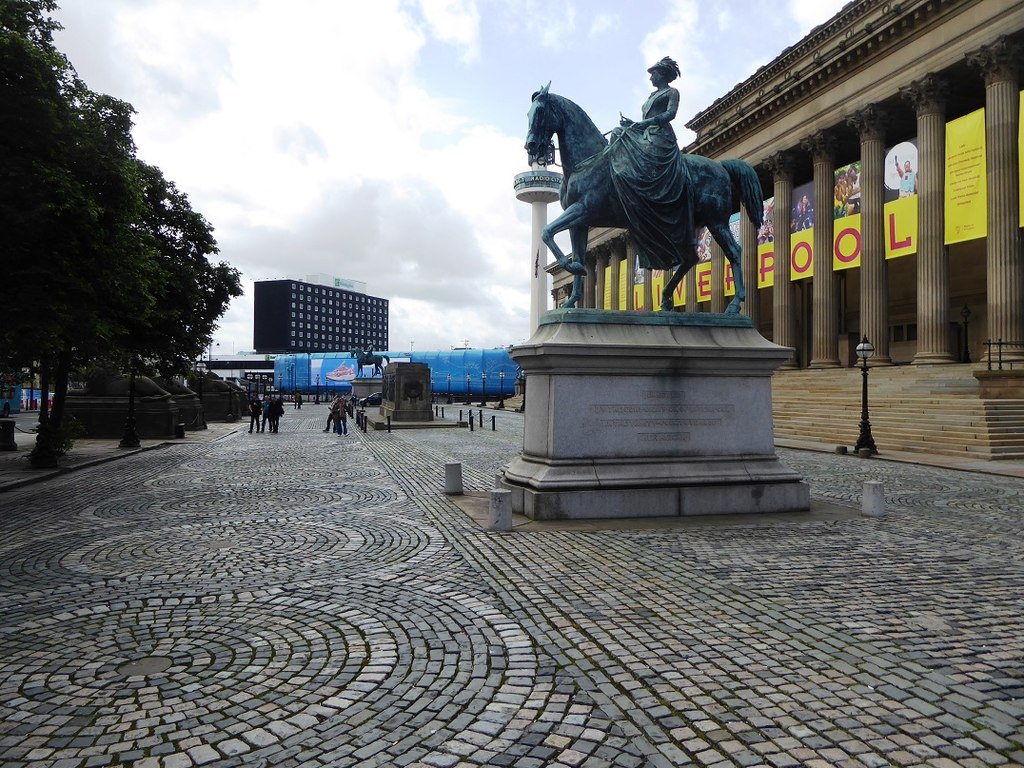
The most-filmed building in the city. The 1854 neoclassical hall and the cobbled plateau in front of it have appeared in Fantastic Beasts and Where to Find Them, The Batman and The Immortal Man, among many others. The plateau’s scale, the colonnade and the two bronze lions are what productions come for: with period vehicles parked and the modern signage removed, it reads convincingly as 1920s New York or as Gotham.
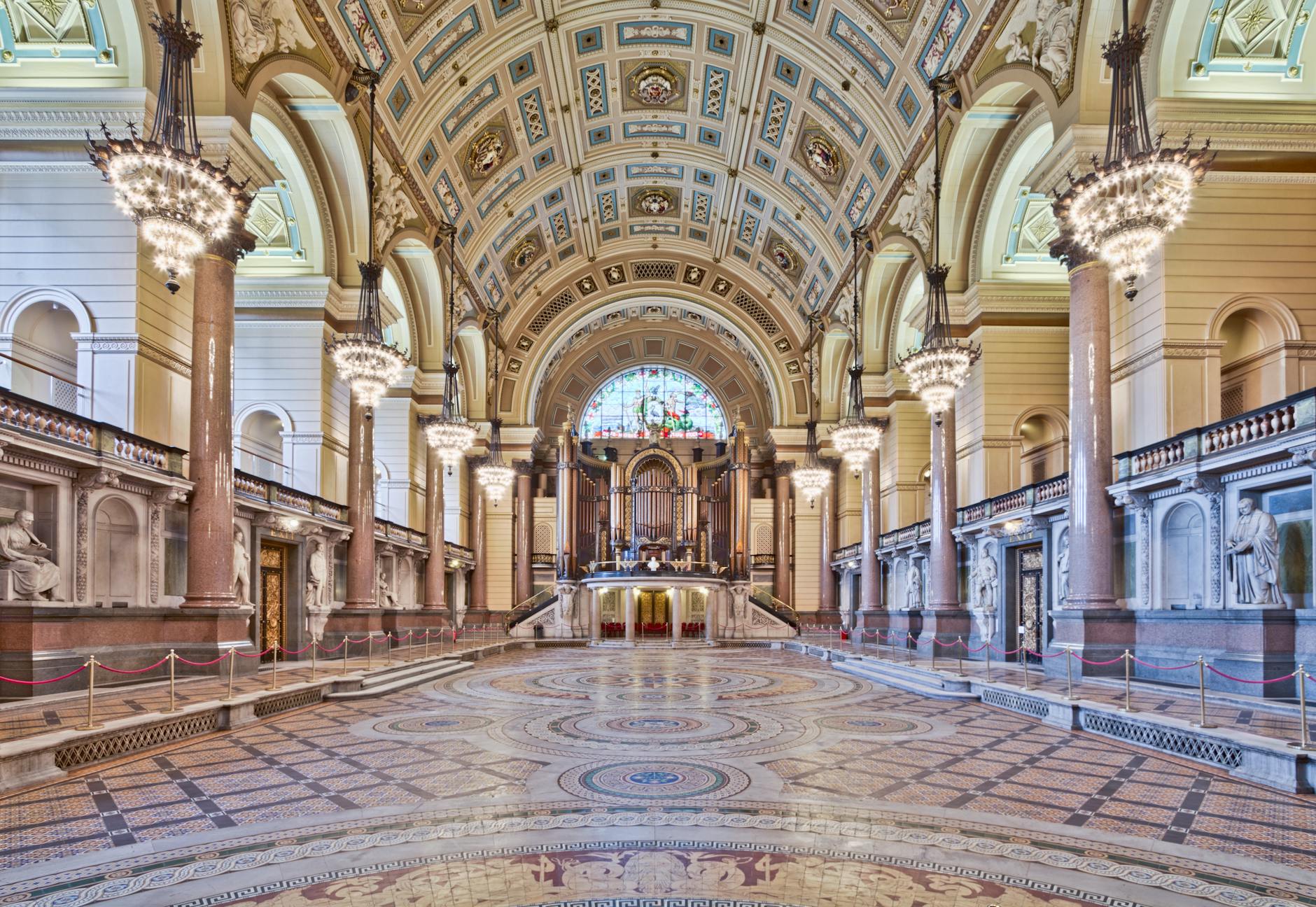
You can go inside through the Visitor Centre, open Monday to Saturday, 9:30am to 5pm, though as a working civic building it has no self-guided access. The Great Hall has a Minton tiled floor of over 30,000 tiles, normally covered and revealed only occasionally, and the concert room upstairs is one of the loveliest small auditoria in the country. Our St George’s Hall guide covers opening arrangements.
William Brown Street
The row behind the hall — the Walker Art Gallery, the World Museum, the Picton Reading Room — gives you an unbroken quarter-mile of nineteenth-century classical facade with no modern intrusion. It is the reason so many productions can shoot a “period city street” here without dressing much at all. All the buildings are free to enter. See the Walker guide and the World Museum guide.
What to know on the ground
There is nothing marked. No plaques, no signage, no “as seen in” boards. This is a working civic square and you are simply standing in it. That is either a disappointment or the whole appeal, depending on what you came for.
The Waterfront and the Three Graces
The Royal Liver Building
The Batman used the Liver Building in 2020, with a stunt double photographed on the roof beside the Liver Birds — one of those images that went round the city faster than the production could manage. The building is on the Pier Head and unmistakable. See our Three Graces guide.
The Cunard Building
The middle of the Three Graces has done duty for The Crown and for Taylor Swift’s “I Can See You” video. It also houses the British Music Experience, which means this is one of the few film locations you can walk into and spend an afternoon in. See the British Music Experience guide.
The Port of Liverpool Building
The third Grace, domed and the most ornate of the three, used for Heads of State. The interior is spectacular and only occasionally open.
The Royal Albert Dock
Doctor Who has filmed here, and the dock’s enclosed water, colonnaded warehouses and cast-iron columns have appeared in a great deal else. It is also where the Beatles Story and the rest of the tourist infrastructure sit, so it is the easiest location on this list to combine with an actual day out. The Maritime Museum and International Slavery Museum there are closed with no reopening date, and Tate Liverpool is at RIBA North until it returns to the dock in 2027. See the waterfront guide.
Stanley Dock and the Northern Docks
North of the Pier Head, past the point most visitors reach, the docks turn industrial and enormous. This is where the big productions go when they need scale.
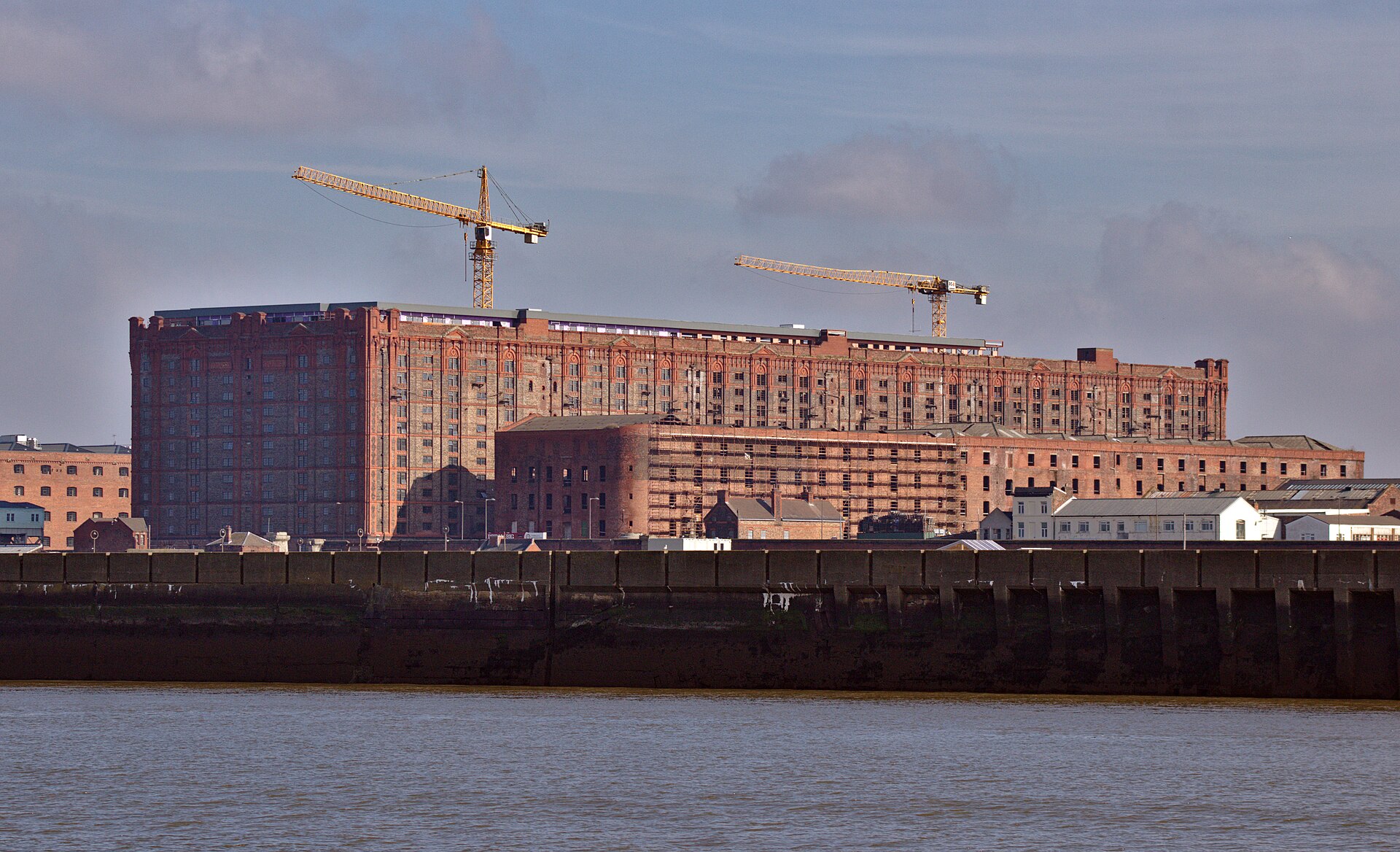
Stanley Dock and its Tobacco Warehouse — for a long time the largest brick warehouse in the world — hosted Captain America: The First Avenger in 2011, when more than five hundred cast and crew converted the docks into 1940s New York. Peaky Blinders also used the site extensively. Part of the complex is now the Titanic Hotel and part has been converted to apartments, so the area is no longer the derelict expanse it was during those shoots — but the warehouse itself, the cobbled quaysides and the dock walls are all still there and still overwhelming in person.
Visiting
Stanley Dock is about a twenty-five minute walk north along the waterfront from the Pier Head, or a short bus or taxi ride. It is a working redevelopment site in parts. The public areas around the hotel and the dock basin are accessible; the warehouse interiors are not, unless you are staying or eating there. Go for the exterior scale, which is the thing the camera came for.
The Tunnels
The Queensway Tunnel under the Mersey to Birkenhead has one of the strangest filmographies of any location in Britain: Harry Potter and the Deathly Hallows, Fast & Furious 6 and Yesterday have all used it. Opened in 1934, it has an Art Deco entrance, a long tiled bore and, crucially, the ability to be closed to traffic at night.
Fast & Furious 6 spent four days in the city in 2012, shooting around Liverpool Town Hall, Dale Street and the Queensway Tunnel. If you have seen the film, the Dale Street sequences are the ones where the architecture is doing the heaviest lifting.
You cannot visit the tunnel on foot, and there is no viewing point. You can drive through it, or take the ferry across and look at the Art Deco entrance buildings on either side, which are worth seeing in their own right.
The Commercial District: Liverpool’s Anywhere
The blocks between Dale Street, Castle Street and the Pier Head are the least celebrated and most-used part of the city’s screen geography. Nobody comes to Liverpool to see them, and they turn up constantly.
The reason is that this was, for about eighty years, one of the richest square miles in Britain. Shipping lines, insurers, banks and commodity traders built themselves granite and Portland stone offices with columned entrances, deep window reveals and no set-backs — the same vocabulary as Lower Manhattan, built in the same decades for the same reasons. Strip out the modern signage and a wheelie bin or two and Dale Street becomes New York, Chicago or pre-war London without a single digital extension.
What to look for
- Castle Street, running from the Town Hall down towards the river, is the single best-preserved stretch. The Town Hall at the top has appeared repeatedly, including in Fast & Furious 6.
- Dale Street holds the heaviest concentration of Victorian commercial palaces, including the Municipal Buildings and the Temple. It is a working street, so you are dodging buses rather than admiring it in peace.
- Water Street and the Hargreaves Building, on the way down to the Pier Head.
- Exchange Flags, the enclosed square behind the Town Hall, which is both a filming location and the entrance to the Western Approaches wartime bunker — one of the more unexpected things under the city, covered in our Western Approaches guide.
None of it is signed, none of it charges anything, and all of it is on the walking route between St George’s Hall and the waterfront. If you only look at the buildings productions choose rather than the ones tourist boards photograph, this is where you will spend your time.
What Is Filming Now, and Can You Watch?
Liverpool hosts productions more or less continuously, and encountering a shoot is genuinely likely if you are here for a few days.
- You will know it by the vehicles. Unit bases — artic trailers, generator trucks, catering — take over car parks near the location, most often around the Albert Dock, Exchange Flags, the north docks and William Brown Street.
- Yellow signs with cryptic initials taped to lamp posts are the crew’s own direction markers. They are the earliest sign something is happening nearby.
- Watching from outside the cordon is fine. Crews are used to it in Liverpool and are generally relaxed, provided you stay behind the marshals and do not walk through a shot. A question to a marshal between takes is usually answered.
- Photography of the location is fine; photography of the cast is a different matter and you will be asked to stop.
- Do not expect to see anything you recognise. Most of a shooting day is waiting, and the visible part is usually a corner of a street with a lot of lights pointed at it.
- Road closures are published in advance by the council, which is the only reliable way to know where a unit will be before it arrives.
Liverpool on Television
The film list gets the attention, but the city’s screen identity was built by television, and a good deal of it is still being made here.
- Brookside ran from 1982 to 2003 on Brookside Close in Croxteth — a genuine cul-de-sac of real houses bought by the production. The close is now residential again and is not a visitor attraction; there is nothing to see and people live there.
- Boys from the Blackstuff (1982) is the single most important piece of Liverpool television ever made, and its locations are the docks and estates of a city in the middle of deindustrialisation. Much of what it filmed has been demolished or converted.
- This City is Ours shot across the city centre more recently, using contemporary Liverpool as itself rather than as somewhere else — which is rarer here than you might think.
- Doctor Who has used the Royal Albert Dock, and the wider north-west has served the series for two decades.
- The Crown used the Cunard Building; A Woman of Substance the waterfront; The Ipcress File Knowsley Hall.
The pattern is worth noticing. Liverpool plays itself in social drama and plays everywhere else in period and genre work — and the second category is what fills the film office’s diary.
Peaky Blinders: The Full Route
More visitors come to Liverpool for Peaky Blinders than for any other production, and the reason is straightforward: the show is set in Birmingham and shot substantially here, because the Birmingham of 1919 no longer exists and Liverpool’s does.
| Location | What it played | Getting there |
|---|---|---|
| Powis Street, Toxteth | “Watery Lane” — the Shelby family street | 20 min walk from the centre, uphill |
| Stanley Dock / Tobacco Warehouse | Docks, warehouses, factory exteriors | 25 min walk north from Pier Head |
| Croxteth Hall | Country house interiors and grounds | Bus from the centre, ~30 min; house closed to visitors until June 2027 |
| St George’s Hall | Civic and institutional interiors | Opposite Lime Street |
| The Georgian Quarter | Period residential streets | 10–15 min walk uphill |
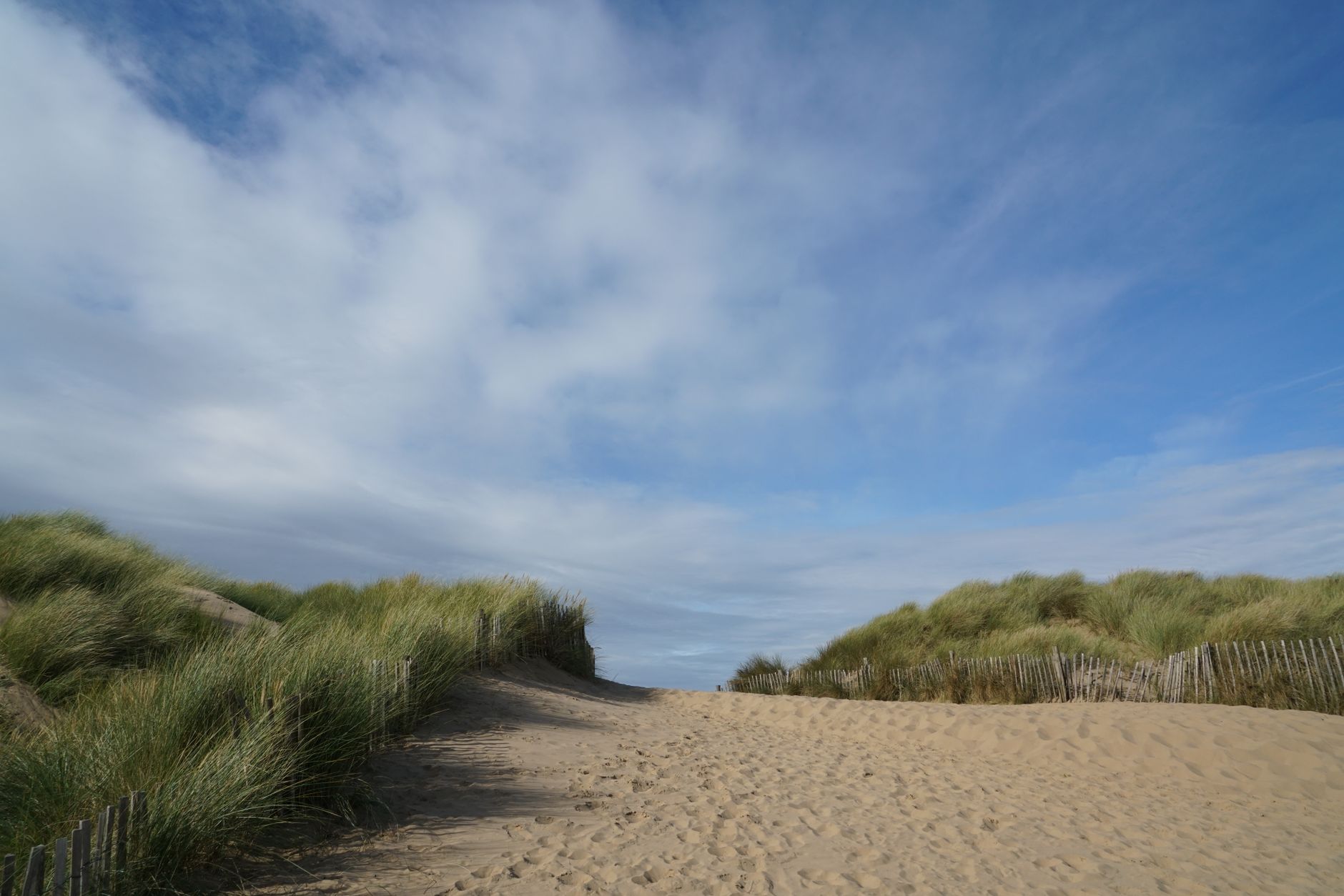
| Formby Beach | Coastal sequences | Merseyrail Northern Line, ~35 min |
| Port Sunlight, Wirral | Polly’s house and village exteriors | Train under the river, ~30 min |
| Liverpool Cathedral | Ecclesiastical interiors | Top of the hill, Georgian Quarter |
| Knowsley Hall | Country house exteriors | Outside the city; check public access |
The honest verdict on Powis Street
Powis Street is a short terraced street in Toxteth. It is where “Watery Lane” was shot, and when it is not dressed for filming it looks like exactly what it is — an ordinary residential terrace where people live. There is nothing to see, nothing marked, and no reason for you to be there other than that you have watched a television programme. Go if that is enough for you; be quiet and respectful if you do, because these are people’s homes. If you want the feeling of the show rather than the specific address, Stanley Dock delivers it far better and nobody lives there.
The Great Houses
Croxteth Hall
An Edwardian country house in its own country park within the city boundary, and one of the busiest filming locations in the region — Outlander, House of Guinness and Peaky Blinders have all used it. Normally, unlike most of the locations on this page, you can go inside and walk the rooms the cameras used, but a major film production has the house until June 2027, so for now only the free country park is open. There is a Victorian walled garden, a farm and 500 acres of park. Our Croxteth Hall guide has visiting details.

Knowsley Hall
The Earl of Derby’s seat, just outside the city, used for Peaky Blinders, The Ipcress File and Fackham Hall. It is a private house and public access is limited to specific events and the adjoining safari park, so check before you plan a trip. Our Knowsley Safari guide covers the park.
Speke Hall
The Tudor black-and-white house near the airport has taken period work over the years and is open to the public through most of the year. The house opens March to December from 12:30, and queues are shorter after 14:00.
Beyond the City: The Wider Region
- Formby Beach — Peaky Blinders used the dunes and shoreline. National Trust, red squirrels, enormous pinewoods, and a 35-minute train from Central. See the Formby guide.
- Port Sunlight, Wirral — the preserved Victorian model village used for Midas Man and for Peaky Blinders. It is a genuine visitor destination in its own right, with the free Lady Lever Art Gallery. See the Wirral guide.
- Norton Priory, Runcorn — The Irregulars. Medieval undercroft, open to visitors.
- Dream, St Helens — the enormous white sculpted head on a former colliery site, used in Stay Close. Free, and startling in person.
- Crosby Beach — the Gormley figures have appeared as a backdrop more than once. See the Crosby guide.
Music Video and Beatles Screen Locations
Liverpool’s screen history predates the blockbusters by decades, and the Beatles films are part of it. A Hard Day’s Night and Yellow Submarine shaped how the world pictured the city, and the actual sites — Mathew Street, Penny Lane, Strawberry Field — are all still there and all covered in our Beatles Liverpool guide. The Cunard Building’s turn in Taylor Swift’s “I Can See You” is the modern equivalent, and it is worth noting that the building was chosen for exactly the same reason as everything else on this page: it looks like somewhere more expensive.
Walking It: A Half-Day Route
A route that takes in the highest concentration of locations with the least walking:
- Start at Lime Street. St George’s Hall and the plateau are directly outside. Twenty minutes here, more if you go inside.
- William Brown Street, along the classical row. Free museums if you want them.
- Down Dale Street through the commercial district — Fast & Furious 6 territory, and the best surviving Victorian banking architecture in the city. Our architecture guide explains what you are looking at.
- Liverpool Town Hall, at the top of Castle Street.
- The Pier Head and the Three Graces — Liver Building, Cunard, Port of Liverpool.
- The Royal Albert Dock, five minutes south, for Doctor Who and lunch.
- Optional extension: north to Stanley Dock, which is the single most cinematic thing on the list but adds an hour round trip.
That is about two and a half miles, entirely flat, and it can be done in three hours or stretched across a full day with the museums. Our self-guided walking tour covers much of the same ground with the history attached.
Are the Film Location Tours Worth It?
Several operators run film and TV location tours, mostly Peaky Blinders-branded. An honest assessment:
- Worth it if the tour gets you inside somewhere you cannot otherwise enter, or takes you to sites outside the centre — Croxteth, Port Sunlight, Knowsley — that would be awkward to reach by public transport in one day.
- Not worth it if the itinerary is confined to the city centre. Every central location on this page is free, unrestricted and within a twenty-five minute walk of the others. You are paying for someone to point at St George’s Hall.
- Read the itinerary, not the marketing. Several tours listing eight or ten locations are in practice a walk between four buildings you could see yourself.
- The exception is a well-informed guide. Liverpool’s better walking tour operators know which production used which doorway and why, and that knowledge genuinely adds something a list cannot. Our walking tours guide covers who is good.
The Liverpool Film Office is the authoritative source for what has actually been shot where, and it publishes location credits. If you want to verify a claim before booking a tour around it, that is where to look.
Practical Notes
- Nothing is signposted. There are no film location markers anywhere in Liverpool. Everything on this page is an ordinary building you walk past.
- Most exteriors are free and unrestricted. St George’s Hall, the Three Graces, the Albert Dock, William Brown Street and Dale Street can all be seen at any hour at no cost.
- The interiors you can actually enter are St George’s Hall, the Cunard Building, Speke Hall and Norton Priory. Croxteth Hall drops off the list until June 2027, while a film production occupies the house.
- Filming happens constantly. If you find a street closed with unit vehicles on it, that is not bad luck — it is the whole reason the page exists. Crews are generally friendly about a question and firm about the cordon.
- Respect the residential locations. Powis Street and the Georgian Quarter terraces are people’s homes.
- Everything central is flat. The Georgian Quarter locations are the exception and involve a real climb.
Frequently Asked Questions
Where was Peaky Blinders filmed in Liverpool?
Powis Street in Toxteth played “Watery Lane”; Stanley Dock and the Tobacco Warehouse provided the docks and factory exteriors; Croxteth Hall and Knowsley Hall the country house scenes; and Formby Beach, Port Sunlight, Liverpool Cathedral, St George’s Hall and the Georgian Quarter all appear. The show is set in Birmingham and shot substantially in Liverpool because the period architecture survived here.
Is Liverpool really the most-filmed UK city after London?
Yes. Liverpool established the first film office in Europe and is consistently the second most-filmed city in the UK. The combination of surviving Victorian docks, a classical commercial district, low costs and an unusually cooperative local authority is what does it.
What was filmed at St George’s Hall?
Fantastic Beasts and Where to Find Them, The Batman and The Immortal Man among many others, alongside a long list of television drama. The cobbled plateau, the colonnade and the bronze lions are what productions use, most often standing in for 1920s New York or for Gotham.
Can I visit Liverpool’s film locations for free?
Almost all of them, yes. Every central exterior — St George’s Hall, the Three Graces, William Brown Street, Dale Street, the Albert Dock — is a public street or square. The Walker Art Gallery and World Museum on William Brown Street are free too; the Maritime and International Slavery museums at the Albert Dock are closed with no reopening date. Speke Hall and Norton Priory charge admission, and Croxteth Hall is closed to visitors until June 2027, although its country park costs nothing to walk round.
Where did The Batman film in Liverpool?
St George’s Hall and the plateau in front of it, and the Royal Liver Building, where a stunt double was photographed on the roof during the 2020 shoot. Both are free to look at and about fifteen minutes’ walk apart.
Was Harry Potter filmed in Liverpool?
Harry Potter and the Deathly Hallows used the Queensway Tunnel under the Mersey. You cannot visit the tunnel on foot, though you can drive through it or see the Art Deco entrance buildings on either side.
How long do you need for a Liverpool film locations walk?
Three hours covers the central cluster comfortably on foot — St George’s Quarter, the commercial district, the Pier Head and the Albert Dock, about two and a half flat miles. Add an hour for Stanley Dock, or a half day for Port Sunlight or Formby.
Is there a Peaky Blinders museum in Liverpool?
No. There is no dedicated museum or visitor centre for the show anywhere in the city, and any tour implying otherwise is describing a walk between exteriors. Croxteth Hall is normally the closest you get to going inside somewhere the show used, but another film shoot has the house until June 2027.
If the Shelbys are the reason you’re here, the table above is only the outline. Our Peaky Blinders filming locations guide takes each site in turn, from Powis Street and Stanley Dock to the St John’s Gardens side of St George’s Hall that became an air-raid shelter for The Immortal Man. It also says which stops aren’t worth the journey and has two self-guided routes that cost less than a Merseyrail Day Saver.
Prefer to go film by film? Our guide to the blockbusters filmed in Liverpool takes each production in turn, from Chariots of Fire‘s Paris at the Town Hall and Bebington Oval to The Batman‘s Gotham, Guy Ritchie’s Fountain of Youth at Exchange Flags and DC’s Clayface on Water Street, with a walking route linking them.
Of all the city’s screen locations, Stanley Dock repays a visit the most: the view along the water between Hartley’s warehouse and the fourteen-storey Tobacco Warehouse is exactly what Captain America, Sherlock Holmes and Netflix’s House of Guinness filmed. Our Stanley Dock guide covers what each production used, what you can and can’t see now the warehouse is flats, and the walk up the Dock Road from the Pier Head.
If you’d like the central locations as a turn-by-turn route, our self-guided Liverpool film locations walking tour links twelve of them in a two-hour walk from Lime Street to the Albert Dock. It has directions between each stop, what was filmed where, and the best place to stand for each shot.
Liverpool’s television history deserves a guide of its own: from The Liver Birds and Boys from the Blackstuff to Brookside, Bread and modern dramas such as The Responder and This City Is Ours. Our guide to TV shows filmed in Liverpool covers what was shot where, which locations you can see, and the shows wrongly credited to the city.
Related Liverpool Guides
- St George’s Hall — the most-filmed building in the city, and open to visitors.
- Liverpool Architecture Guide — why the buildings can double for anywhere.
- The Three Graces — the waterfront trio on screen and in person.
- Croxteth Hall — the house is unavailable to visitors until June 2027, but the country park is open.
- Beatles Liverpool — the city’s first and longest screen story.
- Self-Guided Walking Tour — a route through most of these locations.
- Liverpool Neighbourhoods — where each location sits in the city.
- Liverpool’s UNESCO Story — what the dock landscape is and why it survived.
Photo Credits
The cobbled forecourt and colonnade of St George’s Hall, Liverpool: Forecourt of St George’s Hall, Liverpool – geograph.org.uk – 6195332 by David Gearing, CC BY-SA 2.0, via Wikimedia Commons.
The Stanley Dock warehouses seen across the Mersey: Stanley Dock warehouses 2020 by Rodhullandemu, CC BY-SA 4.0, via Wikimedia Commons.