This article contains advertising. Our booking links are routed through a partner that adds commission tracking automatically, so if you book through one we earn a commission from the provider, at no extra cost to you. It never affects what we recommend. Affiliate disclosure
Croxteth Country Park is one of Liverpool’s quieter strengths — about 500 acres of free parkland in West Derby, open year-round, with a Victorian walled garden, a working rare-breeds farm, a miniature railway, woodland walks and playgrounds, all inside the Liverpool city boundary. For families, it’s one of the best value days out in the region: you can spend most of the day at zero cost, with the walled garden, farm and railway to add if you want more. At the centre of the estate stands Croxteth Hall, a Grade II* listed country house mixing Tudor, Georgian and Queen Anne architecture. A major film production occupies the house until June 2027, so it’s closed to visitors, but the park, garden and farm around it are open. This guide covers what to do there, how to get to it from the city centre, prices, when to go, and how Croxteth fits alongside the wider Liverpool family attraction options.
Croxteth fills a particular slot in the Liverpool family attraction picture: less polished than Knowsley Safari, less expensive than Blue Planet Aquarium, and offering something genuinely different to the city’s parks and museums. For the wider family planning context see the Liverpool with kids family guide; for other Victorian estates and parks see the Liverpool parks and gardens guide.

Croxteth Country Park at a Glance
The basics for a first visit:
- Location: West Derby, north-east Liverpool, postcode L12 0HB.
- Size: 500 acres of country park.
- Country Park entry: free, year-round.
- Country Park opening times: open year-round; check the gate closing time on the signs at the entrance.
- Walled Garden and Home Farm: the Victorian Walled Garden opens daily 10am-3pm (last admission 2.30pm), and the farm daily 10am-5pm (last entry 4pm).
- Key features: Victorian walled garden, rare-breeds farm, woodlands, miniature railway (seasonal), playgrounds, walking and cycling trails.
- Miniature railway: £2.50 per person for a train ride; £1 for the drive-your-own tram.
- Croxteth Hall: the Grade II* listed house is occupied by a major film production until June 2027 and closed to visitors.
- Free parking: available at the main entrance.
Croxteth Country Park: Free Things to Do
The 500-acre country park surrounding the hall is free to access year-round, and it’s the heart of any visit while the house is closed. It’s a substantial Liverpool green space with multiple uses:
Walking Trails
Several way-marked walking routes range from short half-mile loops to multi-mile circuits through woodland, parkland and along the River Alt. The trail leaflets are available from the visitor centre or downloadable from the Liverpool City Council website.
Children’s Playground
The main playground at Croxteth has solid play equipment for primary-age children, with adjacent grassy areas suitable for picnics and ball games. Free.
Miniature Railway (seasonal)
The Croxteth Miniature Railway operates on summer weekends and during school holidays — small steam and diesel locomotives running short circuits through the woodland. A train ride costs £2.50 per person, and the separate drive-your-own tram is £1. Lovely for younger children.
Cycling
The internal park paths welcome cyclists. The main loop is about three miles and largely flat. Joins the Liverpool Loop cycle network for longer rides.
Horse Riding
Croxteth has a long horse-riding tradition; livery yards in the surrounding area use the park’s bridlepaths.
Wildlife Watching
The country park is a recognised wildlife site, with deer, foxes, woodpeckers, owls and a healthy bat population. The River Alt section is particularly good for birds. Worth bringing binoculars.
Outdoor Events
The park hosts various outdoor events through the year — the annual Croxteth Country Show, themed family days, occasional outdoor cinema. The Croxteth Makers Market also runs on select Sundays. Liverpool City Council’s website publishes the events calendar.
The Victorian Walled Garden
The walled garden at Croxteth is one of the most complete surviving Victorian kitchen-and-pleasure gardens in the North West. The garden retains:
- Heated flue walls: the original system that allowed delicate fruit trees to be grown in the British climate.
- The mushroom house: a rare surviving Victorian mushroom-growing structure.
- Elaborately trained fruit trees: pears, apples and peaches still espaliered against the warm walls.
- Productive vegetable beds: used to grow produce.
- Flower beds, lawn paths and quiet seating areas.
The walled garden was originally created on the fertile flood plain of the River Alt to supply the Earl’s kitchens — both vegetables and out-of-season fruit. The “secret garden” feel is partly due to the high brick walls; once you’re inside, the country park outside disappears.
The walled garden opens daily from 10am to 3pm (last admission 2.30pm) and is worth the time for any visitor with even a passing interest in gardens or horticulture.
The Home Farm and Rare Breeds Centre
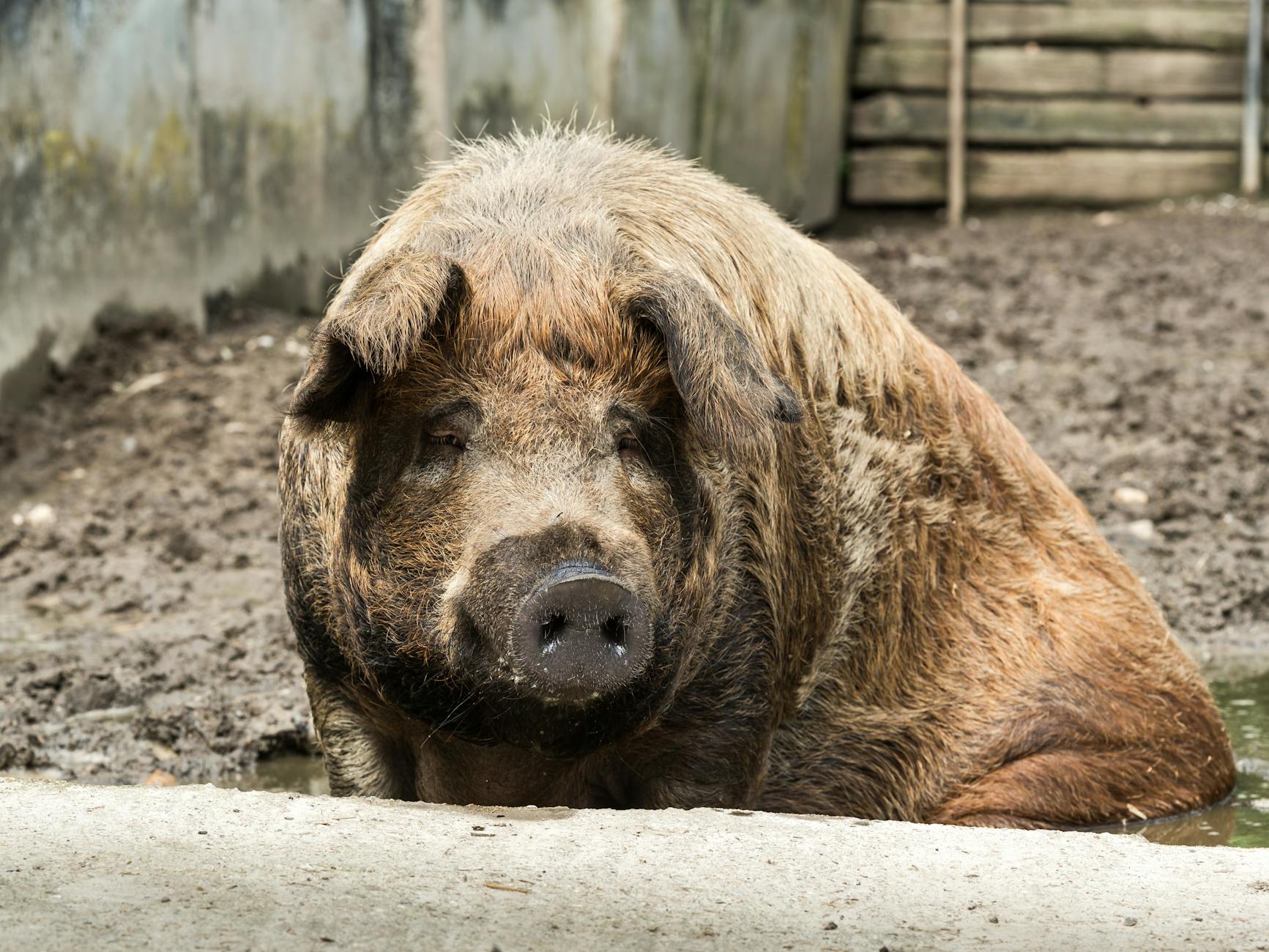
Croxteth’s Home Farm is one of the leading UK conservation farms, with over 20 breeds officially classified as Priority or At Risk by the Rare Breeds Survival Trust. For families, it’s the highlight of a Croxteth visit alongside the playgrounds.
Animals you can typically see and meet:
- Rare-breed pigs: Tamworth, Gloucestershire Old Spots, Saddleback and others.
- Rare-breed sheep: Manx Loaghtan, Shropshire, Hebridean and Castlemilk Moorit.
- Cattle: Belted Galloway, Longhorn, Highland.
- Goats: Bagot, Golden Guernsey, Old English.
- Chickens, ducks and geese: several heritage breeds.
- Horses: usually including Suffolk Punch and other rare working breeds.
The farm runs scheduled feeding sessions and animal talks across the day, which children can attend and often participate in. The farm is also active in lambing season (March-April) and harvest celebrations (September-October), with special events at these times of year.
Croxteth Hall: History and Current Status
Croxteth Hall is closed to visitors while a major film production occupies it until June 2027. There’s no hall ticket to buy and the council isn’t taking advance bookings for the house; the free country park is unaffected, and the walled garden and farm keep their own daily hours.
The house is a Grade II* listed building with a long story behind it. The original house dates from around 1575, and that Tudor core was extended through the centuries in Georgian and Queen Anne phases — which is what makes the building architecturally interesting even from the outside. It was the ancestral home of the Molyneux family from the 16th century until 1972; they rose to prominence as the Earls of Sefton, owning vast swathes of Lancashire and Liverpool through the 18th and 19th centuries. The seventh and last Earl died in 1972 without an heir, and the estate passed to Liverpool City Council.
The estate’s heyday was the early 20th century, when Croxteth functioned as a working country estate with a substantial staff: the walled garden supplied produce for the family kitchens, the home farm provided meat and dairy, and the parkland was used for shoots, riding and entertaining. Inside, the hall is preserved as a family home rather than a museum, its reception rooms, Drawing Room and Library, family bedrooms, servants’ quarters and estate office giving a fairly intact view of how the Earls of Sefton lived around 1900-1914.
How to Get to Croxteth Country Park from Liverpool City Centre
Croxteth is in West Derby, north-east of Liverpool city centre. Several access options:
By car
From the city centre, follow the A580 East Lancashire Road towards Manchester (signposted), then follow brown tourist signs for Croxteth Hall and Country Park. Sat-nav postcode L12 0HB. Free parking is available at the main entrance.
By bus
Buses run to Croxteth from the city centre. The 18 stops outside the park’s main entrance, and the council gives Crompton Drive as the nearest stop; check the live timetable before you set off.
By Merseyrail and bus
The Northern Line train to Sandhills, then a connecting bus, works but is slower than the direct bus from the city centre.
By bike
The Liverpool Loop cycle path passes near Croxteth, and the country park itself has cycle-friendly internal paths. The ride from the city centre uses a mix of cycle paths and quiet roads.
For families staying outside Liverpool
Croxteth’s location is convenient if you’re staying north of the city or coming in from the M58/M57. For families based in the city centre, Sefton Park (see our Sefton Park guide) is more accessible and free; Croxteth wins on the working farm and rare breeds, which Sefton doesn’t have.
Tickets and Pricing
Pricing is straightforward — the country park is free, and the extras below are charged separately. The hall is closed to visitors until June 2027 while a film production occupies it.
Free
- Country park access
- Playground
- Walking trails
- Most car parking
Paid
- Miniature railway: £2.50 per person for a train ride; £1 for the drive-your-own tram.
- Special events (Easter trail, Halloween, Christmas): individually ticketed.
Always confirm current pricing at the visitor centre on arrival; charges may vary by season and event.
When to Visit Croxteth Country Park
The country park is open year-round, and the walled garden (daily 10am-3pm) and farm (daily 10am-5pm) keep their own hours, so the seasons below are about what’s at its best rather than what’s open. The hall stays closed to visitors until June 2027.
Spring (March to May)
The walled garden is at its early-blossom best in April-May, and the farm runs lambing season events. A particularly good time to visit.
Summer (June to August)
The full programme is open. School holiday family activities. The country park is at its greenest. Miniature railway running on summer weekends.
Autumn (September to October)
The walled garden’s harvest season — strongest produce display of the year. Halloween-themed family weekends in late October. Autumn colour in the woodlands.
Winter (November to February)
The country park remains free and open for walks, and the walled garden and farm keep their daily hours. Christmas events sometimes run in early December: in 2026, “‘Twas the Night Before Christmas” in the Stable Yard (10-12 December, £8-£10) has already sold out.
Croxteth in Half a Day Versus a Full Day
Croxteth works as either a half-day or full-day depending on your interest level.
Half-day visit
Free country park walk plus playground plus a coffee at the cafe. Suitable for families staying nearby looking for a low-cost morning out.
Full-day visit
Country park walk plus playground plus the walled garden and farm plus a longer cafe lunch plus miniature railway ride. Suitable for a Liverpool family-trip day.
The visitor centre cafe is acceptable but limited; for a better meal, drive to nearby West Derby or back into the city for one of the options in our family restaurants Liverpool guide.
Practical Information and Tips
- Accessibility: the country park is largely accessible.
- Toilets: at the visitor centre and farm.
- Cafe: at the visitor centre. Modest menu.
- Picnics: widely welcomed; picnic benches and grassy areas throughout the country park.
- Dogs: welcome on lead in the country park. Not permitted in the hall or walled garden.
- Photography: freely permitted throughout the country park.
- Best entrance: the main visitor entrance is the recommended start for first-time visitors. Smaller pedestrian access points around the park’s edge work for locals.
- Weather: the hall, usually the rainy-day option, is closed to visitors until June 2027, so the walled garden is the most sheltered part of a wet-day visit; the country park is more weather-dependent.
Croxteth Versus Other Liverpool Country Estates
Liverpool has several country-house estates within reach. Quick comparison:
- Croxteth Country Park: completely free country park, rare-breeds farm and Victorian walled garden; the mixed Tudor, Georgian and Queen Anne hall is closed to visitors until June 2027.
- Speke Hall: Tudor manor house (National Trust), further south near Liverpool John Lennon Airport. More architectural significance, less rare-breeds.
- Knowsley Hall and Safari Park: see our Knowsley Safari guide. A different experience — drive-through safari rather than a country park and farm.
- Tatton Park (Cheshire): stunning Cheshire estate; further drive but well worth a day trip.
- Port Sunlight Village (Wirral): a complete planned industrial-village environment with the Lady Lever Art Gallery — different style of historic visit.
Combining Croxteth with Other Liverpool Activities
Croxteth works well as a stand-alone half-day or as part of a longer family itinerary. Sensible combinations:
- Croxteth plus Anfield Stadium Tour: both in north Liverpool, manageable in a single day for football-loving families. See our Anfield Stadium Tour guide.
- Croxteth plus West Derby food and drink: the West Derby village just outside the park has several pubs and cafes suitable for a leisurely lunch.
- Croxteth plus Walton Hall Park: two north Liverpool parks with playgrounds — see the playgrounds Liverpool guide.
- Croxteth plus city-centre museum afternoon: morning at Croxteth, lunch in the city, afternoon at the Museum of Liverpool or Walker Art Gallery.
Frequently Asked Questions
How much does it cost to visit Croxteth Country Park?
The country park is free at all times. The miniature railway costs £2.50 per person for a train ride and £1 for the drive-your-own tram; for the walled garden and Home Farm, confirm current pricing at the visitor centre. Croxteth Hall itself is closed to visitors while a major film production occupies it until June 2027.
Can you go inside Croxteth Hall?
Not at the moment. The Grade II* listed house is occupied by a major film production until June 2027 and closed to visitors. The 500-acre country park around it is free year-round, the walled garden opens daily 10am-3pm and the farm daily 10am-5pm.
Are dogs allowed at Croxteth Hall?
Yes, in the country park on lead. Dogs are not permitted inside the hall, walled garden or farm.
How long should I spend at Croxteth Country Park?
The country park and playground make an easy half day. Add the walled garden, farm and a miniature railway ride for a full day out.
Is there parking at Croxteth Hall?
Yes — free parking is available at the main entrance. Larger overflow parking is provided during peak season.
Can I take a picnic to Croxteth Hall?
Yes — picnics are widely welcomed throughout the country park, with picnic benches and grassy areas. The on-site cafe is also available.
What’s the best time of year to visit Croxteth Hall?
April-September is the best time for the walled garden and farm. Spring (April-May) sees the walled garden’s first bloom and lambing season at the farm. Autumn (September-October) offers the strongest harvest displays and lower visitor numbers.
Is Croxteth Hall good for toddlers?
Yes — the country park, playground, miniature railway and farm work very well for under-5s.
How do I get to Croxteth Hall by bus?
Take the 18, which stops outside the country park’s main entrance; Crompton Drive is the nearest stop the council names. Check the timetable for the day you travel.
The Bottom Line
Croxteth Country Park is one of Liverpool’s most underrated family attractions. The free 500-acre park makes it accessible to every budget; the walled garden, farm and miniature railway add up to a substantial visit for the families that want more, and none of that depends on the hall, which stays closed to visitors until June 2027. It’s a different proposition to the safari parks and aquariums of the wider region — closer, cheaper, more historical — and it’s particularly strong for primary-age children interested in farm animals, gardens and the outdoors. For Liverpool families looking for a relaxed, low-cost day out that still delivers real substance, it’s hard to do better.
Croxteth’s other life is as a film set. Outlander, House of Guinness and Peaky Blinders have all shot here, and unlike most of Liverpool’s screen locations — which are streets and dock walls you can only look at — this is one where the house itself has been the set, and a major production is filming there until June 2027. Our film locations guide puts it in context with Knowsley, Port Sunlight and Stanley Dock.