This article contains advertising. Our booking links are routed through a partner that adds commission tracking automatically, so if you book through one we earn a commission from the provider, at no extra cost to you. It never affects what we recommend. Affiliate disclosure
Liverpool and The Beatles are inseparable. The city that shaped John Lennon, Paul McCartney, George Harrison, and Ringo Starr remains the ultimate pilgrimage destination for fans of the world’s greatest band. From the cobblestones of Mathew Street to the suburban streets of Woolton and Allerton, Liverpool’s Beatles heritage is woven into every corner of this vibrant city.
Whether you’re planning a dedicated Beatles break or adding a Fab Four itinerary to a wider Liverpool trip, this comprehensive guide covers every essential site, museum, tour, and experience. We’ve walked these streets, visited these venues, and spoken to local guides to bring you the most thorough and up-to-date Beatles Liverpool guide available anywhere.
Why Liverpool Is the World’s Beatles Capital
Before The Beatles conquered the world, they were Liverpool lads playing sweaty sets in underground clubs and church halls. The band grew out of John Lennon’s earlier group, the Quarrymen, and formed here as The Beatles in 1960. They honed their craft on Merseyside stages and were discovered by Brian Epstein at the Cavern Club in November 1961. Even after global fame took them to London, Abbey Road, and eventually separate solo careers, their Liverpool roots remained central to their identity and music.
Today, Liverpool embraces this heritage with a passion that goes far beyond nostalgia. The city has invested heavily in preserving and celebrating its Beatles connections, from world-class museums and heritage trails to annual festivals that draw hundreds of thousands of fans from every continent. An estimated 600,000 Beatles-related tourists visit Liverpool each year, contributing over £80 million to the local economy.
What makes Liverpool’s Beatles experience special is its authenticity. These aren’t recreated sets or theme park attractions — these are the actual streets the band walked, the actual venues they played, and the actual homes where they grew up. That genuine connection to history gives a Liverpool Beatles pilgrimage an emotional depth that no other city can match.
The Beatles Story Museum at Albert Dock
The Beatles Story at the Royal Albert Dock is the world’s largest permanent exhibition devoted solely to The Beatles, and it’s the natural starting point for any Beatles pilgrimage in Liverpool. Spanning two sites — the main exhibition at Albert Dock and the Pier Head annexe — the museum takes you on a chronological journey through the band’s extraordinary story.
What to Expect Inside
The main exhibition guides you through meticulously recreated environments that bring The Beatles’ story to life. You’ll walk through a replica of the Casbah Coffee Club where the band played their earliest gigs, step inside a full-scale recreation of the Cavern Club, and experience the atmosphere of Hamburg’s Reeperbahn where the band sharpened their live performance skills during gruelling all-night sets.
The collection includes rare memorabilia, personal items, original instruments, and multimedia presentations. Highlights include George Harrison’s first guitar and John Lennon’s last piano. The audio guide, narrated by John Lennon’s sister Julia Baird, adds intimate family stories that you won’t find anywhere else.
The Pier Head annexe, included with your ticket, features rotating special exhibitions and an immersive 4D experience that puts you at the heart of a Beatles concert. The Discovery Zone on the top floor is excellent for younger visitors, with interactive music-making stations and dress-up areas.
Visitor Information and Tips
From 5 October 2026 to 1 March 2027, The Beatles Story opens Sunday to Friday from 9am to 5:30pm (last entry 4:15pm), and on Saturdays and Liverpool school holidays from 9am to 6:30pm (last entry 5:15pm); check the museum’s calendar for festive changes. A standard adult ticket (16 and over) is £20, and family and other discounts come with their own conditions. Plan to spend at least two to three hours here — there’s far more to see than most visitors expect. The museum also offers a premium VIP Experience that includes an extended exhibition tour with exclusive access areas, a complimentary drink in the Fab4 Café, and a souvenir guidebook.
Insider tip: visit on a weekday morning for the quietest experience, and don’t miss the rooftop terrace with views across the Albert Dock. The museum’s gift shop is one of the best in Liverpool for authentic Beatles merchandise.
The Cavern Club: Where It All Began
No Beatles pilgrimage is complete without a visit to the Cavern Club at 10 Mathew Street. This is hallowed ground for music fans — the venue where The Beatles performed an astonishing 292 times between February 1961 and August 1963, and where manager Brian Epstein first saw the band play on 9 November 1961.
The Cavern’s History
The original Cavern Club opened as a jazz venue in 1957 in the cellar of a fruit warehouse. It quickly became the epicentre of Liverpool’s burgeoning rock and roll scene, and by the early 1960s it was hosting lunchtime and evening sessions that drew hundreds of fans. The Beatles’ residency transformed the club from a local haunt into a place of international significance.
After the club closed in 1973, the buildings above it were demolished and the cellar was filled in. It was excavated in 1982, but the walls were too fragile to keep, so the club was rebuilt on 70% of the original site and reopened in 1984, using 15,000 of the original bricks. The current club faithfully recreates the intimate, low-ceilinged atmosphere of the original venue. The curved brick arches, the small stage, and the sense of being underground all combine to give you a genuine feel for what it must have been like to see The Beatles play in this legendary space.
Visiting the Cavern Club Today
The Cavern Club is open seven days a week, with live music from 11:15am. Adults pay £6 for single entry on the door or £8.50 for an All Day & Night pass. You can often catch talented Beatles tribute acts performing the band’s catalogue in the same setting where the originals played. The acoustics haven’t changed — the brick arches create a warm, resonant sound that amplifies the experience.
Next door, the Cavern Pub (at the original club’s entrance location) serves food and drinks and has walls covered in Beatles photographs and memorabilia. The whole Mathew Street area has a buzzing atmosphere, especially on weekends when live music spills out from multiple venues.
Penny Lane: Walking the Famous Street
Penny Lane, immortalised in The Beatles’ 1967 double A-side single, is a real street in the Mossley Hill area of south Liverpool. More than just a song title, Penny Lane was the hub of a neighbourhood that connected the childhood homes of John Lennon and Paul McCartney — they would meet at the Penny Lane roundabout to catch the bus into the city centre together.
Landmarks on Penny Lane
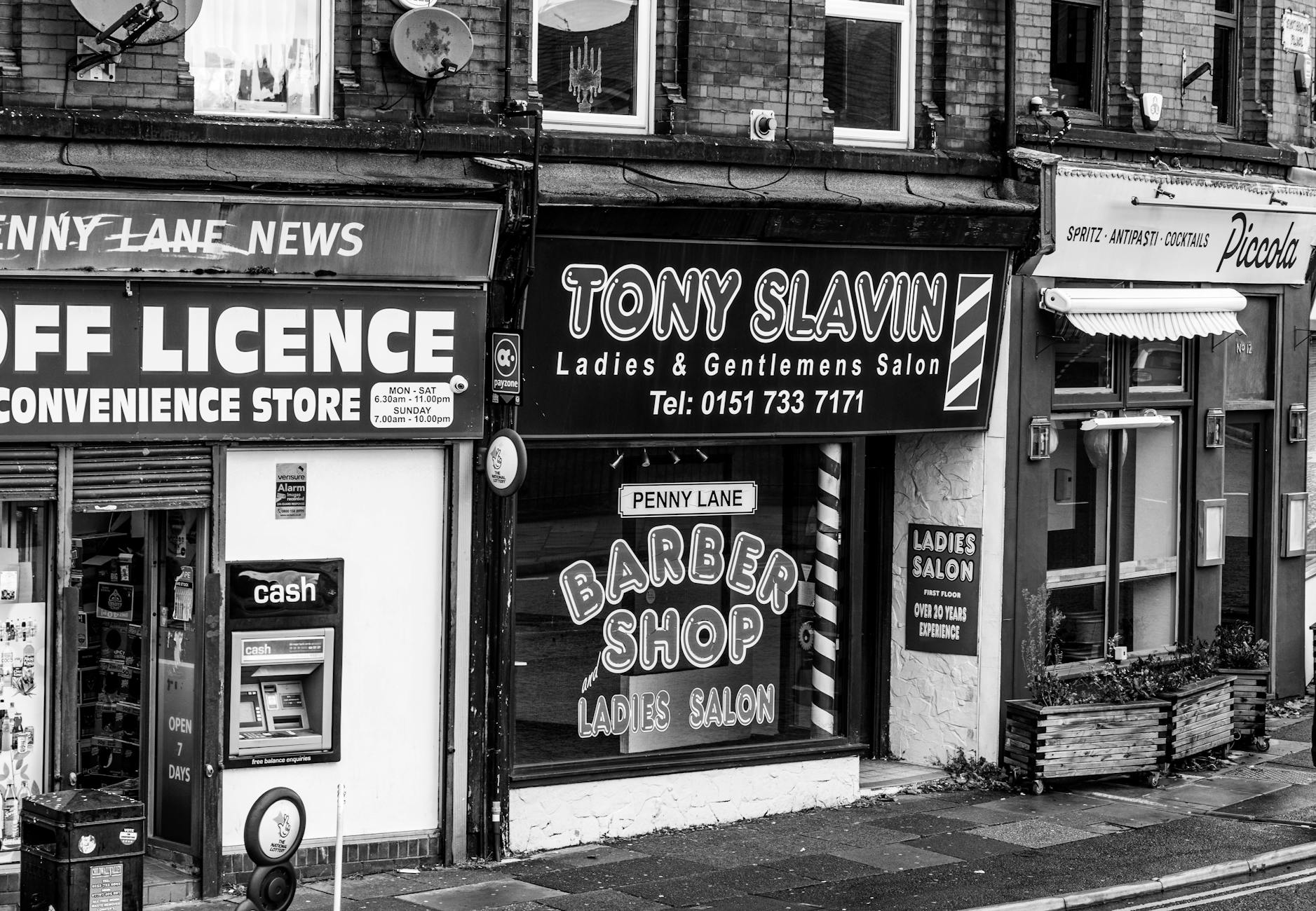
The song’s lyrics reference real places that you can still visit today. The “barber showing photographs” refers to Tony Slavin’s barbershop, in the premises once occupied by the hairdresser Bioletti’s. The “banker with a motorcar” refers to the Barclays bank branch on the corner, and “the shelter in the middle of the roundabout” is the bus terminus shelter at the Smithdown Place end of the street.
The Penny Lane street signs are among the most photographed objects in Liverpool and have been stolen so many times over the decades that the council eventually began painting them directly onto walls and buildings. You’ll find the famous blue and white signs at several points along the street.
At the Smithdown Place roundabout, a stunning mural by artist Paul Curtis depicts scenes from the song and the band’s connection to the area.
Getting to Penny Lane
Penny Lane is located about three miles south of Liverpool city centre and is easily reached by bus — the 86 from Liverpool ONE heads out along Smithdown Road and Allerton Road and stops at Allerton Road/Penny Lane. You can also take a taxi or drive, though parking can be limited. Strawberry Field, covered next, pairs well with Penny Lane on the same trip. Allow about 30 to 45 minutes to explore the street and take photos at the key locations.
Strawberry Field: John Lennon’s Childhood Inspiration
Strawberry Field on Beaconsfield Road in Woolton is one of the most emotionally resonant Beatles sites in Liverpool. As a child, John Lennon would climb over the wall of this former Salvation Army children’s home to play in its grounds, and the memories inspired one of The Beatles’ most celebrated songs, “Strawberry Fields Forever.”
The Strawberry Field Exhibition and Gardens
After decades as a private site that fans could only photograph through its iconic red gates, Strawberry Field opened to the public in September 2019 as an interactive visitor attraction. The exhibition tells the story of John Lennon’s connection to the site, the history of the Salvation Army children’s home, and the creation of the song. Interactive displays allow you to explore different layers and versions of “Strawberry Fields Forever,” revealing how this groundbreaking track was constructed in the studio.
The beautifully landscaped gardens are free to enter and include a café, a gift shop, and a peaceful contemplation garden. The original wrought-iron gates — repainted in their distinctive Salvation Army red — remain the focal point and the most photographed spot on the site. A replica set of gates has been installed so that the originals can be preserved.
Strawberry Field also operates as a work and training hub for young adults with learning disabilities, providing employment in the café, gardens, and shop. Visiting supports this important community mission while connecting you to one of pop music’s most powerful origin stories.
Visiting Strawberry Field
Strawberry Field is open daily from 10am to 5pm, though special events and bookings can change the hours. Exhibition tickets cost £12.45 for adults and £9.45 for concessions. The gardens and café can be visited free of charge. Bus 76 serves the site. Plan to spend around one to two hours here, longer if you want to relax in the gardens and café.
Lennon and McCartney’s Childhood Homes
For the most intimate Beatles experience in Liverpool, the National Trust tours of John Lennon’s and Paul McCartney’s childhood homes are unmissable. These are the actual houses where two of the greatest songwriters in history grew up, and they’ve been lovingly preserved with original furnishings and personal touches that bring their early lives vividly to life.
Mendips: John Lennon’s Home
251 Menlove Avenue, known as Mendips, is the semi-detached house where John Lennon grew up with his Aunt Mimi and Uncle George. George died in 1955, and John stayed on with Mimi until 1963. The house has been restored to its 1950s appearance, and walking through the rooms gives you an extraordinary sense of the young Lennon’s daily life. You’ll see the small front porch where John and Paul practised, and the house where Mimi famously told him that the guitar was all very well but he’d never make a living from it.
20 Forthlin Road: Paul McCartney’s Home
20 Forthlin Road in Allerton is the council house where Paul McCartney grew up with his father Jim, mother Mary, and brother Michael. Jim McCartney, himself a musician, let Paul and John rehearse at home. Many of The Beatles’ earliest songs, including “I Saw Her Standing There” and “Love Me Do,” were written and rehearsed in the front room of this modest terraced house.
The house features photographs taken by Michael McCartney that capture the family’s everyday life and the earliest days of The Beatles. The interiors have been restored to their 1950s and early 1960s appearance, and the National Trust guides share anecdotes and details that bring the McCartney family story to life with remarkable warmth.
How to Book the National Trust Tour
Both homes can only be visited on guided tours operated by the National Trust, and tours must be booked in advance as spaces are strictly limited. The 10:05am and 10:45am tours leave from bus stand 2 at Liverpool South Parkway, and the 1:30pm and 2:10pm tours from Speke Hall; on selected dates, every tour departs from South Parkway. The combined tour lasts about two hours, including minibus transport. Outside July and August, adult tickets cost £37 for non-members or £13 for National Trust members.
Tours sell out quickly, especially during summer and festival periods, so book as far ahead as possible through the National Trust website. Photography is not permitted inside the homes, which actually enhances the experience — you’re fully present in these remarkable spaces without the distraction of composing shots.
Beatles Tours: Guided Experiences
While you can explore many Beatles sites independently, a guided tour adds depth, stories, and logistical convenience — especially for the sites spread across the city’s suburbs. Liverpool offers several excellent tour options to suit different budgets and interests.
The Magical Mystery Tour
The Magical Mystery Tour is Liverpool’s long-running Beatles bus tour, and it has used its film-inspired bus livery since 1994. A brightly painted bus departs from Albert Dock and takes you on a two-hour journey past all the key Beatles sites, including Penny Lane, Strawberry Field, the childhood homes (exterior views only), St Peter’s Church in Woolton (where John and Paul first met at a fete on 6 July 1957), and the streets and locations that inspired the band’s music.
The tour is narrated by knowledgeable and entertaining guides who mix historical facts with local anecdotes and Beatles music played throughout the journey. Tickets cost £21.95 for adults and £10 for children, and the tour departs multiple times daily. Book in advance through the Cavern Club website, as tours frequently sell out during peak season.
Fab 4 Taxi Tours
For a more personalised experience, Fab 4 Taxi Tours offer private guided Beatles tours by taxi. The three-hour Classic tour covers the major Beatles sites, and the company’s longer tours go deeper into the lesser-known ones.
The advantage of a taxi tour is the intimate, conversational format — your driver-guide tailors the experience to your knowledge level and interests, and you can ask questions and request stops as you go. Prices start from £125 per cab for the two-hour Becoming the Beatles tour, for up to six guests, and from £160 per cab for the three-hour Classic, making it excellent value for small groups or families.
Self-Guided Beatles Walking Tour
If you prefer to explore at your own pace, Liverpool’s city centre Beatles sites are walkable in a half-day circuit. Start at the Beatles statue on Pier Head, walk along the waterfront to Albert Dock and The Beatles Story, then head up through the city centre to Mathew Street and the Cavern Club. From there, explore the Beatles Quarter around Mathew Street and Whitechapel, including the site of the Epstein family’s NEMS music shop at 12-14 Whitechapel, which Brian ran. The story goes that a customer asking for “My Bonnie” put the band on his radar, but accounts differ, and he had already seen them in Mersey Beat and on posters around Liverpool.
For the suburban sites — Penny Lane, Strawberry Field, and the childhood homes areas — you’ll need public transport or a car. The Merseyrail network and regular bus services make this straightforward, and the journey itself gives you a sense of the Liverpool neighbourhoods that shaped the band.
The Beatles Quarter and Mathew Street
Mathew Street and the surrounding Beatles Quarter form the heart of Beatles Liverpool in the city centre. This compact area packs in an extraordinary concentration of Beatles history, live music, and fan culture.
Key Mathew Street Landmarks
Beyond the Cavern Club itself, Mathew Street is home to several notable Beatles landmarks. The Wall of Fame, across the front of the Cavern Pub, is built from bricks that each carry the name of an act that played the Cavern before it closed in 1973. A bronze statue of John Lennon leaning against a wall, created by sculptor Arthur Dooley in the 1970s and since replaced by a newer work by David Webster, stands as a permanent tribute to the street’s most famous performer.
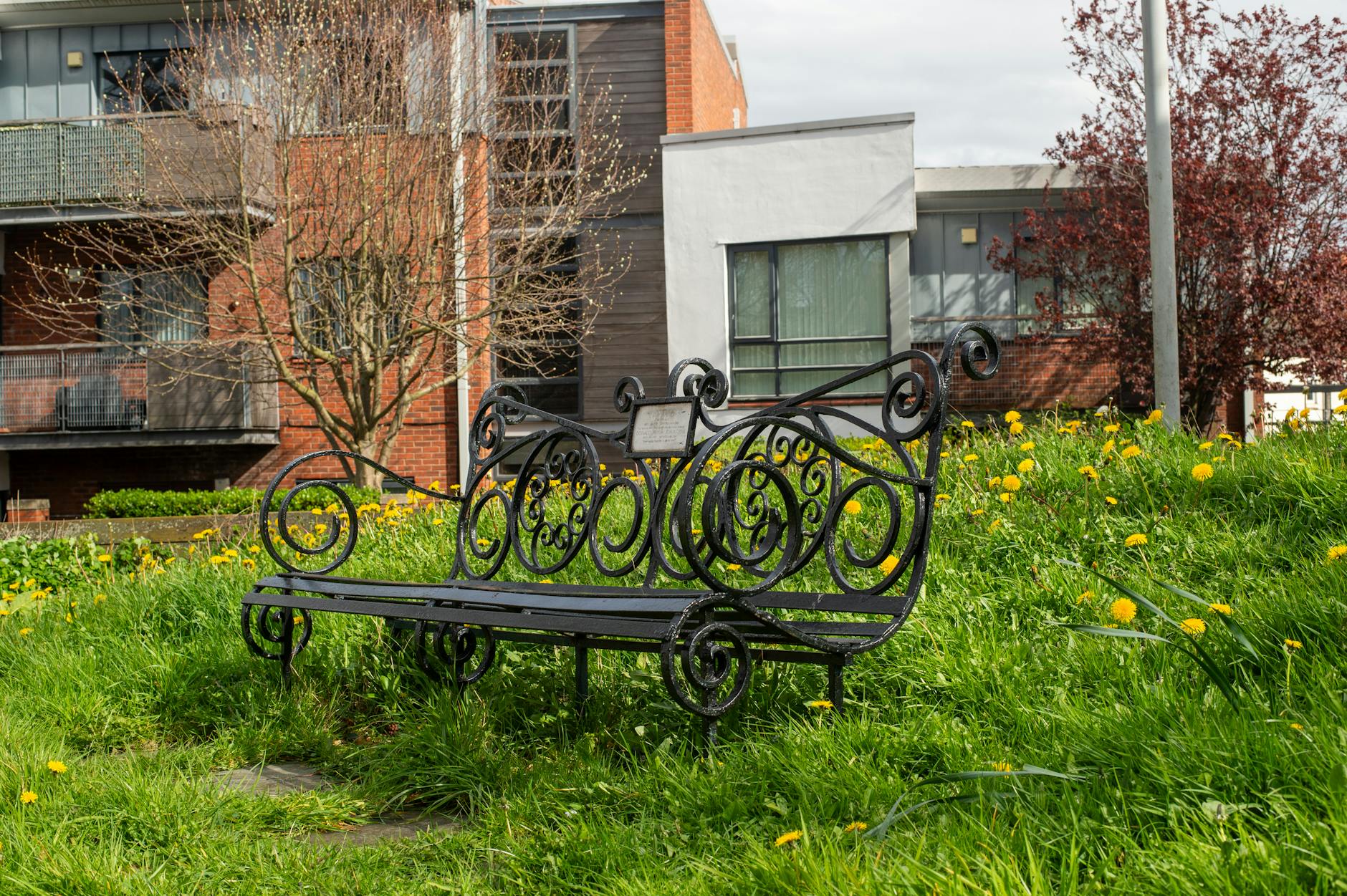
At the top of Mathew Street, Eleanor Rigby sits alone on a bench — a bronze sculpture by singer-songwriter Tommy Steele that was donated to the city in 1982. The statue has become one of Liverpool’s most beloved landmarks, and visitors often sit beside Eleanor for a photograph.
The Grapes pub at 25 Mathew Street is still trading, and it makes an easy stop between visits to the Cavern.
Shopping for Beatles Memorabilia
The Beatles Quarter is the best area in Liverpool for Beatles merchandise and memorabilia. The Cavern Club has its own shop for official merchandise and souvenirs, Cavern T-shirts included. On Mathew Street and the surrounding streets, you’ll find independent shops selling rare records, vintage Beatles photographs, and unique handmade items.
For serious collectors, Liverpool’s record shops — including Probe Records on School Lane and Jacaranda Records on Slater Street — are worth a browse. The annual Record Store Day events in Liverpool are particularly strong for Beatles and Merseybeat releases.
Hard Days Night Hotel
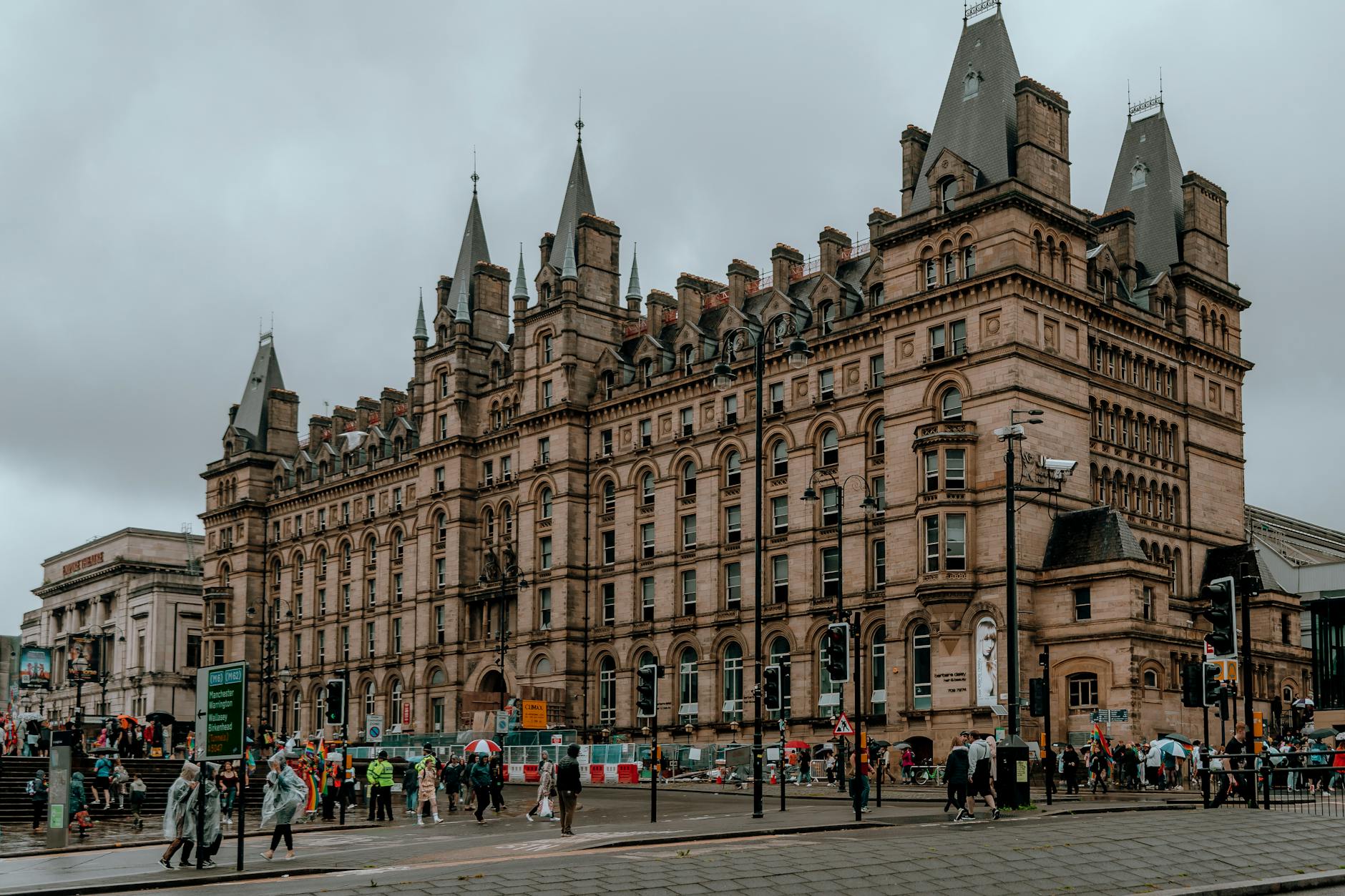
For the ultimate immersive Beatles experience, the Hard Days Night Hotel on North John Street bills itself as the official Beatles-inspired hotel. Located in the heart of the Beatles Quarter, just steps from the Cavern Club, the hotel occupies a stunning Grade II listed building and features Beatles-themed artwork in every room, a dedicated gallery, and the sophisticated Blakes Restaurant.
The hotel’s 110 rooms and suites range from stylish standard rooms with original Beatles artwork and photography to the show-stopping Lennon and McCartney suites. The Lennon Suite is the showpiece, with a white baby grand piano and a private balcony.
Even if you’re not staying overnight, the hotel’s Bar Four is open to non-residents and offers cocktails in a sophisticated Beatles-themed setting. The lobby gallery is also worth a visit for its rotating exhibitions of Beatles photography and art.
International Beatleweek Festival
If you can time your visit right, International Beatleweek is Liverpool’s annual Beatles festival, bringing bands from more than 20 countries and fans from over 40 to the city at the end of every August. The 2026 festival ran from 26 August to 1 September, with over 70 tribute acts playing venues across the city, including the Cavern Club, the Adelphi Hotel (the festival hub) and the Philharmonic Hall.
The festival programme includes tribute band performances, rare film screenings, memorabilia fairs, academic lectures, guided tours, art exhibitions, and special events like the famous Cavern Club all-night sessions. Bands travel from as far as Japan, Brazil, and Australia to perform, and the atmosphere in the Mathew Street area during Beatleweek is electric.
Day passes and full festival wristbands are available, with prices varying depending on the package. Accommodation in Liverpool sells out well in advance during Beatleweek, so book your hotel as early as possible if you’re planning to attend.
Other Essential Beatles Sites in Liverpool
The Beatles Statue at Pier Head
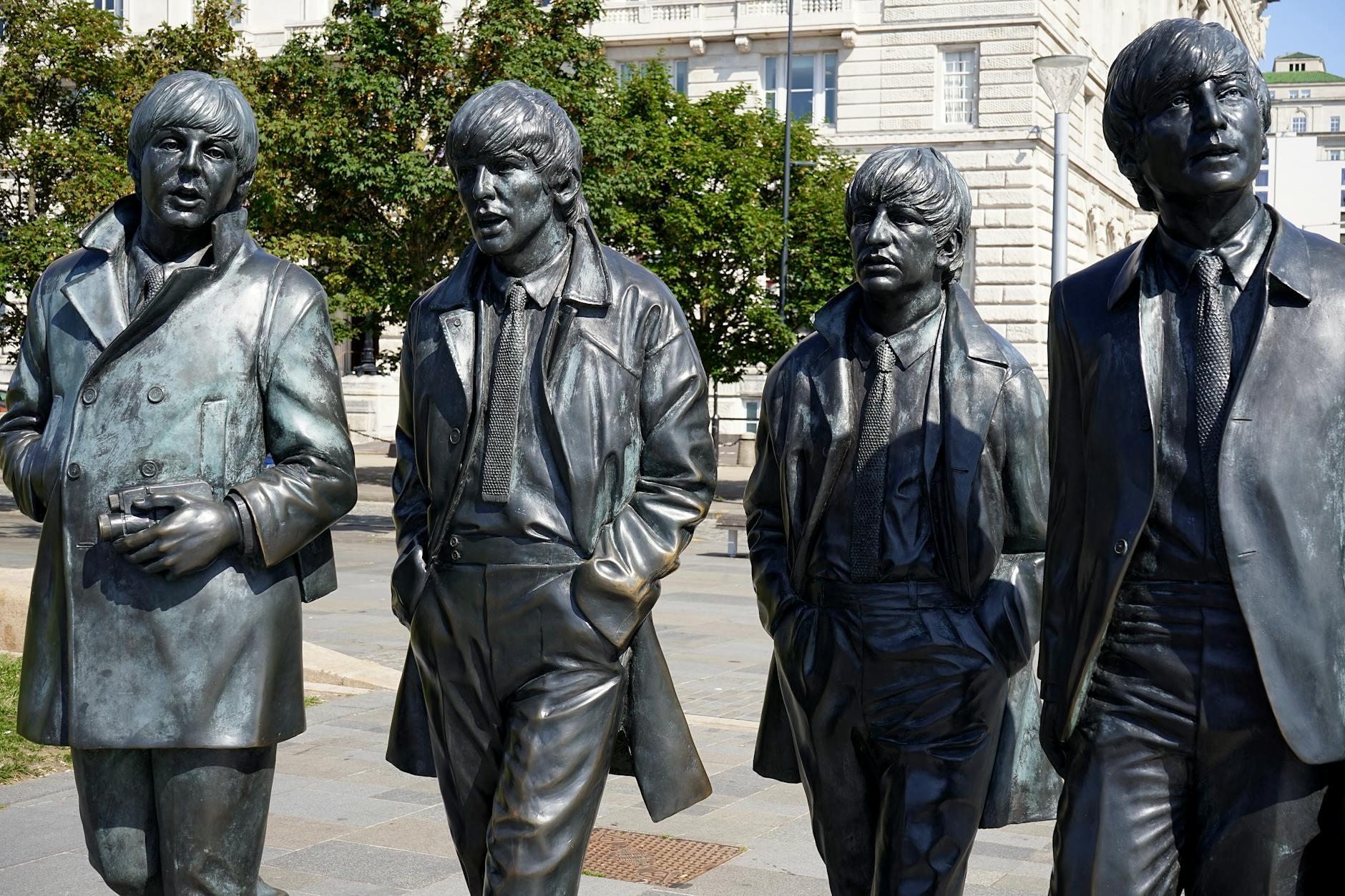
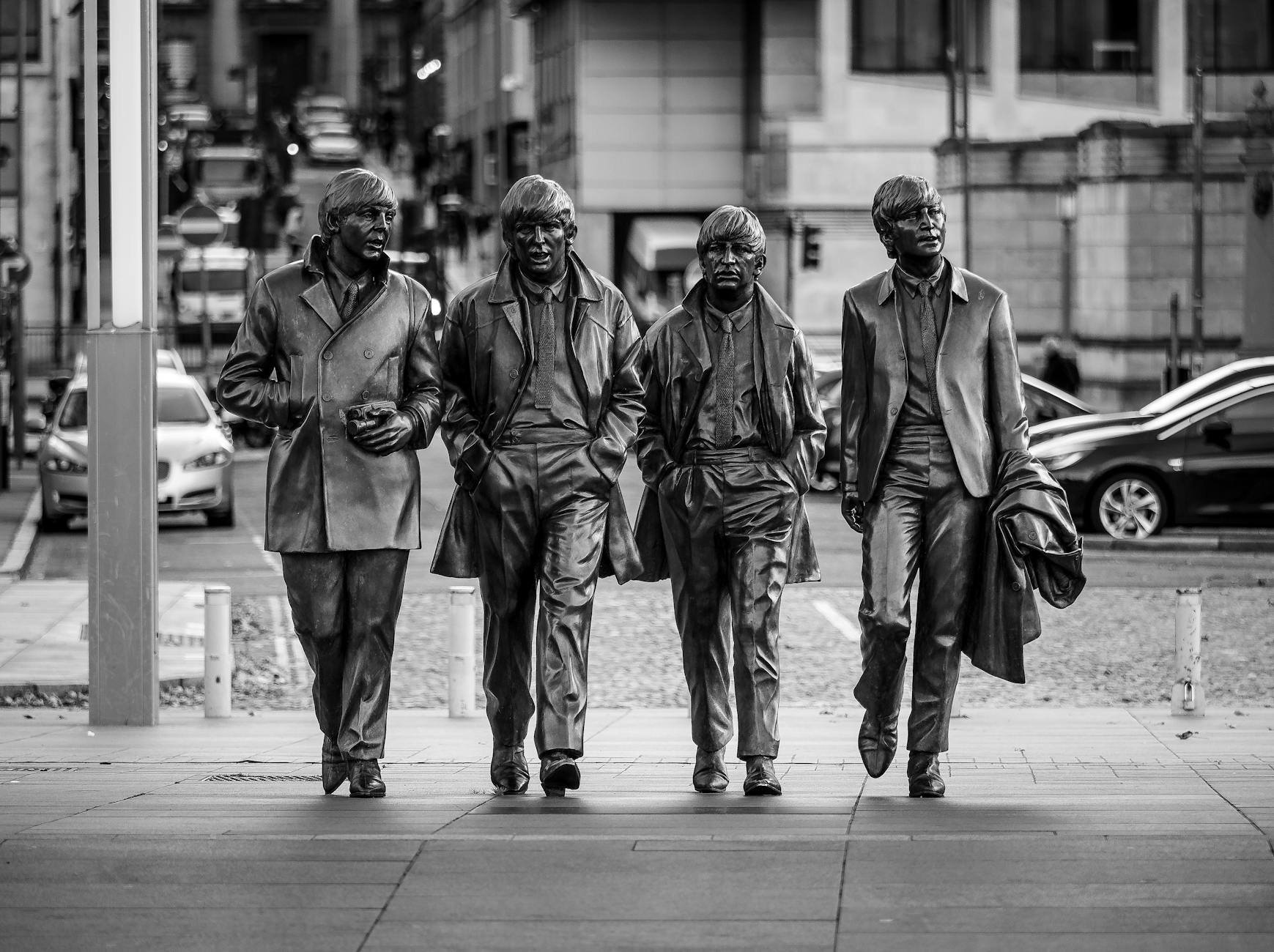
Unveiled in December 2015, the bronze Beatles statue on the Pier Head waterfront has become one of Liverpool’s most iconic landmarks. Created by sculptor Andy Edwards, the larger-than-life figures of John, Paul, George, and Ringo walk together along the waterfront, captured in a moment of easy camaraderie. The statue faces out across the Mersey and provides a perfect photo opportunity with the Three Graces (the Royal Liver Building, Cunard Building, and Port of Liverpool Building) as a backdrop.
British Music Experience
Located in the magnificent Cunard Building on the Pier Head, the British Music Experience traces the history of British popular music from 1945 to the present day. The Beatles feature prominently, but the museum also places them within the wider context of British music culture — from skiffle and Merseybeat through punk, Britpop, and beyond. Interactive exhibits let you try your hand at DJing, guitar playing, and dance moves from different eras.
St Peter’s Church, Woolton
St Peter’s Church in the leafy suburb of Woolton holds a unique place in music history as the location where John Lennon and Paul McCartney first met on 6 July 1957. Lennon’s skiffle group, the Quarrymen, played the church’s Rose Queen garden fete that day, and it was that evening, in the church hall, that the 15-year-old McCartney was introduced to him by mutual friend Ivan Vaughan. A plaque on the church wall commemorates this pivotal moment, and the church hall where they met still stands.
In the churchyard, you can also visit the grave of Eleanor Rigby — a real person whose headstone predates the Beatles song and whose name may (or may not) have inspired McCartney’s famous lyric. The coincidence continues to fascinate fans and researchers alike.
Liverpool Philharmonic Hall
The Royal Liverpool Philharmonic on Hope Street hosted several significant Beatles performances during the early 1960s. Today, the venue regularly programmes Beatles-related concerts and events, and its Art Deco interior makes it one of the most beautiful concert halls in Britain. Nearby, Ye Cracke pub on Rice Street was a favourite haunt of the young John Lennon during his art school years at the Liverpool College of Art, which stood just across the road.
Planning Your Beatles Liverpool Trip
How Many Days Do You Need?
A thorough Beatles Liverpool experience requires a minimum of two full days. On your first day, explore the city centre sites — The Beatles Story at Albert Dock, the Cavern Club and Mathew Street area, the Pier Head statue, and the British Music Experience. On day two, head to the suburbs to visit Penny Lane, Strawberry Field, St Peter’s Church, and the childhood homes area (or take the National Trust tour if you’ve booked in advance).
If you have three days, add a Magical Mystery Tour, deeper exploration of the Beatles Quarter shops and pubs, and time to simply soak up the atmosphere. Beatles fans who really want to see everything — including less-visited sites like the former Casbah Coffee Club in West Derby, the Liverpool Institute (now LIPA, founded by Paul McCartney), and Ringo’s birthplace at 9 Madryn Street — could easily fill four to five days.
Best Time to Visit
Liverpool’s Beatles attractions operate year-round, making any season suitable for a visit. Summer (June to August) offers the longest days and warmest weather, plus International Beatleweek in late August. Spring and early autumn provide pleasant weather with smaller crowds. Winter visits can be atmospheric — Mathew Street and the Cavern Club are arguably at their most evocative on a cold evening — and Liverpool’s Christmas markets add festive cheer to a winter Beatles break.
Getting Around
Liverpool’s city centre Beatles sites are all walkable, clustered around the waterfront and Mathew Street areas. For the suburban sites, the Magical Mystery Tour bus, a taxi tour, or public transport (Merseyrail trains and Arriva buses) will get you there easily. The Merseyrail network is fast, frequent, and affordable, with stations close to most suburbs. If you’re driving, park in the city centre and use public transport for the suburbs — parking near Penny Lane and Strawberry Field is very limited.
Combining Beatles Sites with Wider Liverpool Attractions
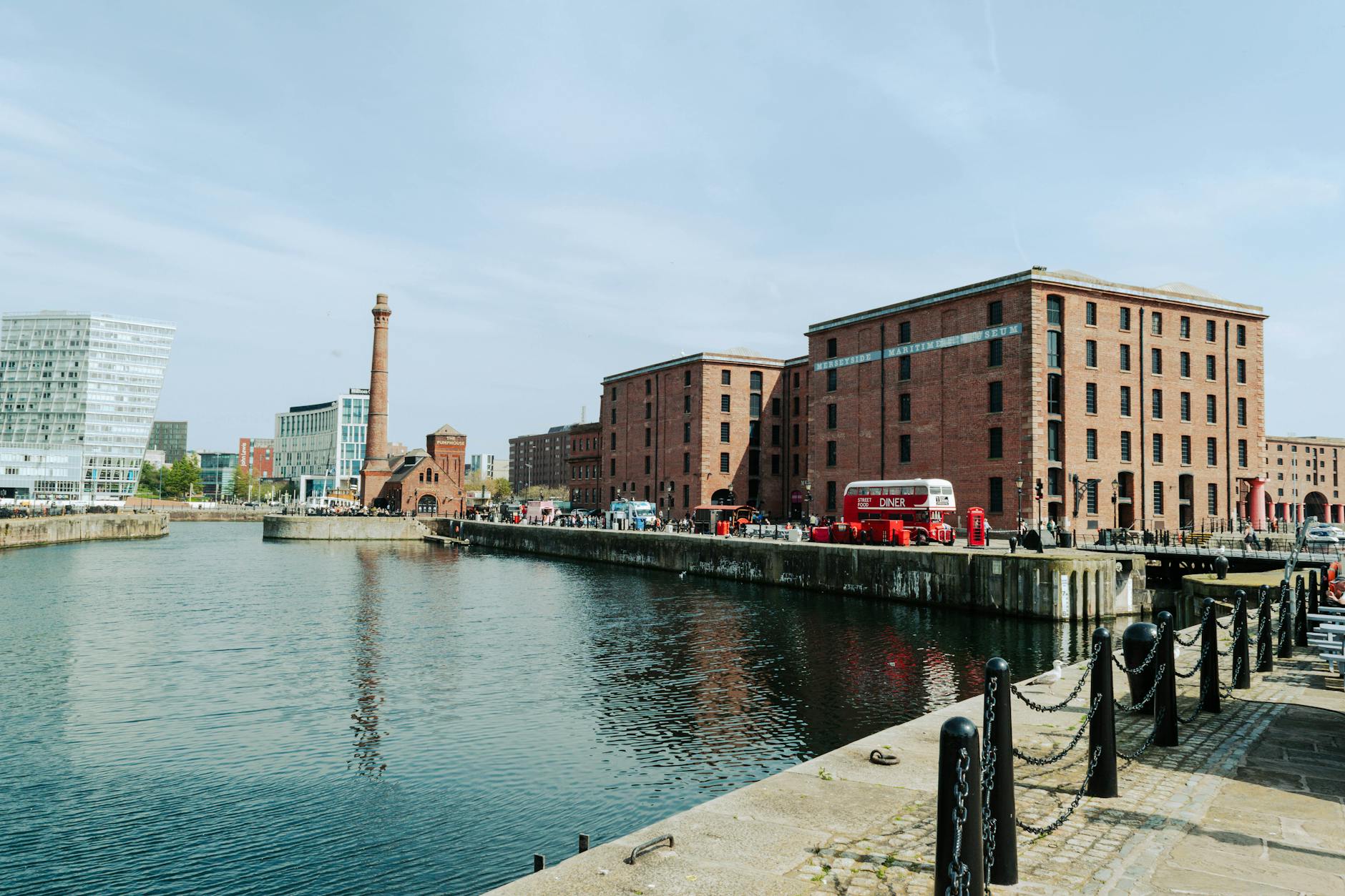
Liverpool has far more to offer than Beatles heritage, and combining your Beatles pilgrimage with the city’s wider attractions makes for a richer trip. The Albert Dock area — where The Beatles Story is located — is also home to the Merseyside Maritime Museum and the International Slavery Museum, though both are closed with no reopening date (the Old Dock Tour still runs). Tate Liverpool’s dock building is being redeveloped, and for now the gallery is at RIBA North on Mann Island. The waterfront walk to the Three Graces and the Museum of Liverpool takes you past the Beatles statue. The full guide to things to do in Liverpool covers the city’s complete range of attractions, from its two cathedrals and Georgian Quarter to its renowned food scene and Premier League football heritage.
Essential Beatles Liverpool Tips
After extensive research and visits to every site in this guide, here are our top tips for making the most of your Beatles Liverpool experience. Book the National Trust childhood homes tour as far in advance as possible — these small-group tours sell out weeks ahead, especially in summer. Wear comfortable walking shoes, as you’ll cover a lot of ground between sites. Carry a portable phone charger, because you’ll be taking more photos than you expect.
Consider buying a combined ticket for The Beatles Story and the Magical Mystery Tour if both are on your itinerary, as bundle deals offer meaningful savings. Visit the Cavern Club during a weekday lunchtime session for the most atmospheric and least crowded experience. If you’re a serious fan, check what’s on at the Philharmonic Hall and the Epstein Theatre (named after Brian Epstein) for Beatles-related concerts and shows during your visit.
Finally, don’t rush. Liverpool’s Beatles heritage is about more than ticking off sites — it’s about absorbing the atmosphere, hearing the stories, and understanding how this city shaped four ordinary lads into the most extraordinary band the world has ever known. Take your time, talk to the locals, and let Liverpool’s Beatles magic work on you.
Complete Beatles Liverpool Guides
For deeper coverage of every aspect of Beatles tourism in Liverpool, the following ten in-depth guides cover specific sites, themes, and visitor types in detail. Use these as the next step in planning a Beatles-focused Liverpool trip:
- The Beatles Story Museum: Complete Visitor Guide — the flagship Beatles museum at the Albert Dock.
- Magical Mystery Tour Liverpool Review: Is It Worth It? — the classic coach tour assessed.
- The Cavern Club Liverpool: History, Live Music & What to Expect — complete guide to the venue where the Beatles played 292 times.
- Penny Lane Liverpool: Walking the Iconic Street — the suburban junction Paul McCartney made famous.
- Strawberry Field Liverpool: Visitor Guide & History — the Salvation Army children’s home and the Imagine piano.
- John Lennon & Paul McCartney Childhood Homes: National Trust Tour — Mendips and 20 Forthlin Road.
- Self-Guided Beatles Walking Tour of Liverpool — free 2-3 hour city centre route.
- Hard Days Night Hotel Liverpool: Is It Worth Staying? — the city’s Beatles-themed hotel on North John Street.
- Beatles Memorabilia Shopping in Liverpool: Where to Buy — the best shops for souvenirs and vinyl.
- Complete Timeline: The Beatles in Liverpool 1956-1966 — the chronological history.
If you want to sleep as close to the story as possible, the Hard Days Night Hotel on North John Street is a Beatles-themed hotel in the Cavern Quarter, a short walk from the club. Our honest review of the Hard Days Night Hotel covers the room types, the art and whether the theme justifies the price.