This article contains advertising. Our booking links are routed through a partner that adds commission tracking automatically, so if you book through one we earn a commission from the provider, at no extra cost to you. It never affects what we recommend. Affiliate disclosure
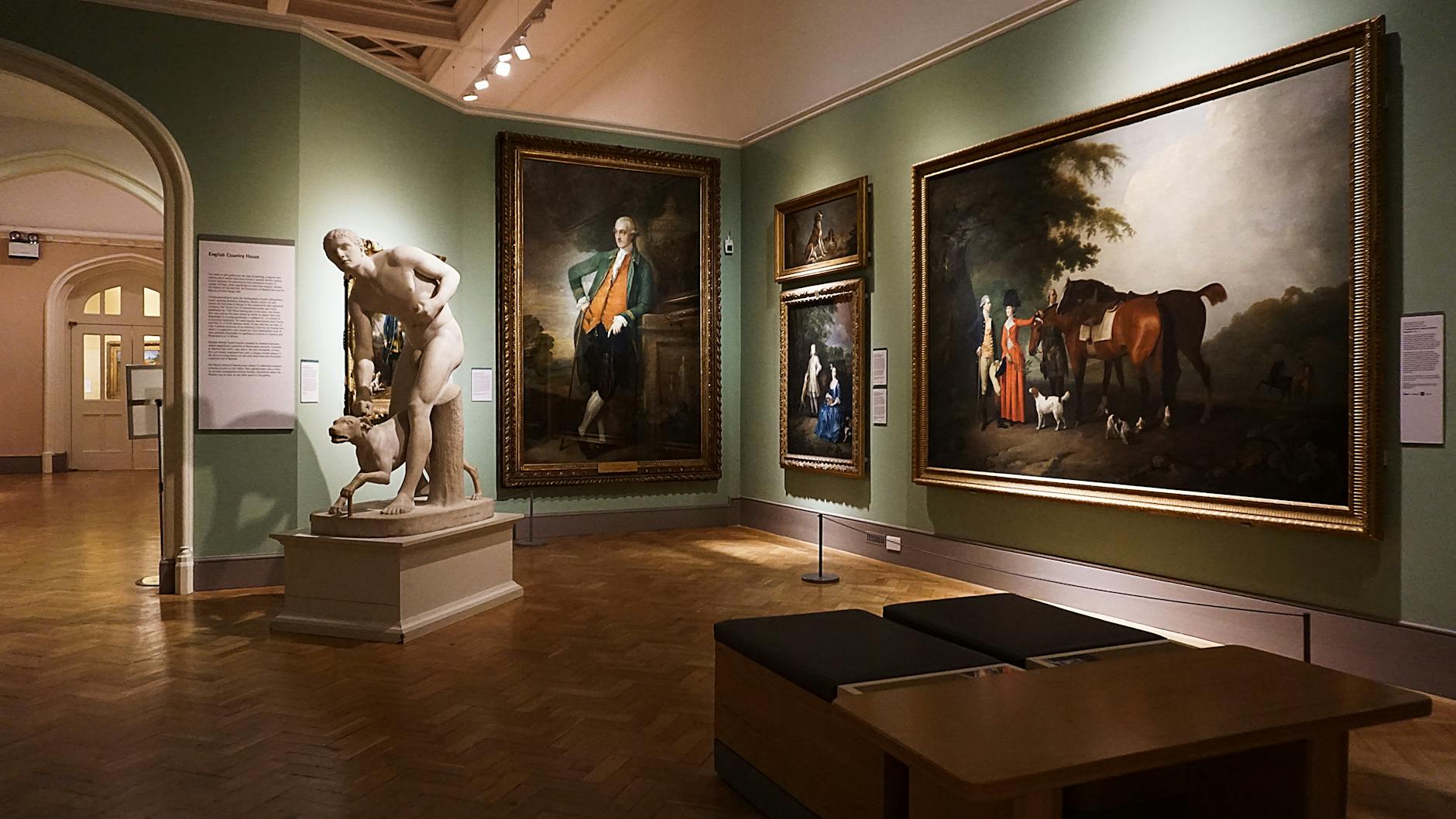
The Walker Art Gallery Liverpool holds a major collection of historic and modern art, with the painting galleries on the first floor and the sculpture and craft and design galleries on the ground floor. The collection runs from medieval altar panels through Renaissance Italy, Dutch and Spanish Old Masters, the Pre-Raphaelites (which is what most first-time visitors come for), British eighteenth and nineteenth century painting, French Impressionism, and a contemporary collection linked to the John Moores Painting Prize, which has been held at the Walker since 1957. Admission is free, the gallery is open every day until 1 November 2026 (check the gallery’s website for opening days after that), and a focused visit takes around two hours. This Walker Art Gallery Liverpool guide covers what to see, where the highlights sit, how to time your visit, and how to combine the Walker with the rest of the city’s free cultural offering.
This is a practical visitor guide rather than an art-historical lecture. If you want depth on individual paintings the gallery’s own audio guide and online collection notes are excellent. What this guide does is help you decide whether the Walker is right for your trip, plan a route that hits the major works in a reasonable time, and integrate the visit with the other museums in St George’s Quarter.
https://www.liverpooltourism.org/wp-content/uploads/2026/05/p7c5-interior.jpg
Walker Art Gallery Liverpool: Why This Collection Matters
The Walker is a serious gallery. It opened in 1877 as a gift to the city from the Liverpool brewer and former mayor Andrew Barclay Walker. The building was designed by Cornelius Sherlock and H.H. Vale in a heavy neoclassical style — pediment, columns, sculpted figures on the facade — to sit alongside the Brown Library (now Central Library) and the new museum (now the World Museum) on William Brown Street. The three buildings together still define St George’s Quarter as Liverpool’s cultural district.
What makes the Walker exceptional is the combination of breadth and depth. The collection includes Italian and Netherlandish paintings, work by Rembrandt, Rubens, Poussin and Degas, and a major Pre-Raphaelite collection. The biennial John Moores Painting Prize, held at the Walker since 1957, has seen the gallery acquire winning paintings consistently since 1978, and is one of the reasons the gallery’s holdings of late twentieth- and twenty-first-century painting are strong.
The Pre-Raphaelite collection deserves a separate mention. Liverpool merchants in the 1850s and 1860s were among the most enthusiastic early collectors of Pre-Raphaelite work, and the Liverpool Academy of Arts repeatedly awarded its annual prize to Pre-Raphaelite painters when the London art establishment was still dismissive. That early-collector enthusiasm fed straight into the Walker’s holdings. The result is a Pre-Raphaelite collection that some specialists consider stronger than the equivalent collections in London — certainly the most concentrated single Pre-Raphaelite display anywhere outside the Tate.
Where the Walker Is and Getting There
The Walker Art Gallery is at William Brown Street, Liverpool L3 8EL, a few doors from the World Museum, with Central Library between them, and across the road from St George’s Hall. The grand stone facade with the bronze statue of Raphael at the top of the entrance steps is unmistakable.
From Liverpool Lime Street rail station, the Walker is a five-minute walk: cross the road to St George’s Hall and walk along its side to William Brown Street. The Walker is on your right after the World Museum. From Liverpool ONE it’s an easy walk through Church Street and the city centre. Q-Park Queen Square is within walking distance; expect £8-12 for a half-day’s parking in 2026 (indicative). The Albert Dock and Pier Head lie further on towards the waterfront. Public transport options are covered in our how to get to Liverpool guide.
Walker Art Gallery Liverpool Opening Hours and Tickets
The Walker Art Gallery is open every day until 1 November 2026, 10:00–17:00. Check the gallery’s website for opening days after that, and for any closures over Christmas and New Year.
Admission is completely free. General entry covers the permanent galleries, while some temporary exhibitions and special events charge a fee, so check the listing for each before you go.
The gallery’s free audio guide is downloadable as an app before you arrive or available on hire at the entrance. It’s better than most museum audio guides and worth the few minutes of setup time. For younger visitors, the Big Art for Little Artists gallery is on the ground floor.
https://www.liverpooltourism.org/wp-content/uploads/2026/05/p7c5-preraph.jpg
Walker Art Gallery Highlights: The Top Works to See
The Walker’s layout puts the historic collection on the upper floor and the British and contemporary collections on the ground floor. Here’s a curated route through the must-see paintings. With limited time, this is what to prioritise.
Pre-Raphaelite Room
Most first-time visitors come for the Pre-Raphaelites and you should plan to spend a good 30-40 minutes here. The standout works are Dante Gabriel Rossetti’s Dante’s Dream on the Day of the Death of Beatrice (1871) — at over three metres wide, this is one of Rossetti’s largest paintings and dominates the room. John Everett Millais’s Lorenzo and Isabella (1848-49) was his first exhibited work in the Pre-Raphaelite style. Don’t miss Ford Madox Brown’s The Coat of Many Colours or the smaller works by Arthur Hughes, John William Waterhouse and Edward Burne-Jones in the same suite of rooms.
Victorian Narrative Painting
Adjacent to the Pre-Raphaelite room is the Victorian narrative painting display, which holds William Frederick Yeames’s And When Did You Last See Your Father? (1878). It’s the painting where a Royalist boy in a blue silk suit is being interrogated by Parliamentarian soldiers during the English Civil War. Standing in front of the original — much larger than reproductions suggest, with the boy’s silk catching the light differently from the dark Parliamentarian uniforms — is one of the small but real pleasures of a Walker visit.
Old Masters
The Old Master rooms include Rembrandt’s Portrait of the Artist as a Young Man (1629-31), Nicolas Poussin’s Landscape with the Gathering of the Ashes of Phocion (1648), Rubens’s Holy Family in a Garden, and significant works by Murillo, Lippi, Cranach and Simone Martini’s beautifully gilded 14th-century altar panel of Christ Discovered in the Temple. Don’t miss the Stubbs paintings — George Stubbs was born in Liverpool in 1724 and the gallery holds his animal paintings, including Molly Longlegs.
Impressionists and Late Nineteenth Century
The Impressionist room is small but holds Monet, Degas, Cézanne and Sickert. Don’t expect a major Impressionist gallery on the scale of the Courtauld, but the individual works are well-chosen — particularly the small Cézanne and a fine Sickert music-hall painting.
British Twentieth Century and Contemporary
The modern and contemporary painting gallery is on the first floor; the ground floor holds the sculpture gallery and the craft and design gallery. Highlights of the modern and contemporary rooms include Lucian Freud, Stanley Spencer, L.S. Lowry, Paul Nash, David Bomberg, Frank Auerbach, Bridget Riley and David Hockney. Hockney’s Peter Getting Out of Nick’s Pool, an early Los Angeles pool painting, won the John Moores Prize in 1967. The John Moores Painting Prize winners are scattered through the contemporary rooms and provide a fascinating cross-section of British painting since 1957 — past winners include David Hockney, Mary Martin, Patrick Heron and Peter Doig.
How Long to Spend at the Walker Art Gallery
A focused first visit, hitting the major Pre-Raphaelites, the Yeames, the Old Masters and a quick walk-through of the contemporary rooms, takes about 90 minutes to 2 hours. A thorough visit covering everything in detail, with the audio guide, can comfortably fill 3 hours. Specialist art visitors regularly spend half a day. For a quick stop with a single focus (just the Pre-Raphaelites, or just the Stubbs paintings), an hour is enough.
The galleries can be quiet on weekday mornings outside school holidays and busy on weekend afternoons. Late afternoons (15:00 onwards) are usually quieter than mornings. The least crowded experience is typically Tuesday or Wednesday after 14:00 outside school holidays.
The Walker Café, Shop and Facilities
The Walker’s café is on the ground floor and serves sandwiches, soup, salads, hot drinks and cake — fine for a quick stop, though most visitors prefer to walk the five minutes to Queen Square or Bold Street for a more substantial lunch. The shop near the entrance is one of the better museum shops in the city, with strong stock of art books, postcards, prints and homewares; expect to spend £15-50 if you find something you like, though there are plenty of options under £10. Toilets are on the ground floor. The building is fully wheelchair accessible with lifts to the upper galleries.
The free wi-fi is reliable. Photography is permitted in the permanent galleries (no flash, no tripods) except in the occasional temporary exhibitions where copyright restrictions apply — these are clearly signed. Sketching is welcome and the gallery actively encourages it; bring pencils and a small pad if you’d like to spend longer with the paintings.
https://www.liverpooltourism.org/wp-content/uploads/2026/05/p7c5-exterior.jpg
Special Events: The John Moores Painting Prize
The John Moores Painting Prize is the Walker’s signature event. Founded in 1957 by Littlewoods chairman Sir John Moores together with Walker director Hugh Scrutton, the prize is a biennial contemporary painting competition. The shortlisted works are exhibited at the Walker, and the winner’s painting has regularly joined the gallery’s permanent collection.
The prize has launched or accelerated a remarkable list of careers: Patrick Heron (1959), David Hockney (1967), Mary Martin (1969), Richard Hamilton (1969), Peter Doig (1993), Peter Davies (2002) and many others. Visiting Liverpool during a John Moores exhibition is one of the strongest single contemporary-art experiences possible outside London. The 2025 prize ran from 6 September 2025 to 1 March 2026 — check the Walker’s events page for the next edition.
Other regular special events include the Liverpool Hope University Prize for early-career painters, the Heart of Glass Sculpture display, and a steady programme of free family activity days during school holidays. Specific dates and entry requirements are on the National Museums Liverpool website.
Combining the Walker with Other Liverpool Attractions
The Walker sits in St George’s Quarter, Liverpool’s cultural district, alongside several other strong free attractions. The World Museum is a few doors along William Brown Street — together the two museums fill a comfortable full day. The Central Library, with its restored historic reading room, is between them. St George’s Hall opposite offers guided tours on selected dates, so check its listings for access to the Great Hall.
For a full day combining museums with the waterfront, you can walk from the Walker through the city centre to the waterfront, visit the Museum of Liverpool and walk along the Albert Dock. A strong itinerary: Walker Art Gallery 10:00-12:00, walk through the city centre with a short stop on Bold Street for lunch 12:00-13:00, Museum of Liverpool and Albert Dock 13:00-17:00. Total cost: free, or whatever you spend on food.
For contemporary art, the Walker pairs well with Tate Liverpool at the Albert Dock and the FACT Liverpool gallery on Wood Street. The three together give you a strong cross-section of historic, modern and contemporary practice. See our Liverpool museums and galleries pillar for the wider context. If you’re including evening culture in the day, the Liverpool Empire and the Royal Court are both close by — see our Liverpool live music venues guide for evening options nearby.
Frequently Asked Questions
Is the Walker Art Gallery Liverpool free?
Yes. General admission to the Walker Art Gallery is free, including the permanent galleries; some temporary exhibitions and special events charge a fee. Donations are welcome but never required.
What are the Walker Art Gallery Liverpool opening hours?
The Walker Art Gallery is open every day until 1 November 2026, 10:00–17:00; check the gallery’s website for opening days after that. The gallery’s audio guide app should be downloaded before arrival for the best experience.
How long does it take to visit the Walker Art Gallery?
A focused first visit takes 90 minutes to 2 hours. A thorough visit with the audio guide fills 3 hours. Quick visits with a single focus (just the Pre-Raphaelites, for example) can be done in an hour. Specialist art visitors regularly spend half a day.
What is the most famous painting at the Walker Art Gallery?
The most-recognised painting is probably William Frederick Yeames’s And When Did You Last See Your Father? (1878). Other major works include Rossetti’s Dante’s Dream, Hockney’s Peter Getting Out of Nick’s Pool, and the Stubbs animal paintings.
Is the Walker Art Gallery good for children?
Yes, with the right approach. The Pre-Raphaelite paintings have strong narrative content that engages older children. The Stubbs animal paintings work well for younger ones. Check the gallery’s current family listings for activities and sessions. For younger children expect a focused 45-60 minute visit rather than a full tour. The World Museum along the street is the stronger family-focused option for under-tens.
Where is the Walker Art Gallery Liverpool?
The Walker Art Gallery is at William Brown Street, Liverpool L3 8EL, in St George’s Quarter. It’s a short walk from Liverpool Lime Street rail station. Q-Park Queen Square is within walking distance for drivers.
Is the Pre-Raphaelite collection at the Walker really world-class?
Yes. The Walker holds one of the strongest Pre-Raphaelite collections anywhere — comparable to and in some respects exceeding the collections at the Tate, Manchester Art Gallery and Birmingham Museum and Art Gallery. The collection traces back to the Liverpool Royal Institution’s acquisition of William Roscoe’s paintings in 1819. The Rossetti, Millais and Holman Hunt holdings in particular are exceptional.
Does the Walker host temporary exhibitions?
Yes, the Walker runs a continuous programme of temporary exhibitions ranging from major retrospectives to smaller focused shows. The biennial John Moores Painting Prize is the gallery’s signature event. Other regular shows include the Liverpool Hope University Prize for early-career painters, themed exhibitions drawing on the permanent collection, and visiting touring exhibitions. Most temporary exhibitions are free; ticketed special events are clearly marked.
Final Thoughts: The Strongest Free Art Gallery in the North
The Walker Art Gallery Liverpool is one of the strongest cultural arguments for visiting the city. The Pre-Raphaelite collection alone is exceptional, and the addition of the Old Masters, the Stubbs paintings, the Yeames, the Impressionists, the Lowry, the Hockney, the Freud, the Bacon and the John Moores winners means there is genuinely something for every level of art interest. Free admission, central location, well-curated galleries, and the building’s own architectural quality make this one of the best free visits in the UK.
For a first visit to Liverpool I’d plan the Walker as a 90-minute to 2-hour anchor, ideally paired with the World Museum a few doors along for a full day in St George’s Quarter. For art-focused trips, combine the Walker with Tate Liverpool and FACT for a strong three-gallery itinerary covering historic, modern and contemporary practice. For rainy days, the Walker is one of the most reliable indoor options in the city — see our Liverpool rainy day activities for the full shortlist. For more on Liverpool’s broader cultural offering see our Liverpool museums and galleries pillar.