This article contains advertising. Our booking links are routed through a partner that adds commission tracking automatically, so if you book through one we earn a commission from the provider, at no extra cost to you. It never affects what we recommend. Affiliate disclosure
Watch The Batman closely and there’s a moment Liverpudlians enjoy far more than anyone else in the cinema. Gotham’s City Hall, steps swarming with press and police, is St George’s Hall, opposite Lime Street station. The grim Gotham City Police Department is the Royal Liver Building. And when Batman and Catwoman ride off at the end, they go past the gravestones of Anfield Cemetery. Once you start looking for films filmed in liverpool, it’s hard to stop. The same few streets have been 1920s New York, 1940s New York, wartime Birmingham, modern London, Olympic Paris and a comic-book city that doesn’t exist, often within a couple of years of each other.
This guide goes film by film through the major productions shot in Liverpool and on Merseyside, from Chariots of Fire to The Batman and the 2025–26 wave of DC and Guy Ritchie. It covers exactly which streets and buildings were used and what they were pretending to be, and ends with a walking route that takes in most of them in an afternoon. For the same locations sorted by place rather than by film, including TV and Peaky Blinders, see our Liverpool film and TV locations guide. Details were checked in September 2026 against the Liverpool Film Office, VisitLiverpool and National Museums Liverpool.
At a Glance: The Blockbusters and Where They Shot
| Film | Year | Liverpool location | Played |
|---|---|---|---|
| Chariots of Fire | 1981 | Liverpool Town Hall; Bebington Oval, Wirral; New Brighton | British Embassy in Paris; 1924 Paris Olympic stadium |
| In the Name of the Father | 1993 | St George’s Hall (partly) | Court and institutional scenes |
| The 51st State | 2001 | India Buildings, Water Street; the docks | Liverpool, as itself |
| Harry Potter and the Deathly Hallows – Part 1 | 2010 | Queensway Tunnel | The chase through a London tunnel |
| Captain America: The First Avenger | 2011 | Stanley Dock | 1940s Brooklyn and New York docks |
| Fast & Furious 6 | 2013 | Queensway Tunnel; Town Hall; Dale Street | London |
| Fantastic Beasts and Where to Find Them | 2016 | St George’s Hall; Cunard Building | 1920s New York |
| Florence Foster Jenkins | 2016 | Water Street; Cunard Building; Royal Liver Building | 1940s New York |
| Yesterday | 2019 | Penny Lane; city streets; Queensway Tunnel | Liverpool, as itself |
| The Batman | 2022 | St George’s Hall; Royal Liver Building; Anfield Cemetery | Gotham City Hall; Gotham police HQ |
| Fountain of Youth | 2025 | Exchange Flags; St George’s Hall | London |
| Clayface | 2026 | Cunard Building; Derby Square; Philharmonic Hall; Water Street | Gotham |
Why Hollywood Keeps Coming to Liverpool
Liverpool isn’t just popular with film crews by accident. It’s the second most-filmed city in the UK after London, and it established the first film office in Europe. Several things make it work.
- It looks like somewhere else. Liverpool’s commercial district was built on the money of one of the world’s greatest ports, between roughly 1830 and 1930, in the same monumental style as New York and Chicago. Take the British cars and street signs away and Water Street reads as Lower Manhattan.
- It isn’t famous on screen. Paris looks like Paris and London looks like London. Liverpool’s buildings are just as grand but not instantly recognisable to a global audience, which is exactly what a production doubling another city needs.
- Everything is close. Neoclassical civic halls, Edwardian office blocks, Victorian docks, Georgian terraces and a road tunnel are all within a mile or so of each other. A unit can move between them in minutes.
- The city says yes. The Liverpool Film Office closes roads, negotiates with residents and businesses and unlocks buildings, and it’s done it for decades. Productions come back because it works.
Liverpool as New York
New York is the city Liverpool plays most often, and it does it very well.
Captain America: The First Avenger (2011)
Marvel brought more than five hundred cast and crew to Stanley Dock on the northern docks and turned it into the Brooklyn and New York waterfront of the 1940s. The huge brick Tobacco Warehouse, the cobbled quaysides and the dock walls formed the backdrop for the scenes of Steve Rogers’ early life before he became a super soldier. Stanley Dock has been partly redeveloped since, with the Titanic Hotel in the North Warehouse and the Tobacco Warehouse now converted into apartments, but the scale of the place is unchanged. It’s about 25 minutes’ walk north of the Pier Head.
Fantastic Beasts and Where to Find Them (2016)
For J.K. Rowling’s wizarding-world spin-off, set in 1926 New York, the production used St George’s Hall and the Cunard Building extensively. The hall’s plateau, dressed with period cars and New York signage, is where Frank, Newt’s thunderbird, takes flight. The interior of St George’s Hall appears early in the film, in the chaotic political rally scene. Stand on the plateau steps and you’re standing on the set.
Florence Foster Jenkins (2016)
Meryl Streep’s story of the famously terrible soprano is set in 1940s New York, and much of that New York was Liverpool’s Water Street, with the Cunard Building and the Royal Liver Building. Water Street, running uphill from the Pier Head past the grand banking halls and India Buildings, is probably the most convincing piece of “Manhattan” in Britain.
Liverpool as Gotham
The Batman (2022)
Matt Reeves’ dark, rain-soaked Batman used Liverpool for some of its most important civic locations. St George’s Hall is Gotham City Hall, the backdrop for the film’s scenes on the City Hall steps. The Royal Liver Building plays the Gotham City Police Department, and a stunt double was photographed on its roof during filming, which caused quite a stir on the waterfront. At the end of the film, the bike ride through a cemetery was shot at Anfield Cemetery, close to the football ground.
Clayface (2026)
DC Studios came back to Gotham-on-Mersey for Clayface, shooting in the city in 2025. The production used the Cunard Building, Derby Square, the Philharmonic Hall and Water Street, bringing the art deco and classical buildings of the business district back into the DC universe. The Philharmonic Hall, on Hope Street, is a 1939 art deco concert hall and still the home of the Royal Liverpool Philharmonic Orchestra, so you can see a concert in the building rather than just look at it.
Liverpool as London
It seems odd that productions travel 200 miles north to film “London”, but London is very hard and very expensive to close off, and Liverpool’s grand streets can pass for it perfectly well.
Harry Potter and the Deathly Hallows – Part 1 (2010)
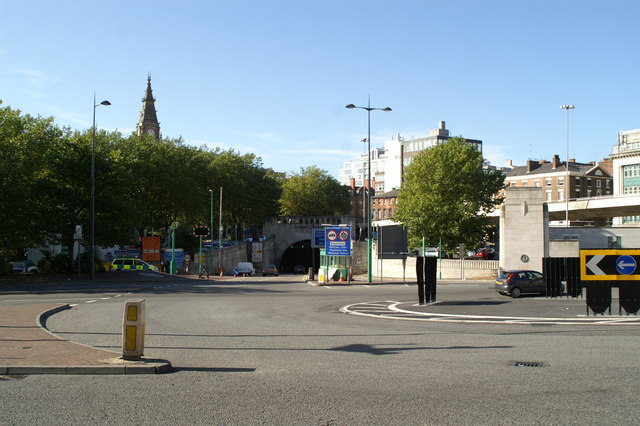
The chase in which Harry and Hagrid are pursued by Death Eaters through a road tunnel was filmed in the Queensway Tunnel, the 1934 road tunnel under the Mersey between Liverpool and Birkenhead. Its long, curving, tiled bore, with no daylight, suits a night-time chase perfectly.
Fast & Furious 6 (2013)
The London street-racing sequences, with Vin Diesel, Paul Walker and a lot of very expensive cars, used the Queensway Tunnel again, along with Liverpool Town Hall and Dale Street. Filming ran for four days in 2012, with roads closed through the business district. The tunnel stands in for a London underpass in the film.
Fountain of Youth (2025)
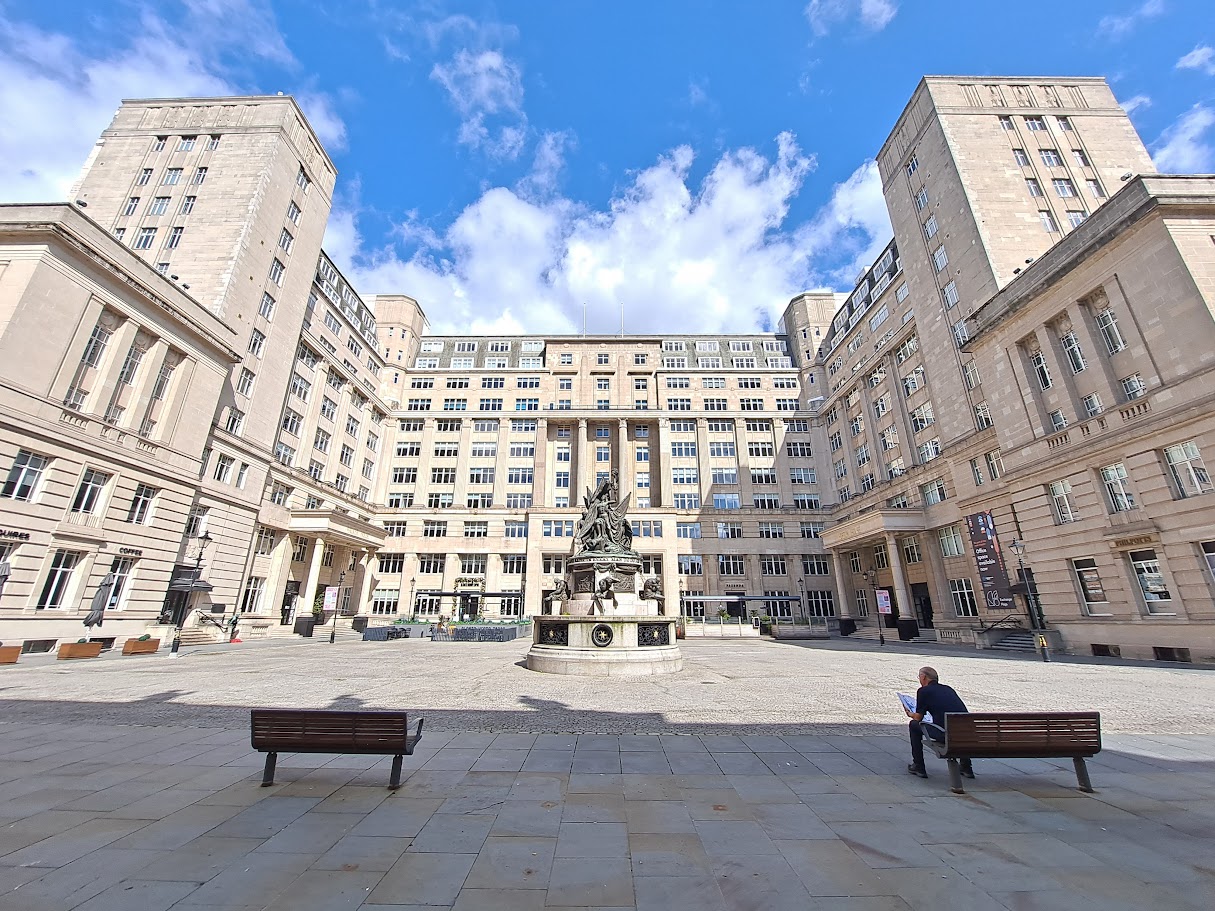
Guy Ritchie’s globe-trotting heist adventure, with John Krasinski and Natalie Portman, is set partly in London, but much of that London was shot on Merseyside. Exchange Flags, the grand square behind the Town Hall, and St George’s Hall both appear.
Liverpool as Paris
Chariots of Fire (1981)
The Oscar winner about British runners at the 1924 Paris Olympics is one of the earliest big films to use Liverpool as another city, and it did so thoroughly. Liverpool Town Hall and the area around the Central Library became the British Embassy in Paris. The chapel at the old Royal Hospital doubled as a French café. The Olympic stadium itself was Bebington Oval, a sports ground on the Wirral that’s still in use. The famous opening scene of the runners on the beach was shot in St Andrews, Scotland, not on Merseyside, but other beach scenes used New Brighton.
Liverpool as Itself
Liverpool doesn’t only play other places. Some of its best screen moments are the ones where it’s simply Liverpool.
- Yesterday (2019). Danny Boyle and Richard Curtis’s comedy about a musician who wakes up in a world that has never heard of the Beatles naturally visits Penny Lane and other Beatles sites around the city. It also used the Queensway Tunnel. Our Penny Lane guide covers the real street.
- Nowhere Boy (2009). Sam Taylor-Johnson’s film about the teenage John Lennon is set in Liverpool. Our Beatles childhood homes guide covers the real houses from Lennon’s early life.
- The 51st State (2001). Samuel L. Jackson and Robert Carlyle in a crime caper set in Liverpool, using India Buildings on Water Street and the docks.
Other Films You’ll Spot
- In the Name of the Father (1993), the Guildford Four drama, partly filmed at St George’s Hall.
- Tolkien (2019) used the William Brown Street area, whose cobbles and museum frontages have also appeared in several period productions.
- Peaky Blinders: The Immortal Man (2026), the Netflix film, turned the St John’s Gardens side of St George’s Hall into a wartime air-raid shelter. Our Peaky Blinders locations guide has the full story.
Television has used the city just as much, from The Crown at the Cunard Building to Doctor Who at the Royal Albert Dock and Outlander at Croxteth Hall. Those are covered in our main film and TV locations guide.
A Short History of Liverpool on Film
Liverpool’s relationship with the camera is much older than the blockbusters.
- The 1890s. Camera operators working for the Lumière brothers filmed Liverpool in 1897, including a remarkable moving panorama shot from the Liverpool Overhead Railway as it ran along the docks. The railway was demolished in the 1950s, so that footage is one of the few ways to see it moving. Clips of it still turn up in local exhibitions and online, and it’s well worth finding.
- The silent and early sound era. Documentaries and newsreels recorded the port at its peak, including A Day in Liverpool (1929).
- The 1980s. As the port declined and the city was in crisis, Liverpool became a setting for some of the best British films about ordinary life: Letter to Brezhnev (1985), and Terence Davies’ memory films of his Liverpool childhood. Meanwhile Chariots of Fire showed that the city could play somewhere else entirely.
- The 1990s and 2000s. The Liverpool Film Office’s efforts paid off, with a steady stream of period dramas, crime films and TV series using the city’s empty warehouses and grand streets. Terence Davies returned with Of Time and the City (2008), a love letter made from archive footage.
- The 2010s onwards. Hollywood arrived in force: Marvel, Harry Potter, Fast & Furious and Warner Bros’ Batman, followed by streaming-era productions from Netflix, Apple and Amazon.
Set in Liverpool, filmed somewhere else
Just as Liverpool plays other cities, other cities sometimes play Liverpool. The best-known example is Educating Rita (1983). Willy Russell’s story is set in Liverpool, with a Liverpool hairdresser at its heart, but the university scenes were largely filmed at Trinity College in Dublin. It’s worth knowing before you go looking for Rita’s university on Merseyside.
Tips for Photographing the Locations
- Go early on a Sunday. Water Street, Castle Street, Dale Street and Exchange Flags are business-district streets, and at 08:00 on a Sunday they’re nearly empty. It’s the closest you’ll get to the closed-road look of a film set.
- Use rain. The Batman made Liverpool look gloriously wet and gloomy, and a rainy evening with the streetlights on gets you the same Gotham mood around St George’s Hall.
- Frame out the modern. Productions hide traffic lights, bus lanes and shop signs. A tighter crop on the columns and stonework of the Cunard Building or India Buildings gets you the 1920s New York feel.
- Look up. The upper storeys of the business district are where the grand detail is, and they’re what cameras usually frame.
- Respect working buildings. Most of these are offices, a working town hall and a working cemetery. Photograph from public spaces and don’t block entrances.
The Buildings That Keep Getting Cast
Look across the list and a handful of buildings appear again and again. They’re worth knowing in their own right.
| Building | Films | Can you go in? |
|---|---|---|
| St George’s Hall | The Batman, Fantastic Beasts, Fountain of Youth, In the Name of the Father, The Immortal Man | Yes, with tours and events; check the hall’s website |
| Cunard Building | Fantastic Beasts, Florence Foster Jenkins, Clayface | Partly: it houses the British Music Experience (paid) |
| Royal Liver Building | The Batman, Florence Foster Jenkins | Yes, via the paid RLB360 tower tour |
| Queensway Tunnel | Harry Potter, Fast & Furious 6, Yesterday | You can drive through it (toll); pedestrians not allowed |
| Liverpool Town Hall | Chariots of Fire, Fast & Furious 6 | Exterior; interior on occasional open days and events |
| Water Street | Florence Foster Jenkins, The 51st State, Clayface | A public street |
| Stanley Dock | Captain America | Public areas around the dock; Titanic Hotel bar |
Our St George’s Hall guide and Three Graces guide cover visiting the two most-filmed buildings.
A Blockbuster Walking Route
This route takes in the locations from about eight of the films above in two to three hours of easy walking, most of it downhill. It’s free unless you go inside anything.
- St George’s Hall and the Plateau, opposite Lime Street. Start where Gotham City Hall and 1920s New York meet: The Batman, Fantastic Beasts and Fountain of Youth. Walk round the back to St John’s Gardens for the Immortal Man air-raid scenes.
- William Brown Street, beside the hall. The cobbled street of museums and the library, used in Tolkien and period dramas.
- The Queensway Tunnel entrance, a few minutes west, at the bottom of Dale Street. Look at the portal where the Harry Potter and Fast & Furious chases disappeared underground. Don’t try to walk in.
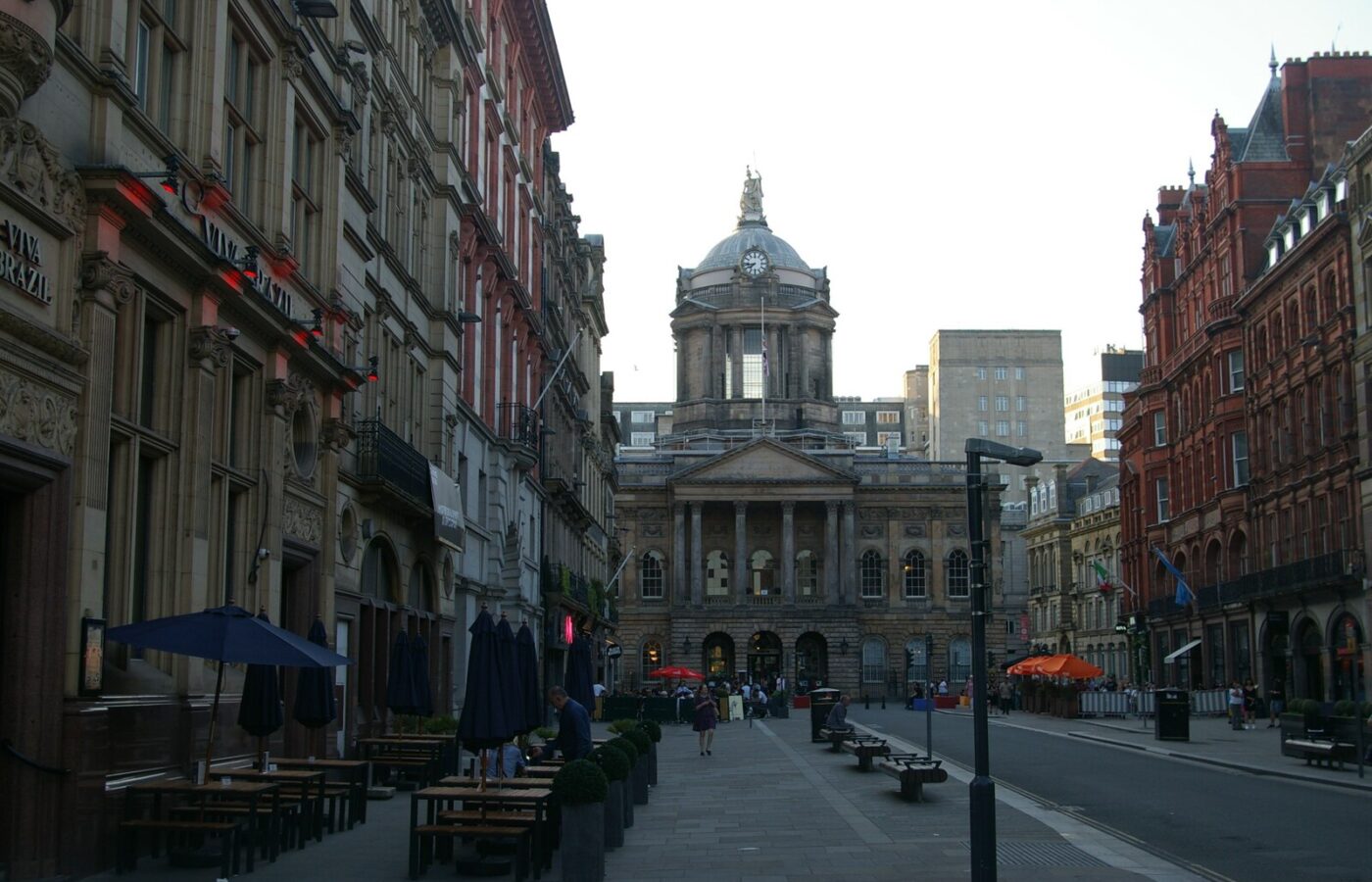
- Dale Street to the Town Hall. Walk down Dale Street, a Fast & Furious 6 location, to Liverpool Town Hall, the British Embassy in Paris in Chariots of Fire.
- Exchange Flags, directly behind the Town Hall. The Nelson Monument square used by Fountain of Youth.
- Derby Square and Castle Street. A short walk south to Derby Square, a Clayface location, along one of the grandest Victorian streets in Britain.
- Water Street. Walk down past India Buildings (The 51st State) towards the river, the 1940s New York of Florence Foster Jenkins.
- The Royal Liver Building and the Cunard Building, at the Pier Head. Gotham’s police headquarters and Fantastic Beasts’ New York. Finish with a drink on the waterfront.
If you have more time, walk 25 minutes north along the river to Stanley Dock for Captain America, and end at the Titanic Hotel bar. Our self-guided walking tour follows much of the same route with the architectural history.
Beyond the City Centre
- Anfield Cemetery. The final bike ride in The Batman. It’s a working cemetery, so visit respectfully. It’s a short walk from Anfield stadium, which makes it an easy add-on to an Anfield stadium tour.
- Bebington Oval, Wirral. The Chariots of Fire Olympic stadium, still a public sports ground. Bebington station on Merseyrail’s Wirral line is nearby.
- New Brighton. The beach and promenade used in Chariots of Fire, now a pleasant seaside outing with Fort Perch Rock and the lighthouse. See our Wirral Peninsula guide.
- Penny Lane. For Yesterday, and for the song. Our Penny Lane guide covers what to see.
Can You Watch Filming?
Liverpool hosts productions most weeks, and big shoots are hard to miss: closed roads, period cars, fake snow, trucks and catering vans lined up along Water Street or around St George’s Hall. The general rules:
- You can usually watch quietly from behind the barriers or from the public side of the cordon. Marshals will tell you where you can and can’t stand.
- Photography of sets is often tolerated, but productions may ask people not to photograph actors or to post images that give away plot details. Do as you’re asked.
- Don’t approach actors between takes. They’re working.
- The Liverpool Film Office and local news often mention big productions, but exact schedules aren’t published in advance.
Are Film Location Tours Worth It?
Paid film location tours exist, some as walking tours and some as private driving tours. For the city-centre blockbusters, you don’t need one. Almost everything in the table above is within a mile of Lime Street, free to see from the street, and easy to find with the route on this page. A tour mostly adds anecdotes. A driving tour makes more sense if you want Anfield Cemetery, Bebington Oval and Stanley Dock in one go and don’t fancy the trains. If you do book, choose a local guide who’s actually worked in or around productions, not a generic sightseeing company with film-themed marketing.
Frequently Asked Questions
What films were filmed in Liverpool?
Major films shot in Liverpool include The Batman, Fantastic Beasts and Where to Find Them, Captain America: The First Avenger, Harry Potter and the Deathly Hallows – Part 1, Fast & Furious 6, Florence Foster Jenkins, Chariots of Fire, Yesterday, Fountain of Youth and DC’s Clayface.
Which parts of The Batman were filmed in Liverpool?
St George’s Hall played Gotham City Hall, the Royal Liver Building played the Gotham City Police Department, and the closing motorbike scene went through Anfield Cemetery.
Was Harry Potter filmed in Liverpool?
Yes. The road-tunnel chase in Harry Potter and the Deathly Hallows – Part 1 was filmed in the Queensway Tunnel under the Mersey.
Why is Liverpool used to double for New York?
Its early-twentieth-century commercial buildings, especially around Water Street, the Pier Head and St George’s Hall, were built in the same grand style as Lower Manhattan, but they’re less recognisable on screen. The Liverpool Film Office also makes closing streets relatively straightforward.
Is Liverpool the most-filmed city in the UK?
It’s the most-filmed UK city outside London, and it established the first film office in Europe.
Where was Captain America filmed in Liverpool?
At Stanley Dock on the northern docks, which doubled for 1940s Brooklyn and the New York waterfront.
Can I visit the film locations in Liverpool for free?
Almost all of them. St George’s Hall, the Three Graces, Water Street, Exchange Flags, the Town Hall exterior and Stanley Dock can all be seen from public streets. Going inside some buildings, such as the Royal Liver Building tower tour, costs extra.
Several of the productions above came back to the same place: Stanley Dock, whose brick warehouses and enclosed water have stood in for 1940s New York, Victorian London and 1860s Dublin. Our Stanley Dock guide lists what each film used and how to see it for yourself.
To see the central locations in one go, follow our Liverpool film locations walking tour, a free two-hour route with twelve stops and directions between them.
The city’s television is a different story from its films: the TV shows were mostly written by Liverpudlians and set here, rather than using Liverpool as a stand-in for somewhere else. For Brookside, Bread, The Responder and the rest, see our guide to TV shows filmed in Liverpool.
Related Liverpool Guides
- Liverpool Film & TV Locations
- Peaky Blinders Filming Locations in Liverpool
- St George’s Hall
- The Three Graces
- Liverpool Architecture Guide
- Self-Guided Walking Tour
- Liverpool’s Hidden Gems
- Top Tourist Attractions in Liverpool
Photo Credits
Castle Street and Liverpool Town Hall: Liverpool, looking along Castle Street to the Town Hall – geograph.org.uk – 7255963 by Christopher Hilton, CC BY-SA 2.0, via Wikimedia Commons.
Queensway Tunnel entrance: Mersey Tunnel entrance – geograph.org.uk – 1527611 by David Long, CC BY-SA 2.0, via Wikimedia Commons.
Exchange Flags: Exchange Flags, Liverpool (2023) by Brit in Seoul, CC BY 4.0, via Wikimedia Commons.