This article contains advertising. Our booking links are routed through a partner that adds commission tracking automatically, so if you book through one we earn a commission from the provider, at no extra cost to you. It never affects what we recommend. Affiliate disclosure
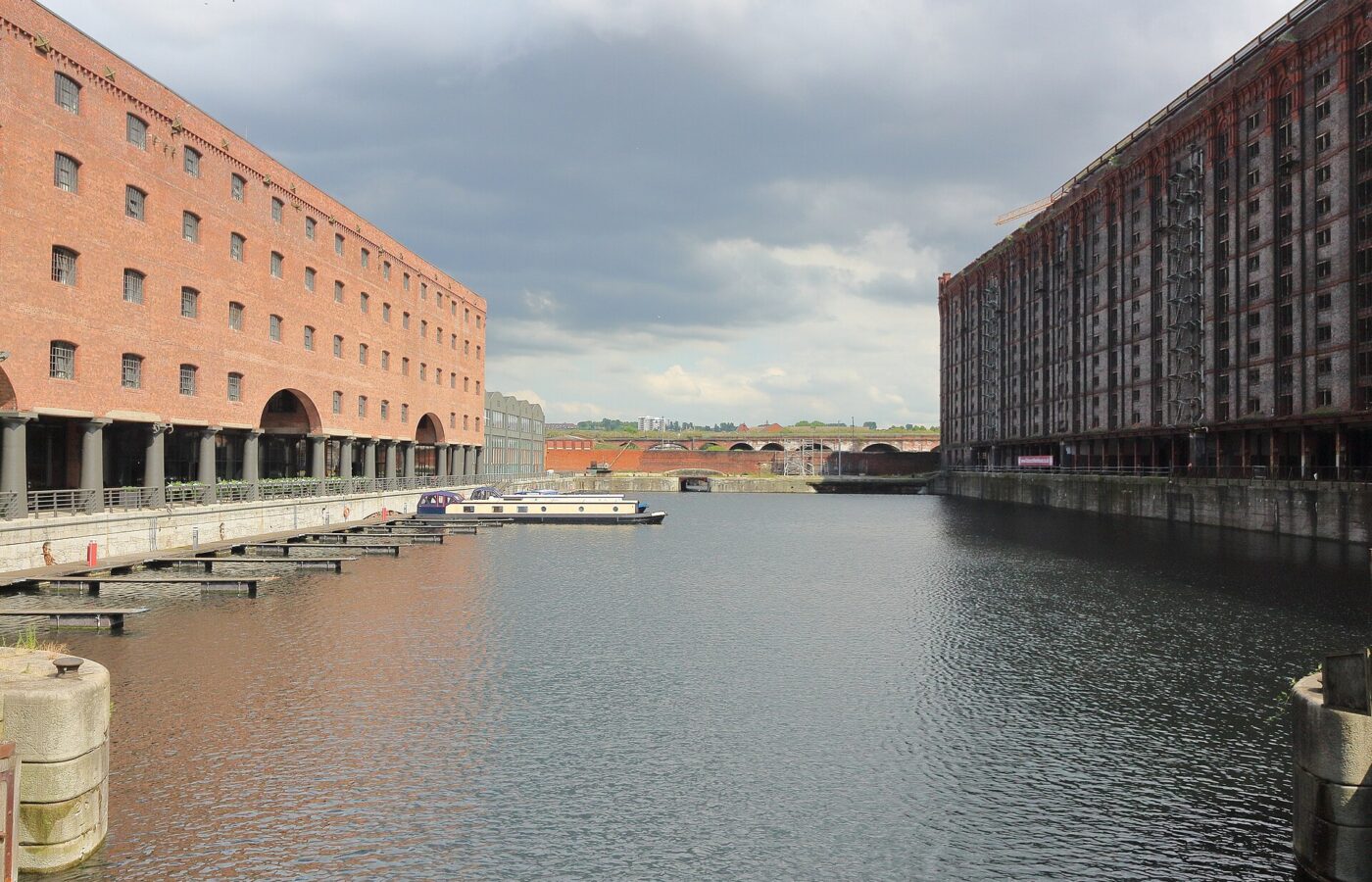
Walk in off Regent Road and the scale takes a moment to register. On one side of the water stands a five-storey Victorian warehouse of red brick on cast-iron columns, now a hotel. On the other, across a sheet of still, dark water, rises the Tobacco Warehouse: fourteen storeys, 27 million bricks and, when it was finished in 1901, reckoned the largest building in the world by floor area. Hollywood has dressed this view as 1940s New York, Guy Ritchie turned it into Victorian London, and Netflix made it 1860s Dublin. Unlike most film sets, you can wander round it for nothing and have a drink in one of the buildings afterwards, which makes Stanley Dock Liverpool’s most satisfying screen location to visit.
This guide covers the dock’s history, the Tobacco Warehouse and its conversion into flats, the films and TV series shot here and what each one used, the Titanic Hotel and the Rum Warehouse, the canal locks, how to get there and a walk that links it with the rest of the northern docks. Facts were checked in September 2026. The area is still being regenerated, so some access routes change as work moves on.
Stanley Dock at a Glance
| What | Detail (checked September 2026) |
|---|---|
| Where | Regent Road, on the northern docks, about 1.5 miles north of the Pier Head |
| Built | Dock opened 4 August 1848, designed by Jesse Hartley. Tobacco Warehouse completed 1901, by A. G. Lyster |
| The Tobacco Warehouse | 14 storeys, 125 ft (38 m) high, 27 million bricks, 30,000 panes of glass, 8,000 tons of steel. Grade II listed |
| What’s there now | The Titanic Hotel in the North Warehouse (since 2014), the Rum Warehouse event space, and flats in the Tobacco Warehouse (first residents 2021) |
| On screen | Captain America: The First Avenger (2011), Sherlock Holmes (2009), Peaky Blinders, House of Guinness (2025), David Copperfield (2000) |
| Cost | Free to walk round the quaysides. The Tobacco Warehouse is private homes |
| Time needed | 45 minutes to look round. Half a day with the walk from the Pier Head, the Victoria Tower and a drink |
| Getting there | About 30 minutes’ walk from the Pier Head, 10 minutes by taxi, or 15–20 minutes’ walk from Sandhills station (Merseyrail) |
A Dock Built for the Canal
Stanley Dock was designed by Jesse Hartley, the dock engineer who had just built the Royal Albert Dock, and it opened on 4 August 1848. Hartley’s other docks line up along the river, but this one sits inland, behind the river wall. The reason is the Leeds and Liverpool Canal. Stanley Dock was the point where the canal met the sea: a branch dropped through a flight of four locks into the dock, so barges carrying coal and goods from Lancashire and Yorkshire could tie up alongside ships bound for the rest of the world.
Hartley lined the quays with warehouses in the same style as the Albert Dock: plain, massive and fireproof, with brick above, granite below and cast-iron columns along the waterfront, so goods could be swung straight from ship to store. The North and South Warehouses are both Grade II* listed. The North Warehouse was damaged in an air raid in the Second World War, but survived to become the hotel.
By the 1890s, the problem was tobacco. Liverpool imported enormous quantities of it, and duty had to be paid before it could leave a bonded warehouse, so it needed secure storage on a vast scale. The Mersey Docks and Harbour Board’s answer was to fill in the southern part of Stanley Dock and build on the reclaimed land. The result was the Tobacco Warehouse. For most of the twentieth century it held tobacco bound for Britain’s factories and shops, until trade moved to containers and the building fell out of use in the 1980s.
Stanley Dock timeline
| Year | What happened |
|---|---|
| 1848 | Stanley Dock opens on 4 August, with the four Stanley Locks linking it to the Leeds and Liverpool Canal |
| 1901 | The Tobacco Warehouse is completed on the filled-in southern part of the dock |
| 1940s | The North Warehouse is damaged in an air raid in the Second World War |
| 1980s | The tobacco trade leaves and the warehouses fall out of use |
| 2000–2011 | The film crews arrive: David Copperfield, Sherlock Holmes, Captain America |
| 2009 | The Liverpool Canal Link opens, carrying boats on to the Albert Dock |
| 2012–2014 | Peaky Blinders films its first two series here |
| 2014 | The North Warehouse reopens as the Titanic Hotel |
| 2015–2021 | The Tobacco Warehouse is converted into flats. The first residents move in in 2021 |
| 2021 | UNESCO removes Liverpool, including the Stanley Dock Conservation Area, from the World Heritage list |
| 2025 | Everton’s stadium opens at neighbouring Bramley-Moore Dock, and Netflix’s House of Guinness is released |
For the bigger picture of the port that built all this, see our Liverpool maritime history guide.
The Tobacco Warehouse
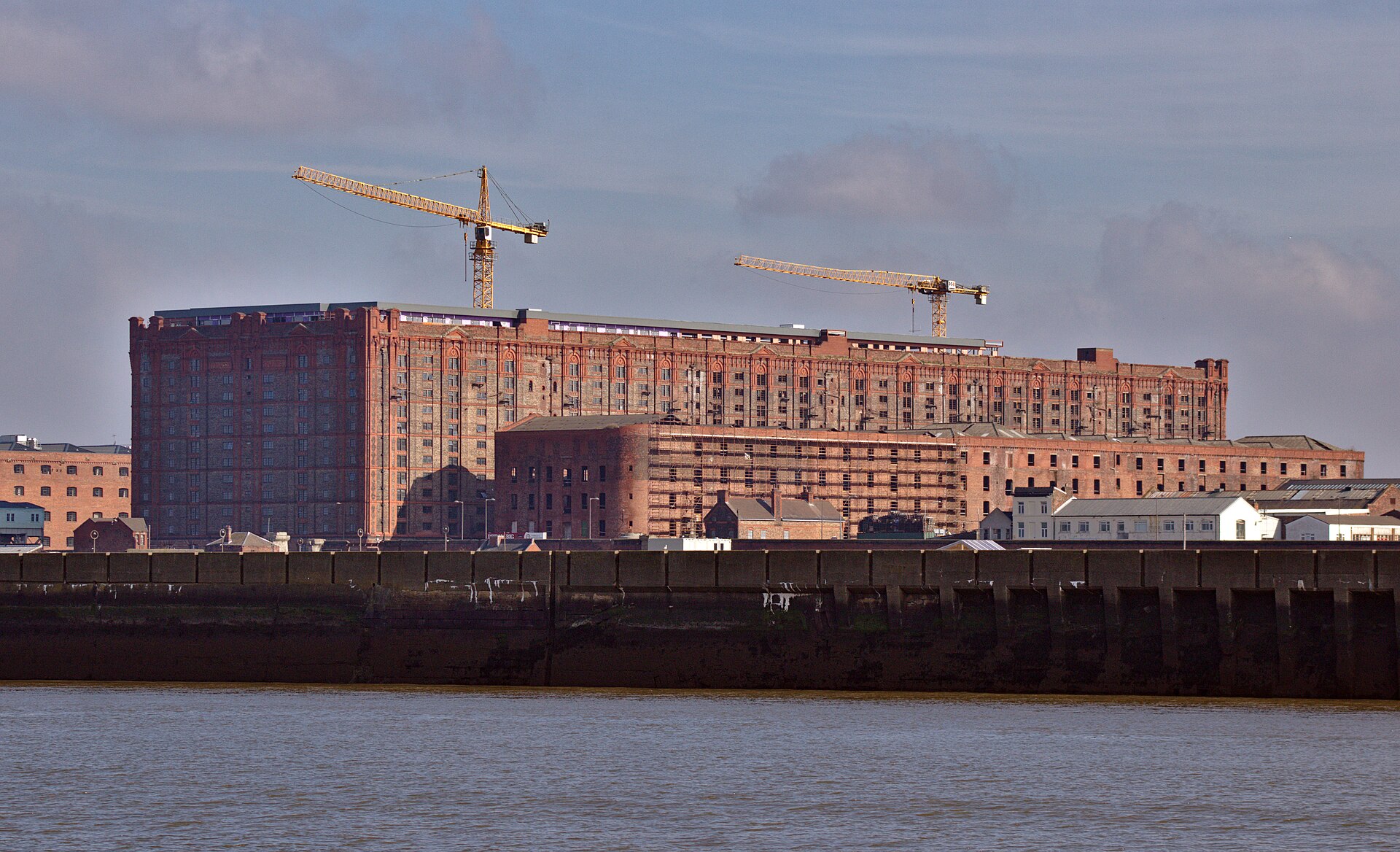
Photographs never quite get the size of it across, so here are the numbers:
- 14 storeys, 125 feet (38 metres) high.
- 27 million bricks, 30,000 panes of glass and 8,000 tons of steel.
- About 1.6 million square feet of floor space, around 36 acres.
- When it was completed in 1901, it was claimed to be the largest building in the world by area. It is still usually described as the world’s largest brick warehouse.
- Designed by Anthony George Lyster, engineer to the Mersey Docks and Harbour Board, and Grade II listed.
After the tobacco trade left, the building sat largely empty for the best part of thirty years. Its ground floor hosted a Sunday heritage market for a while, and on Boxing Day 2010 a warehouse rave drew 2,500 people, but mostly it was a spectacular ruin, which is exactly what made it so useful to film crews.
In 2014, Harcourt Developments put forward plans to turn it into around 550 flats. The conversion ran from about 2015 to 2021 and hollowed out the middle of the building to create a garden courtyard, letting light into floors built to keep it out. The first residents moved in in 2021, and the building is now part of the wider Ten Streets regeneration area inland from the docks. It is people’s homes now, so you look at it from the quayside rather than wander in.
Stanley Dock on Screen
Location managers have been coming here for more than twenty years, and for good reason. There are Victorian brick warehouses and cobbled quays that can pass for New York, London or Dublin with a few changes of signage. Because the dock is inland and enclosed, it’s easy to close off completely for a shoot. And there’s that one-of-a-kind view: two walls of brick facing each other across black water, with no modern building in the frame. Liverpool is the second most-filmed city in the UK after London, and Stanley Dock is one of the main reasons why.
| Production | Year | What Stanley Dock played |
|---|---|---|
| David Copperfield | 2000 | Victorian England |
| Most Haunted Live! | January 2009 | Itself, as a live overnight ghost hunt |
| Sherlock Holmes (Guy Ritchie) | 2009 | Victorian London |
| Captain America: The First Avenger | 2011 | The New York docks of the 1940s |
| Peaky Blinders | Filmed 2012 and 2014 | The industrial Birmingham of the first two series |
| House of Guinness (Netflix) | 2025 | The streets and brewery yards of 1860s Dublin |
Captain America: The First Avenger (2011)
The biggest production to use the dock. Marvel brought a cast and crew of more than 500 to Liverpool and dressed the quaysides and warehouses as the New York waterfront of the 1940s. Stand on the quay between the hotel and the Tobacco Warehouse and you’re more or less on the set. Most visitors are surprised that a Marvel superhero film came to north Liverpool at all.
Sherlock Holmes (2009)
Guy Ritchie’s version, with Robert Downey Jr and Jude Law, needed a grimy, industrial Victorian London, and found part of it here. The dock’s warehouses, cobbles and dock walls needed little dressing to go back more than a century.
Peaky Blinders
The Shelbys’ Birmingham was pieced together from locations across the north of England and the Midlands, and Stanley Dock supplied much of its industrial atmosphere in the first two series, filmed in 2012 and 2014. It is the best place in the city to feel what the show looked like, and unlike Powis Street, the terraced street that played Watery Lane, you’re not peering at anyone’s front window. Our Peaky Blinders locations guide has the full trail, including Powis Street and St George’s Hall.
House of Guinness (2025)
Netflix’s drama about the brewing dynasty used Stanley Dock’s warehouses and waterside for the streets and brewery yards of 1860s Dublin. It’s one of the more recent examples of Liverpool standing in for its neighbour across the Irish Sea, and the production also filmed at Croxteth Hall.
For every film and series shot in the city, see our films filmed in Liverpool guide, and for how to see the main locations, our Liverpool film locations guide.
The Titanic Hotel and the Rum Warehouse
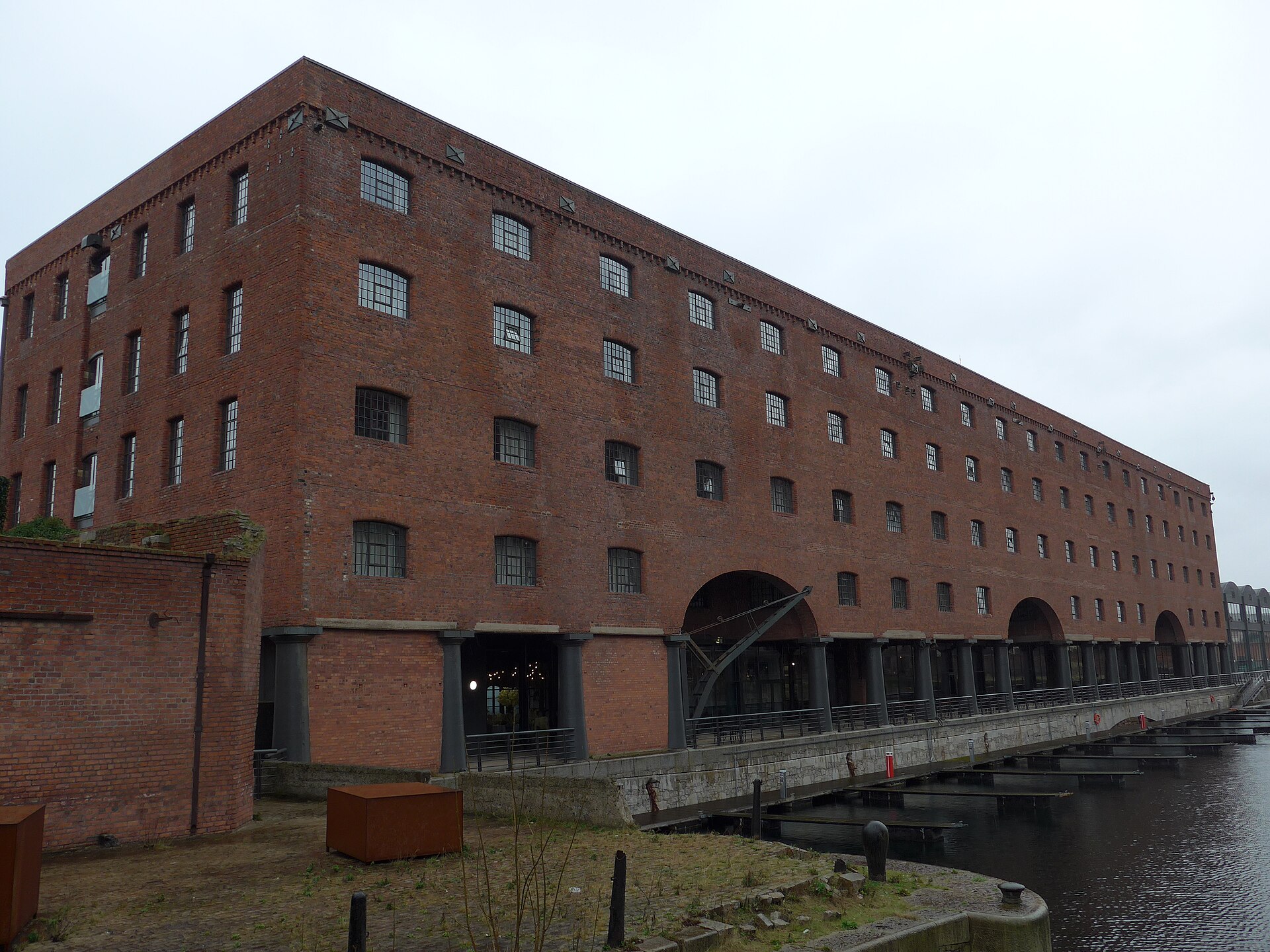
The North Warehouse reopened in 2014 as the Titanic Hotel, with more than 150 rooms inside Hartley’s brick-vaulted floors: high ceilings, exposed cast-iron columns and big windows over the dock. The name refers to Liverpool’s claim on the Titanic. The White Star Line was run from the city, and the ship carried “Liverpool” on her stern as her port of registry, though she never called here. Our Titanic and Liverpool guide tells that story.
- The Maya Blue Spa in the hotel is one of the largest hotel spas in the city and is the main reason many people book a stay.
- The Rum Warehouse next door is the hotel’s event space, one of the most striking wedding and party venues in Liverpool. It means the complex is often busy with private events at weekends.
- The hotel’s bar and restaurant are the easiest way to see inside one of Hartley’s warehouses without staying. Book ahead for a meal, especially on Friday and Saturday nights.
- Parking: unusually for Liverpool, the hotel has its own free car park, which suits drivers.
- No dogs, except assistance dogs.
Our honest verdict: the Titanic Hotel is a great place for a spa weekend or a special occasion, and the building is a big part of the experience. It is not the best base for a first visit, though. You’ll be taking taxis to the centre, and the walk back along the dock road late at night is quiet. If you want to walk to everything, stay near the waterfront instead. See our hotels near the Albert Dock guide. For more on the hotel itself, see the boutique hotels and romantic hotels guides.
Stanley Locks and the Canal Link
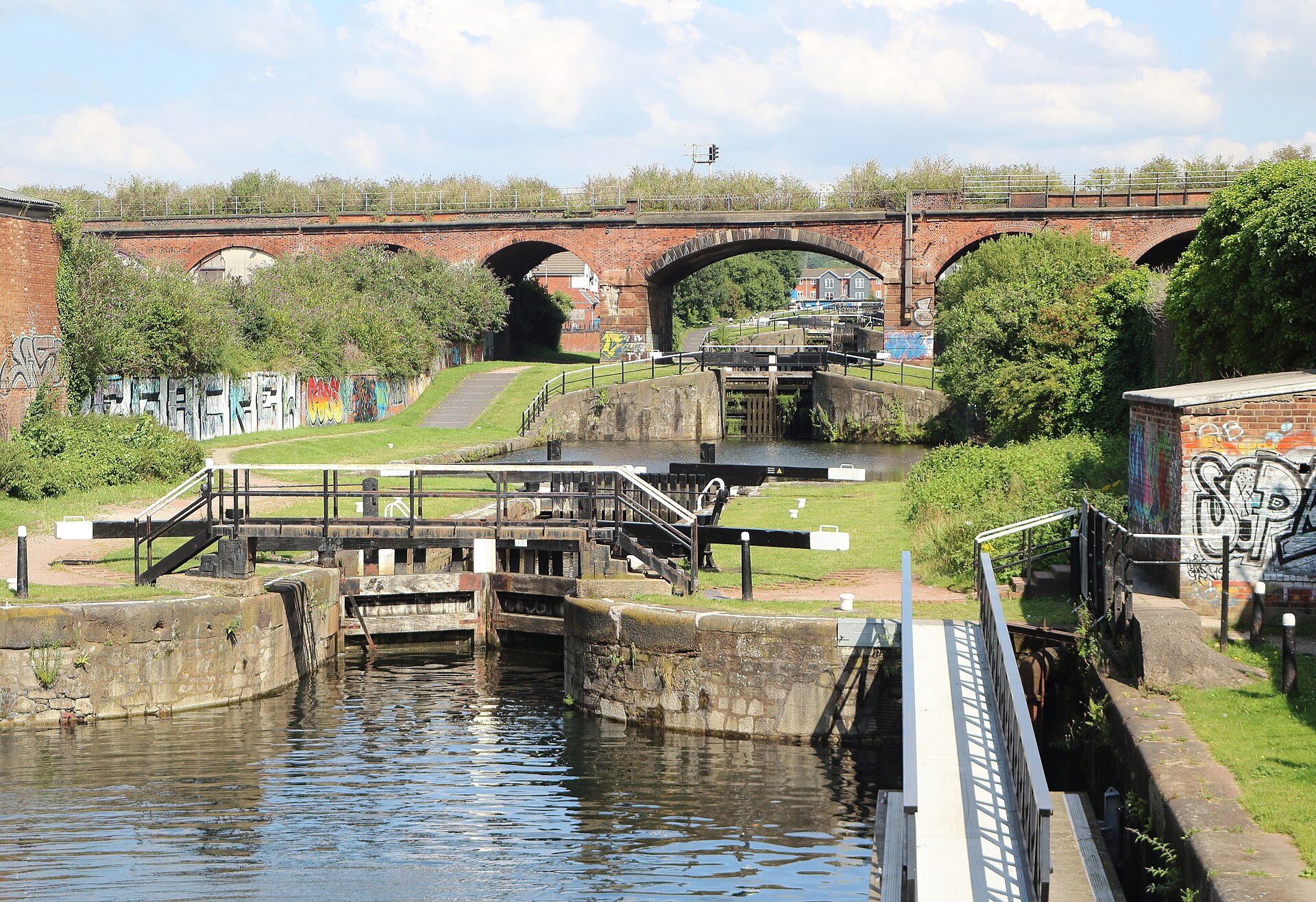
At the eastern end of the dock, the Leeds and Liverpool Canal comes down through its flight of four locks, built in 1848 to a design by Jesse Hartley’s son, John Bernard Hartley. It is the western end of the longest single canal in Britain, which runs 127 miles over the Pennines to Leeds. With its black and white balance beams, stone lock chambers and brick railway viaduct, it is one of the most photogenic spots in north Liverpool. The graffiti along the walls is part of the scene now. For the city’s commissioned murals, see our Liverpool street art guide.
Since 2009, the Liverpool Canal Link has carried boats on from Stanley Dock through the northern docks and along a new channel past the Pier Head to the Albert Dock, so narrowboats can now cruise from the Pennines right into the city’s front room. You’ll often see them moored in Stanley Dock on their way through.
The canal towpath heads inland and north from the top of the locks through Liverpool’s old industrial districts. It is an interesting walk, but it gets lonely in places, so go in daylight and preferably with company.
Visiting: What You Can and Can’t See
- You can walk the quaysides around the hotel and look across the water to the Tobacco Warehouse. The classic photograph is taken from the western end, looking along the dock with the hotel on one side and the Tobacco Warehouse on the other.
- You can go into the Titanic Hotel’s bar and restaurant, and see the Rum Warehouse if there’s an event you can attend.
- You can walk down to the canal locks at the eastern end.
- You can’t go into the Tobacco Warehouse. It is private flats, and there’s no visitor centre or regular public tour.
- Be ready for parts of the quayside to be closed for private events or filming, and for construction fencing elsewhere in the northern docks while regeneration continues.
Architecture enthusiasts should pair it with the Albert Dock, Hartley’s other masterpiece, and our Liverpool architecture guide. Until UNESCO removed Liverpool from the World Heritage list in 2021, the Stanley Dock Conservation Area was one of the six areas of the Maritime Mercantile City World Heritage Site. Our guide to Liverpool’s lost World Heritage status explains what happened.
Getting There
- On foot from the Pier Head: about 30 minutes north, past Princes Dock and the cruise terminal, then along Waterloo Road and Regent Road, the old Dock Road, beside Hartley’s granite dock wall. It is flat, straightforward and interesting all the way.
- By taxi: about 10 minutes from the city centre, and the easiest option after dark.
- By train: Sandhills, on Merseyrail’s Northern line, is the nearest station, around 15–20 minutes’ walk away.
- By car: the Titanic Hotel has free parking for guests. Parking elsewhere nearby is limited, and on match days it’s worse.
Watch the football fixtures. Everton’s new stadium at Bramley-Moore Dock opened in 2025, a few minutes’ walk to the north-west. On home match days, Regent Road fills with tens of thousands of fans and some roads close. That is great if you’re going to the game and a nuisance if you’re trying to photograph an empty dock. Our Everton stadium tour guide covers the new ground.
A Northern Docks Walk
Stanley Dock is the highlight of a walk most visitors never take: north from the Pier Head along the working edge of the city that built Liverpool’s fortune. Allow two hours at an easy pace, including stops.
- Start at the Pier Head with the Three Graces, then head north past Princes Dock and the cruise terminal. On a cruise day there may be a liner in port.
- Follow Waterloo Road and Regent Road north. The granite dock wall on your left, with its fortress-like gateways, was Hartley’s security system. It kept thieves out and customs duty in.
- Salisbury Dock and the Victoria Tower. Hartley’s six-sided granite clock tower of 1848 stands at the river entrance to the docks. You can see it across Collingwood and Salisbury docks from the western end of Stanley Dock.
- Stanley Dock itself: the quaysides, the view along the water and a drink at the hotel.
- The locks at the eastern end, then back to the city by taxi, or retrace your steps along the Dock Road.
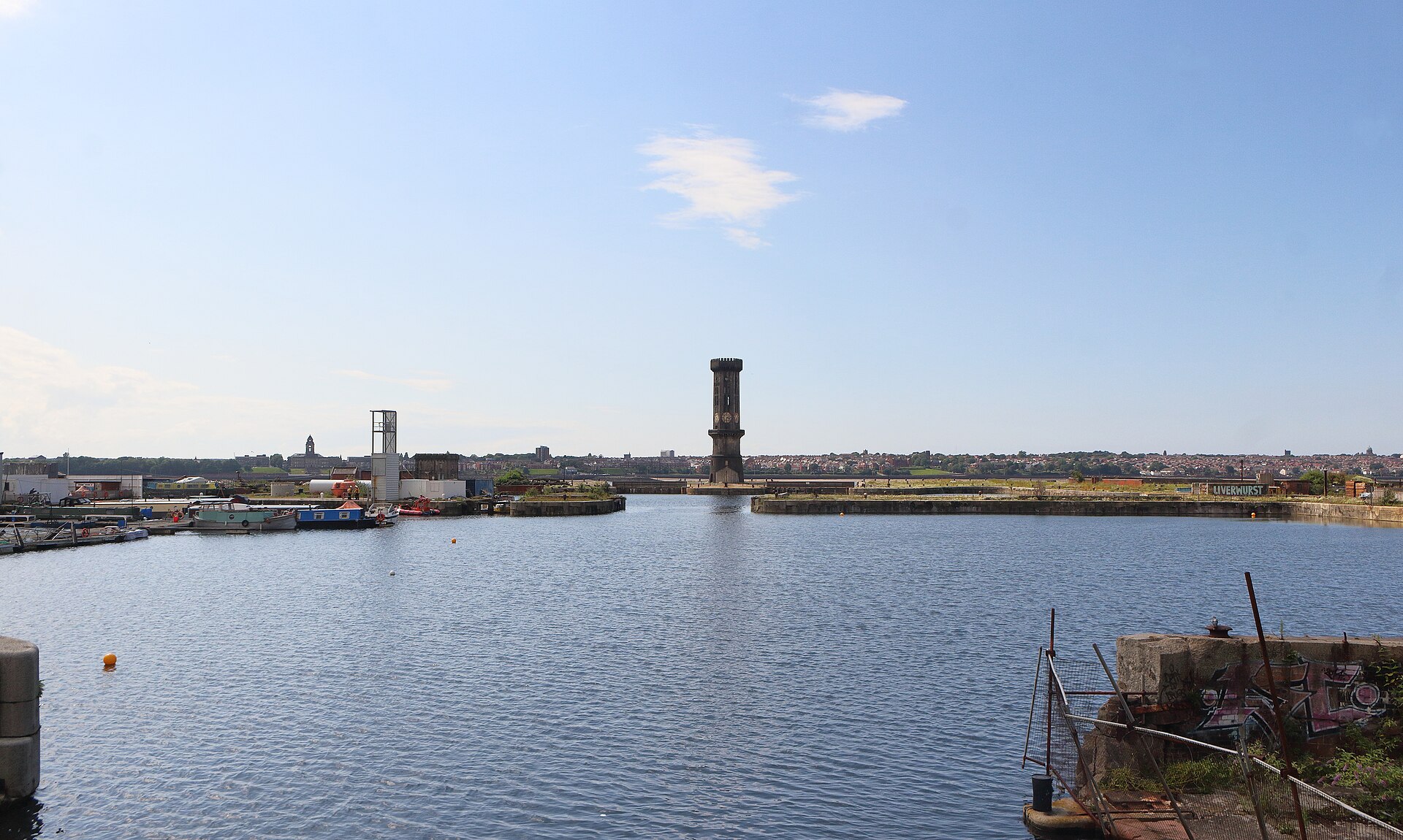
Our Liverpool waterfront guide covers the southern half of the route, from the Pier Head to the Albert Dock and beyond.
Photographing Stanley Dock
Few places in Liverpool reward a camera like this one, and a little planning gets you far better pictures.
- The classic view is from the western end of the dock, looking along the water with the hotel’s colonnade on one side and the Tobacco Warehouse on the other. On a still day, both walls reflect in the dock. This is the frame the film crews used.
- The scale shot means crossing the river. From the Wirral promenade north of Seacombe, the full length of the Tobacco Warehouse rises above the river wall. It’s the only angle that shows just how big the building is. The Mersey Ferry calls at Seacombe, so you can combine the photograph with a river crossing. See our Mersey Ferry guide.
- The locks are best photographed from the bottom lock looking up the flight towards the railway viaduct, with the balance beams in the foreground.
- The details are worth the time too: the cast-iron columns, the old dockside crane outside the hotel, iron bollards, and the granite dock wall and gateways along Regent Road.
- Be considerate. The Tobacco Warehouse is now people’s homes, so don’t point a long lens at windows. The hotel and Rum Warehouse often have weddings on, so ask before photographing inside.
- Commercial shoots, whether professional photography or filming, need the site owners’ permission. The Liverpool Film Office, the first film office in Europe, handles location filming across the city.
Is Stanley Dock Worth the Trip?
It depends on what you came to Liverpool for.
- Yes, definitely, if you love film locations, industrial architecture or photography. Nowhere else in the city gives you this scale, and nothing here is roped off or ticketed.
- Yes, if you’re staying at the Titanic Hotel, going to an event at the Rum Warehouse, or heading to an Everton game anyway.
- Probably not, if you only have one day in Liverpool. The Pier Head, the Albert Dock, the Beatles sites and the Georgian Quarter all come first. A quick compromise is a taxi up for a drink in the hotel bar and a ten-minute look round the quay.
One more thing: go in daylight. The dock is dramatic after dark, but the surrounding streets are quiet and poorly lit in places, and the dock road is a long walk back.
Frequently Asked Questions
What films were shot at Stanley Dock?
Among others, Captain America: The First Avenger (2011), Guy Ritchie’s Sherlock Holmes (2009), Peaky Blinders (filmed 2012 and 2014), Netflix’s House of Guinness (2025) and a 2000 adaptation of David Copperfield.
Is the Tobacco Warehouse the largest brick building in the world?
It is usually described as the world’s largest brick warehouse, and when it was completed in 1901 it was claimed to be the largest building in the world by area. It has 14 storeys and was built with 27 million bricks.
Can you go inside the Tobacco Warehouse?
No. It was converted into flats between about 2015 and 2021 and is now private homes. You can see it from the quaysides around the dock.
Is the Titanic Hotel in the Tobacco Warehouse?
No. This is a common mix-up. The Titanic Hotel is in Jesse Hartley’s North Warehouse on the opposite side of the dock, which opened as a hotel in 2014.
How do I get to Stanley Dock from the city centre?
Walk about 30 minutes north from the Pier Head along the Dock Road, take a 10-minute taxi, or take Merseyrail’s Northern line to Sandhills and walk for 15–20 minutes.
Is Stanley Dock free to visit?
Yes. The quaysides are free to walk around. The only costs are a drink or meal at the Titanic Hotel, if you want one.
Is Stanley Dock near Everton’s new stadium?
Yes. Everton’s stadium at Bramley-Moore Dock, opened in 2025, is a few minutes’ walk away. Expect crowds and road closures on home match days.
Related Liverpool Guides
- Liverpool Film Locations
- Films Filmed in Liverpool
- Peaky Blinders Locations
- Liverpool and the Titanic
- Liverpool Architecture Guide
- Liverpool Maritime History
- Boutique Hotels in Liverpool
- Everton Stadium Tour
Photo Credits
Stanley Dock, with the Titanic Hotel and the Tobacco Warehouse: Stanley Dock 2019 by Rodhullandemu, CC BY-SA 4.0, via Wikimedia Commons.
The Tobacco Warehouse from across the Mersey: Stanley Dock warehouses 2020 by Rodhullandemu, CC BY-SA 4.0, via Wikimedia Commons.
The North Warehouse, now the Titanic Hotel: Former Warehouse On North Side Of Stanley Dock Titanic Hotel Stanley Dock Regent Road Liverpool Merseyside England UK – View 1 by PeterMarchantNWBuildings10, CC BY-SA 4.0, via Wikimedia Commons.
The Stanley lock flight: Stanley Lock Flight 2019 by Rodhullandemu, CC BY-SA 4.0, via Wikimedia Commons.
Collingwood Dock and the Victoria Tower: Collingwood Dock 2019 by Rodhullandemu, CC BY-SA 4.0, via Wikimedia Commons.