This article contains advertising. Our booking links are routed through a partner that adds commission tracking automatically, so if you book through one we earn a commission from the provider, at no extra cost to you. It never affects what we recommend. Affiliate disclosure
The RMS Titanic never visited Liverpool. The most famous ship in history sailed from Belfast to Southampton, Southampton to Cherbourg, Cherbourg to Queenstown (Cobh), and Queenstown towards New York — sinking after striking an iceberg in the North Atlantic on 14-15 April 1912 with the loss of more than 1,500 lives. Yet the Titanic was registered as a Liverpool ship. The name “LIVERPOOL” was painted on her stern. Her owner — the White Star Line — was headquartered in a Grade II*-listed building on James Street in central Liverpool. At least one in ten of her crew was from Merseyside, and the news of the disaster, when it reached Liverpool on 15 April 1912, was read out from the balcony of the White Star Line offices to a crowd of stunned families waiting in the street. Liverpool’s Titanic connection is one of the most substantial and least-known threads in the city’s history. This guide covers the registration, the owners, the crew, the surviving Liverpool Titanic sites, and how to experience the city’s Titanic heritage today.
The story is closely tied to the wider Liverpool maritime history, and the buildings involved appear on the Liverpool waterfront guide and the Three Graces guide. The parent Liverpool history and heritage guide places the Titanic story in the wider port history.
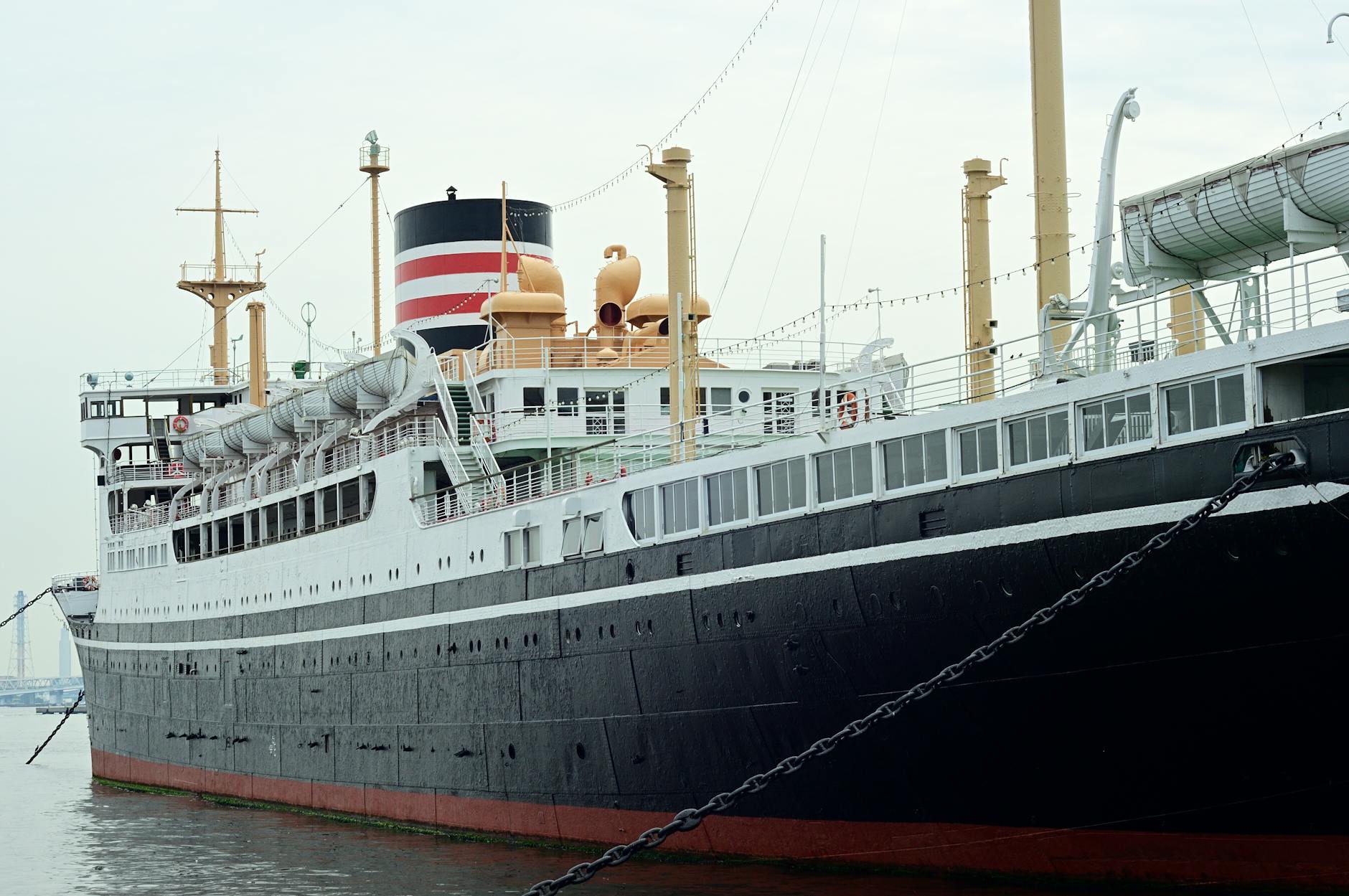
Why Titanic Was a Liverpool Ship
The Oceanic Steam Navigation Company, better known as the White Star Line, was founded in Liverpool in 1845 by John Pilkington and Henry Wilson and grew through the late 19th century into one of the two great transatlantic passenger shipping companies (Cunard being the other). The White Star Line specialised in luxury and innovation — its ships emphasised passenger comfort, dining, and design over the raw speed that Cunard pursued.
By the 1890s, the White Star Line had built up a substantial fleet of Liverpool-registered vessels operating across the Atlantic and beyond. The new company headquarters, completed in 1898 at 30 James Street, became the administrative centre for all White Star operations.
In 1907, the company moved the operational base of its prestige transatlantic services from Liverpool to Southampton — a more accessible port for the new generation of giant liners and closer to the European mainland. But the corporate headquarters remained at 30 James Street, and crucially, the ships remained registered in Liverpool. The legal home port of the entire White Star fleet, including the Olympic, Titanic, and Britannic (the three giant sister ships of 1911-1914), was Liverpool.
So when the Titanic was launched at Harland and Wolff in Belfast in 1911, fitted out, and put into service in April 1912, her stern carried the word LIVERPOOL — and her registration documents listed Liverpool as her port of registry. She sailed from Southampton because that’s where the White Star Line’s passengers boarded; but she was, in every legal sense, a Liverpool ship.
Albion House / 30 James Street: The White Star Line Headquarters
The building at 30 James Street — sometimes called Albion House, sometimes called the White Star Building, now operating as the 30 James Street Hotel — is the single most important Titanic site in Liverpool. The building was designed in 1896 by Richard Norman Shaw (one of the most prominent late-Victorian British architects) and James Francis Doyle, and completed in 1898 as the new Liverpool headquarters of the Oceanic Steam Navigation Company.
The building is Grade II*-listed — among the most architecturally significant commercial buildings of late-Victorian Liverpool. The exterior combines distinctive red brick and Portland stone with carved detail; the interior originally included the great booking hall, executive offices, and the famous balcony from which company announcements were made to crowds gathered in the street below.
15 April 1912: The Day the News Broke
The Titanic sank in the early hours of 15 April 1912. The news reached London and Liverpool via wireless and cable during the day. The White Star Line’s Liverpool offices at 30 James Street became the immediate focal point — crew families, friends of passengers, journalists, and worried members of the public gathered outside the building demanding information.
The White Star Line officials, in shock and unwilling to leave the building, read the names of the deceased from the balcony to the crowd below. The scene — described in contemporary newspaper accounts — was one of the defining moments of the disaster: a balcony on a Liverpool merchant street, the names of the lost crew and passengers being called out in batches as more information came through from the Carpathia rescue ship.
The balcony is still there. The building is still there. You can stand in James Street and look up at exactly the place where the disaster was announced to Liverpool.
30 James Street as a Hotel Today
The building has been variously occupied since the White Star Line’s dissolution in 1934 (the company merged with Cunard in 1934 to form Cunard-White Star, with the Liverpool office gradually winding down). After decades of intermittent use, the building was carefully restored and reopened in 2014 as 30 James Street — Home of the Titanic, a boutique Titanic-themed hotel.
The hotel is themed throughout around the White Star Line and the Titanic, with original archival material, themed rooms, and a rooftop restaurant called Carpathia Champagne Bar — named after the Cunard ship that rescued the Titanic survivors. The rooftop offers unobstructed views of the Pier Head and the Three Graces. The hotel is open to the public for dining and drinks even if you’re not staying.
For Titanic enthusiasts, staying or eating at 30 James Street is the most direct way to engage with the building. The exterior is accessible 24 hours; the interior public spaces (lobby, ground-floor bar, rooftop) are open during normal hospitality hours.
The Memorial to the Engine Room Heroes of the Titanic
On Pier Head, in the gardens immediately south of the Port of Liverpool Building and visible from the Albert Dock approach, stands one of the most moving public memorials in Britain — the Memorial to the Engine Room Heroes of the Titanic. The memorial, designed by Sir William Goscombe John and unveiled in 1916, takes the form of a tall obelisk with bronze figures.
The story it commemorates is the most distinctive single tragedy of the Titanic. When the ship struck the iceberg, the engine room crew — engineers, stokers, trimmers, greasers, and electrical engineers — stayed at their posts below the waterline to keep the lights on, the pumps running, and the wireless telegraph operational so that distress signals could be sent. None of the 32 engineering officers survived. Most of the engine-room ratings (the unrated working crew) also died — held below by the rising water, unable to reach the boat decks.
The memorial was originally specific to the 32 Titanic engineering officers. After World War I, the dedication was broadened to include all maritime engine-room fatalities killed in the course of duty — making the memorial a tribute to the wider class of working seafarers who keep ships running and who die at sea in disproportionate numbers when ships are lost.
The memorial is free, accessible 24 hours, and a quiet but essential stop on any Liverpool waterfront walk. The inscription is worth reading carefully.
The Liverpool Connection to Titanic’s Crew
Estimates vary, but at least 90 of Titanic’s crew of approximately 900 — roughly one in ten — were from Merseyside or had close professional links to the area. This included a disproportionate share of the senior officers and engineers, drawn from Liverpool’s vast maritime workforce as the second port of the British Empire.
Key Liverpool-connected Titanic crew members included engineering officers, deck officers, stewards, and ratings. Some survived; most did not. Many of the families left behind by Titanic crew lived in the inner-city dock districts of Liverpool — Vauxhall, Anfield, Everton, and the south-end Dingle and Toxteth areas. The disaster cut through working-class Liverpool with particular force in the spring of 1912.
The Maritime Museum (closed for redevelopment until 2028-2029) held extensive crew family records and oral histories. Once the museum reopens, these will form a substantial part of the Titanic-related material on display.
Other Liverpool Titanic Connections
The Carpathia and the Rescue
The Cunard liner RMS Carpathia, which rescued the 705 Titanic survivors on the morning of 15 April 1912, was also a Liverpool-registered ship — registered to Cunard, headquartered in the Cunard Building at Pier Head, completed in 1917 just a few years after the Titanic disaster.
The Carpathia’s rescue was extraordinary. Captain Arthur Henry Rostron — also Liverpool-connected by the Cunard headquarters — pushed his ship at unprecedented speed through icefields towards the Titanic’s last reported position, arriving four hours after the sinking. The 705 survivors were taken to New York. The Carpathia became the subject of enduring fame, and her captain was knighted.
The 30 James Street Hotel’s rooftop restaurant is named after the Carpathia. The Cunard Building at Pier Head was the corporate headquarters of the Carpathia’s owners.
The Titanic Hotel Liverpool at Stanley Dock
Confusingly, there is a second “Titanic-themed” hotel in Liverpool — the Titanic Hotel Liverpool, at Stanley Dock. This is a different property from 30 James Street: it’s a 153-room conversion of the Stanley Dock’s Rum Warehouse (1850) and Tobacco Warehouse complex, opened in 2014. The Titanic Hotel takes its name from the wider Stanley Dock complex’s maritime history, including its connection to the White Star Line’s operations from Liverpool, but the property is not specifically themed around the Titanic disaster itself.
The Stanley Dock Titanic Hotel is one of the most photogenic and architecturally interesting hotels in Liverpool — vast Victorian brick warehouse architecture, a rooftop pool, the Maya Blue Wellness Spa, and the Rum Warehouse restaurant. See the best hotels in Liverpool guide for booking details.
The Maritime Museum’s Titanic Collection
The Merseyside Maritime Museum at the Royal Albert Dock holds one of the most substantial Titanic collections in the UK outside London — original White Star Line corporate records, crew documentation, model ships, contemporary photographs and ephemera, and material relating to the wider Liverpool maritime context. The museum is closed for redevelopment until 2028-2029 as part of the Waterfront Transformation Project. When it reopens, the Titanic material will form a significant part of the redesigned displays.
Until the museum reopens, the National Museums Liverpool website hosts substantial Titanic-related online content, including digitised archive material and curatorial essays.
The Pier Head Cunard War Memorial and Related Sites
The wider Pier Head area contains several memorials connected to early 20th-century Liverpool shipping — the Cunard War Memorial (to Cunard staff and crew lost in two World Wars), the Lusitania bell, and various plaques. The Lusitania was a Cunard sister-ship of the Mauretania, Liverpool-registered, sunk by a German U-boat in May 1915 — a Liverpool maritime tragedy comparable in scale to the Titanic but with different historical significance (the Lusitania’s sinking was a major factor in the eventual US entry into World War I).
A Liverpool Titanic Walking Tour
Here’s a suggested 90-minute walking route covering the principal Titanic Liverpool sites:
09:30 — Start at 30 James Street. Stand outside the building, look up at the balcony from which the Titanic disaster news was read in April 1912. 15 minutes.
09:45 — Enter 30 James Street Hotel lobby. The themed reception area and ground floor are open to the public. Optional: continue up to the Carpathia Champagne Bar on the rooftop for a drink with views over Pier Head. 30 minutes.
10:15 — Walk to Pier Head. Visit the Memorial to the Engine Room Heroes of the Titanic, in the gardens immediately south of the Port of Liverpool Building. Read the inscription. 20 minutes.
10:35 — Walk around the Pier Head. Visit the Cunard War Memorial, the Lusitania-related memorials, the Royal Liver Building exterior. Photograph the Three Graces. 30 minutes.
11:05 — Optional: walk to the Royal Albert Dock to look at the exterior of the Maritime Museum building (closed until 2028-2029 but architecturally significant). 15 minutes.
11:20 — Lunch. The Albert Dock restaurants, or back at 30 James Street.
This route gives you the principal Liverpool Titanic sites in a single morning, with the Pier Head memorial and the 30 James Street building as the two essential stops.
Books and Resources on Titanic and Liverpool
For visitors who want background reading:
Books: Titanic and Liverpool (Encyclopedia-Titanica), The Liverpool Connection (various authors), and the National Museums Liverpool’s online curatorial essays. The Encyclopedia-Titanica website (encyclopedia-titanica.org) hosts comprehensive Titanic biographical and historical material with detailed Liverpool-specific entries.
Films: James Cameron’s Titanic (1997) remains the iconic dramatisation. Various BBC and ITV documentaries have covered the Liverpool angle specifically. The Walter Lord book A Night to Remember (1955) and its 1958 film adaptation remain the canonical first-generation Titanic narratives.
Online: The Encyclopedia-Titanica site is the deepest free online resource. National Museums Liverpool’s online collection includes digitised White Star Line archive material relevant to Liverpool.
Titanic Liverpool FAQs
Did the Titanic ever visit Liverpool? No. The Titanic sailed from Belfast to Southampton, then Southampton to Cherbourg, Queenstown, and out into the Atlantic. She never docked in Liverpool. But she was registered as a Liverpool ship, with “LIVERPOOL” painted on her stern.
Why was the Titanic a Liverpool ship? Her owner, the White Star Line, was headquartered in Liverpool at Albion House (30 James Street). Until 1907 the entire White Star fleet was operationally based in Liverpool; from 1907 onwards the prestige services moved to Southampton, but the company headquarters remained in Liverpool and the ships remained Liverpool-registered.
Where can I see Titanic memorials in Liverpool? The Memorial to the Engine Room Heroes of the Titanic stands at Pier Head, in the gardens south of the Port of Liverpool Building. The 30 James Street building (the former White Star Line headquarters) is on James Street. Both are free to access from the exterior.
What is 30 James Street? The building is the former Liverpool headquarters of the White Star Line, designed by Norman Shaw and J.F. Doyle and completed in 1898. It now operates as a Titanic-themed boutique hotel called 30 James Street — Home of the Titanic. The exterior is accessible 24 hours; the interior public spaces (lobby, Carpathia Champagne Bar on the rooftop) are open during normal hospitality hours.
How many Titanic crew were from Liverpool? At least 90 of the approximately 900 crew — about one in ten — were from Merseyside or had close professional connections to the area, including a disproportionate share of senior officers and engineers.
What happened to the White Star Line? The White Star Line merged with Cunard in 1934 to form Cunard-White Star, with the Cunard branding eventually replacing White Star entirely. The Liverpool corporate operation wound down through the mid-20th century.
Can I visit the Liverpool Maritime Museum Titanic exhibition? The Merseyside Maritime Museum is closed for redevelopment until 2028-2029 as part of the Waterfront Transformation Project. When it reopens, the Titanic material will form part of the redesigned displays. Until then, National Museums Liverpool’s online resources are the alternative.
Is the Titanic Hotel Liverpool actually about the Titanic? The Titanic Hotel Liverpool is a separate property at Stanley Dock (the converted Rum Warehouse). It’s named for the wider Stanley Dock complex’s maritime history rather than being specifically about the Titanic ship or disaster. For dedicated Titanic-themed accommodation, the 30 James Street Hotel is the choice.
What was the Carpathia’s Liverpool connection? The Carpathia was a Cunard ship, Liverpool-registered, with Cunard’s corporate headquarters at the Cunard Building on Pier Head. The Carpathia rescued the 705 Titanic survivors on 15 April 1912.
Are there guided Titanic Liverpool tours? Periodically — heritage organisations and walking-tour operators occasionally run themed Titanic walks, particularly around the disaster anniversary (15 April each year). Check current operators via the Liverpool walking tours guide.
Why Liverpool’s Titanic Story Matters
The Titanic disaster is one of the most globally known maritime tragedies, with a cultural footprint that has been refreshed across more than a century of books, films, exhibitions, and dramatisations. What gets less attention is the Liverpool layer — the registration, the corporate headquarters, the crew origins, the way the news of the disaster broke in a Liverpool street rather than a London or Southampton one.
For visitors, engaging with this story in person involves three sites: 30 James Street for the corporate and announcement history, the Memorial to the Engine Room Heroes at Pier Head for the human cost, and (when it reopens in 2028-2029) the Merseyside Maritime Museum for the archival and exhibition material. The combined experience takes a half-morning, costs nothing apart from optional refreshments at the 30 James Street Hotel, and adds an emotional and historical layer to a Liverpool trip that the standard tourism itinerary won’t provide.
For broader maritime and historical context, pair the Titanic story with the Liverpool maritime history guide, the Three Graces guide (the Cunard Building was the headquarters of the Carpathia’s owners), the waterfront guide (the working dock environment Titanic’s crew came from), and the parent Liverpool history and heritage guide. Liverpool’s Titanic connection is one of the deeper, quieter parts of the city’s maritime story, and it’s worth knowing on a Liverpool trip.
Passengers arriving by sea today dock a few minutes’ walk from where the White Star Line kept its offices — which is a neater piece of continuity than the city usually gets credit for. Our guide to arriving in Liverpool by sea covers the modern cruise terminal, what a transit call can realistically reach on foot, and the ferry routes still running across the Irish Sea.
The city’s most direct tribute to the ship is a hotel: the Titanic Hotel fills Jesse Hartley’s North Warehouse at Stanley Dock, across the water from the vast Tobacco Warehouse. Our Stanley Dock guide explains the dock’s history, its film credits and how to combine a drink at the hotel with a walk along the northern docks.