This article contains advertising. Our booking links are routed through a partner that adds commission tracking automatically, so if you book through one we earn a commission from the provider, at no extra cost to you. It never affects what we recommend. Affiliate disclosure
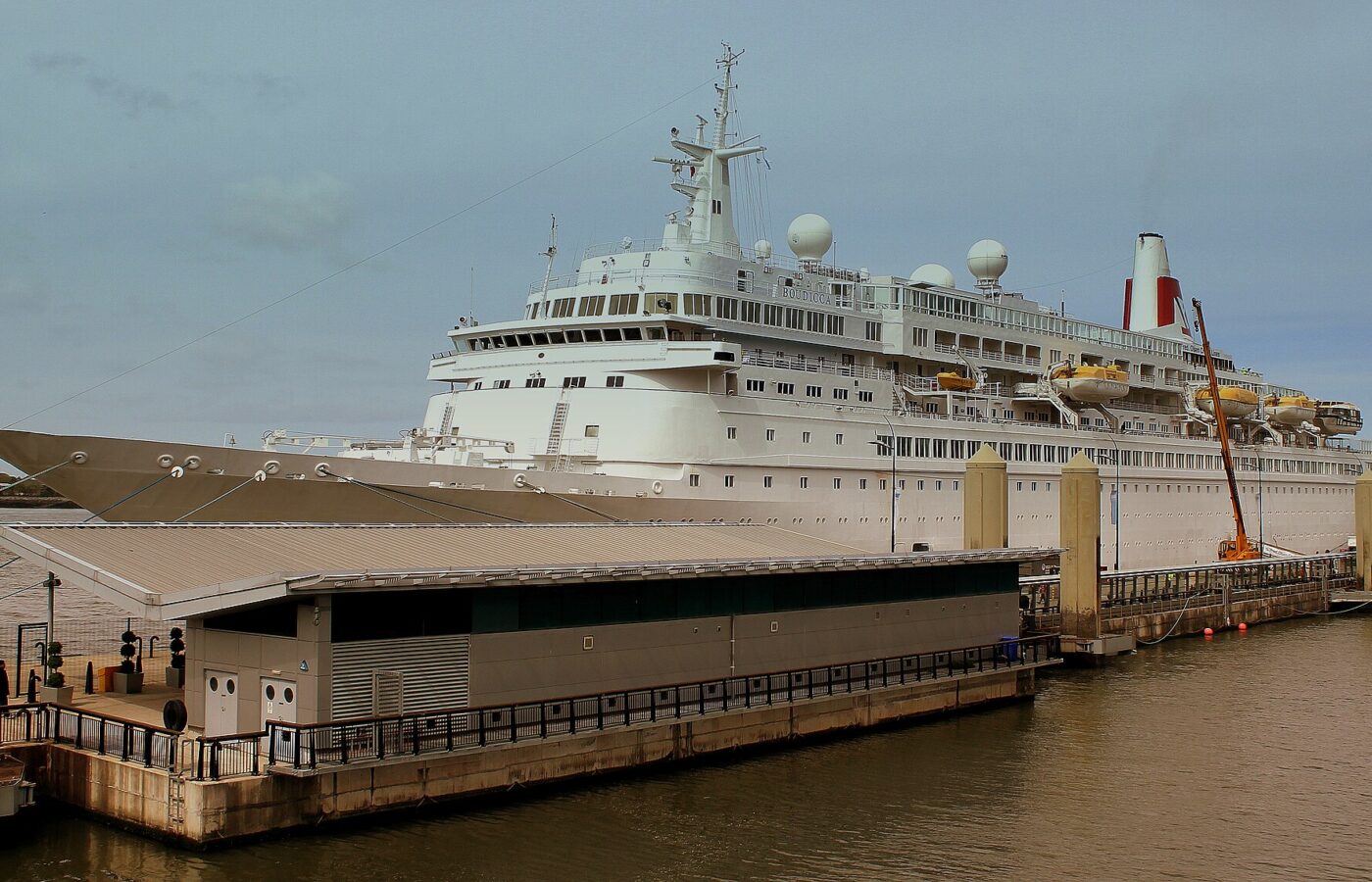
Most cruise ports put you on a coach. You dock at an industrial terminal eight miles from anywhere, join a queue for a shuttle, and lose ninety minutes of a seven-hour call before you have seen a building. Liverpool cruise port does not work like that, and this is the single most useful thing to know before you arrive: the terminal is at Princes Dock, on the city’s own waterfront, and the city centre starts about fifty metres from the gangway. There is no shuttle bus because there is nothing to shuttle you to. You walk off the ship and you are there.
This guide covers arriving in Liverpool by sea in every form it takes — a cruise transit call, a turnaround where your holiday starts or ends here, the Isle of Man ferry, and the Irish Sea routes that are not what most websites still claim they are. It covers what to do with the hours you have, what the ship’s excursions are actually selling you, where to park, and which pre-cruise hotels are worth the money. Everything was checked in September 2026.
The Terminal in Sixty Seconds
| Detail | Liverpool Cruise Terminal |
|---|---|
| Address | Gate 2, Princes Parade, Liverpool L3 1DL |
| Distance to city centre | About 50 metres. Genuinely. |
| Shuttle bus | None — and none needed |
| Walk to the Three Graces | 5 minutes, flat |
| Walk to the Albert Dock | 15 minutes, flat |
| Walk to Lime Street station | 20 minutes, slight incline at the end |
| Nearest Merseyrail station | James Street, 8 minutes |
| Airport | 15 km (Liverpool John Lennon) |
| 2026 season | 118 ship calls, around 250,000 passengers |
| Accessibility | Direct flat-surface pedestrian access throughout |
The terminal handles both transit calls, where the ship stops for the day, and turnaround calls, where passengers begin or end a cruise here. It has dedicated check-in desks, security screening, a customs and border control zone, baggage handling, coach bays, taxi ranks, parking, cycle hire and hop-on-hop-off bus access. A new floating dock and terminal building is planned, which would let two large ships berth simultaneously and handle over 7,000 passengers a day.
If You Are on a Transit Call
You probably have somewhere between six and ten hours. Liverpool is one of the very few British ports where that is genuinely enough, because everything worth seeing is within a mile and it is flat.
The five-hour version
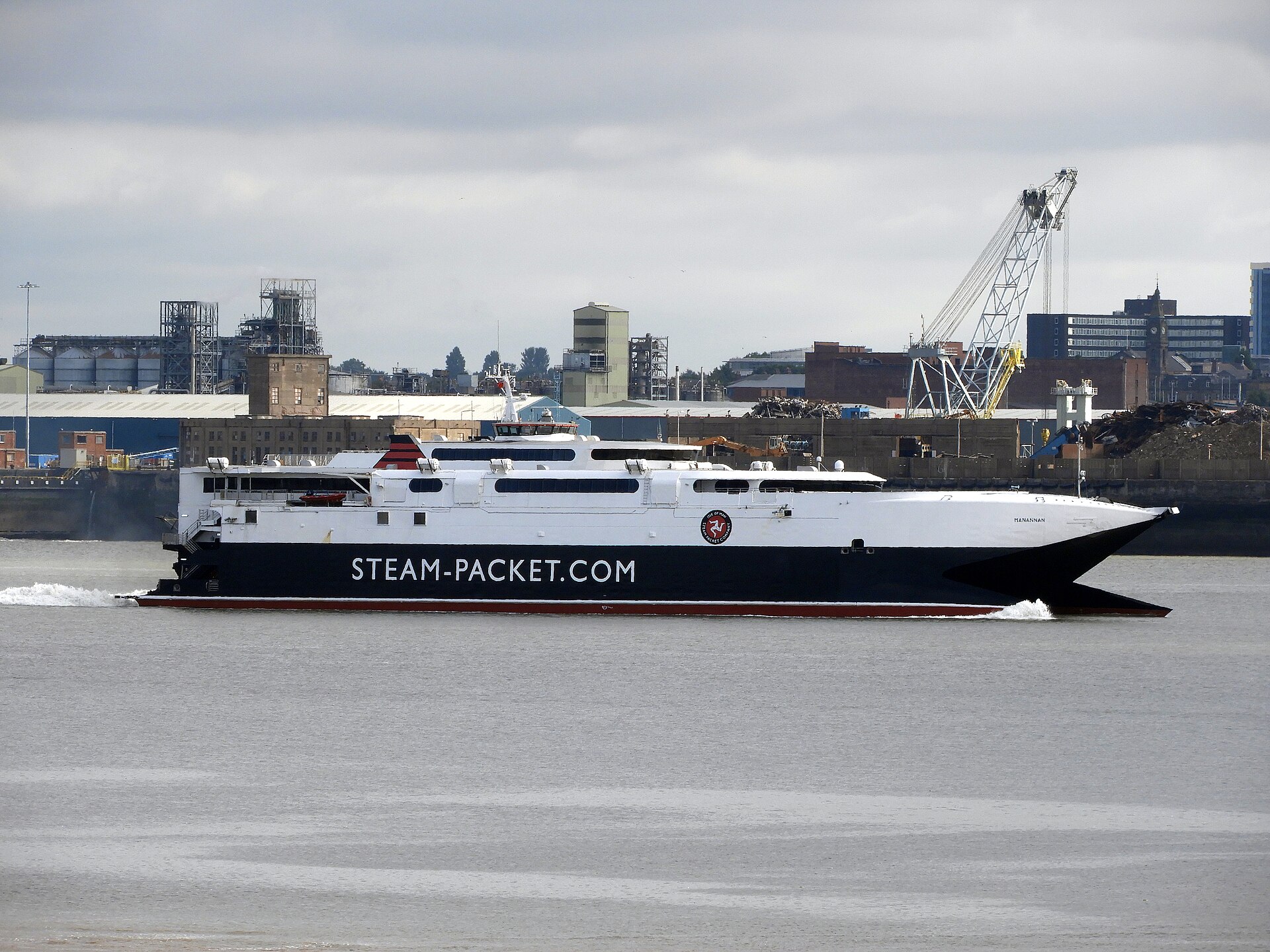
- Walk south along the waterfront from the terminal to the Pier Head — five minutes. The Three Graces are right there: the Royal Liver Building, the Cunard Building and the Port of Liverpool Building. See our Three Graces guide.
- Museum of Liverpool — free, step-free, and the single best explanation of what this city is and why it looks like this. Ninety minutes. See the full guide.
- Continue to the Royal Albert Dock, ten minutes further, for the Beatles Story and the dock itself. Note that the Merseyside Maritime Museum and the International Slavery Museum here are closed, with no reopening date, and Tate Liverpool’s dock building until around 2027 — its collection is temporarily at RIBA North on Mann Island, which you pass on the way.
- Lunch at the dock or in the Ropewalks, ten minutes inland.
- Walk back along the same flat waterfront. Total distance under three miles.
If you have eight hours or more
Add either the climb up to the Georgian Quarter and the two cathedrals — genuinely spectacular, and a real hill — or the Mersey Ferry, which does a fifty-minute River Explorer round trip and gives you the entire waterfront from the water. If your interest is football, an Anfield stadium tour is achievable: the 26 from Liverpool ONE and the 17 from Queen Square both run to the ground, and on match days the 917 express runs from Commutation Row. Book the tour slot in advance.
If it is raining
Liverpool is unusually well set up for this. The Museum of Liverpool is ten minutes from the terminal and free; the Walker Art Gallery and World Museum are twenty minutes away on William Brown Street and also free; the Tate collection sits temporarily at RIBA North on Mann Island. You could fill a full call without going outside for more than ten minutes at a stretch. See our rainy day guide.
Timing Your Call: What Fits in What
The single most useful planning tool for a transit call is an honest table of how long things take, including the walk. These are door-to-door from the terminal gate and assume you are not rushing.
| What | Round trip from the ship | Cost |
|---|---|---|
| Pier Head and the Three Graces | 40 minutes | Free |
| Museum of Liverpool | 2 hours | Free |
| Royal Albert Dock and one museum | 3 hours | Free |
| Mersey Ferry River Explorer | 1 hour 30 | Ferry fare |
| Both cathedrals and the Georgian Quarter | 3 hours | Free (crypt charges) |
| Anfield stadium tour | 3 hours 30 | Tour ticket |
| Beatles childhood homes (NT minibus) | 3 to 4 hours | Tour ticket |
| Chester by train | 5 to 6 hours | Rail fare |
| Crosby Beach and the Gormley figures | 3 hours | Rail fare |
A six-hour call comfortably takes any two of the first five rows. An eight-hour call can reach Anfield or the Beatles homes with room to spare. Chester is only sensible on a long call, and only if you are comfortable being an hour’s train ride from the ship — which is the one genuine argument for booking that particular excursion through the cruise line rather than doing it yourself, since a ship will wait for its own operator and will not wait for you.
What not to attempt
- The Lake District. It is roughly two hours each way in traffic. Some operators sell it. On a standard call it is four hours in a coach for ninety minutes at Windermere.
- Manchester. An hour each way to see a different city. If you want Manchester, you should have got off there.
- Two major attractions plus a meal on a six-hour call. Something will be rushed, and it is always the meal.
Eating and Drinking Near the Terminal
The immediate area around Princes Dock is hotel bars and a small number of chain restaurants — adequate and unexciting. Ten to fifteen minutes on foot transforms the options.
- The Royal Albert Dock (15 minutes) has the highest concentration of waterfront restaurants, mostly mid-market, all with a view. Reliable rather than remarkable, and easy with a group.
- Castle Street and the business district (10 minutes) hold the better restaurants and some genuinely handsome old banking halls converted into bars.
- Bold Street and the Ropewalks (15 to 20 minutes, slight climb) are where the city actually eats — independents, bakeries, a strong Middle Eastern cluster. See our Bold Street food guide.
- Food halls in the Baltic Triangle and around Duke Street are the fastest option for a group with different tastes and a sailing time. See street food markets.
- Scouse — the lamb or beef stew the city is named for — is worth ordering once, served with pickled red cabbage and crusty bread. Several central pubs do it properly. Our best pubs guide covers where.
A city-centre pint was around £5 to £5.50 in September 2026, which after ship prices will feel like a rounding error.

Weather, Tides and Sailing Realities
- Liverpool’s cruise berth is on the open river, not in an enclosed dock, and the Mersey has one of the largest tidal ranges in Britain. Occasional weather-related schedule changes are a feature of this port rather than a failure of it.
- Missed calls happen in winter and in high winds. If Liverpool is a bucket-list stop rather than an incidental one, a summer sailing is materially more reliable.
- The wind on the landing stage is not the wind in the city. The waterfront is exposed and the streets three blocks inland are not, which catches out people who dress for the gangway.
- Rain is genuinely likely in any month. This is the north-west of England. It is also why the free indoor museums matter so much here.
Combining a Cruise With a Longer Stay
Liverpool rewards a few days more than a call, and a turnaround gives you the excuse. The city is compact enough that three days covers the centre, the Beatles suburbs and a stretch of coast without rushing.
- Two extra days gets you the waterfront and museums, the Georgian Quarter and cathedrals, and a night out in the Ropewalks. Our two-day itinerary sequences it.
- Three days adds either the Beatles suburbs — Penny Lane, Strawberry Field, the childhood homes — or the northern coast at Crosby and Formby. See the three-day itinerary.
- A week brings in Chester, North Wales and the Lake District as genuine day trips. See day trips from Liverpool.
- If your cruise ends here in winter, Liverpool Christmas Wonderland at the Pier Head runs from 20 November 2026 to 3 January 2027, and Skate St George’s on St George’s Plateau from 21 November 2026 to 3 January 2027. See our Christmas markets guide.
Ship Excursions: What to Book and What to Skip
This is where cruise passengers lose the most money in Liverpool, and the reason is specific to this port. Shore excursions are priced on the assumption that a passenger cannot easily get to the city alone. Here, they can.
Not worth booking
- “Liverpool city highlights” walking tours. You are being sold a guided walk along a flat waterfront that begins at the terminal gate. The self-guided walking tour covers the same ground for nothing, and Liverpool also has genuinely good free walking tours running daily.
- Any excursion to the Albert Dock or the Pier Head. Fifteen minutes on foot.
- “Panoramic city drive” coach tours. The city is a mile across. You will see it through a window.
- Museum entry packages. The major museums here are free. Check before you pay for entry to anything.
Worth considering
- Beatles tours to the childhood homes. This is the genuine exception. Mendips and 20 Forthlin Road are only accessible inside by pre-booked National Trust minibus, they are five miles out, and slots are limited. If this matters to you, book it — either through the ship or, cheaper, directly with the National Trust well in advance. Our childhood homes guide explains the mechanics.
- Chester or the wider region. Chester is a genuinely lovely walled Roman city about thirty-five minutes away by train, and an organised trip removes the timing risk on a fixed sailing. See the Chester day trip guide.
- Anfield or Everton stadium tours, where the guaranteed slot and the guaranteed return time have real value.
- Anything with accessibility needs. The ship’s operation will have wheelchair-accessible vehicles arranged; arranging it yourself on the day is harder.
The general rule
In most cruise ports, the excursion buys you access. In Liverpool it usually buys you a guide and a guarantee that you will be back before sailing. The guarantee is worth something — missing a ship is genuinely expensive. The access is worth nothing here, because you already have it.
If Liverpool Is Your Turnaround Port
Boarding or disembarking in Liverpool is straightforward, and considerably less stressful than Southampton.
Getting to the terminal
- By train: Lime Street is about twenty minutes’ walk, which is fine without luggage and not with it. Take a taxi from the rank outside the station — it is a five-minute fare. James Street station is the closest at eight minutes’ walk.
- By air: Liverpool John Lennon is 15 km away. The Arriva 500 bus runs to the city centre every fifteen minutes and takes 30 to 40 minutes, but with cruise luggage a taxi is the sensible choice for the last leg. Manchester Airport is the alternative, with a direct train to Lime Street taking about 1h21.
- By road: the terminal is signed from the city’s approaches and sits directly on the dock road.
- From London: Euston to Lime Street takes just over two hours direct, with two trains an hour through most of the day. See how to get to Liverpool.
Parking
Parking is available at the terminal, and there are several city-centre car parks within a few minutes’ drive that offer cruise rates. Book ahead: cruise-week demand is predictable and the terminal’s own capacity is finite. Compare the terminal rate against a nearby multi-storey with a pre-booked rate, because for a two-week cruise the difference can be substantial.
Arriving the day before
Strongly recommended if you are travelling any distance, and Liverpool makes it genuinely pleasant rather than a chore. A night here before a cruise is a night in a good city, not a night by a motorway junction.
| Where to stay | Walk to terminal | Suits |
|---|---|---|
| Princes Dock / waterfront hotels | 2–5 minutes | Early sailings, heavy luggage |
| Albert Dock | 15 minutes or a short taxi | Museums and eating on the doorstep |
| Business district / Castle Street | 10 minutes | Value, especially at weekends |
| Lime Street area | 20 minutes or a taxi | Arriving late by train |
Our city centre hotels guide and Albert Dock hotels guide cover the options, and where to stay by area explains how each district behaves.
Disembarkation day
If your flight or train is not until the evening, do not sit in the terminal. Left luggage is available at Lime Street station, and the waterfront museums are ten minutes from where your bags will be. A full afternoon in Liverpool costs nothing and beats an airport lounge.
The Isle of Man Ferry
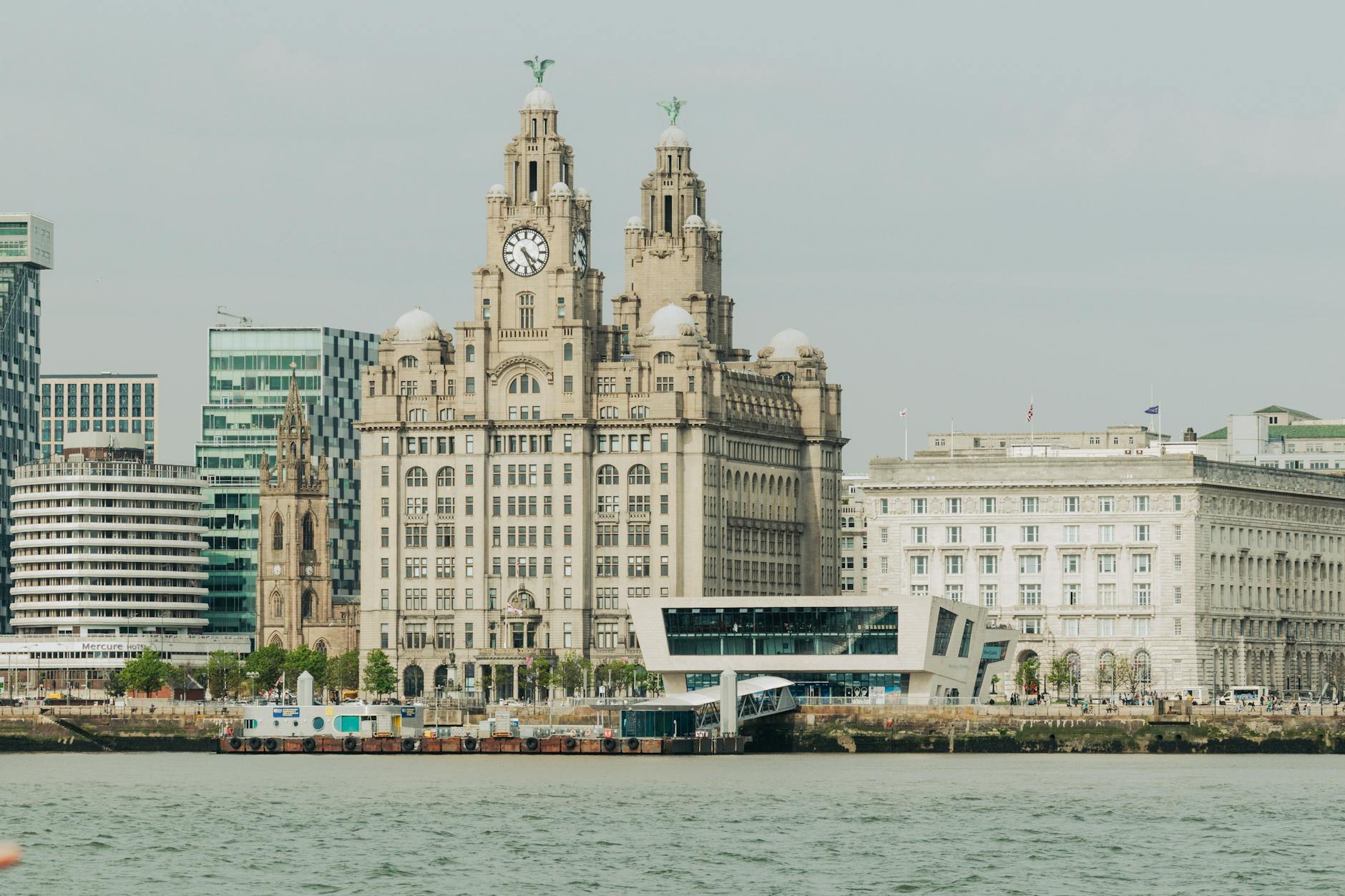
The Isle of Man Steam Packet Company sails Liverpool to Douglas in two hours forty-five minutes on the fast craft. Sailings run daily from April to October and at weekends through the winter, roughly five a week overall, though the schedule varies — check the operator’s own timetable rather than an aggregator.
Important: this does not leave from the cruise terminal. The Isle of Man Ferry Terminal is a separate building at 1 Triskelion Way, Liverpool L3 1QW, on the northern waterfront. It is walkable from the city centre but it is not the same gate, and turning up at the wrong one with a car booking is a bad start to a day.
The crossing is worth doing as an experience in its own right. The Isle of Man is a genuinely different place — its own parliament, its own language revival, TT racing in late May and June, and a coastline that rewards a couple of days rather than a day trip. Two hours forty-five each way makes a same-day return technically possible and not much fun.
Ireland by Sea: What Actually Runs
This is the single most out-of-date piece of information on the internet about Liverpool, and it matters, so here it is plainly:
The Liverpool to Dublin passenger ferry closed in December 2023. A great many pages still ranking for “Liverpool Dublin ferry” describe a service that has not existed for nearly three years. If you are planning a trip on the basis of one of them, stop.
What you can actually do
- Birkenhead to Belfast with Stena Line — an overnight crossing from the Wirral side of the river, not from Liverpool’s own waterfront. Cabins available, and it works well as a genuine overnight leg rather than a slog. Cross the Mersey by train or ferry to reach it.
- Holyhead to Dublin with Stena Line or Irish Ferries — two to three hours, several sailings daily, and the standard route. Holyhead is about two and a half hours from Liverpool by road or a longer trip by train via Chester.
- Flying. Liverpool John Lennon serves Dublin and Belfast directly and the flight is under an hour. For a foot passenger without a car, this is now almost always the sensible answer.
Liverpool’s connection with Ireland is deep and historic — a very large share of the city’s population traces back to Irish migration, and it shows in the accent, the surnames and the pubs. Our Irish heritage guide covers it. The passenger ferry is simply no longer part of that story.
The Mersey Ferry
Not a way of getting anywhere in particular, and one of the best things in the city. The fifty-minute River Explorer cruise crosses to the Wirral and back with a commentary, boarding is ramped, and the vessels are fully wheelchair accessible on the main decks. For a cruise passenger with a few spare hours it is the most efficient way to see the whole waterfront, and it costs a fraction of any organised harbour tour. See the Mersey Ferry guide.
There is also a commuter service at peak times, which is genuinely a commuter service and does not do the loop or the commentary. If you want the tour, take the River Explorer.

Liverpool as a Port: Some Context
It is worth understanding why the terminal is where it is, because it explains the whole city.
Liverpool was for roughly two centuries one of the great ports of the world — the departure point for around nine million emigrants to North America and Australia, the home port of Cunard and White Star, and the registered port of the Titanic, whose owners’ office was on James Street a few minutes from where you will dock. The Three Graces were built as the offices of that trade. The dock system that runs north from the terminal is the reason the city exists.
Arriving by sea, in other words, is arriving the way the city was designed to be arrived at. The Museum of Liverpool tells this story properly and is free; the Merseyside Maritime Museum, which tells it in most depth, is closed for now, with no reopening date. The Titanic connection, the maritime history and the UNESCO story are all covered in more depth elsewhere on this site.
Practical Notes for Cruise Passengers
- Currency: pounds sterling. Card is accepted almost everywhere; a number of bars and cafés are card-only.
- Tipping: not expected in pubs at all. Ten per cent in restaurants if service is not already added.
- Museums are free — the Museum of Liverpool, the Walker Art Gallery and the World Museum all charge nothing. This surprises people every time. The Maritime and International Slavery Museums are closed, with no reopening date.
- Weather: bring a waterproof regardless of season. See weather and what to pack.
- Toilets: the free museums are the reliable answer in the city centre.
- Timing: allow considerably more contingency than the walking distance suggests if you are going beyond the centre. The waterfront is flat and quick; anything involving a bus is subject to traffic.
- All-aboard time is not sailing time. Work back from the earlier figure.
- Accessibility: the terminal has flat, step-free pedestrian access and the entire waterfront route is level. See our accessible Liverpool guide for detail on the attractions.
Frequently Asked Questions
How far is Liverpool Cruise Terminal from the city centre?
About fifty metres. The terminal is at Princes Dock on the city’s own waterfront and the centre begins essentially at the gate. There is no shuttle bus because none is needed — the Three Graces are five minutes’ walk and the Albert Dock fifteen, all flat.
Do I need a shore excursion in Liverpool?
For the city itself, no. Everything central is walkable from the gangway and the major museums are free. Excursions are worth considering for the Beatles childhood homes, which need a pre-booked minibus, for Chester or the wider region, and for anyone with accessibility needs who wants transport arranged.
Is there a ferry from Liverpool to Dublin?
No. The Liverpool to Dublin passenger service closed in December 2023, despite a great deal of out-of-date information still online. The current options are Stena Line from Birkenhead to Belfast overnight, Holyhead to Dublin with Stena or Irish Ferries, or a flight of under an hour from Liverpool John Lennon.
How long does the Isle of Man ferry take from Liverpool?
Two hours forty-five minutes on the Steam Packet fast craft to Douglas. Sailings are daily from April to October and at weekends in winter, roughly five a week overall. It leaves from the Isle of Man Ferry Terminal at 1 Triskelion Way, L3 1QW — a different building from the cruise terminal.
Can I park at Liverpool Cruise Terminal?
Yes, parking is available at the terminal, and several city-centre car parks nearby offer cruise rates. Book ahead — cruise-week demand is predictable — and compare the terminal rate against a pre-booked multi-storey, because the difference over a two-week cruise can be significant.
What can I do in Liverpool in six hours from a cruise ship?
Comfortably: the Pier Head and Three Graces, the Museum of Liverpool, the Royal Albert Dock (its Maritime and Slavery museums are closed for now), and lunch — all free apart from the food, all flat, all within a mile of the ship. Add the Mersey Ferry’s fifty-minute cruise if you want the waterfront from the water.
How many cruise ships visit Liverpool?
The 2026 programme has 118 individual ship calls and the port forecasts around 250,000 passengers, which would be a record season. Planned expansion includes a new floating dock allowing two large ships to berth at once.
Is Liverpool Cruise Terminal wheelchair accessible?
Yes — the terminal is designed with direct, flat-surface pedestrian access, and the entire waterfront route into the city is level. The major museums are step-free with lifts, and the Mersey Ferry has ramped boarding with accessible main decks.
Should I arrive the night before a Liverpool turnaround cruise?
Yes, if you are travelling any distance. Unusually for a cruise port, the pre-cruise night is genuinely worth having here: the hotels are in a real city centre rather than beside an industrial estate, and you can spend the evening somewhere good.
For the nuts and bolts of the building itself, including the parking routine on turnaround day, how long security takes on the way back aboard, taxi times to Lime Street and the airport, and how the tide affects the walkway, see our separate Liverpool Cruise Terminal guide.
For a fuller breakdown of the ship tours sold for Liverpool, including which ones are just a walk you could do for free, which genuinely justify the price, and a sample DIY day that costs about £50–60, see our Liverpool cruise shore excursions guide.
The river’s other regular sailing is the Isle of Man boat, which leaves from its own terminal at Triskelion Way, just north of the Pier Head, and reaches Douglas in 2 hours 45 minutes in summer. Our Isle of Man ferry from Liverpool guide covers the timetable, fares from £26, the winter weekend service and why a same-day return rarely works.
For Ireland, remember that the Liverpool–Dublin ferry closed at the end of 2023. Our guide to getting to Ireland from Liverpool covers what runs now: Stena Line’s 8-hour Belfast sailings from 12 Quays in Birkenhead, the Holyhead route to Dublin, and an island-hopping option via Douglas.
Starting a cruise here? Our guide to Liverpool cruise parking, hotels and pre-cruise stays covers the hotels within walking distance of Princes Parade, how parking works, and how to plan disembarkation day so you do not miss your train.
Related Liverpool Guides
- Liverpool Waterfront Guide — everything within walking distance of the terminal.
- The Mersey Ferry — the best-value hour on the water.
- The Three Graces — the buildings you see from the deck.
- Liverpool Maritime History — why the port is where it is.
- Liverpool’s Titanic Connection — the office was minutes from your berth.
- Free Museums in Liverpool — the reason a transit call costs nothing.
- Day Trips from Liverpool — Chester and beyond, if you have a long call.
- Accessible Liverpool — step-free routes from the terminal.
Photo Credits
A cruise ship alongside the landing stage at Liverpool Cruise Terminal: MV BOUDICCA OF FRED OLSEN LINE AT LIVERPOOL CRUISE LINER TERMINAL MAY 2013 (8738590994) by calflier001, CC BY-SA 2.0, via Wikimedia Commons.
The Isle of Man Steam Packet fast craft arriving on the Mersey: HSC Manannan arriving in Liverpool (36159450604) by Reading Tom from Reading, UK, CC BY 2.0, via Wikimedia Commons.