This article contains advertising. Our booking links are routed through a partner that adds commission tracking automatically, so if you book through one we earn a commission from the provider, at no extra cost to you. It never affects what we recommend. Affiliate disclosure
Liverpool has a deep bench of free museums. National Museums Liverpool alone runs several free venues across the city centre and the Wirral. Add Tate Liverpool’s temporary space at RIBA North on Mann Island, the Bluecoat contemporary gallery, the Victoria Gallery & Museum at the University of Liverpool, the Open Eye Gallery’s photography exhibitions, FACT’s contemporary art centre, and the city’s two cathedrals — all free to enter — and a full week of culture in Liverpool can run you exactly £0 in admission. This complete guide to free museums in Liverpool covers what’s open in 2026, what’s closed for renovation, what each museum is actually like inside, how long to allow, and the route that lets you do three free museums and a quick stop at RIBA North in a single day on foot.
The honest 2026 caveat first: two beloved free museums are out of action. The Maritime Museum and the International Slavery Museum (which shares the same Albert Dock building) are both closed for essential maintenance ahead of a major redevelopment, which depends on funding, and no reopening date has been given; the Old Dock Tour still runs. Tate Liverpool’s main Royal Albert Dock site is also closed for redevelopment. Its temporary space at RIBA North on Mann Island is free, but no further Tate exhibitions are planned there, just two small RIBA displays. The other free museums are unaffected and open as usual. Visiting Liverpool on a budget still works brilliantly without the closed museums — there’s more than enough free culture to fill several days.
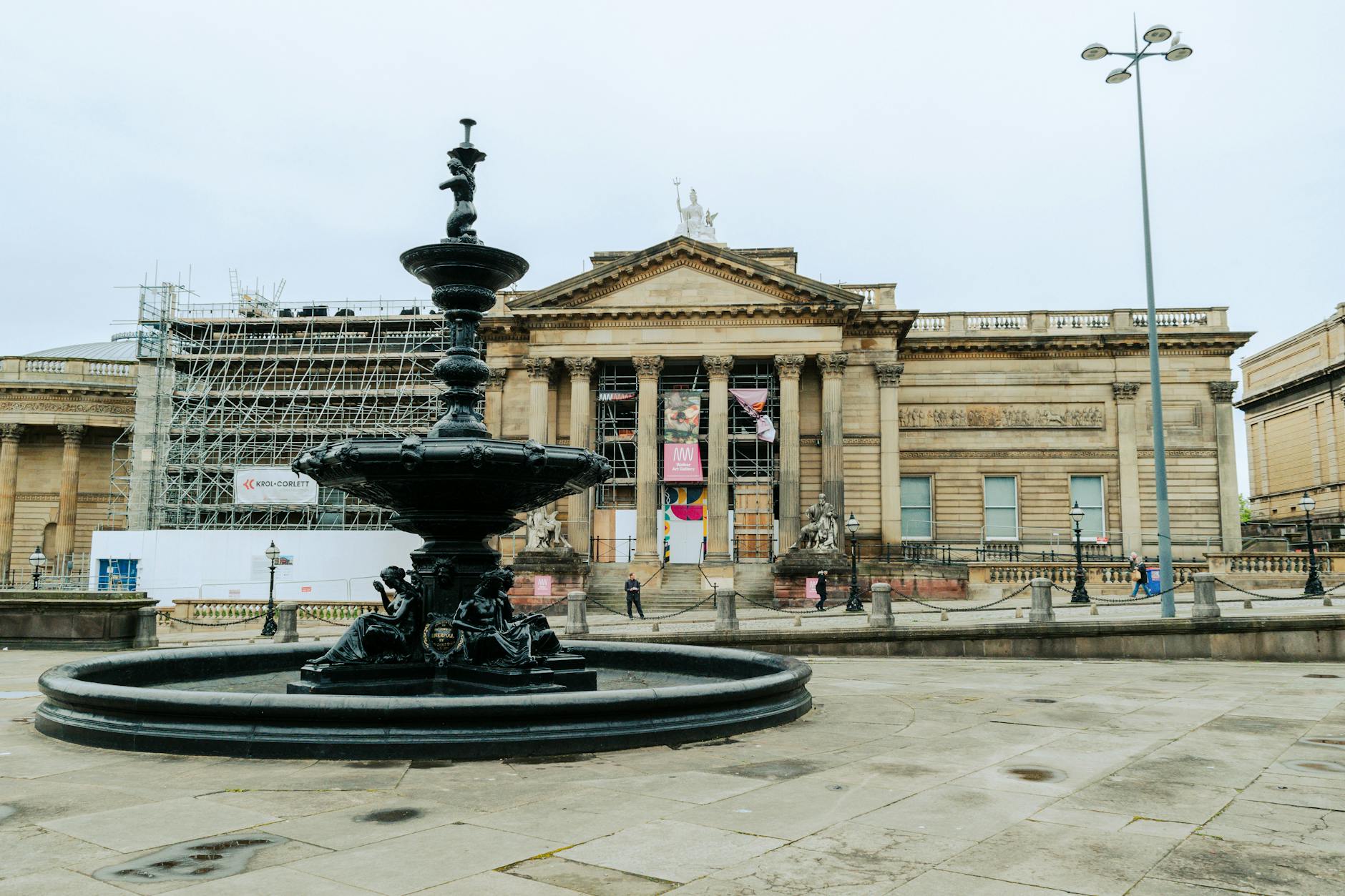
The National Museums Liverpool venues
National Museums Liverpool (NML) runs the free venues below, including World Museum, the Walker Art Gallery and the Museum of Liverpool. Two of its museums — the Maritime Museum and the International Slavery Museum — are closed, with no reopening date announced. World Museum, the Walker and the Museum of Liverpool are open every day, 10:00-17:00, until 1 November 2026; check each venue’s page for its opening days after that. No tickets needed for general admission; just walk in.
Museum of Liverpool
The Museum of Liverpool sits on the Pier Head between the Three Graces and the Albert Dock, in a striking modern building completed in 2011. Three floors covering the city’s history from the Ice Age to the present — the geology, the medieval town, the rise as a port of empire, the slavery and abolition years, immigration, the Beatles era, football, post-war regeneration. Standout galleries include the People’s Republic floor (everyday Liverpool life), the Wondrous Place gallery (Beatles, football, popular culture), and the History Detectives section for kids. Allow 2-3 hours. The Waterfront Café on the ground floor has good views over the Mersey and reasonable prices (£4-7 for lunch). Detailed in our Museum of Liverpool guide.
Walker Art Gallery
The Walker has been called the “National Gallery of the North” and the description is genuinely earned — it holds one of the most significant art collections in the UK outside London, with works by Rembrandt, Turner, Hockney, Lucian Freud, Stubbs, and Holman Hunt among many others. The pre-Raphaelite collection is particularly strong. Located on William Brown Street, two minutes’ walk from Lime Street station and directly opposite the World Museum. Allow 1.5-2 hours minimum; serious art-lovers can spend half a day. Special exhibitions sometimes have admission fees (typically £8-15); general admission to the permanent collection is free. Full coverage in our Walker Art Gallery guide.
World Museum
The World Museum is the natural history and world cultures venue, the most family-friendly of the central free museums. Five floors covering Egyptology (with genuine mummies), dinosaurs, an aquarium, a planetarium (shows carry a charge), space exhibits, and the Bug House live insect zone. Plenty of seating and hands-on exhibits make it easy going with children. Adults find plenty here too, particularly in the Egyptology, anthropology, and Ancient Worlds galleries. Allow 2-3 hours with kids, 1.5-2 hours without. Detailed in our World Museum guide.
Lady Lever Art Gallery (Port Sunlight, Wirral)
The Lady Lever sits in Port Sunlight, the model village built by William Hesketh Lever (of Sunlight Soap and later Unilever) for his factory workers in the 1880s. The gallery itself, opened in 1922, was a memorial to his wife and houses Lever’s personal collection — Wedgwood, pre-Raphaelite paintings, Chinese porcelain, classical sculpture, and 18th-century furniture. The combination of the gallery and the surrounding model village (still occupied and well-maintained) makes for a lovely half-day trip from central Liverpool. Get there by Merseyrail to Bebington (20 minutes from Liverpool Central, around £5 return). Free admission. Allow 2 hours in the gallery plus an hour for the village.
Sudley House (Mossley Hill)
The least-known of the free National Museums Liverpool venues, Sudley House is the preserved Victorian home of the Holt family, ship-owners, displaying their personal art collection. Smaller than the Walker but more intimate — you’re walking through actual lived-in rooms with paintings by Turner, Gainsborough, and Reynolds on the walls where the family hung them. The grounds are pleasant. It’s out in Mossley Hill, south Liverpool, so check the Sudley House page on the National Museums Liverpool site for directions before you set off. Free admission. Allow 1.5 hours including grounds.
Other free museums and galleries in Liverpool
Tate Liverpool + RIBA North (Mann Island)
Tate Liverpool’s Royal Albert Dock home is closed for redevelopment (currently expected to reopen in 2027). Its temporary space, RIBA North on Mann Island, is a short walk from the original site and free to enter, but no further Tate exhibitions are planned there; just two small RIBA displays are on. Treat it as a quick stop rather than a long visit. Detailed in our Tate Liverpool guide.
Bluecoat (School Lane)
The Bluecoat is the oldest building in central Liverpool, a 1717 Queen Anne charity school turned contemporary arts centre. Free contemporary art exhibitions in the main galleries, a free-to-enter atrium and courtyard, a programme of talks and events, plus a café-bar, a small bookshop, and craft studios. The exhibition programme changes through the year, so see what’s on before you go. Allow 1-1.5 hours. Gallery admission is free; some events are ticketed.
Victoria Gallery & Museum (Brownlow Hill)
The University of Liverpool’s public museum, housed in the original Victoria Building (a striking 1892 Alfred Waterhouse red-brick building that gave its name to the architectural term “red brick university”). Two floors of historic and contemporary collections, including dentistry displays, taxidermy, paintings, and rotating exhibitions. Quieter than the central NML venues — many tourists miss it entirely. Allow 1-1.5 hours. Free admission.
FACT (Wood Street, Ropewalks)
The Foundation for Art and Creative Technology is Liverpool’s centre for film, video, and digital art. Free contemporary exhibitions in three galleries, often featuring large-scale installations, video work, and digital art that you won’t see elsewhere in the city. The associated cinema is paid (showing independent and arthouse films) but the galleries are always free. Allow 1 hour for exhibitions. See our FACT guide for detail.
Open Eye Gallery (Mann Island)
Liverpool’s dedicated photography gallery, on Mann Island near the Three Graces. Free rotating exhibitions of contemporary photography, often by Liverpool-region or international photographers. Smaller than the major museums but consistently strong programming. Allow 30-60 minutes. Free admission.
St George’s Hall (St George’s Plateau)
St George’s Hall is Liverpool’s monumental civic building, a Grade I-listed neoclassical landmark directly opposite Lime Street station. Start at the Visitor Centre. The main Great Hall and the historic courtrooms are sometimes accessible free, sometimes via paid tours — check current programming on the Liverpool City Halls website. The exterior is the most photographed building in Liverpool. Allow 45-60 minutes for a visit.
The two free cathedrals
Liverpool’s two cathedrals both offer free admission and are among the city’s most visually spectacular interiors.
Liverpool Cathedral (Anglican)
The largest cathedral in Britain and the fifth-largest in the world, completed in 1978 after 74 years of construction to Giles Gilbert Scott’s design. Free entry to the main cathedral. The Tower Experience (climb plus lift to the top for views) costs £8 standard, or £6.50 for concessions. The building is genuinely awe-inspiring in scale — the central tower is 101 metres tall, the longest cathedral in the world by some measures. Allow 1-1.5 hours for general visiting, more for the tower. Detailed in our Liverpool Cathedral guide.
Metropolitan Cathedral (Catholic)
The Metropolitan Cathedral of Christ the King, often called “Paddy’s Wigwam” by locals, is the dramatic modernist circular cathedral at the top of Hope Street, completed in 1967 to Frederick Gibberd’s design. Free admission. The stained-glass-lit interior under the circular lantern is striking. The crypt below (originally designed by Edwin Lutyens for a much grander never-completed Catholic cathedral) is open to visitors Monday to Saturday, 10:00-16:00 (last entry 15:30), for £5 per person. Allow 30-60 minutes. The Hope Street walk between the two cathedrals is one of Liverpool’s defining experiences.
A free museums day plan
The geography of Liverpool’s free museums clusters them into three areas, all within walking distance:
The William Brown Street group
Walker Art Gallery and World Museum sit directly opposite each other on William Brown Street, two minutes’ walk from Lime Street station. You can do both in a long morning. St George’s Hall stands opposite; check its tours separately if you want to see inside.
The Pier Head and Mann Island group
Museum of Liverpool, Tate Liverpool + RIBA North, and Open Eye Gallery all sit within five minutes’ walk of each other at the Pier Head and Mann Island. You can do all three in an afternoon. The Three Graces, the bronze Beatles statue, and the Mersey ferry terminal are all part of the same walk. The closed Maritime Museum and Slavery Museum are also in this area — visible from outside but not currently open.
The Ropewalks and Hope Street group
FACT, the Bluecoat, the two cathedrals, and the Victoria Gallery & Museum all sit in or near the Ropewalks and the Hope Street area. FACT is on Wood Street and the Bluecoat on School Lane, with the cathedrals up at either end of Hope Street. A morning here easily fills four-five free venues.
A model free-museums day in central Liverpool
10:00: Walker Art Gallery (90 minutes). Walk 5 minutes to World Museum.
11:30: World Museum (90 minutes — focus on Egyptology and Bug House if time-limited).
13:00: Lunch break — Liverpool ONE food court or Bold Street.
14:00: Walk to Museum of Liverpool at the Pier Head (15 minutes). 2 hours in Museum of Liverpool.
16:00: Quick stop at RIBA North on Mann Island, Tate Liverpool’s temporary space.
17:00: Galleries closing — walk along the Albert Dock (free), grab a coffee.
That’s three major free museums, a quick stop at RIBA North and a waterfront walk in one full day, all on foot, zero admission fees. Add the cathedrals on day two and the Bluecoat / FACT / Victoria Gallery & Museum on day three, and three days of culture have cost nothing in general admission.
What about Western Approaches and the Beatles Story?
Two attractions sometimes confused with the free museums but which actually charge admission:
Western Approaches Museum (Rumford Street): the WWII underground headquarters of the Battle of the Atlantic, brilliantly preserved with the original mapping room and operations rooms intact. An adult day pass costs £16.50. Not free, but worth the money for anyone interested in WWII history. Detailed in our Western Approaches guide.
The Beatles Story (Albert Dock): charges around £20 standard adult admission. Not free, but the main Beatles museum and a near-certain stop for Beatles fans. Frequently bundled in the Liverpool Pass at savings; see our Liverpool Pass review for whether that makes sense for your trip.
British Music Experience (Cunard Building): adult admission is £20 online or £22 walk-up. Not free. Covers all British pop music history, not just Beatles. Detailed in our British Music Experience guide.
Practical visiting tips
Opening hours
Until 1 November 2026, World Museum, the Walker and the Museum of Liverpool open daily from 10:00 to 17:00; for later dates, check each museum’s own page. The Bluecoat gallery opens 11:00-17:00 Tuesday to Sunday and closes on Mondays; its café opens 10:00-17:00 Tuesday to Saturday and 11:00-17:00 on Sunday. FACT opens 11:00-18:00 Wednesday to Sunday. The cathedrals open daily, longer hours. On a Monday, with the Bluecoat and FACT shut, build the day around the cathedrals, walking tours and the waterfront, and check the NML museums’ opening days.
Special exhibitions
General admission is free (donations welcome), but some temporary exhibitions carry a charge, and so do planetarium shows at the World Museum. The Walker frequently has a paid headline exhibition (£8-15); the World Museum sometimes runs paid special exhibitions. Check the National Museums Liverpool website for current paid shows if you want to know in advance which “free” museums currently have a paid exhibition you might want to add.
Donations
The free museums all have donation points and occasional staff-prompted asks. Donations are entirely optional. Locals sometimes donate £2-5 per visit; tourists typically don’t. There’s no expectation. If you’ve enjoyed a visit and want to support the museums, the donation boxes near the entrance are the place. Online donations work too.
Facilities
Facilities differ from venue to venue, so check each museum’s visitor page for cafés, shops, baby-changing and step-free routes for wheelchairs and pushchairs. The Walker, World Museum, and Museum of Liverpool all have cloakrooms (free or £1-2). Cafés are reasonably priced — typically cheaper than restaurants on the Albert Dock or in Liverpool ONE.
Photography
Photography rules vary from museum to museum. Tripods and professional equipment may require permission — ask at reception. Special exhibitions sometimes restrict photography (typically posted at the entrance). The cathedrals allow photography throughout.

Free museums in the Wirral and outer Merseyside
Beyond central Liverpool, two more free National Museums Liverpool venues sit across the Mersey on the Wirral. Both are realistic day trips by Merseyrail from Liverpool Central or Lime Street.
Lady Lever Art Gallery (Port Sunlight)
Covered above. Free admission, train to Bebington from Liverpool Central, around £5 return. Pair with a walk around Port Sunlight village — the entire model village is a free open-air heritage site.
Sudley House (Mossley Hill)
Covered above. Free admission. Adult bus singles within the Liverpool City Region are capped at £2 each way, or a Saveaway day ticket covers all bus journeys (check its current price before you buy).
Free museums vs paid attractions: when to pay
Liverpool’s free museums genuinely cover the city’s main cultural stories — art history (Walker), natural and world history (World Museum), city history including the Beatles era (Museum of Liverpool), classical and modern art (Tate Liverpool, Walker, Sudley, Lady Lever), and contemporary art (FACT, Bluecoat, Open Eye). For most visitors that’s the full cultural offering covered.
The paid attractions worth budgeting for, if budget allows:
- The Beatles Story (£20): the central Beatles museum experience — see our Beatles Story guide
- Western Approaches (£16.50): a preserved WWII underground command HQ
- The Anfield stadium tour (£26 for an adult booked in advance): for football fans — see the Anfield tour guide
- The Magical Mystery Tour (from £21.95): the Beatles coach tour out to Penny Lane and Strawberry Field
For travellers on a strict budget, none of these are essential — the free museums alone deliver a full Liverpool experience. For Beatles or football enthusiasts, one or two of these paid attractions are usually worth it on top of the free museums.
FAQs
How many free museums are there in Liverpool?
Plenty. The free museums and galleries open in 2026 include the Museum of Liverpool, Walker Art Gallery, World Museum, Sudley House, Lady Lever Art Gallery, Tate Liverpool + RIBA North, Bluecoat, Victoria Gallery & Museum, FACT and Open Eye Gallery, plus the two cathedrals (which are technically religious sites rather than museums but allow free entry to spectacular interiors). The Maritime Museum and International Slavery Museum, both previously free, are shut for maintenance ahead of a planned redevelopment, and no date has been set for them to reopen.
Is the Walker Art Gallery in Liverpool really free?
Yes — the gallery, which opened in 1877, is free to enter in 2026. Special temporary exhibitions sometimes charge admission (typically £8-15), but the permanent collection costs nothing to see.
Why is the Maritime Museum closed?
The Maritime Museum and the International Slavery Museum (which share a building on the Albert Dock) are closed for essential maintenance works ahead of a major redevelopment project, which National Museums Liverpool says is subject to funding. No reopening date has been announced, though the Old Dock Tour still runs. Pop-up off-site displays continue during the closure.
Are all Liverpool museums free?
No. The National Museums Liverpool network is free and includes most of the major venues, but several paid museums also exist: The Beatles Story, the British Music Experience, Strawberry Field, the LFC Stadium Museum, Western Approaches Museum, and the Anfield Stadium Tour all charge admission.
What’s the best free museum in Liverpool?
Most repeat visitors rate the Museum of Liverpool as the best all-round free museum — comprehensive city coverage, family-friendly, in a striking modern building with great views. The Walker Art Gallery has the best art collection. The World Museum is the most child-friendly. The cathedrals are the most spectacular interiors. Pick by interest.
Do I need to book free museum tickets in Liverpool?
No — general admission is walk-in. Some special exhibitions require timed bookings (free or paid). Check the National Museums Liverpool website if a specific exhibition is the reason for your visit.
What days are Liverpool free museums closed?
World Museum, the Walker and the Museum of Liverpool are open every day until 1 November 2026; check their pages for the days they open after that. FACT closes Mondays and Tuesdays. The Bluecoat gallery closes on Mondays. The cathedrals are open daily.
Are Liverpool’s free museums accessible?
It depends on the venue, so check each museum’s accessibility information for step-free routes, accessible toilets, wheelchair loans and sensory support. Some older buildings (parts of the Walker, parts of the cathedrals) have limited stair-access areas, and the Bluecoat’s listed status limits access to its older rooms.
Can I see the Maritime Museum exhibits anywhere during the closure?
Pop-up off-site displays of Maritime Museum collections appear around the city during the closure period. The Archives Centre is reopening in a temporary space. Check the National Museums Liverpool website for current locations and dates.
Is Tate Liverpool’s main building open?
No — the original Royal Albert Dock site is closed for renovation, currently expected to reopen in 2027. In the meantime Tate’s temporary home at RIBA North on Mann Island, a short walk away, is free, though it now has two small RIBA displays rather than Tate exhibitions.
What’s the most photographed free museum in Liverpool?
St George’s Hall takes the top photographic spot for its exterior; the Anglican Cathedral interior is probably the most-photographed interior. The Museum of Liverpool’s modern architecture also draws plenty of camera attention from the Pier Head waterfront.
Related Liverpool Budget Guides
More money-saving guides from our Liverpool budget cluster:
- How Much Does a Trip to Liverpool Cost?
- Cheapest Time to Visit Liverpool
- Free Walking Tours in Liverpool
- Backpacker’s Guide to Liverpool
- Liverpool Pass: Is It Worth It?
- Cheap Transport in Liverpool
Plus the Liverpool on a budget overview pillar.
The other quiet virtue of these museums is that nearly all of them are step-free throughout, with lifts to every floor and, at the Museum of Liverpool, a Changing Places toilet. For a traveller who needs to know exactly where the ramps, lifts and accessible toilets are before setting off, our accessible and inclusive Liverpool guide goes through the city venue by venue — including the places where access falls short.
Free entry makes these museums ideal for a slower trip: drop in for an hour, sit down, and come back tomorrow. Check the Walker, World Museum and Museum of Liverpool pages for their opening days after 1 November 2026. Our guide to Liverpool for older travellers plans the week round that.