This article contains advertising. Our booking links are routed through a partner that adds commission tracking automatically, so if you book through one we earn a commission from the provider, at no extra cost to you. It never affects what we recommend. Affiliate disclosure
Between 2004 and 2021, Liverpool’s historic waterfront and centre carried UNESCO World Heritage Site status — the global recognition that places the Mersey alongside the Pyramids of Giza, the Taj Mahal, and the historic centre of Rome as sites of “Outstanding Universal Value to humanity.” In July 2021, after almost two decades on the list and nine years on the List of World Heritage in Danger, the Liverpool – Maritime Mercantile City site was deleted from the World Heritage list. It became only the third UNESCO site ever delisted, after the Dresden Elbe Valley (Germany, 2009) and the Arabian Oryx Sanctuary (Oman, 2007). The loss is significant — a defining moment in the city’s 21st-century identity — and a complicated one, because the buildings themselves are unchanged and the heritage value, by every measure other than the UNESCO inscription, is exactly as it was. This guide covers the Liverpool UNESCO World Heritage story: the 2004 inscription, the 2012 In Danger listing, the 2021 delisting, the buildings and zones that made up the site, and what visitors should know about engaging with Liverpool’s heritage today in the post-UNESCO era.
This story is closely tied to the Liverpool maritime history the site was inscribed to recognise, and to the Liverpool waterfront guide that covers the same physical places. The parent Liverpool history and heritage guide places the UNESCO story in the wider context.
The 2004 UNESCO Inscription
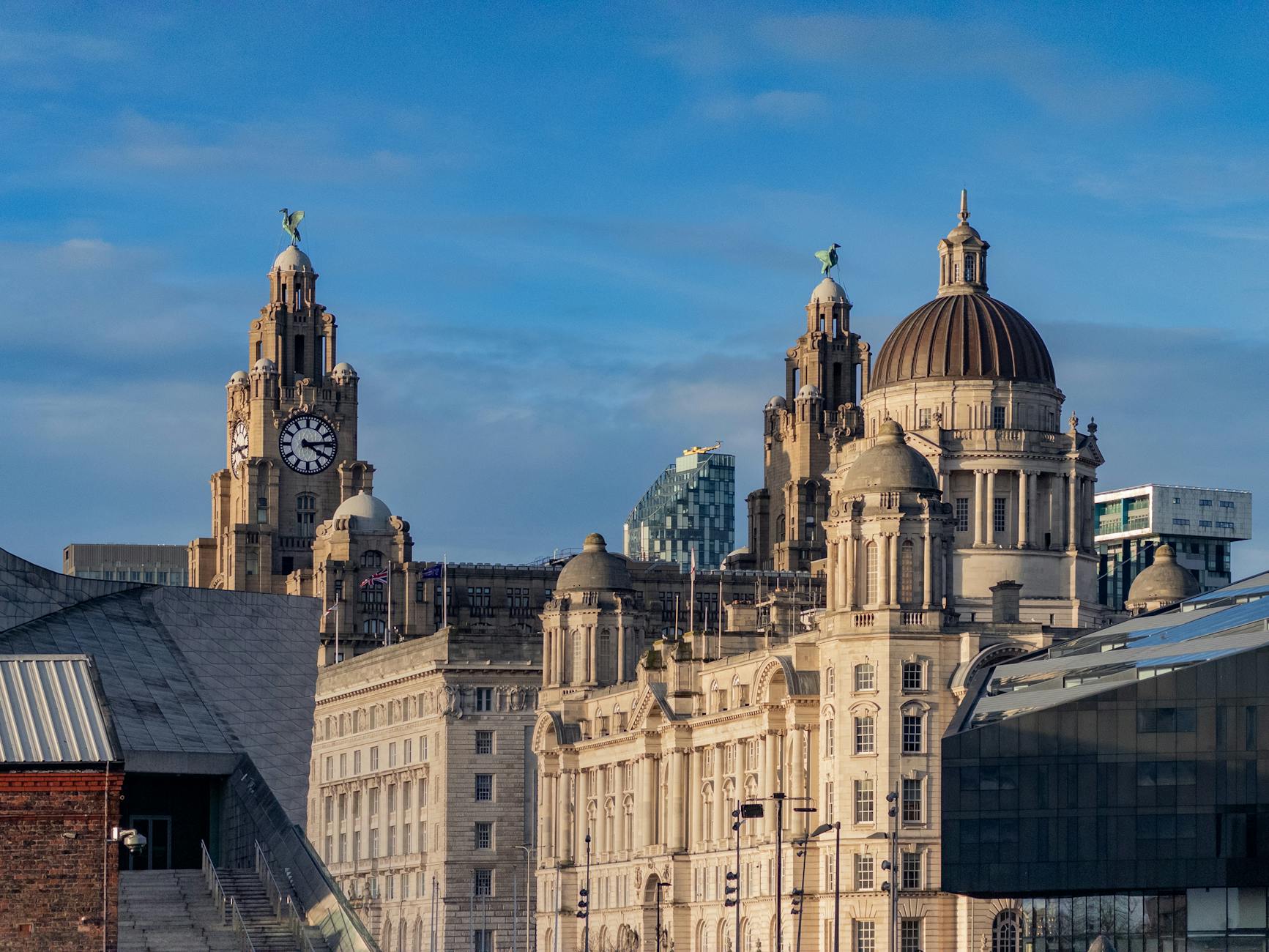
In July 2004, at the UNESCO World Heritage Committee meeting in Suzhou, China, Liverpool – Maritime Mercantile City was inscribed on the World Heritage list. The inscription recognised Liverpool as “the supreme example of a commercial port at the time of Britain’s greatest global influence,” with the citation explicitly noting the city’s role in the development of the world’s major trading centres in the 18th and 19th centuries.
The site was not a single building or square — it was a complex of six designated areas across central Liverpool covering 136 hectares, with a buffer zone of 750 hectares around them. The inscribed areas were:
- Pier Head — including the Three Graces (Royal Liver Building, Cunard Building, Port of Liverpool Building) and the waterfront esplanade.
- Albert Dock Conservation Area — the Albert Dock complex (now Royal Albert Dock) and surrounding warehouses.
- Stanley Dock Conservation Area — the larger northern dock estate including the Tobacco Warehouse, the largest brick warehouse in the world by floor area.
- Castle Street / Old Town — the merchant commercial district including the Town Hall, the merchant townhouses, and the historic core.
- William Brown Street Cultural Quarter — the neoclassical cultural buildings including St George’s Hall, the Walker Art Gallery, the World Museum, the Central Library, and the Sessions House.
- Lower Duke Street — Georgian and Victorian commercial buildings linking the merchant area to the dock.
The recognition was the culmination of years of work by Liverpool City Council, English Heritage (now Historic England), and a wide network of heritage and academic partners. It was widely celebrated as a coming-of-age for a city that had spent the 1970s and 80s in steep economic decline and the 1990s and 2000s in regeneration. The 2008 European Capital of Culture programme — the most successful in the history of the designation — built directly on the cultural visibility the UNESCO status conferred.
The 2012 In Danger Listing
Within eight years of inscription, Liverpool’s UNESCO status was already in trouble. In 2012, the World Heritage Committee placed Liverpool – Maritime Mercantile City on the List of World Heritage in Danger — a warning category for sites where the inscribed values are threatened by development, neglect, conflict, or natural disaster.
The trigger was Liverpool Waters — an enormous proposed regeneration project announced by developer Peel Holdings for the abandoned dock land north of the Three Graces. The Liverpool Waters plan envisaged towers up to 50+ storeys, a new commercial district, residential developments, and large-scale mixed-use construction immediately adjacent to (and within) the World Heritage Site’s buffer zone. UNESCO’s concern was that the “visual integrity” of the inscribed site would be compromised by high-rise development on the historic dock estate to the north.
Liverpool City Council, faced with a choice between the heritage status and the development that the council saw as essential to regeneration of the post-industrial north dock estate, chose to back the development. The 2012 In Danger listing was a yellow card. Nine years later, the World Heritage Committee issued the red card.
The 2021 Delisting
On 21 July 2021, at the 44th session of the World Heritage Committee (meeting in Fuzhou, China, online due to the COVID-19 pandemic), the Committee voted to delete Liverpool – Maritime Mercantile City from the World Heritage list. The vote followed extensive debate. The Committee’s formal statement cited the “irreversible loss of attributes conveying the outstanding universal value of the property.”
The immediate triggers cited were two: the continued progress of the Liverpool Waters development, and Liverpool City Council’s 2021 approval of Everton Football Club’s new stadium at Bramley-Moore Dock — a £500 million stadium built directly within the inscribed site’s northern boundary, on what was historic dock infrastructure. (The stadium opened in 2025 as the Hill Dickinson Stadium and is Everton’s new men’s home.)
Liverpool became only the third site ever delisted from the World Heritage list, joining Dresden’s Elbe Valley (delisted 2009 over a controversial bridge construction) and Oman’s Arabian Oryx Sanctuary (delisted 2007 after the sanctuary’s boundaries were reduced by 90% to allow oil exploration). The Dresden parallel is particularly close — both Dresden and Liverpool lost their status over development decisions that local authorities believed were economically and socially necessary but that UNESCO judged to be irreconcilable with the inscribed values.
The Arguments: Heritage vs Regeneration
The Liverpool delisting was, and remains, controversial — defended by some, mourned by others, with both positions having substance.
UNESCO’s position was that the inscribed site’s value depended on the integrity of the historic dock skyline and the visual relationship between the central waterfront, the Three Graces, and the surrounding dock infrastructure. High-rise residential and commercial development immediately to the north of the Three Graces — and a 52,000-seat football stadium replacing historic dock fabric at Bramley-Moore — represented changes too significant for the original inscription to remain meaningful.
Liverpool City Council’s position was that the council had inherited an enormous expanse of derelict 19th-century dock infrastructure (the docks north of Pier Head were progressively closed from the 1970s and were, by the 2000s, an economic and physical liability). Regenerating the dock estate required development, and development at the scale needed was incompatible with UNESCO’s preferred level of preservation. Council leaders argued that Liverpool was being asked to choose between regeneration and recognition, and that the regeneration won.
The architects’ and heritage professionals’ view was more mixed. Many argued the choice was a false binary — that thoughtful design could have preserved the inscribed values while permitting redevelopment — and that the council had failed to exercise sufficient design discipline on the Liverpool Waters and Bramley-Moore Dock proposals. Others pointed out that some of the docks now being developed were themselves modern interventions, with relatively limited historic fabric of significance.
Both sides agreed on one thing: the loss was significant, irreversible, and a defining moment in Liverpool’s 21st-century identity.
What Has Actually Changed for Visitors?
Practically speaking, almost nothing. The buildings that were inscribed are all still there. The Three Graces, the Albert Dock, the Stanley Dock complex, St George’s Hall, the merchant townhouses of Castle Street, the Bluecoat, the Walker Art Gallery, the World Museum — all unchanged. The Royal Albert Dock is undergoing internal renovation (the Maritime Museum and International Slavery Museum are closed for a separate £58 million Waterfront Transformation Project until 2028-2029), but the external dock estate is fully accessible.
The legal protections that matter most — the UK’s system of Listed Building status — are entirely unaffected by the UNESCO delisting. The Three Graces are Grade I listed. The Albert Dock complex is Grade I listed. The Tobacco Warehouse at Stanley Dock is Grade II*. The merchant townhouses are typically Grade II. St George’s Hall is Grade I. These designations carry full legal force under UK heritage law, and they protect the buildings from inappropriate alteration or demolition regardless of UNESCO status.
The UNESCO inscription was a recognition, an honour, and a tourism asset — but it was never the primary legal protection mechanism. What visitors see today is exactly what they would have seen in 2020. The change is in how the city tells its own story, not in what the city looks like.
The Six Inscribed Zones Today
If you want to visit the buildings and spaces that made up the original UNESCO site, here’s the current status of each.
1. Pier Head
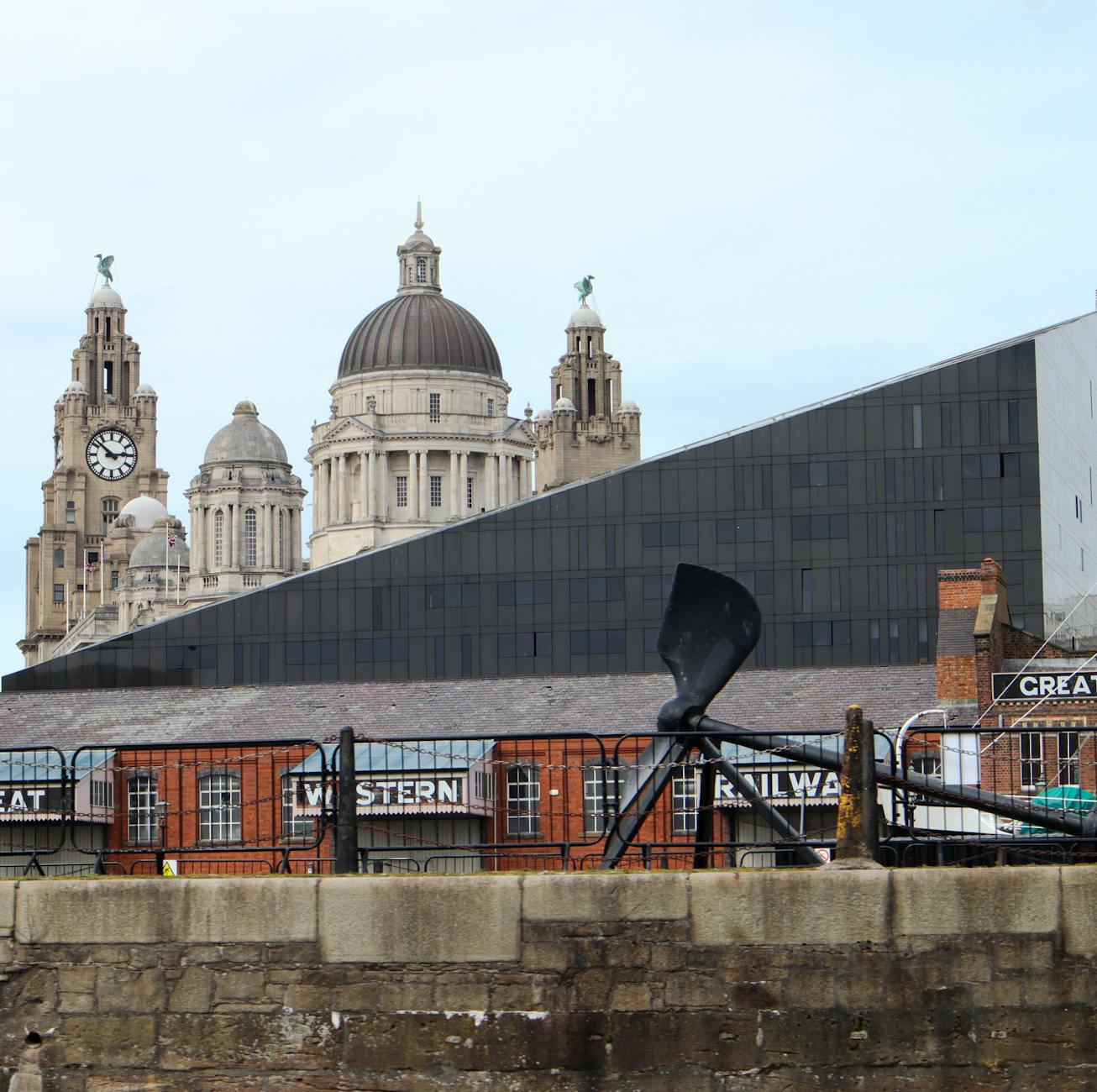
The flagship zone. The Three Graces still anchor the waterfront. The Three Graces guide covers the Royal Liver Building, Cunard Building, and Port of Liverpool Building in detail. The RLB 360 visitor experience inside the Royal Liver Building runs guided tower tours, around £18. The Pier Head esplanade is free and contains the Beatles Statue, multiple Cunard and maritime memorials, the Mersey Ferry terminal, and the open views of the river and Wirral.
2. Royal Albert Dock
The Grade I-listed quadrangle of cast-iron-columned brick warehouses opened in 1846. The dock complex is fully open to visitors; individual museums within it have their own statuses. The Beatles Story (paid attraction) is open. The Tate Liverpool has temporarily relocated to RIBA North on Mann Island while its Albert Dock home undergoes renovation (planned reopening 2027). The Maritime Museum and International Slavery Museum are closed until 2028-2029 for the Waterfront Transformation Project.
3. Stanley Dock Conservation Area
North of Pier Head, the larger 19th-century dock estate including the Tobacco Warehouse (the largest brick warehouse in the world by floor area), the Titanic Hotel Liverpool (a 2014 heritage-conversion hotel), and the Stanley Dock distillery. The Stanley Dock buildings themselves are extraordinary and increasingly accessible as regeneration projects open them up. The Liverpool hidden gems guide covers Stanley Dock as one of the under-visited Liverpool architectural sights.
4. Castle Street and the Old Town
The Georgian merchant district running from Liverpool Town Hall (Grade I, 1754) to the lower commercial streets. The Town Hall, the Georgian merchant townhouses of Castle Street, the historic insurance and shipping company headquarters of Dale Street, and the Liverpool Crown Court complex around Derby Square. This zone has the highest density of Liverpool’s 18th- and early 19th-century commercial heritage architecture.
5. William Brown Street Cultural Quarter
The neoclassical “cultural quarter” immediately north-east of Lime Street station: St George’s Hall (Grade I, 1854), the Walker Art Gallery, the World Museum, the Liverpool Central Library, and the Sessions House. All are free to enter (admission to Walker and World Museum collections is free; St George’s Hall public tours are paid). This zone is the most visitor-friendly of the six, with all major buildings open and the architectural ensemble fully visible from a single vantage point.
6. Lower Duke Street
The Georgian and early Victorian commercial buildings linking the Castle Street merchant area down towards the Albert Dock. Less individually photographed but a substantive piece of Liverpool’s commercial architectural fabric, including the original Bluecoat building (1717, oldest building in central Liverpool) which sits at the head of the zone.
Could Liverpool Get UNESCO Status Back?
Technically, yes. UNESCO World Heritage delisting is irreversible only in the sense that the original 2004 inscription cannot be restored. A delisted site can apply for re-inscription as a new nomination, provided the original criteria for outstanding universal value can be made out and the threats that triggered the delisting have been addressed.
Liverpool would have a difficult case. The Liverpool Waters development is partly built and continuing. The Bramley-Moore Dock stadium is open and operational. The changes that UNESCO judged irreversible cannot be reversed. A re-inscription nomination would need to argue that, despite the modern development, the inscribed values still hold — a position UNESCO has already rejected.
The realistic future is that Liverpool will continue to operate as a non-UNESCO heritage city. Domestic UK heritage protections (Listed Building status, Conservation Areas, the Historic England framework) remain in place and are arguably more legally meaningful for day-to-day building protection than the UNESCO designation ever was. Liverpool City Council continues to invest in heritage projects — the Waterfront Transformation Project, the ongoing dock restoration programmes, the Bluecoat’s and St George’s Hall’s heritage programming. The recognition has gone; the heritage hasn’t.
How Liverpool’s UNESCO Story Compares to Dresden and Oman
Three sites have been delisted from the UNESCO World Heritage list. Each story differs.
Arabian Oryx Sanctuary (Oman, delisted 2007). The sanctuary’s boundaries were reduced by 90% to permit oil exploration, with corresponding collapse in the wildlife population that the inscription protected. The delisting was effectively the Oman government’s own decision implemented in practice.
Dresden Elbe Valley (Germany, delisted 2009). A new road bridge (the Waldschlößchen Bridge) was built across the inscribed valley despite UNESCO opposition, and the historic riverside view was judged compromised. Like Liverpool, Dresden chose the development over the inscription.
Liverpool – Maritime Mercantile City (UK, delisted 2021). The cumulative impact of the Liverpool Waters and Bramley-Moore Dock developments was judged to have compromised the inscribed site’s integrity.
All three delistings involve the same underlying question: when does development become irreconcilable with the inscribed values? In all three cases, the local authorities made decisions they considered economically and socially essential, and UNESCO made decisions it considered conservation-essential. The lists differ on which trade-offs are acceptable.
A Suggested Liverpool Heritage Walk Honouring the Lost UNESCO Site
For visitors who want to experience the original UNESCO inscription on foot, here’s a 3-hour walking route covering the six inscribed zones in a single circuit. The route stays in central Liverpool and is fully walkable.
09:30 — Start at the Pier Head. The Three Graces, the waterfront esplanade, the Beatles Statue, the Cunard and Lusitania memorials. 30 minutes.
10:00 — Walk south to the Royal Albert Dock. Loop the dock externally (the Maritime Museum and Slavery Museum are closed til 2028-2029, but the dock walks are open). 45 minutes.
10:45 — Walk back to Pier Head and continue north to Stanley Dock. 15-minute walk. Visit the Tobacco Warehouse exterior (the largest brick warehouse in the world), the Titanic Hotel lobby (open to non-guests), the dock infrastructure. 30 minutes.
11:45 — Taxi or walk back to Castle Street. Visit Liverpool Town Hall (exterior; tours by appointment), the merchant townhouses of Castle Street, the Old Town. 30 minutes.
12:15 — Walk up Dale Street to William Brown Street. St George’s Hall (free public access during open hours), the Walker Art Gallery (free), the World Museum (free), the Central Library (free, plus famous tiled floor). 90 minutes.
13:45 — Lunch on Bold Street or in the Liverpool ONE area. Walk back via Lower Duke Street to close the circuit.
Total walking distance about 4 km. The route gives you all six inscribed zones with appropriate context and represents an honest engagement with what Liverpool was inscribed for in 2004 and what remains accessible to visitors in 2026.
Liverpool UNESCO World Heritage FAQs
Is Liverpool a UNESCO World Heritage Site in 2026? No. Liverpool – Maritime Mercantile City was delisted on 21 July 2021. The UK no longer has Liverpool on its UNESCO list. The other UK cities with current UNESCO status (Bath, Edinburgh, Stonehenge, Westminster, etc.) remain inscribed.
Why did Liverpool lose its UNESCO status? The cumulative impact of two major developments — the Liverpool Waters regeneration scheme and the new Everton Football Club stadium at Bramley-Moore Dock — was judged by the World Heritage Committee to have caused “irreversible loss” of the inscribed site’s integrity. The decision followed nine years of warnings as a site on the List of World Heritage in Danger.
When was Liverpool a World Heritage Site? Inscribed July 2004, In Danger from 2012, delisted 21 July 2021. Total inscription period: 17 years.
What was Liverpool inscribed for? “Liverpool – Maritime Mercantile City” was inscribed as the supreme example of a commercial port at the time of Britain’s greatest global influence in the 18th and 19th centuries, with six designated areas covering 136 hectares of central Liverpool.
Can Liverpool get UNESCO World Heritage status back? Theoretically possible through a re-inscription nomination, but practically very unlikely. The developments that triggered delisting are largely complete and irreversible. UNESCO has already judged that the inscribed values are too compromised to restore.
Does the loss of UNESCO affect heritage protection? No. UK Listed Building status, Conservation Area designations, and the Historic England framework remain unchanged. The legal protections that prevent inappropriate alteration or demolition of Liverpool’s historic buildings are entirely intact. UNESCO inscription was an honour and a recognition, not the primary legal protection.
Which other UNESCO sites have been delisted? Only two before Liverpool: the Arabian Oryx Sanctuary in Oman (delisted 2007) and the Dresden Elbe Valley in Germany (delisted 2009). Liverpool was the third and most recent.
What is the Liverpool Waters development? A regeneration scheme for the abandoned dock land north of Pier Head, originally proposed by Peel Holdings, including residential and commercial buildings, high-rise towers, and mixed-use development. The scheme was the original trigger for the 2012 In Danger listing.
What is the new Everton stadium called? Hill Dickinson Stadium, opened 2025 at Bramley-Moore Dock. The construction within the World Heritage Site’s boundary was a major factor in the 2021 delisting decision. See the Liverpool football tourism guide for visiting information.
Why the Liverpool UNESCO Story Matters
The Liverpool delisting is, at one level, a story about three buildings and one football stadium. At another level, it’s a story about a city’s relationship with its own past — about how working cities balance the demands of regeneration with the obligations of historic preservation, and about whether a global recognition mechanism (UNESCO) is the right framework for resolving those tensions in a city with serious post-industrial economic challenges.
Visitors don’t need to take sides. The buildings are still there. The architectural ensemble is still extraordinary. The Three Graces still light up at golden hour over the Mersey, the Albert Dock’s brick warehouses still surround the enclosed water of the dock, St George’s Hall still presents Britain’s most magnificent neoclassical interior. Liverpool’s heritage is unchanged by the loss of an inscription. What’s changed is how Liverpool tells its own story going forward — increasingly framed around the city’s contemporary working life, its music and football and cultural production, rather than the global imprimatur of UNESCO.
For planning purposes, the practical heritage experiences of Liverpool are unchanged from the UNESCO era. The Liverpool waterfront guide, the Three Graces guide, the Liverpool architecture guide, and the maritime history guide all cover the buildings and spaces that constituted the inscribed site. Walk them with the UNESCO context in mind, and Liverpool’s heritage acquires an extra dimension — the story of what was won, what was risked, and what was eventually lost in the trade-off between heritage and development.