This article contains advertising. Our booking links are routed through a partner that adds commission tracking automatically, so if you book through one we earn a commission from the provider, at no extra cost to you. It never affects what we recommend. Affiliate disclosure
Liverpool was the most heavily bombed area of Britain outside London during the Second World War. Between August 1940 and January 1942, the Luftwaffe targeted the city, the docks, and the working-class districts of Bootle, Birkenhead, and Wallasey across some 80 separate air raids. The week of 1-7 May 1941 — known forever in Liverpool as the May Blitz — was the most concentrated series of air attacks on any single British city area outside the capital. Nearly 1,900 people were killed in seven days, 1,450 seriously injured, and 70,000 made homeless. Whole streets in the dock districts and the inner city were destroyed. The reason was strategic: Liverpool was the western end of the Atlantic convoy lifeline, the British port through which 90% of wartime imports passed, and the headquarters from which the Royal Navy and Royal Air Force fought the Battle of the Atlantic. Cripple Liverpool and you cripple the British war effort. This guide covers the Liverpool Blitz history, the Battle of the Atlantic, and the wartime sites still visitable today — including the underground bunker that ran the convoy war, the bombed-out church kept as a memorial, the Pier Head Blitz Memorial, and the lesser-known “Blitz Beach” at Crosby.
This is one of the most substantial chapters in Liverpool’s modern history. The parent Liverpool history and heritage guide places the WWII story in context, and several of the sites covered here also appear in the Liverpool hidden gems guide and the free things to do in Liverpool guide.
Why Liverpool Was a Target
By 1939, Liverpool was the second port of the British Empire. The combined Liverpool-Birkenhead dock complex was the largest on the west coast of Britain, and during the war it handled an extraordinary share of the country’s imports — more than 90% of all war materials brought into Britain from overseas passed through Liverpool. Food, fuel, raw materials, manufactured goods, weapons, ammunition, and troop reinforcements from the Empire and (after 1941) the United States all came through the Mersey docks.
For Nazi Germany, paralysing Liverpool would have been a strategically decisive blow. The Atlantic convoys were Britain’s lifeline; the U-boat campaign attempted to cut that lifeline at sea; the Blitz attempted to cut it at the port. Both strategies failed, but at enormous human cost.
The city’s significance to the war effort was matched by its proximity to occupied France — Luftwaffe bombers could reach Liverpool from forward airfields in France and the Low Countries in a few hours of night flight. The city was within bombing range from August 1940 onwards, and it was attacked more heavily and more sustainedly than almost any other British target.
The Liverpool Blitz: A Chronology
August-September 1940. The first significant raids on Liverpool. Initially limited; the Luftwaffe was still concentrating on London.
October-December 1940. Intensifying raids on the Liverpool docks and city centre. Heavy damage to the warehouse district and the inner-city working-class neighbourhoods. A devastating raid on 28 November destroyed buildings and infrastructure across central Liverpool.
Christmas Blitz, 20-22 December 1940. Three nights of heavy bombing in the run-up to Christmas. The Cunard Building was damaged. St Nicholas’ Church at Pier Head was hit and largely destroyed. Major civilian casualties.
1-7 May 1941 — the May Blitz. The most concentrated week of bombing in Liverpool’s wartime experience. 681 Luftwaffe bombers dropped 2,315 high-explosive bombs and 119 land-mines and parachute mines, plus tens of thousands of incendiary bombs. Nearly 1,900 people were killed in seven nights, 1,450 seriously injured, and 70,000 made homeless. Whole districts of central Liverpool, Bootle, Birkenhead, and Wallasey were destroyed.
The night of 3-4 May 1941. The worst single night of the Blitz. A bomb hit the SS Malakand in Huskisson Dock, a freighter loaded with ammunition. The resulting explosion was massive — one of the largest single explosions of the war on British soil — and devastated the surrounding docks.
The night of 5 May 1941. St Luke’s Church on Berry Street was destroyed by incendiary bombs. The shell remained standing. It is still standing today, kept as a memorial.
January 1942. The last major air raid on Liverpool. The Luftwaffe’s shift of focus to the Eastern Front from June 1941 onwards reduced the pressure on British cities.
Across the full Blitz period, German bombs killed 2,716 people in Liverpool, plus 442 in Birkenhead, 409 in Bootle, and 332 in Wallasey — over 3,900 total Merseyside dead. Tens of thousands more were injured. The physical scars on the city took decades to repair; some of them are visible to this day in the gaps and post-war infill across the central and dock districts.
Wartime Liverpool: The Battle of the Atlantic
While the Blitz attacked Liverpool from the air, the U-boat campaign attacked Liverpool from the sea. The Battle of the Atlantic — the longest continuous military campaign of the Second World War, lasting from 3 September 1939 to 8 May 1945 — was fought to keep the convoy lanes open between North America and Liverpool. Hundreds of merchant ships and Royal Navy escorts were sunk; tens of thousands of sailors lost their lives.
The Battle of the Atlantic was directed from an underground bunker at Rumford Street in central Liverpool, just behind the Pier Head. The bunker — known then as Derby House, now as the Western Approaches Headquarters — housed the Operations Room from which Royal Navy Admiral Sir Max Horton and his staff directed the convoy war. The Operations Room contained a vast wall-mounted plotting map of the North Atlantic, with ship and submarine positions tracked in real time by WRNS plotters using long sticks to push counters across the map.
From this bunker, the Allied command coordinated the convoy routes, the air patrols, the destroyer escorts, the codebreaking from Bletchley Park, and the strategy that eventually defeated the U-boats by mid-1943. The Battle of the Atlantic was won, not in a single battle, but through this kind of patient operational management — and Liverpool was its headquarters.
WWII Sites to Visit in Liverpool
1. Western Approaches Museum
The single most important wartime site you can visit in Liverpool. The underground bunker on Rumford Street has been preserved almost exactly as it was abandoned in 1945. The two-storey Operations Room, with its vast wall-map of the Atlantic and the original ship-plotting tables, is intact. The cipher rooms, the teleprinter floor, and the WRNS dormitories are all open to visitors.
The Western Approaches Museum, run by the heritage charity Big Heritage, is open most days from 10:00 to 17:00 (check current hours). Adult tickets around £12. Allow at least 90 minutes; serious visitors can spend three hours here. The bunker is genuinely atmospheric — narrow concrete corridors, sealed steel doors, original wartime signage — and the volunteer guides are extremely knowledgeable. One of the most under-visited heritage sites in the UK for its quality.
2. St Luke’s Bombed Out Church
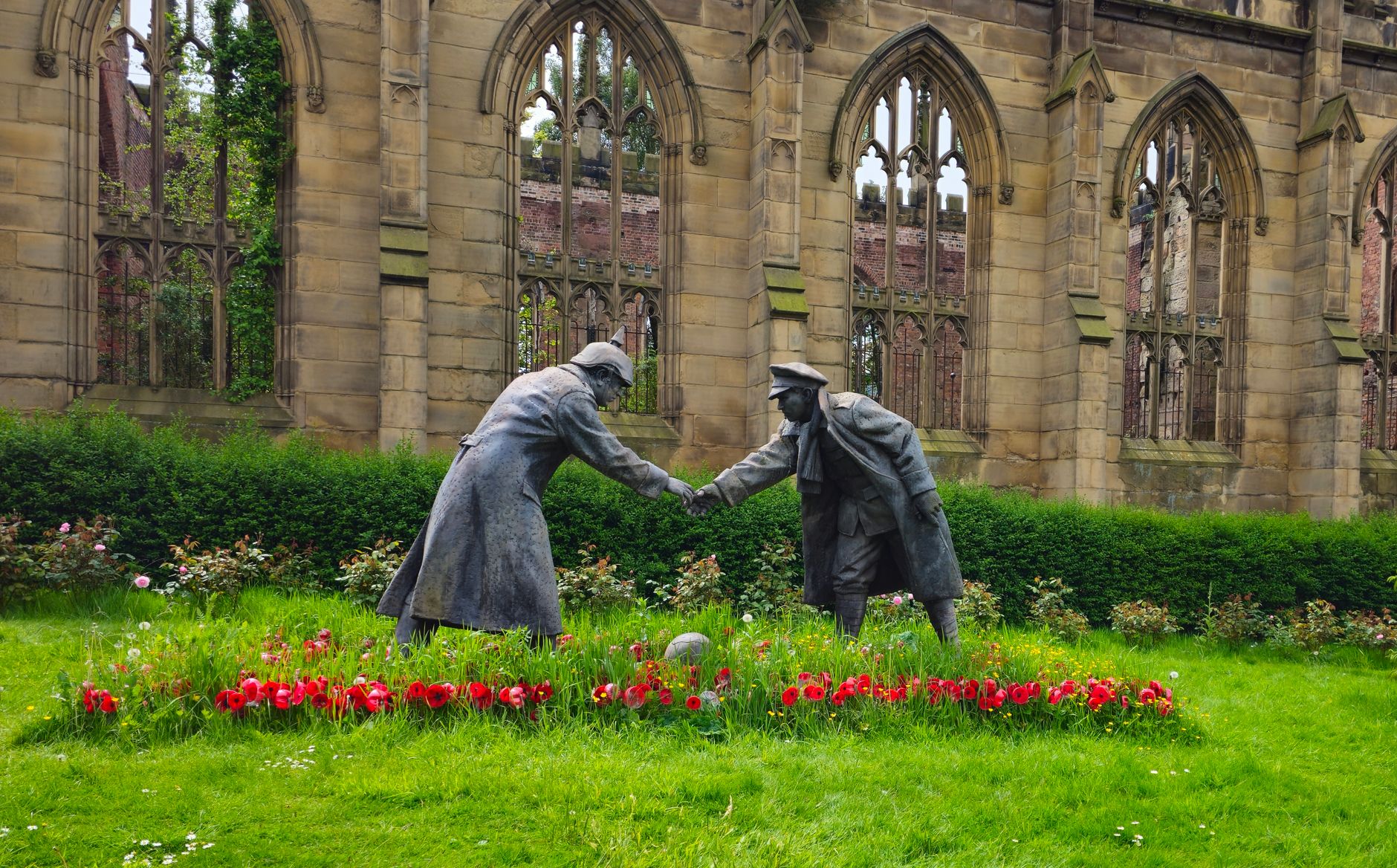
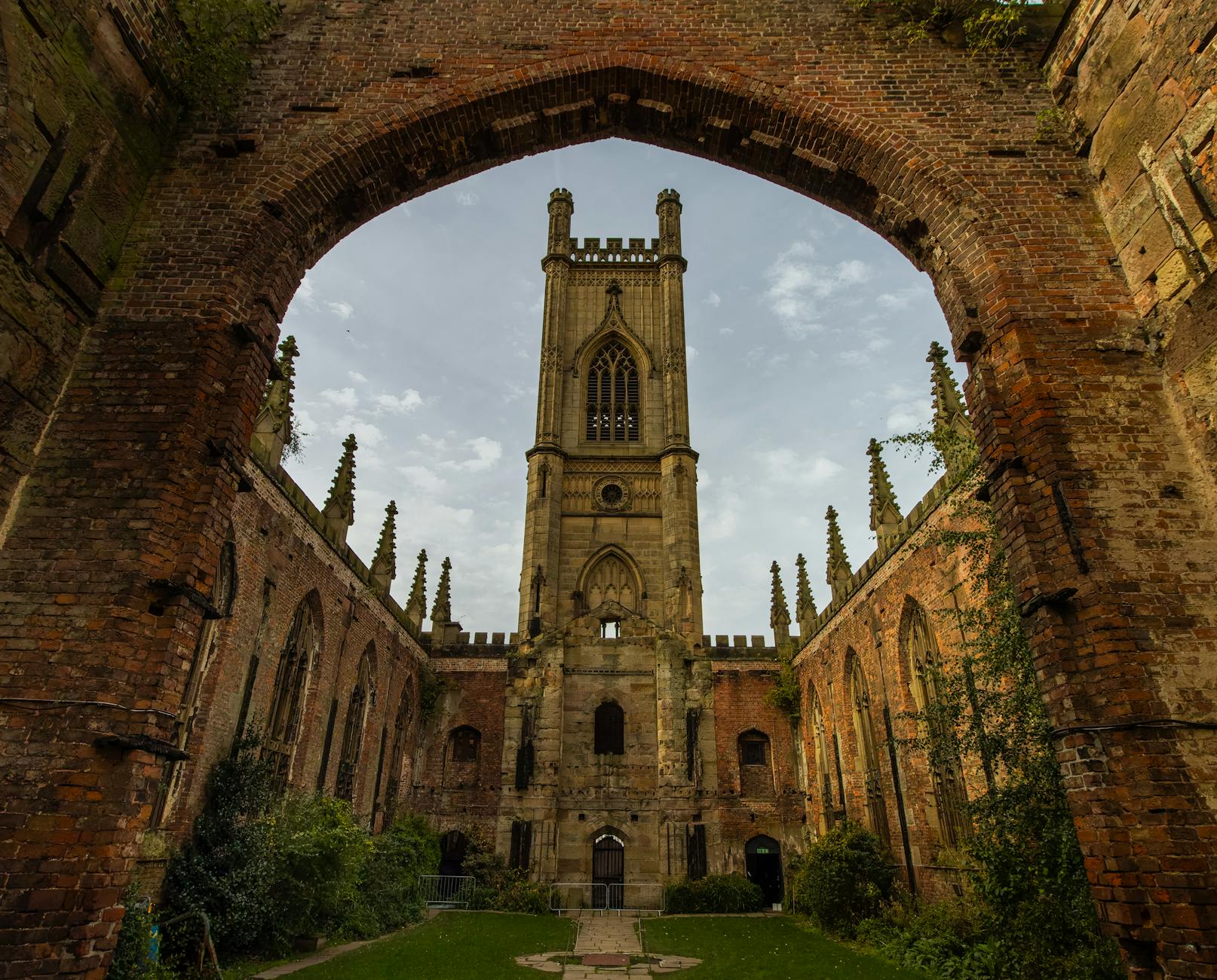
The shell of the 1831 St Luke’s Church on the corner of Berry Street and Leece Street, hit by incendiary bombs on 5 May 1941 and gutted from within while the outer stone walls remained standing. After the war, the church was deliberately kept as a ruin — a memorial to the Liverpool Blitz and to the people of the city killed during the war years.
Today the Bombed Out Church operates as an open-air community space. The interior, now without a roof, is laid out as a garden of remembrance with a memorial garden, sculpture, and seating. Through the summer months, the church hosts outdoor theatre, music, poetry readings, film screenings, and markets. The shell itself is one of the most photographed buildings in central Liverpool, and one of the most atmospheric.
Free entry, open during community-event hours. Look for the small memorial plaques inside and the dedication to the Liverpool Blitz dead.
3. The Pier Head Blitz Memorial
In the grounds of St Nicholas Church at Pier Head (the “Sailors’ Church,” itself badly damaged in the December 1940 Christmas Blitz), a bronze Blitz Memorial commemorates the civilians killed in the Liverpool Blitz. The memorial is free, accessible, and easily combined with a Three Graces visit. The church itself has been rebuilt and is open for services and visitor access.
4. Museum of Liverpool: Blitz Exhibition
The Museum of Liverpool at Pier Head (free entry, daily) hosts a permanent exhibition on the Liverpool Blitz including original artefacts, archival photographs, and audio recordings of survivors. The exhibition is one of the more emotionally affecting parts of the museum and provides excellent context for visits to the Bombed Out Church and Western Approaches. Allow 30-45 minutes.
The Museum of Liverpool also hosts the city’s wider WWII material — the home-front experience, evacuation stories, the docks at war, and the post-war rebuilding. See the Liverpool museums and galleries guide for broader museum coverage.
5. Blitz Beach at Crosby
One of the strangest and most affecting WWII sites in Liverpool. The rubble from the Liverpool and Bootle Blitz was transported north to Hightown, near Crosby, and dumped on the foreshore to reinforce the beach against coastal erosion. Eighty years on, the rubble has been slowly worn down by the tides — but Victorian carved stonework, brick walls, lamp-post fragments, ironwork, and tiled flooring still emerge from the sand, mixed in with the natural shoreline.
Locally known as “Blitz Beach” or “Liverpool’s rubble beach,” it’s a strange, melancholy site — a stretch of working coastline with fragments of pre-war Liverpool architecture scattered through it. Free, accessible by train (Hightown Merseyrail station, then a 15-minute walk) or by car. Combine with a visit to Crosby Beach proper for Antony Gormley’s Another Place installation (100 cast-iron figures looking out to sea) which is one of Britain’s most distinctive public art works.
6. Liverpool Town Hall Sandstorm Damage
Look carefully at the exterior of Liverpool Town Hall on Castle Street and you can see, on the south side, the pock-marked stone where Blitz-era bomb fragments scarred the building. Several Liverpool buildings carry these visible scars; the Town Hall’s are some of the most accessible.
7. The Anglican Cathedral and the Blitz
Liverpool Anglican Cathedral, then under construction, was hit by bombs during the May Blitz of 1941 but the damage was relatively contained and construction continued through the rest of the war. The cathedral hosts a Blitz memorial chapel and various commemorative artworks.
8. The Liverpool One Site: Old Pier Head Bombing
The area now occupied by Liverpool ONE was a heavily bombed working dock district during the war. The post-war rebuilding produced 50 years of architectural disappointment before the 2008 Liverpool ONE regeneration finally restored sustained activity to the area. The Old Dock viewing window at Thomas Steers Way preserves a fragment of the pre-Blitz dock infrastructure.
A Suggested Liverpool WWII Half-Day Itinerary
To experience Liverpool’s WWII history substantively in a half-day visit, this is the route I’d build.
09:30 — Start at the Pier Head Blitz Memorial, in the grounds of St Nicholas Church. 15 minutes for the memorial and the church.
10:00 — Walk to the Museum of Liverpool, also at Pier Head. Visit the Blitz exhibition. 45-60 minutes.
11:00 — Walk to Western Approaches Museum on Rumford Street (8 minutes’ walk). 2 hours for the bunker tour — the most substantial part of the day.
13:00 — Lunch in central Liverpool (Bold Street is 10 minutes’ walk).
14:00 — Walk to St Luke’s Bombed Out Church. The shell, the memorial garden, the dedication plaques. 45 minutes including time to absorb the atmosphere.
14:45 — Walk back via Bold Street and the Liverpool ONE area to finish.
For a more ambitious visit, add a separate half-day trip to Crosby for Blitz Beach and Antony Gormley’s Another Place figures — about 25 minutes north by Merseyrail. Total walking distance for the central itinerary above is about 2.5 km.
Annual Liverpool Blitz Commemorations
Each May, Liverpool commemorates the May Blitz of 1941. The principal commemoration is typically held in the first week of May at the Pier Head Blitz Memorial, with civic and Royal British Legion involvement. The Bombed Out Church often hosts memorial events. Local newspapers (Liverpool Echo) carry survivor stories and historical retrospectives.
On VE Day (8 May), Liverpool hosts annual remembrance services, with major events in 2025 (80th anniversary) and 2026 (81st). The Liverpool events and festivals guide covers seasonal and annual events.
Battle of the Atlantic Day falls in late May each year — commemorating the official end of the Battle of the Atlantic on 8 May 1945. Liverpool, as the campaign’s western headquarters, hosts significant Royal Navy and Royal Air Force commemoration events, particularly at the Pier Head and the Western Approaches Museum.
Books and Resources on Wartime Liverpool
For visitors who want background reading:
Books: Joan Boyce’s Pillowslips and Gasmasks: Liverpool’s Wartime Evacuation, Phil Carradice’s The Liverpool Blitz, Ron Jones’s The Liverpool Blitz, and the Imperial War Museum’s online Liverpool Blitz collection. National Museums Liverpool publishes substantial online material at liverpoolmuseums.org.uk.
Documentaries: The BBC archive contains substantial WWII material on Liverpool, including The Liverpool Way series. The Imperial War Museum’s online video archive is freely accessible.
Oral histories: The Museum of Liverpool and Liverpool Central Library both hold significant oral history collections from Liverpool Blitz survivors. The Liverpool Records Office at Liverpool Central Library can arrange access to wartime archives.
Liverpool in WWII FAQs
When was the Liverpool Blitz? The Liverpool Blitz ran from August 1940 to January 1942, with the most concentrated period being 1-7 May 1941 (the “May Blitz”). The May Blitz was the most concentrated bombing campaign on any UK city area outside London.
How many people died in the Liverpool Blitz? Around 2,716 people died in Liverpool itself, with a further 442 in Birkenhead, 409 in Bootle, and 332 in Wallasey — over 3,900 across Merseyside. The May Blitz alone killed close to 1,900 people in seven days.
Why was Liverpool bombed so heavily? Liverpool handled over 90% of Britain’s wartime imports from overseas — food, fuel, weapons, raw materials — making it the most strategically important port outside London. Cripple Liverpool and you cripple British supply.
Is the Western Approaches Museum worth visiting? Yes — for any visitor interested in WWII history. The underground bunker has been preserved exactly as it was abandoned in 1945, including the original Operations Room and ship-plotting map of the Atlantic. The single most substantial WWII site in Liverpool.
Can I visit St Luke’s Bombed Out Church? Yes. The shell is on Berry Street/Leece Street in central Liverpool, free to enter during community-event hours, and operates as an open-air memorial garden and community venue.
Where is Liverpool Blitz Beach? At Hightown, north of Crosby — accessible via Hightown Merseyrail station then a 15-minute walk. Look for the rubble fragments mixed into the foreshore as you walk along the beach.
Was the Liverpool Anglican Cathedral damaged in the Blitz? Yes, but the damage was contained and construction continued. The cathedral hosts a Blitz memorial chapel.
What was the Battle of the Atlantic? The longest continuous military campaign of WWII, 1939-1945, in which the Royal Navy and Royal Air Force kept the convoy lanes between North America and Britain open against the German U-boat fleet. It was directed from the Western Approaches headquarters bunker in Liverpool.
What was the worst single night of the Liverpool Blitz? The night of 3-4 May 1941. A bomb hit the SS Malakand in Huskisson Dock, an ammunition freighter, and the resulting explosion was one of the largest single explosions of the war on British soil.
Are there walking tours of WWII Liverpool? Periodically — local heritage organisations and some Liverpool walking tour operators run themed WWII walks, particularly around the May Blitz anniversary. Check current operator listings.
Why Liverpool’s WWII History Matters
Liverpool’s wartime experience is one of the most significant in British civilian history. The city was bombed harder than almost any other; the people held the home-front and the docks together; the bunker on Rumford Street directed the convoy campaign that kept Britain fed and armed. The May Blitz of 1941 represents an extreme of civilian endurance — seven nights of sustained bombing, 1,900 dead, 70,000 homeless, and the working dock returning to the convoys by morning.
For visitors, engaging with this history in person is best done through the Western Approaches Museum (which preserves the actual operational bunker) and the Bombed Out Church (which preserves the physical witness). The Museum of Liverpool’s Blitz exhibition provides the broader civilian context. Crosby’s Blitz Beach gives the slow, melancholy postscript — the rubble of the bombed city still washing up out of the sand 80 years on.
For visitors combining the WWII history with the rest of the Liverpool itinerary, the natural pairings are the hidden gems guide (which covers both Western Approaches and the Bombed Out Church in the wider context of under-visited sites), the maritime history guide (the port story the Atlantic convoys served), and the waterfront guide (the working dock environment that was the wartime target). The parent Liverpool history and heritage guide places it all in the broader chronological narrative.
The bombing also wiped out Liverpool’s first Chinatown, near the docks around Pitt Street and Cleveland Square, and the community rebuilt around Nelson Street. After the war, hundreds of Chinese merchant seamen who had kept Britain supplied were made to leave the country, many of them leaving families behind. A plaque at the Pier Head remembers them. Our Liverpool Chinatown guide tells the full story.