This article contains advertising. Our booking links are routed through a partner that adds commission tracking automatically, so if you book through one we earn a commission from the provider, at no extra cost to you. It never affects what we recommend. Affiliate disclosure
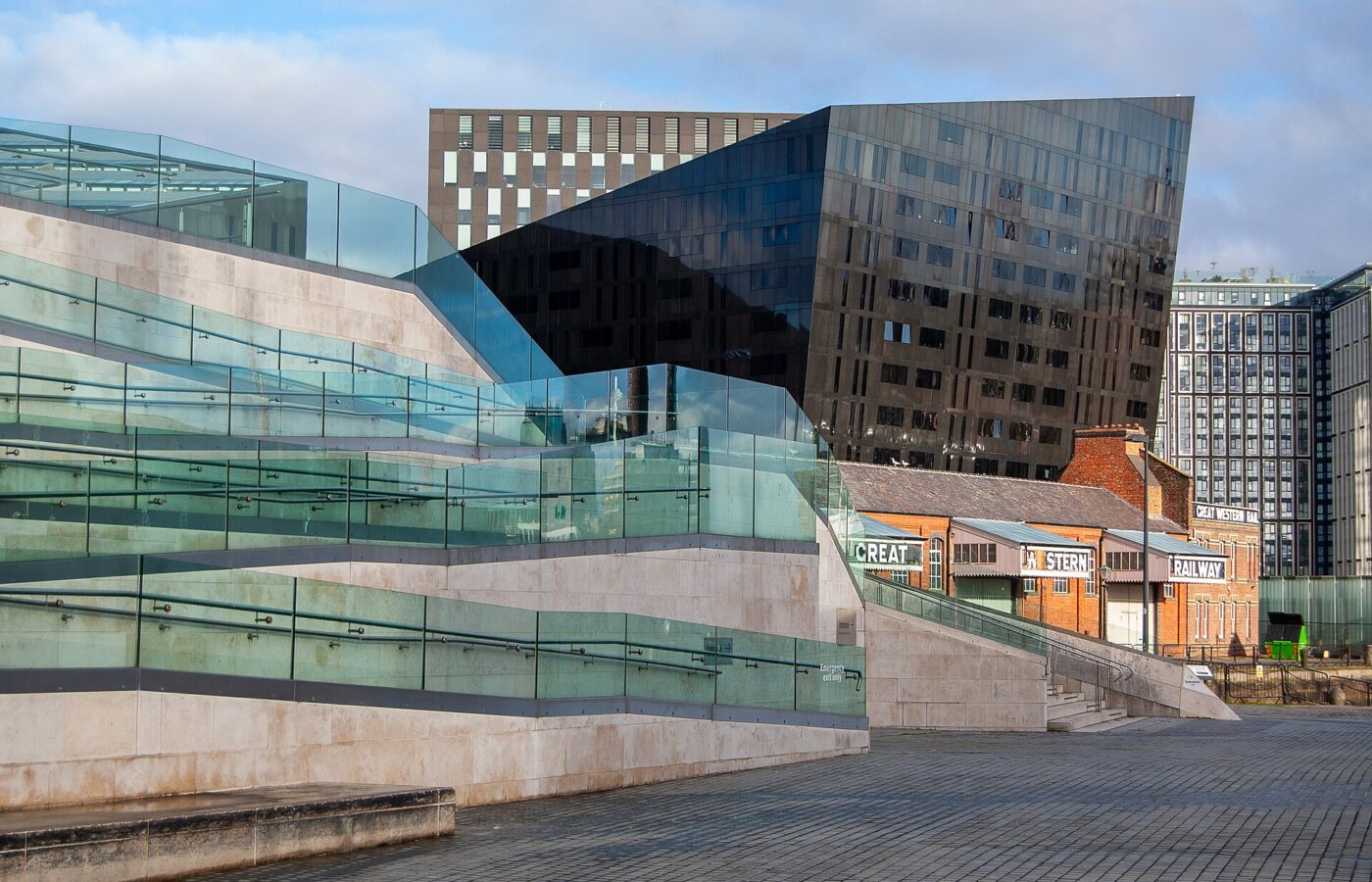
The Museum of Liverpool has a long stone ramp curling up from the Pier Head to its front door, wide enough for two wheelchairs to pass, with a handrail the whole way. It is not a discreet side entrance round the back — it is the main approach, and everybody uses it. That single design decision tells you a good deal about how accessible liverpool actually is compared with its reputation: better than most British cities in the places that were rebuilt this century, and considerably harder work in the Georgian streets that were not.
This guide covers Liverpool for travellers who need more than the standard listing tells them — wheelchair users and people with limited mobility, deaf and blind visitors, autistic and neurodivergent travellers, solo travellers, older visitors, Muslim visitors, dog owners and families with pushchairs. Everything here was checked in September 2026. Where we are not certain of a current detail we say so and tell you who to ring, because a confident wrong answer about a step is worse than no answer at all.
The Short Version
| Aspect | Liverpool’s honest rating |
|---|---|
| City-centre step-free movement | Very good on the waterfront and Liverpool ONE; poor uphill |
| Rail accessibility | Among the best in the UK — level boarding across Merseyrail |
| Museums and galleries | Excellent, and nearly all free |
| Changing Places toilets | Widely provided in the centre |
| Historic buildings | Mixed — retrofitted access, rarely to every level |
| Sensory and relaxed provision | Genuinely strong and growing |
| Accessible accommodation | Adequate; concentrated in the modern chains |
| Halal and dietary provision | Very good, clustered on Bold Street and Hatton Garden |
| Solo travel | Easy, cheap, and unusually friendly |

Getting Here and Getting Around
Trains
Liverpool Lime Street is fully step-free with lifts, and has a Changing Places toilet — a meaningful detail, because a standard accessible toilet is no use to a traveller who needs a hoist and a bench. Assistance can be booked in advance through your train operator, and turn-up-and-go assistance is available, though booking ahead is considerably more reliable at busy times.
Merseyrail is one of the easiest networks in the country to use. The newer trains offer level boarding — the floor meets the platform, with no ramp and no need to find a member of staff — and step-free access to platforms exists at almost every station. This is genuinely unusual in Britain and it changes what is possible: Crosby, Formby, Southport, Chester and the Wirral all become straightforward rather than an expedition. “Almost every station” is not “every station”, though, so check the specific stations at both ends of your journey before you set off.
Buses and the airport
Liverpool’s buses are low-floor with wheelchair spaces and ramps as standard. The Arriva 500 from Liverpool John Lennon Airport runs up to every fifteen minutes from roughly 04:00 to midnight, takes 30 to 40 minutes into the centre and takes card on board. The airport itself is single-terminal and compact, which makes it much easier to navigate than Manchester. Our airport guide has the detail.
The Mersey Ferry
Boarding is ramped and all the ferries are fully wheelchair accessible on the main decks, with accessible toilets on those decks. The fifty-minute River Explorer cruise is, for a wheelchair user, one of the genuinely great value experiences in the city — you see the entire waterfront with no barriers at all. See the ferry guide.
Taxis
Liverpool’s black cabs are wheelchair accessible as standard, with ramps carried on board, and there are reliable ranks at Lime Street and outside Liverpool ONE. Private hire is a different matter — accessible private hire vehicles exist but need booking in advance, sometimes a day ahead.
The thing to know about the topography
Liverpool’s centre is genuinely flat from the waterfront through Liverpool ONE to the bottom of Bold Street. East and south of that, it climbs, and it climbs harder than a map suggests. The walk from the Albert Dock up Duke Street to the Georgian Quarter is a serious gradient. The two cathedrals sit on the ridge at the top. If you use a manual chair, walk with a stick, or simply tire on hills, plan the city as two zones and use a bus or a taxi between them rather than treating it as one walk. Our neighbourhoods guide flags which districts are flat.
Wheelchair Access: Attraction by Attraction
Reliably good
- Museum of Liverpool — wide galleries, lifts to every floor, a Changing Places toilet, and that ramped main entrance. The single best building in the city for access, and free. See the full guide.
- Merseyside Maritime Museum and the International Slavery Museum — both closed for essential maintenance ahead of a major redevelopment, with no reopening date. Improved access is part of the brief. Do not build a day around them yet.
- Walker Art Gallery and World Museum — both fully accessible for wheelchair users, both free, both on William Brown Street next to Lime Street. See the Walker guide and World Museum guide.
- Tate Liverpool — the Albert Dock building is closed for redevelopment until around 2027, with new lifts and improved access promised. The collection has moved temporarily to RIBA North on Mann Island, a few minutes’ walk away and step-free.
- Royal Albert Dock — broad, level walkways around the water with ramps linking the different levels. Accessible toilets near the visitor information centre and in several of the restaurants. The cobbles in a couple of stretches are the only real friction.
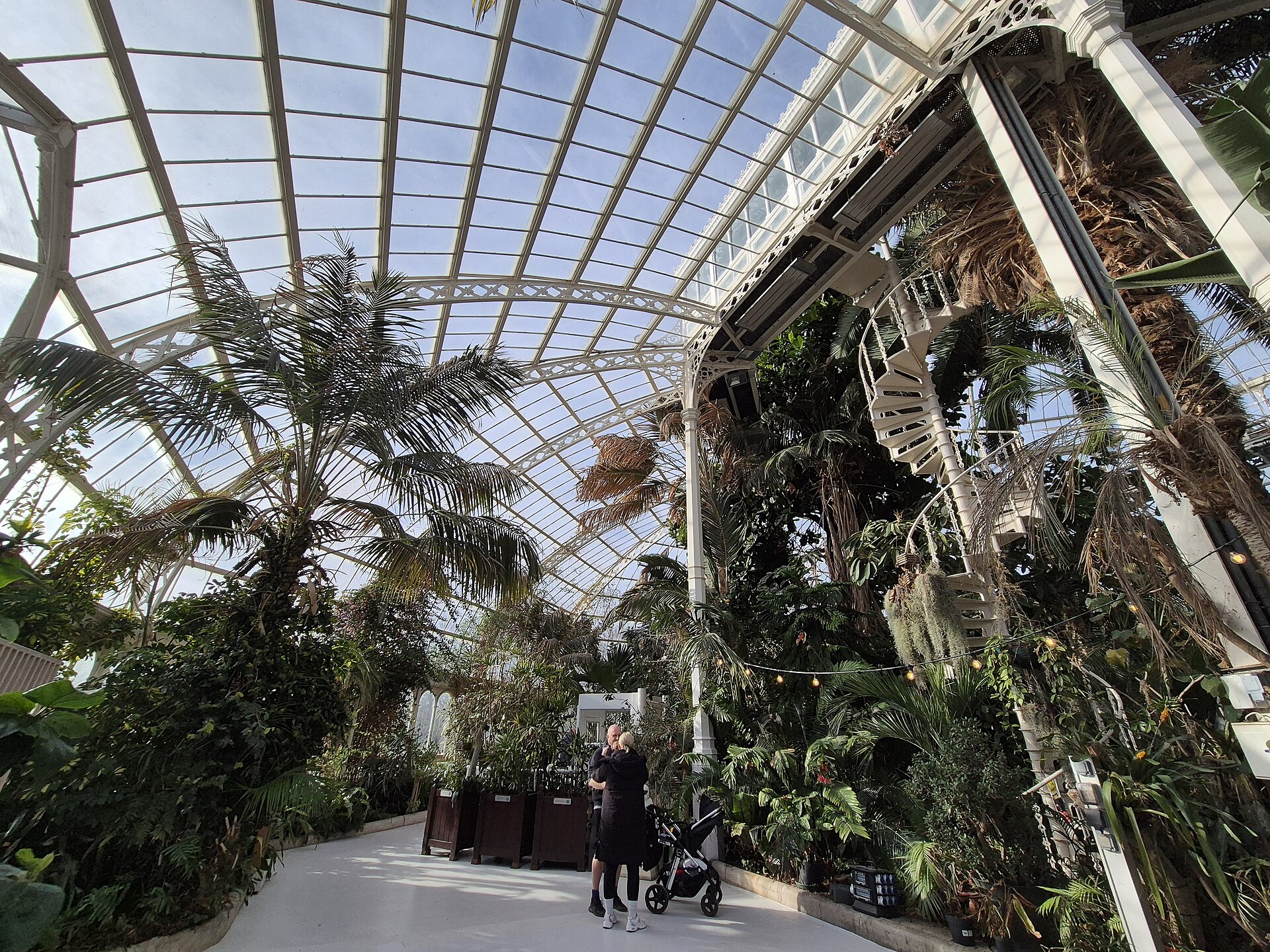
- Sefton Park Palm House — free, and fully step-free: ramped entrance, level floors throughout, and a lift to the accessible toilet. A genuinely lovely place that requires no negotiation at all.
- Liverpool ONE — modern shopping district, lifts everywhere, level throughout, accessible toilets on multiple levels. See the Liverpool ONE guide.
- M&S Bank Arena — modern build with level access, lifts to all tiers and designated wheelchair spaces with companion seats. See the entertainment venues guide.
- Duke Street Market — step-free via the main entrance, accessible toilet on the ground floor.
Accessible with caveats
- Liverpool Cathedral — the main floor is accessible and vast, but the tower requires lifts plus a final flight of steps, so the famous view is not step-free. It runs a Helios Quiet Hour for visitors needing a calmer sensory experience. See the cathedral guide.
- Metropolitan Cathedral — the main circular space is level and easy, and the entrance has ramped access. The Lutyens Crypt beneath is reached by a route that is not fully step-free at every point; ask at the desk.
- The Cavern Club — it is a cellar, but wheelchair access is by lift. Space inside is tight when busy, which is most evenings. See the Cavern guide.
- Anfield — the stadium has designated wheelchair positions across the stands and an accessible tour route, but the surrounding streets are ordinary residential terraces with narrow pavements and parked cars. Book stadium access directly rather than through a reseller. See the stadium tour guide.
- The Beatles childhood homes — small 1950s terraced houses reached by minibus tour. They are physically what they are, and the National Trust is honest about the limitations. Contact them directly before booking. See our childhood homes guide.
- Historic theatres — the Empire, Philharmonic Hall, Royal Court and Playhouse all have wheelchair positions and lift access to at least one level, but not to every tier. Book through each venue’s access line, not online.
Genuinely difficult
- The Georgian Quarter’s terraces. Beautiful, and almost universally reached by a flight of stone steps to a raised front door. Many of the small bars and restaurants in these streets are simply not accessible, and few say so on their own websites.
- The Williamson Tunnels, which are a dug tunnel system and not adapted.
- Some Ropewalks basements — a lot of the city’s best small bars are down a staircase.
- Crosby and Formby beaches beyond the promenade. Crosby has a paved promenade with good views of the Gormley figures, but reaching the figures themselves means crossing soft sand. Formby’s dunes are not accessible.
Changing Places and Accessible Toilets
Changing Places toilets — the larger facilities with a hoist, an adult-sized changing bench and space for two carers — are provided across Liverpool city centre, including at Lime Street station and the Museum of Liverpool. This is one of the areas where the city genuinely outperforms its size.
Two practical notes. First, many Changing Places facilities use a RADAR key; carry one. Second, provision thins out quickly outside the centre — Woolton, Crosby and the outer suburbs are much less well served, so plan a longer day around the central facilities. The national Changing Places register is the authoritative source and is worth checking against your specific route before you travel.

Deaf and Hard of Hearing Visitors
- Hearing loops are standard at the National Museums Liverpool venues, the major theatres and the arena. Ask at the desk rather than assuming — some are counter loops only.
- Captioned performances are scheduled across the Everyman and Playhouse seasons and at the Empire. These dates are published with the season, not added afterwards, so book early — there are typically only one or two per production.
- BSL-interpreted tours run periodically at the National Museums venues and can sometimes be arranged on request with notice.
- The Mersey Ferry commentary is audio only. The view carries it, but you will miss the narration.
Blind and Partially Sighted Visitors
- Audio description is scheduled across the producing theatres’ seasons, usually with a touch tour beforehand where you can handle costumes and set pieces on stage. Book direct.
- Touch tours and handling sessions run at several of the National Museums venues. These are not always advertised prominently — email ahead and ask.
- Assistance dogs are welcome across attractions, restaurants and transport, as required by law. Liverpool is straightforward about this in practice.
- Tactile paving and crossings are well provided in the rebuilt central areas and patchier in the older streets.
Autistic and Neurodivergent Visitors
This is the area where Liverpool has moved fastest, and there is now genuine provision rather than a policy statement.
- Relaxed mornings at the Museum of Liverpool, with sensory resources and ear defenders available.
- Quiet hours at Tate Liverpool, with reduced noise and ear defenders on loan — currently running at the temporary RIBA North site on Mann Island while the dock building is closed.
- The Helios Quiet Hour at Liverpool Cathedral — a genuinely calm session in an enormous, echoing building that is otherwise quite overwhelming.
- Relaxed performances across the theatres, with house lights up, reduced sound levels and freedom to move around and leave.
Quiet places when the city is too much
Liverpool centre can be genuinely loud — it is a compact city with a lot of nightlife and near-constant construction. Reliable retreats: the Metropolitan Cathedral’s circular interior, which is calm even on a Saturday; the Palm House in Sefton Park; St John’s Gardens behind St George’s Hall; the upper floors of the Walker on a weekday morning; and the riverside walk south of the arena, which is almost always empty. The parks guide has more.
Solo Travellers
Liverpool is one of the easiest British cities to visit alone, for reasons that are partly practical and partly cultural.
- Everything is walkable, so you are not dependent on transport late at night.
- The free museums mean a solo day costs almost nothing. See free museums.
- Eating alone is unremarkable here. The food halls in particular — communal tables, order individually, no negotiation — solve the solo dinner problem entirely.
- Bar culture is genuinely conversational. This is not a cliché about Liverpool; it is a practical observation. Drinking alone at a bar here attracts conversation more often than it does in most cities, which some people will consider a feature and others a warning.
- Free walking tours are a reliable way to meet people on a first day. See our free walking tours guide.
- Safety is much as any large British city. The centre is busy and well lit; ordinary judgement applies around the club streets late on. Our safety guide is specific rather than generic.
Older Travellers
- The waterfront is the flat zone and holds the free Museum of Liverpool and the Tate collection at RIBA North within a few minutes of each other (the Maritime and International Slavery Museums are closed for redevelopment). It is possible to have a full, excellent day out here with almost no gradient.
- The Mersey Ferry gives you the whole city from a seat.
- Concessionary rates apply on most paid attractions and on rail; carry proof of age.
- The hills are the thing to plan around, not the distances. Nothing in central Liverpool is far. Some of it is steep.
- Benches are well provided along the waterfront and in Liverpool ONE, thin on the ground on the climb up Bold Street.
Muslim Visitors
Liverpool has one of Britain’s oldest established Muslim communities and the practical provision reflects it.
- Halal food is clustered on Bold Street and Hatton Garden, with a strong Middle Eastern and Turkish scene at the top of Bold Street in particular. Some of the best-value eating in the city centre is here. See the Bold Street guide.
- Al-Rahma Mosque in Toxteth is the main city mosque, with the Abdullah Quilliam Mosque on West Derby Road occupying the site of Britain’s first mosque, founded in 1889 — a genuinely significant piece of British Muslim history and open to visitors at published times.
- Prayer space is available at the airport and at the universities; city-centre provision is limited, so plan around the mosques.
- Alcohol-free options are increasingly good across the food hall and café scene, which matters in a city where socialising defaults to a pub.
Travelling With a Dog
- Merseyrail carries dogs free on a lead, as do most of the region’s bus operators — check with the specific operator.
- The beaches north of the city are the main draw, but seasonal dog restrictions apply at Crosby, Formby and Ainsdale, typically between spring and early autumn on the main bathing stretches. Check the specific beach for the specific dates.
- Formby’s pinewoods are excellent for dogs outside the restricted zones, though the red squirrel areas ask for dogs on leads.
- Dog-friendly pubs are the norm rather than the exception, particularly on Lark Lane and in the Baltic Triangle.
- Sefton Park, Calderstones and Stanley Park are all large, free and dog-friendly. See the Sefton Park guide.
Families and Pushchairs
Much of what makes a city accessible for wheelchairs makes it easy with a pushchair, and the same map applies: waterfront and Liverpool ONE easy, Georgian Quarter hard. The free museums are the backbone of a family day here — all step-free, all indoors, all free. Our Liverpool with kids guide and the rainy day activities page cover the options, and family hotels handles where to stay.
Accessible Accommodation
Liverpool’s accessible room stock is adequate rather than abundant, and it is concentrated in the modern chain hotels near the waterfront and the business district. A few things worth knowing:
- “Accessible” covers a wide range. The Hilton Liverpool City Centre, for example, has five fully accessible rooms with wheel-in showers and six partially accessible rooms with baths — a distinction that matters enormously and is rarely visible on a booking site.
- Ring the hotel directly. Booking platforms filter on a checkbox, not on whether the shower has a fixed seat or the door is wide enough. Every property that takes access seriously will answer specific questions on the phone.
- Ask about the route from the entrance, not just the room. Several central Liverpool hotels are in converted warehouses and listed buildings with a step or two between the door and the lift.
- Book early. There are only so many accessible rooms in the city, and Grand National week and Anfield home matches clear them out.
- Our where to stay guide and city centre hotels page cover the general options; ring for the specifics.
Planning: The Questions That Actually Get Useful Answers
Access information published online is frequently vague, occasionally wrong and almost never wrong on purpose — it is usually written by someone who does not use the building the way you will. A short phone call or email before you travel is worth more than an hour of reading, and the difference is in what you ask.
What not to ask
“Are you wheelchair accessible?” produces a yes from almost every venue in Britain, because almost every venue can get a wheelchair through a door somehow. It is the least informative question available.
What to ask instead
- “How do I get from the street to the main space?” This surfaces the steps, the side entrance and the staff-operated lift that nobody mentions.
- “Is the accessible toilet on the same level as the thing I have come to see?” A surprising number are not.
- “What is the width of the narrowest doorway on that route?” Powered chairs and scooters are wider than the standard assumption.
- “Is the lift staff-operated, and is it staffed all day?” A lift that requires a member of staff who leaves at four is not a lift after four.
- “Can I book the access ticket by phone, and is the companion ticket free?” Nearly every venue in this guide operates a free companion scheme, and nearly none of them make it obvious online.
- “What is the quietest hour you are open?” Useful for sensory reasons and equally useful for anyone who simply cannot manage a crowd.
Before you travel
- Book rail assistance ahead rather than relying on turn-up-and-go. It exists and it works, but booked assistance is far more reliable at busy times, particularly at Lime Street on a match day.
- Carry a RADAR key. Many accessible and Changing Places facilities are locked.
- Check both ends of a Merseyrail journey, not just the one you are starting from.
- Register for venue access schemes in advance. These are almost never arrangeable on the night.
- Check the fixture list. An Anfield or Everton home match changes crowd density, taxi availability and accessible hotel availability across the whole city.
Where Liverpool Still Falls Short
An honest guide has to include this section, and most do not.
- The independent hospitality scene is the weakest link. Liverpool’s best small bars, cafés and restaurants are disproportionately in Georgian basements and up steps, and very few of them publish access information at all. This is where the city’s character lives, and it is the part hardest to reach.
- Access information is inconsistently published. The National Museums venues and the major theatres are good at it. Almost everyone else expects you to ring.
- Provision drops off sharply outside the centre. Woolton, Crosby and the eastern suburbs have far fewer Changing Places facilities and much less predictable pavement quality.
- Pavement parking is a genuine and persistent problem in the residential streets around Anfield and in parts of the Georgian Quarter.
- Accessible room stock is limited and clears out entirely on event weekends.
- Construction is constant. Liverpool is in the middle of a long building programme along the north docks and around Lime Street, and temporary pavement closures with poorly signed diversions are common. Allow extra time and expect the route you planned to have moved.
None of that makes Liverpool a difficult city to visit. It makes it a city where the good parts are genuinely very good and the gaps are worth knowing about in advance rather than discovering at the door.
A Realistic Step-Free Day
A day that requires no stairs, no steep gradients and no advance negotiation:
- Morning: arrive at Lime Street (step-free, Changing Places on site), take a taxi or the level walk down to the Pier Head.
- 10:30: Museum of Liverpool via the ramp. Free, lifts throughout, Changing Places toilet.
- 12:30: lunch at the Albert Dock — level walkways, accessible toilets near the visitor centre.
- 14:00: the Walker Art Gallery and World Museum on William Brown Street, both free and both fully accessible. (The Maritime and International Slavery Museums are closed, with no reopening date.)
- 15:30: the Mersey Ferry River Explorer — ramped boarding, accessible on the main decks, fifty minutes, and the best view in the city.
- 17:00: Liverpool ONE for shopping or dinner, entirely level with lifts between tiers.
That is a full day, almost all of it free, with no gradient worth the name. Extend it with a Merseyrail trip to Crosby for the promenade view of the Gormley figures, using level boarding at both ends.
Frequently Asked Questions
Is Liverpool a good city for wheelchair users?
In the waterfront and central shopping zone, yes — genuinely good, with level ground, ramped major attractions and a rail network with level boarding. Away from that zone the picture is mixed: the Georgian Quarter is steep and its terraces are almost universally stepped. Plan the city as two zones rather than one.
Is Merseyrail wheelchair accessible?
Largely yes, and it is one of the better networks in Britain for this. The newer trains offer level boarding — the floor meets the platform with no ramp needed — and almost every station has step-free platform access. Check the specific stations at both ends of your journey, as “almost every” is not “every”.
Are there Changing Places toilets in Liverpool?
Yes, and they are widely provided across the city centre, including at Lime Street station and the Museum of Liverpool. Carry a RADAR key. Provision is much thinner outside the centre, so plan a suburban day around a central facility.
Which Liverpool attractions are free and fully accessible?
The Museum of Liverpool, the Walker Art Gallery, the World Museum and Sefton Park Palm House are all free and all step-free. That is still an unusually strong list for a UK city — though note that the Maritime Museum and the International Slavery Museum are closed with no reopening date, and Tate Liverpool’s dock building is closed until 2027.
Can wheelchair users get into the Cavern Club?
Yes — the Cavern is a cellar, but wheelchair access is provided by lift. Be aware that space inside is tight when it is busy, which is most evenings and all weekend.
Is Liverpool good for solo travellers?
Very. It is compact enough to walk everywhere, the major museums are free, eating alone is entirely unremarkable, and the bar culture is more conversational than in most British cities. Free walking tours are a good way to meet people on a first day.
Where can I find halal food in Liverpool?
Bold Street and Hatton Garden are the main clusters, with a particularly strong Middle Eastern and Turkish scene towards the top of Bold Street. This is also some of the best-value eating in the city centre, halal or not.
Are dogs allowed on Liverpool’s beaches?
Seasonal restrictions apply at Crosby, Formby and Ainsdale, generally covering the main bathing stretches from spring to early autumn. The restricted areas and dates vary by beach, so check the specific one before travelling. Outside those zones and seasons, the northern coast is excellent for dogs.
Do Liverpool theatres offer captioned or audio described performances?
Yes, across the Everyman, Playhouse and Empire seasons, usually with one or two dates per production and often with a touch tour before an audio described show. The dates are published when the season is announced rather than added later, so book early and book through the venue’s access line rather than online.
Wheelchair users need a level of detail this page can only summarise — which lift has a size restriction, where the smooth paving runs between the Albert Dock cobbles, which Changing Places toilets are behind a RADAR key, and how to get into a cellar club through a service door at the back. Our wheelchair accessible Liverpool guide goes venue by venue at that level, including an honest list of where the city simply does not work.
Travelling alone? Our full solo travel in Liverpool guide goes much further than the notes above. It covers which hostels and areas suit a solo traveller, the city’s night-time safety schemes from Ask for Angela to the Village Angels patrols, where eating alone is easiest, and a three-day plan built around the free museums.
Travelling with a dog brings its own set of rules. Our dog-friendly Liverpool guide covers the Sefton beaches that ban dogs from May to September, the parks and river walks where they can run, pubs that let them inside, hotels that take them and what they charge, and how assistance dogs are accommodated across the city.
Muslim visitors will find a long-established community and plenty of halal food. Our guide to Liverpool for Muslim travellers covers halal restaurants on Bold Street and Hatton Garden, how to check HMC and HFA certification, Al-Rahma Mosque and the restored Abdullah Quilliam Mosque, praying on the go and Ramadan 2027.
For older visitors who want to take things slowly, our guide to Liverpool for older travellers sets out where the city is flat and where it climbs, the over-60s fares on the ferry and open-top bus, how the bus pass works here, and two gentle itineraries that keep the walking short.
Related Liverpool Guides
- Getting Around Liverpool — Merseyrail, buses, ferries and fares in detail.
- Liverpool Neighbourhoods — which districts are flat and which climb.
- Free Museums in Liverpool — the accessible backbone of any visit.
- Liverpool with Kids — much of the same map applies with a pushchair.
- Where to Stay in Liverpool — accommodation by area and type.
- Liverpool Entertainment Venues — access provision venue by venue.
- The Mersey Ferry — ramped, accessible and the best view in the city.
- Liverpool Travel Tips — the practical basics.
Photo Credits
The ramped south approach to the Museum of Liverpool at the Pier Head: Museum of Liverpool – South Ramp – geograph.org.uk – 7694498 by Oliver Mills, CC BY-SA 2.0, via Wikimedia Commons.
The level interior of Sefton Park Palm House: Interior of Sefton Park Palm House, Liverpool by Fatih Renkligil, CC BY-SA 4.0, via Wikimedia Commons.