This article contains advertising. Our booking links are routed through a partner that adds commission tracking automatically, so if you book through one we earn a commission from the provider, at no extra cost to you. It never affects what we recommend. Affiliate disclosure
Liverpool is one of the easiest UK cities to get around. The city centre is compact enough to cover on foot; the Merseyrail underground loop links four city-centre stations and runs out across Merseyside; buses are cheap, with the City Region’s £2 adult single fare cap; black cabs and private hire fill the gaps; and the Mersey Ferry doubles as both a tourist attraction and a working cross-river commuter service. This getting around Liverpool transport guide covers everything you need: how to use Merseyrail, where the bus stations are, how the Saveaway day ticket works, the £2 bus fare cap, taxi options, the Mersey Tunnel for crossing to the Wirral, and the walks between the main attractions. Whether you’re here for a weekend or a longer stay, this is the practical transport information you’ll actually need.
For broader trip planning, see the parent Liverpool travel guide and the how to get to Liverpool guide for arriving in the city in the first place.
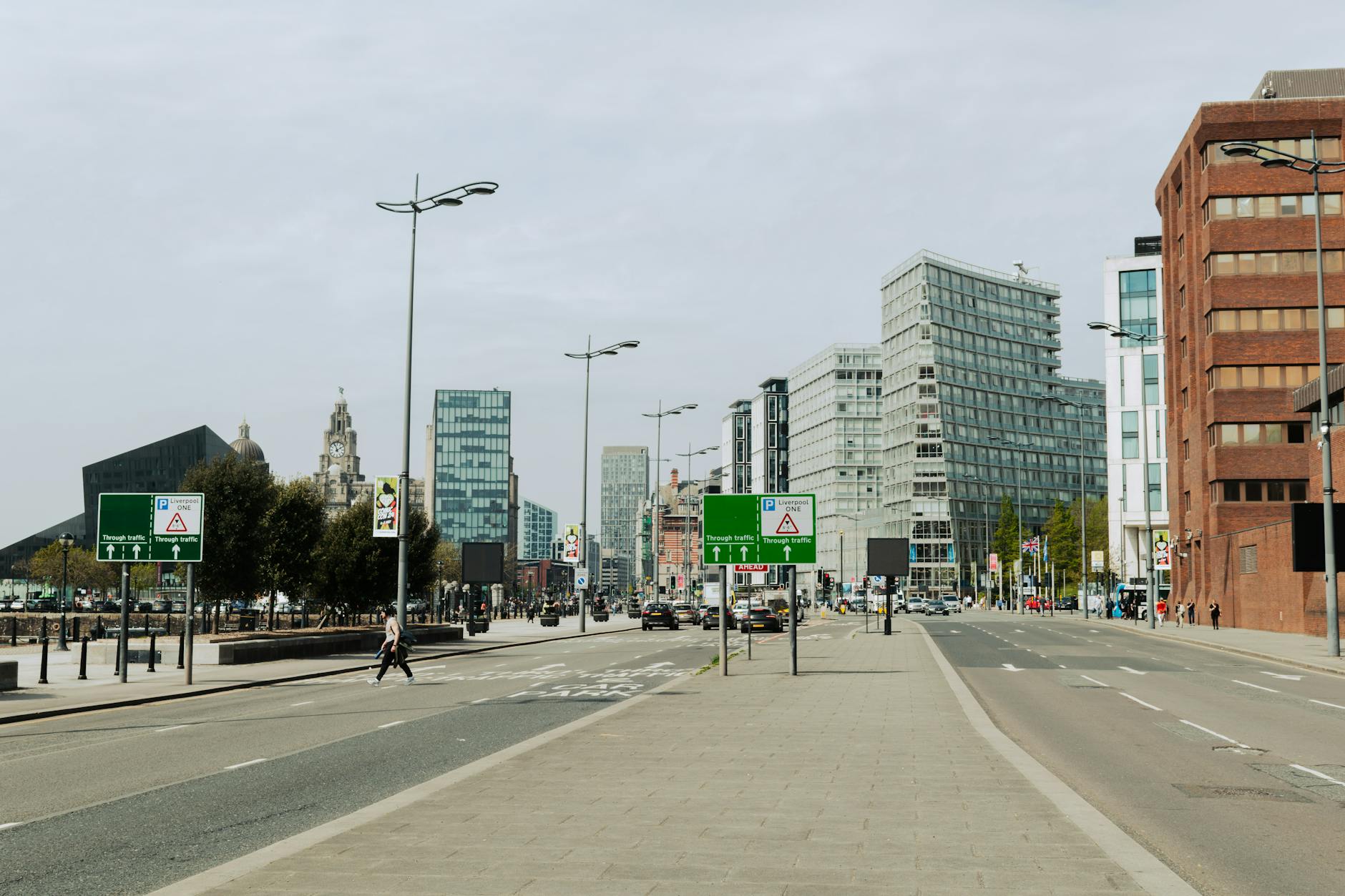
Walking: The Default Mode in Central Liverpool
Most of what tourists visit in Liverpool is walkable. The city centre is genuinely compact:
- Lime Street station to the Albert Dock: 15-20 minutes’ walk through Liverpool ONE.
- Lime Street to the Cavern Club (Mathew Street): a short walk.
- Lime Street to the Anglican Cathedral: allow about 30 minutes, the cathedral’s own estimate.
- Albert Dock to Pier Head: about 10 minutes’ walk along the waterfront.
- Pier Head to the Bombed Out Church: an easy walk up through the centre, finishing at the top of Bold Street.
- Liverpool ONE to the Beatles Story: a short stroll down to the dock.
The central pedestrian network is well-paved, pram and wheelchair friendly, and reliably safe in daylight. Pedestrianised zones include Liverpool ONE, Mathew Street, much of Castle Street, and large parts of the Albert Dock. The single biggest tip for first-time visitors: plan to walk between most central attractions and only use public transport for the longer hauls (Anfield, Penny Lane, the suburban Beatles sites, the Sefton Coast).
Merseyrail: Liverpool’s Underground
Merseyrail is the city region’s suburban rail network, with two main lines — the Northern Line (north-south, running under the city centre) and the Wirral Line (east-west, crossing under the Mersey to the Wirral). The Wirral Line runs round an underground loop through four central stations:
- Liverpool Central — Bold Street end of the city centre.
- Lime Street — the mainline rail station, plus Merseyrail underground platforms below.
- Moorfields — north of the city centre, near the commercial district.
- James Street — closest to the Albert Dock and Pier Head (a short walk to the waterfront).
Trains go round the loop in one direction only, calling at James Street, Moorfields, Lime Street and Liverpool Central in turn, and how often they run depends on the time and the day. The system is small enough that you don’t need a route map for central use — pick whichever station is closest to where you want to go, ride one or two stops, get off. Journey times between central stations are 2-4 minutes.
Key Merseyrail Destinations from the City Centre
Northern Line (going north):
- Sandhills — 5 minutes — for some commuter routes.
- Aintree — for the racecourse and the Grand National (check the journey time for your train on Merseyrail’s timetable).
- Crosby/Blundellsands & Crosby — 20 minutes — for Crosby Beach and the Antony Gormley figures.
- Hightown — the stop before Formby — for Blitz Beach.
- Formby / Freshfield — about 29 and 31 minutes from Liverpool Central — for Formby Beach and the Red Squirrel Reserve (Freshfield is the handier stop for the National Trust pinewoods).
- Southport — 45-50 minutes — for the Southport seaside day trip.
Wirral Line (crossing under the Mersey):
- Birkenhead Hamilton Square — 5 minutes — for the central Birkenhead area.
- Birkenhead Park — 10 minutes — for the historic park.
- Port Sunlight — about 20 minutes — for Port Sunlight village, which has its own station.
- New Brighton — 25 minutes — for the Wirral seaside town.
- West Kirby — the end of the line — for the Hilbre Island walking experience, which depends on the tides.
- Chester — 45 minutes — for the Chester day trip.
The Wirral coverage is covered in detail in the Wirral peninsula guide.
Merseyrail Tickets
Single fares from central Liverpool to suburban stations are typically £3-5. Standard Day Returns around £5-8. The Saveaway day ticket (around £6 in 2026) is excellent value — covers unlimited Merseyrail travel plus most buses and the cross-river commuter Mersey Ferry. Off-peak (after 9:30am Mon-Fri, all day weekends and bank holidays).
Saveaway tickets are now sold on MetroCards — a reusable contactless card available from any staffed Merseyrail station for a one-off £1 cost. Top up the MetroCard with the day’s ticket at the staffed counter or ticket machine.
Buses
Liverpool’s buses are operated by multiple private companies (Arriva, Stagecoach, smaller operators) under the wider Merseytravel branding. Routes radiate from two main interchanges:
- Queen Square bus station — north and east of the city centre. Adjacent to Lime Street station. Main hub for buses to Anfield, Norris Green, Walton, Kirkby, and many north-Liverpool destinations.
- Liverpool ONE bus station — south-west of the city centre. Main hub for buses to south Liverpool, the Wirral via the tunnel, and many south-suburban destinations.
Useful tourist routes:
17, 26 — the 17 from Queen Square and the 26 from Liverpool ONE run direct to Anfield (for Liverpool FC); the 19 stops a short walk away.
86 — along the Penny Lane corridor to south Liverpool.
76 — to Strawberry Field and Woolton (for the suburban Beatles sites).
86A — to Speke Hall (for the National Trust Beatles Childhood Homes tour).
Bus Fares: The £2 Cap
The Liverpool City Region runs its own £2 adult single bus fare cap. Most single bus journeys within the City Region cost £2 — significantly cheaper than they used to be. Pay by contactless card, cash, or via the operator’s app.
The City Region has kept the cap in place, so check its fare announcements before you travel; bus drivers will quote the current price.
The Saveaway day ticket covers most buses across Merseyside for the day if you’re planning multiple trips. The price depends on the travel area you choose, so check the current fare on Merseytravel’s site.
Real-Time Bus Information
Use the Merseytravel app or the Bus Times Live website for current bus arrival information at any stop. How often buses run varies by route and day, so look up the timetable for the route you need.
Mersey Ferries
The Mersey Ferries serve a dual purpose — tourist attraction and working cross-river commuter service. From the Gerry Marsden Ferry Terminal at Pier Head:
River Explorer Cruise — the tourist option. 50-minute round trip with a digital audio guide, calling at Seacombe on the Wirral side while Woodside Ferry Terminal is closed for refurbishment. Adult tickets £14. The standard tourist experience, covered in the Mersey Ferry cruise guide.
Cross-river commuter ferry — direct Pier Head to Seacombe service, cheaper, faster, no commentary. Useful if you just want to get to the Wirral or back. Saveaway day ticket includes the commuter ferry, though not the sightseeing cruise. Outside the commuter sailings, the River Explorer leaves Pier Head on the hour.
The ferries are accessible (lifts, step-free boarding), allow dogs (free), and have a small on-board café.

Taxis and Private Hire
Two types operate in Liverpool:
Black cabs (hackney carriages): Pickup at taxi ranks (Bold Street, Hanover Street, Whitechapel, Lime Street station, Albert Dock, Pier Head) or hailable on the street with a lit “TAXI” sign. Metered fares; typical short central journey £6-10. Card payment widely accepted.
Private hire (Uber, Bolt, local minicabs): Must be booked through the operator; Uber rides are requested in its app. Generally slightly cheaper than black cabs for the same journey. Bolt also runs in Liverpool, and its app shows which of its services are available. Local minicab companies (Delta, Mercury) offer phone bookings.
For most tourists, the choice depends on convenience — black cab from a rank if you’re already in a busy central area; Uber/Bolt if you’re at a hotel or specific location.
Crossing the Mersey: Tunnels
Two road tunnels connect Liverpool to the Wirral:
Queensway Tunnel — Birkenhead. Older (1934), more central.
Kingsway Tunnel — Wallasey. Newer (1971), connects more directly to the north Wirral.
Both are toll roads, charged each way (cash, contactless, or T Flow contactless account). Eligible Liverpool City Region residents with a T Flow account can get a discounted rate. Check the current charges on the Mersey Tunnels site before you drive.
The tunnels are used by cars, taxis, and buses (the Wirral bus services). Pedestrians and cyclists cannot use them — cross by ferry or by Merseyrail Wirral Line instead.
Trains Beyond Liverpool
The main rail station for travel beyond the city region is Liverpool Lime Street. Operators include:
- Avanti West Coast — direct trains to London Euston (just over two hours), Birmingham, Manchester Piccadilly (under an hour).
- TransPennine Express — direct trains to Manchester, Leeds, York, Newcastle, Scarborough.
- Northern — local and regional services across the north-west.
- Transport for Wales — direct trains to Chester, Wrexham, North Wales coast (Llandudno, Bangor, Holyhead).
For day-trip rail options, see the day trips from Liverpool parent guide and the individual destination guides (Lake District, York, Manchester, North Wales, etc.).
Liverpool’s Cycling and Active Travel
Liverpool has been progressively improving its cycle infrastructure. Notable routes:
Otterspool Promenade — traffic-free riverside path from the Albert Dock south to Otterspool.
The Wirral Way — 12 miles of traffic-free path across the Wirral peninsula (West Kirby to Hooton).
The Sefton Coastal Path — multiple miles of coastal cycling from Crosby north to Southport.
City Bike Liverpool operates docked rental bikes at several central locations, with app-based hire. Casual cycling is best in summer when traffic is lighter and the waterfront paths are at their best.
Electric scooter rentals (Bolt, which also runs the shared e-bikes) are available from designated docking stations. Helmet required; central use only.
Liverpool City Sightseeing Bus
The hop-on-hop-off open-top sightseeing bus runs a daily circuit of the major attractions — Pier Head, Albert Dock, Cavern Quarter, Lime Street, the Cathedrals, Anfield (in season). Adult ticket around £18 for 24 hours.
Worth doing on a first day for the orientation, less useful afterwards (the same attractions are within easy walking distance). The audio commentary is decent. Combined with the Liverpool Pass (£64.99 for 24 hours, £84.99 for 48 hours) which also bundles Beatles Story, Strawberry Field, LFC Museum, Mersey Ferry Cruise, and the British Music Experience.
Liverpool Transport Tickets: Which One Should You Buy?
Depends on what you’re doing.
Single day, city-centre walking + one suburban trip: Saveaway day ticket — covers Merseyrail, buses, commuter ferry, off-peak.
Single day, lots of bus travel: Saveaway is still best — multi-modal flexibility.
Single day, just one Merseyrail return: Buy a Day Return (around £5-8 depending on destination). Cheaper than Saveaway if you’re only doing one trip.
Multi-day visit: Buy a Saveaway for each travel day, or consider a Merseyrail weekly Pass (around £25) for unlimited Merseyrail travel.
Tourist with multiple attractions to do: The Liverpool Pass (£64.99/£84.99) bundles transport, ferry, and major attractions; worth doing the maths against individual ticket prices.
Visiting Anfield or other one-off destinations: Single bus fare £2 each way is the cheapest option.
Getting Around Liverpool: Practical Tips
Download the Merseytravel app — combined journey planner for buses, trains, and ferries. Free, available on iOS and Android.
Contactless cards work almost everywhere. Tap on most buses, all Merseyrail station gates, ferry terminals, and taxis. Some smaller bus operators still take cash but cards are increasingly universal.
Avoid the morning Mon-Fri rush hour for Saveaway tickets. Saveaway doesn’t cover journeys starting 06:31-09:29 Mon-Fri. Either travel before or after the cutoffs, or buy a single ticket for early commutes.
Late-night transport thins out. Last Merseyrail trains differ by line, direction and day, so look up the last one home before you go out. Most night-time city-centre transport is by black cab or Uber. Plan ahead if you’re going to be out past midnight in suburban Liverpool.
Pedestrian crossings: Standard UK rules — wait for the green man. Drivers in Liverpool are generally respectful of pedestrians; jaywalking is common but use crossings for safety.
Mobility: Most Merseyrail stations are step-free; some have lifts to all platforms. Buses are wheelchair-accessible. The Mersey Ferry is fully accessible. For a taxi or private hire car, book a wheelchair-accessible vehicle specifically and confirm the space with the operator; in the Uber app, check whether an accessible option is available.
Getting Around Liverpool FAQs
What is the best way to get around Liverpool? Walking for the central tourist sites (Albert Dock, Cavern Quarter, Cathedrals, Pier Head), plus Merseyrail for the cross-Mersey or longer suburban trips, plus occasional bus or taxi for specific destinations like Anfield, Strawberry Field, or south-Liverpool spots. A Saveaway day ticket covers most of that travel off-peak.
How much does public transport cost in Liverpool? Bus single fare £2; Merseyrail singles £3-5; Saveaway day ticket priced by travel area (unlimited Merseyrail+bus+commuter ferry). Mersey Ferry River Explorer Cruise £14 for an adult.
Is Liverpool walkable? Yes — the city centre is one of the most walkable in the UK. The Albert Dock, Pier Head, Liverpool ONE and the Cavern Quarter are all linked by easy walks, and Lime Street station is within walking distance of the waterfront.
How does Merseyrail work? Underground/overground commuter rail network. Four central underground stations interchange in a loop. Northern Line runs north (Crosby, Formby, Southport); Wirral Line crosses under the Mersey to the Wirral and on to Chester.
What is the Saveaway day ticket? A day ticket covering unlimited Merseyrail, most buses, and the cross-river commuter Mersey Ferry within Merseyside, priced by the travel area you pick. Off-peak (after 9:30am weekdays; all day weekends/bank holidays). Sold on a MetroCard (£1 one-off card cost).
Are buses safe in Liverpool? Yes — Liverpool buses are reliably safe day and evening. Standard urban precautions apply late at night.
Can I use a contactless card on Liverpool buses? Yes — almost all bus operators in Liverpool accept contactless payment. £2 single fare cap applies in most cases.
How do I get from Lime Street to the Albert Dock? 15-20 minutes’ walk through Liverpool ONE. Or two stops on Merseyrail (Lime Street to James Street via Liverpool Central, then 5 minutes’ walk). Bus is also an option but walking is generally easier.
Is there a metro or underground in Liverpool? Merseyrail’s four central stations operate as an underground loop, so yes — a small but useful underground system. The wider Merseyrail network includes both underground and overground sections.
How do I cross to the Wirral? Three options: the Merseyrail Wirral Line (underground, beneath the river), the commuter Mersey Ferry from Pier Head to Seacombe, or car/taxi via the Queensway or Kingsway road tunnels (tolled each way).
Is Uber available in Liverpool? Yes — Uber operates in the city, and the app shows what’s nearby when you request a ride. Bolt is here too. Local minicab companies (Delta, Mercury) take phone bookings.
The Bottom Line on Getting Around Liverpool
Liverpool is one of the easiest UK cities to get around. The central tourist core is small enough to walk; the Merseyrail underground loop handles the longer city-region trips; bus services are dense and capped at £2 single fares; the Mersey Ferry connects to the Wirral; black cabs and Uber/Bolt cover anything else. The single best ticket for tourists is the Saveaway day pass, which covers most public transport across Merseyside for a full off-peak day.
For first-time visitors, the simplest approach: walk everything in the central tourist core (Albert Dock, Cavern Quarter, Cathedrals, Pier Head), use Merseyrail for the cross-Mersey day-trips and the Sefton Coast (Crosby, Formby, Southport), and grab the occasional bus or taxi for specific stops like Anfield or Strawberry Field. Combined with the parent Liverpool travel guide, the how to get to Liverpool guide, and the Liverpool on a budget guide, you’ll have everything you need to navigate the city efficiently and cheaply.
Fares and route numbers only matter once you know where you are actually going. The 17 to Anfield, the Northern Line to Crosby and the 82 down Aigburth Road all appear on this page because they connect districts that feel genuinely different from one another. Our area-by-area neighbourhoods guide covers what is at the far end of each of those journeys, and whether the trip earns the fare.
One detail worth pulling out of all this: Merseyrail’s newer trains offer level boarding, meaning the floor meets the platform with no ramp and no need to find staff, and almost every station has step-free platform access. That is genuinely unusual in Britain and it changes what a day out to Crosby, Formby or Chester involves. Our accessible Liverpool guide covers the network, the ferry, the black cabs and the attractions in the same detail.