This article contains advertising. Our booking links are routed through a partner that adds commission tracking automatically, so if you book through one we earn a commission from the provider, at no extra cost to you. It never affects what we recommend. Affiliate disclosure
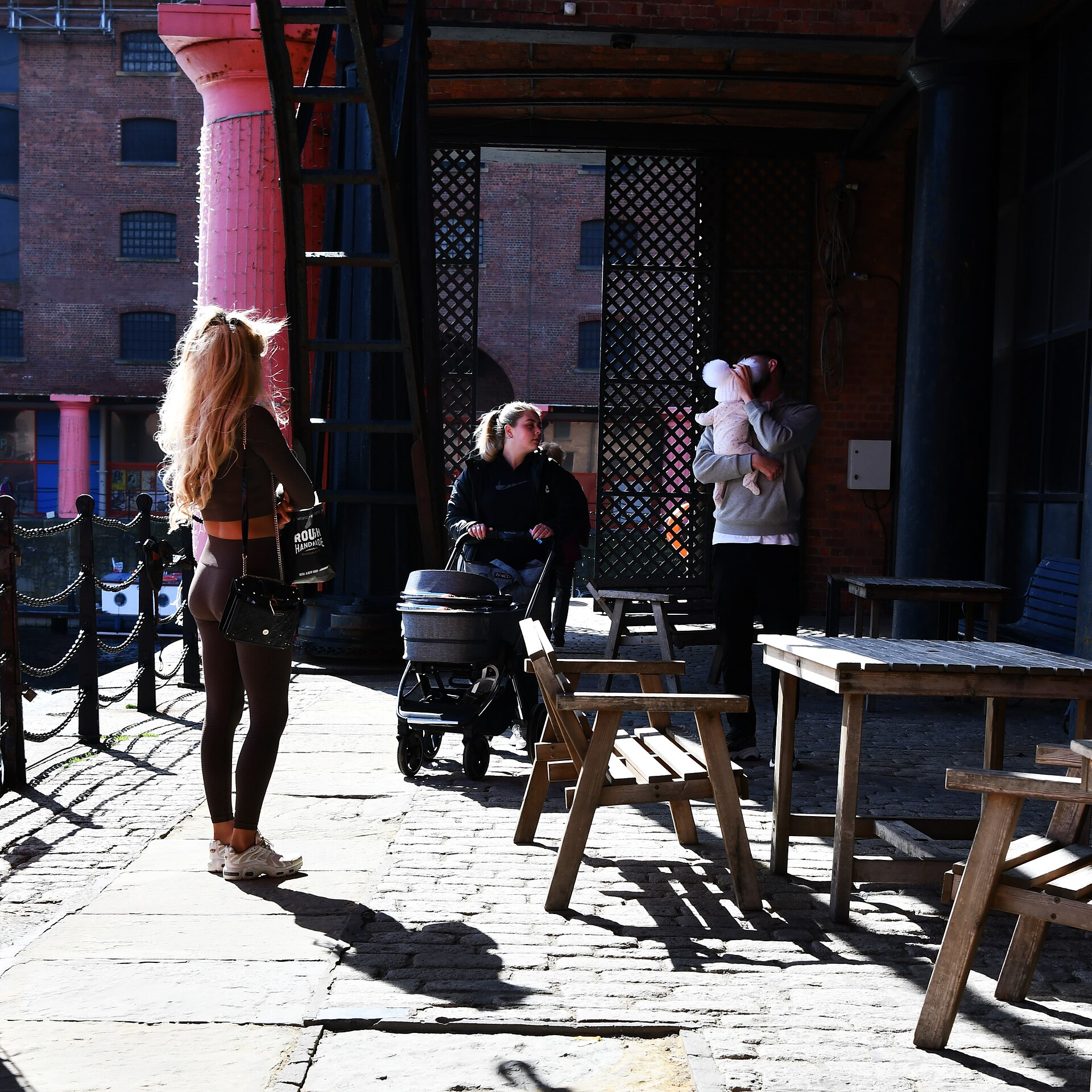
Here is the detail that tells you whether a guide has been written by someone who has actually pushed a chair around the Albert Dock: the walkways are cobbled, but there is a strip of smooth paving slabs running down the middle of them. You can cross the entire dock without touching a cobble if you know where to look. Nobody signposts it. That kind of specific, ground-level information is what wheelchair accessible liverpool searches are actually after, and it is what most published guidance leaves out in favour of a “fully accessible” tick.
This guide sets out what genuinely works in Liverpool for wheelchair users and people with limited mobility: which attractions are step-free and which only claim to be, where the Changing Places toilets are, how the rail network behaves, and — because it matters more than any of it — where the city is hard. Everything was checked in September 2026. Two major venues that appear on almost every accessible-Liverpool list are currently closed, and that is covered below, because a wasted journey is worse than no recommendation.
The Honest Summary
| Aspect | Verdict |
|---|---|
| Waterfront and Liverpool ONE | Excellent — flat, wide, lifted, well provided |
| Merseyrail | Among the best UK networks — level boarding on the newer trains |
| Free museums | Strong, though two big ones are closed with no reopening date |
| Changing Places toilets | Good in the centre, thin outside it |
| Georgian Quarter | Difficult — steep, and the terraces are stepped |
| Independent bars and cafés | The weakest link, and rarely documented |
| Black cabs | Wheelchair accessible as standard, plentiful |
| Hotels | Adequate; ring, do not filter |
The short version: Liverpool splits into a flat zone and a hill. The flat zone runs from the cruise terminal at Princes Dock, through the Pier Head and Albert Dock, into Liverpool ONE and along to Lime Street. Inside it, the city is genuinely very good. East and south of Bold Street it climbs hard, and the Victorian and Georgian building stock was not built for anyone who cannot manage a step.
Getting Around
Merseyrail
The single best thing about accessible travel here. The newer trains offer level boarding — the carriage floor meets the platform, so there is no ramp to deploy and no need to find a member of staff — and step-free access to platforms exists at almost every station on the network. This is unusual in Britain and it transforms what a day out looks like: Crosby, Formby, Southport, Chester and the Wirral become straightforward rather than an operation.
“Almost every station” is not every station, so check both ends of your journey before you set out. The network is not valid for Day Saver tickets in the weekday morning peak between 06:31 and 09:29, which is worth planning around. Our getting around guide has the ticketing.
Lime Street and mainline rail
Liverpool Lime Street is fully step-free with lifts, and it has a Changing Places toilet — which is a meaningfully different thing from a standard accessible toilet, because it has a hoist and an adult-sized changing bench. Book assistance in advance through your train operator; turn-up-and-go exists but booked assistance is far more reliable at busy times, and Lime Street on a match day is very busy indeed.
Buses
Low-floor with wheelchair spaces and ramps as standard across the city. The Arriva 500 from Liverpool John Lennon Airport runs up to every fifteen minutes from roughly 04:00 to midnight, takes 30 to 40 minutes and accepts card on board. The airport itself is single-terminal and compact, which makes it considerably easier to navigate than Manchester.
Taxis
Liverpool’s black cabs are wheelchair accessible as standard and carry ramps, and there are reliable ranks at Lime Street and outside Liverpool ONE. Private hire is different — accessible vehicles exist but need booking in advance, sometimes a day ahead. For a big event finish, walk a few minutes away from the venue and hail rather than joining the rank.
The Mersey Ferry
Ramped boarding, and all the ferries are fully wheelchair accessible on the main decks with accessible toilets there. The fifty-minute River Explorer cruise is, for a wheelchair user, one of the genuinely great experiences in the city — the entire waterfront, from a seat, with no barriers at any point. See the ferry guide.

Attractions: What Actually Works
Reliably step-free
- Museum of Liverpool, Mann Island. The best building in the city for access: a wide ramped main entrance used by everyone rather than a side door, broad galleries, lifts to every floor, and a Changing Places toilet. Free. See the full guide.
- Walker Art Gallery, William Brown Street. Fully accessible for wheelchair users, free, and next to Lime Street. See the Walker guide.
- World Museum, a few doors along. Fully accessible, free, and it has a Changing Places toilet. See the World Museum guide.
- Liverpool ONE. Modern open-air shopping district, level throughout, lifts between tiers, accessible toilets on multiple levels and a Changing Places facility on Wall Street. See the Liverpool ONE guide.
- Sefton Park Palm House. Free, ramped at the door, level floors throughout, lift to the accessible toilet. One of the very few places in the city that requires no negotiation at all. See the Sefton Park guide.
- M&S Bank Arena. Modern build, accessible seating spaces, wide corridors, accessible toilets and a drop-off point on the river side. 79 accessible parking spaces, though parking is not free for Blue Badge holders. See the arena guide.
- Everyman Theatre, Hope Street. Rebuilt in 2014 to modern standards, and it has a Changing Places toilet — rare in a theatre.
- Strawberry Field, Woolton. Purpose-built visitor centre with a Changing Places toilet. See the Strawberry Field guide.
- Royal Albert Dock. Broad level walkways with ramps between levels, accessible toilets near the visitor information centre and in several restaurants. The cobbles are avoidable via the central paving strip.
Accessible, with caveats worth knowing
- The Beatles Story, Albert Dock. The entrance lift is out of order, leaving 19 shallow steps, so check before you go; the main lift also has size restrictions that exclude some larger powered chairs, and there is a cap on how many wheelchairs can be in the exhibition at once. This is the sort of thing you find out at the door unless you ring first — call ahead on 0151 705 6621. See our Beatles Story guide.
- The Cavern Club, Mathew Street. It is a cellar, and wheelchair access is real but informal: ask staff at the front, and they will take you round to a rear door and down in a service lift. It is not signposted and you will not find it yourself. Space inside is tight whenever it is busy, which is most evenings. See the Cavern guide.
- Anfield. The stadium tour is wheelchair accessible and consistently well reviewed for it, with designated wheelchair positions across the stands on match days. Book directly with the club rather than through a reseller. The surrounding streets are ordinary residential terraces with narrow pavements and heavy pavement parking. See the stadium tour guide.
- Liverpool Cathedral. The main floor is accessible and enormous. The tower is not step-free — it is lifts plus a final flight of stairs — so the famous view is out of reach. It runs a Helios Quiet Hour for visitors who need a calmer sensory experience. See the cathedral guide.
- Metropolitan Cathedral. The circular main space is level and easy, with ramped access at the entrance. The Lutyens Crypt below is not fully step-free at every point; ask at the desk on the day.
- Historic theatres — the Empire, Philharmonic Hall, Royal Court and Playhouse all have wheelchair positions and lift access to at least one level, but not to every tier. Book through each venue’s access line rather than online. See the entertainment venues guide.
- The Beatles childhood homes. Small 1950s terraced houses reached only by pre-booked National Trust minibus. They are physically what they are; contact the National Trust directly before booking. See our childhood homes guide.
Currently closed — do not plan around these
This is the section other guides have not updated, and it will cost you a wasted morning if you rely on them.
- Merseyside Maritime Museum and the International Slavery Museum — same Albert Dock building, both closed since early 2025 for essential maintenance ahead of a major redevelopment, with no reopening date. Improved access is part of the scheme. They still appear as open on a great many accessible-Liverpool listings.
- Tate Liverpool — the Albert Dock building is closed for redevelopment and expected to reopen around 2027, with larger galleries, new lifts and improved access. The collection has moved temporarily to RIBA North on Mann Island, a few minutes away, right next to the Museum of Liverpool, and step-free.
Genuinely difficult
- The Georgian Quarter terraces. Beautiful, and almost universally reached by a flight of stone steps to a raised front door. Many of the small bars and restaurants in these streets are simply not accessible, and very few say so on their own websites.
- Ropewalks basements. A large share of the city’s best small bars are down a staircase.
- The Williamson Tunnels, which are a dug tunnel system and not adapted.
- Crosby and Formby beaches beyond the promenade. Crosby has a paved promenade with a good view of the Gormley figures, but reaching the figures themselves means crossing soft sand. Formby’s dunes are not accessible.
- The climb. Duke Street from the Albert Dock to the cathedrals rises around seventy metres over three-quarters of a mile. In a manual chair this is not a walk, it is an undertaking.
Changing Places Toilets
Confirmed Changing Places facilities in and around the city centre:
- Liverpool Lime Street station
- Museum of Liverpool, Mann Island
- World Museum, William Brown Street
- Everyman Theatre, Hope Street
- Liverpool ONE, Wall Street
- Strawberry Field, Beaconsfield Road, Woolton
Three practical notes. Carry a RADAR key — many are locked. Provision thins sharply outside the centre, so plan a suburban day around one of the central facilities or around Strawberry Field if you are heading south. And check the national Changing Places register against your specific route before you travel, because facilities do go temporarily out of service and no guide is updated fast enough to catch that.
The Albert Dock in Detail
It is the single most visited part of the city and it deserves its own note, because the surface conditions vary within a few metres.
- The cobbles are real and they are unpleasant in a chair. But a strip of smooth paving slabs runs down the middle of the main walkways, and following it lets you cross the whole dock comfortably. Look down, not at the signage.
- Ramps link the different levels around the dock and the quaysides are broad.
- Accessible toilets are near the visitor information centre and in several of the restaurants.
- The warehouse conversions have low headroom and tight corners on some floors — a factor for larger powered chairs rather than a barrier.
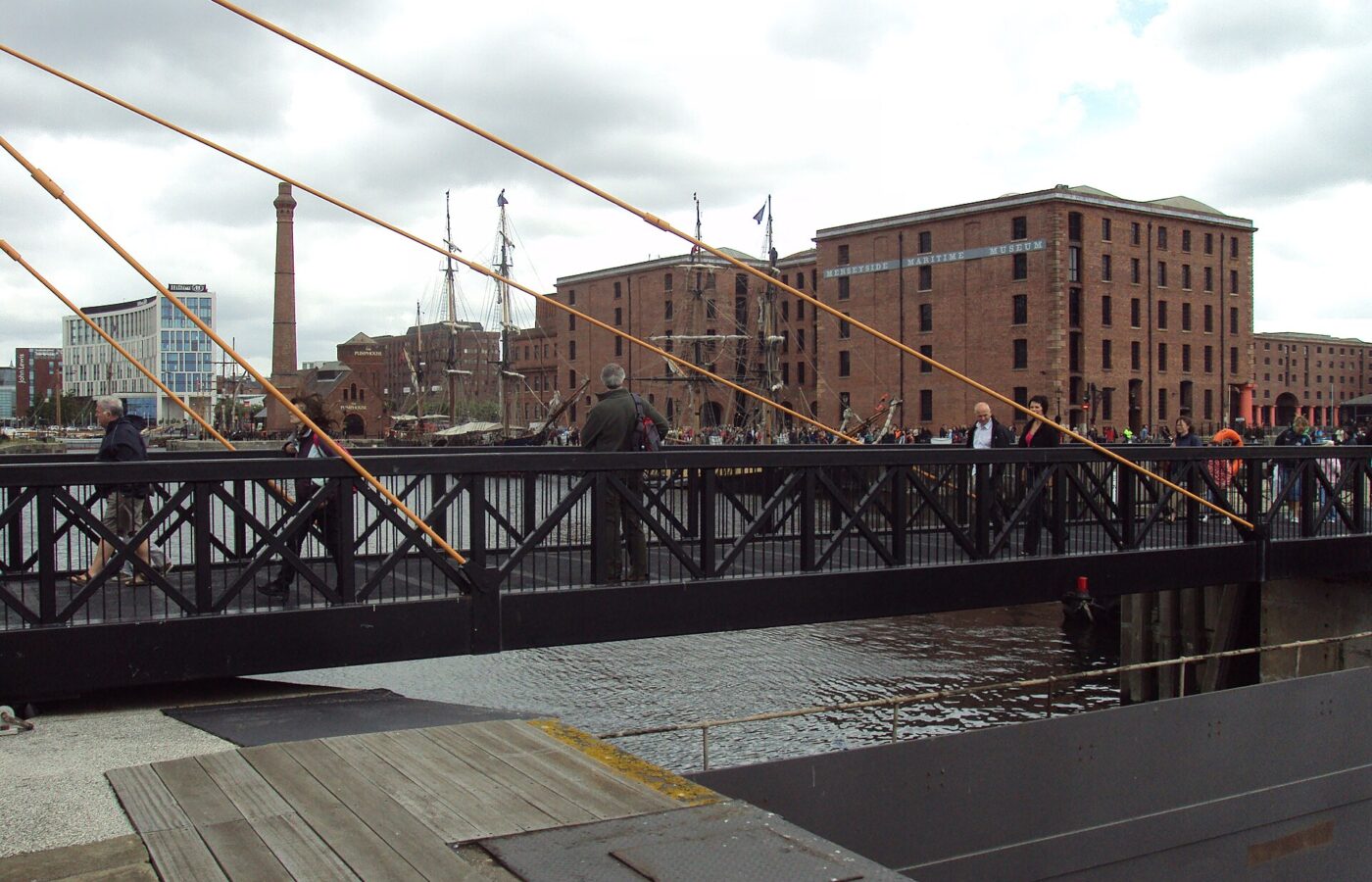
- The footbridges across Canning Dock are level and railed.
- It is exposed. The dock takes the wind straight off the river, and it is noticeably colder there than three streets inland.
Where to Stay
Liverpool’s accessible room stock is adequate rather than plentiful, and it concentrates in the modern chain hotels near the waterfront and the business district.
- “Accessible” covers a wide range. The Hilton Liverpool City Centre, for example, has five fully accessible rooms with wheel-in showers and six partially accessible rooms with baths. That distinction matters enormously and is invisible on a booking site.
- Ring the hotel directly. Platforms filter on a checkbox, not on whether the shower has a fixed seat, the bed height, or the door width. Any property that takes access seriously will answer specific questions on the phone.
- Ask about the route from the street to the room, not just the room. Several central Liverpool hotels are in converted warehouses and listed buildings with a step or two between the front door and the lift.
- Book early. There are only so many accessible rooms in the city, and Grand National week and Anfield home matches clear them out entirely.
- Stay in the flat zone. The waterfront, Albert Dock and business district put you on level ground; anything up the hill means a taxi every time you come home.
Our where to stay guide, city centre hotels and Albert Dock hotels cover the general picture; ring for the specifics.
Eating and Drinking
The honest position: this is where Liverpool falls down, and it is worth saying plainly rather than burying.
- The waterfront and Liverpool ONE are easy. Modern buildings, level entrances, accessible toilets. The food is mid-market and fine.
- Bold Street and the Ropewalks are mixed. Some ground-floor, level-entry independents; a lot of steps and basements. Very little published access information.
- Duke Street Market is step-free via the main entrance with an accessible toilet on the ground floor, and food halls in general are among the best options — level, open-plan, and you order at counters rather than navigating a dining room.
- The Georgian Quarter is the hardest. The best restaurants in the city are up here and a good number of them are up steps.
- Ring ahead rather than turning up. Almost no independent venue in Liverpool publishes usable access information, and almost all of them will tell you honestly if you ask.
Our food and dining hub and street food markets guide cover the options.
A Full Step-Free Day
A day with no stairs, no serious gradient and no advance negotiation beyond one phone call.
- 09:30 — arrive at Lime Street. Step-free, lifts, Changing Places on site. Take a taxi down to the Pier Head, or the level walk if you have the time.
- 10:00 — Museum of Liverpool via the main ramp. Free, lifted throughout, Changing Places toilet. Two hours easily.
- 12:00 — RIBA North, next door on Mann Island, for the Tate collection while the dock building is closed.
- 13:00 — lunch at the Albert Dock, ten level minutes south along the waterfront, following the paving strip through the cobbles.
- 14:30 — the Mersey Ferry River Explorer. Ramped boarding, accessible main decks, fifty minutes, the best view in the city.
- 16:00 — Liverpool ONE. Entirely level, lifts between tiers, Changing Places on Wall Street.
- Optional: Merseyrail from Central to Waterloo for the Crosby promenade and a view of the Gormley figures, with level boarding at both ends.
Almost all of that is free. It is a genuinely good day, and it requires nothing exceptional of anyone.
Before You Travel
- Do not ask “are you wheelchair accessible?” Almost every venue in Britain says yes. Ask “how do I get from the street to the main space?” — that question surfaces the step, the side entrance and the staff-operated lift.
- Ask whether the accessible toilet is on the same level as the thing you came to see. Often it is not.
- Ask the width of the narrowest doorway on the route. Powered chairs and scooters are wider than the standard assumption.
- Ask whether the lift is staff-operated and staffed all day. A lift needing a member of staff who leaves at four is not a lift after four.
- Register for venue access schemes in advance. Nearly every venue in this guide offers a free companion ticket, and nearly none of them make it obvious online. It cannot be arranged on the night.
- Carry a RADAR key.
- Check the fixture list. An Anfield or Everton home match changes crowd density, taxi availability and accessible hotel availability across the whole city.
- Expect construction. Liverpool is midway through a long building programme along the north docks and around Lime Street, and temporary pavement closures with poorly signed diversions are common. Allow extra time.
Frequently Asked Questions
Is Liverpool good for wheelchair users?
In the flat zone — the waterfront, Albert Dock, Liverpool ONE and along to Lime Street — genuinely yes, and better than most British cities. Away from it the picture changes: the Georgian Quarter is steep and its terraces are stepped, and the independent bar and restaurant scene is largely inaccessible and undocumented. Plan the city as two zones rather than one.
Is Merseyrail accessible for wheelchair users?
Largely yes, and it is one of the better networks in Britain. The newer trains offer level boarding — the floor meets the platform with no ramp and no staff needed — and almost every station has step-free platform access. Check the specific stations at both ends of your journey, because “almost every” is not every.
Can wheelchair users get into the Cavern Club?
Yes, but not through the front. Ask staff at the entrance and they will take you round to a rear door and down in a service lift. It is not signposted. Space inside is tight when busy, which is most evenings and all weekend.
Is the Albert Dock wheelchair friendly despite the cobbles?
Yes. The cobbles are real, but a strip of smooth paving slabs runs down the middle of the main walkways and you can cross the whole dock on it. Ramps link the different levels and there are accessible toilets near the visitor information centre and in several restaurants.
Which Liverpool museums are free and fully accessible?
The Museum of Liverpool, the Walker Art Gallery and the World Museum. Note that the Merseyside Maritime Museum and the International Slavery Museum are closed, with no reopening date, and Tate Liverpool’s dock building until around 2027 — the Tate collection is temporarily at RIBA North on Mann Island.
Where are the Changing Places toilets in Liverpool?
Confirmed at Lime Street station, the Museum of Liverpool, the World Museum, the Everyman Theatre, Liverpool ONE on Wall Street, and Strawberry Field in Woolton. Carry a RADAR key, and check the national register against your route before travelling.
Is the Anfield stadium tour wheelchair accessible?
Yes, and it is well reviewed for access, with designated wheelchair positions across the stands on match days. Book directly with the club rather than through a reseller. The residential streets around the ground are narrow with heavy pavement parking.
Can I visit the Beatles Story in a wheelchair?
Not without help at the moment: the entrance lift is out of order, leaving 19 shallow steps, so check its accessibility page before you go. The main lift also has size restrictions that exclude some larger powered chairs, and there is a limit on how many wheelchairs can be in the exhibition at once. Ring ahead on 0151 705 6621 before you travel.
Are Liverpool’s black cabs wheelchair accessible?
Yes, as standard, and they carry ramps. There are reliable ranks at Lime Street and outside Liverpool ONE. Accessible private hire vehicles exist but need booking in advance, sometimes a day ahead.
Related Liverpool Guides
- Accessible & Inclusive Liverpool — the full pillar, covering sensory, deaf, blind, solo and dietary needs.
- Getting Around Liverpool — Merseyrail, buses and fares in detail.
- The Mersey Ferry — ramped, accessible, and the best view in the city.
- Free Museums in Liverpool — what is open and what is not.
- Liverpool Neighbourhoods — which districts are flat and which climb.
- Where to Stay in Liverpool — accommodation by area.
- M&S Bank Arena Guide — access seating and drop-off.
- Liverpool Waterfront Guide — the flat zone, end to end.
Photo Credits
The level footbridge across Canning Dock, Liverpool: Bridge across Canning Dock, Liverpool – DSC06865 by Rept0n1x, CC BY-SA 3.0, via Wikimedia Commons.
The Albert Dock walkway, showing the smooth paving strip between the cobbles: Liverpool, Albert Dock walkway – geograph.org.uk – 7768210 by Michael Garlick, CC BY-SA 2.0, via Wikimedia Commons.