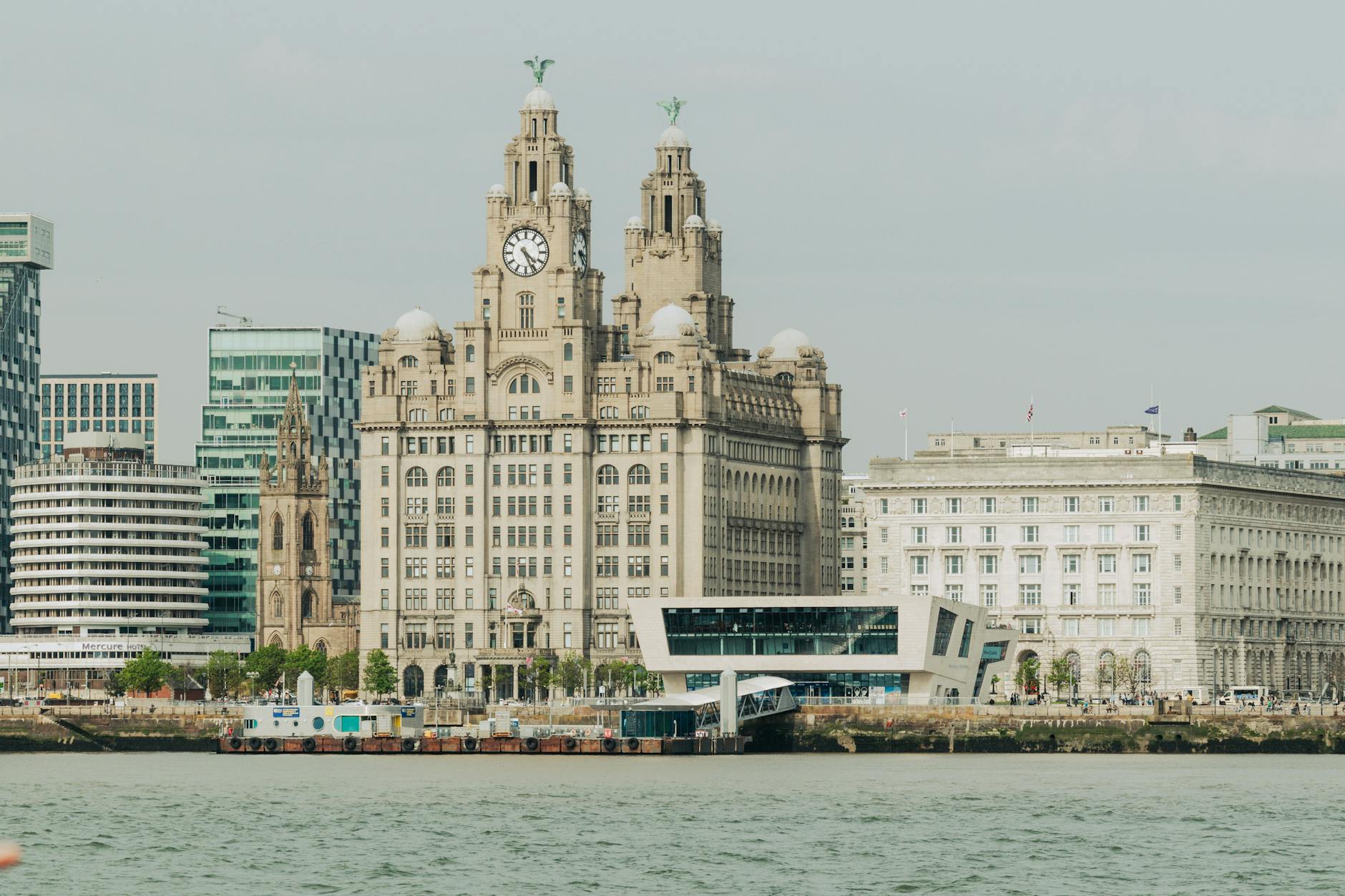
Liverpool has two faces. There’s the Liverpool the cruise-ship tour buses see — the Beatles statues, the Liver Birds, the Albert Dock waterfront — and then there’s the Liverpool locals quietly enjoy on weekday afternoons: a secret network of tunnels under Edge Hill, a bombed-out church that hosts open-air theatre in summer, a Victorian palm house tucked inside a south-side park, an Art Nouveau pub so ornate it’s been called the most beautiful in Britain. These are the hidden gems in Liverpool that don’t make the headline attraction lists, and they’re where the city actually opens up to you. This guide covers 20 of them — the ones I’d send a friend visiting for the first time to, the ones that turn a tourist trip into something you’ll remember years later.
If you’ve already worked through the top 25 tourist attractions in Liverpool and want to dig a layer deeper, or you’re a return visitor looking for something new, the spots below are organised by neighbourhood and theme so you can build them into a half-day walk or a full day out. Some are free, most are cheap, and almost all of them sit within twenty minutes of Lime Street by foot, bus, or Merseyrail.
Subterranean Liverpool: The Hidden Gems Beneath the Streets
The strangest, most unexpectedly atmospheric of Liverpool’s hidden gems sit underground. The city has been digging into itself for two hundred years — Victorian eccentrics, wartime planners, brewery owners — and you can still walk through what they left behind. Two sites in particular are essential, and most visitors don’t know either of them exists.
1. Williamson Tunnels (Edge Hill)
Joseph Williamson — “the Mole of Edge Hill” — was a wealthy 19th-century tobacco merchant who employed Liverpool’s poor to dig an enormous, purposeless network of tunnels and chambers under his Edge Hill estate from around 1810 until his death in 1840. Nobody fully knows why. Theories range from charitable make-work to religious eschatology to early Victorian eccentricity, and historians still argue about it. What you can do is descend into the recently excavated sections via the Friends of Williamson’s Tunnels heritage centre on Mason Street, L7 3EW, where guided tours run roughly hourly on Wednesdays and Sundays and last about 45 minutes. Admission is around £4.50 for adults, £3 for children. Hard hats are provided. You need to be comfortable with steep steps and, for the Banqueting Hall section, a short ships ladder. It’s genuinely strange and genuinely brilliant.
2. Western Approaches Museum (Rumford Street)
Hidden behind an unmarked door on Rumford Street in the business district is the underground command bunker that ran the Battle of the Atlantic — the longest continuous military campaign of World War II. The Operations Room, with its enormous wall-mounted map of the Atlantic and convoy plotting tables, has been preserved almost exactly as it was abandoned in 1945. You can walk through the cipher rooms, the teleprinter floor, and the WRNS dormitories. Allow ninety minutes. The Western Approaches Museum is a serious, sobering counterweight to the city’s lighter attractions and one of the most under-visited heritage sites in the UK. Open most days from 10:00 to 17:00; check current hours before you go.
Hidden Green Spaces: Parks and Gardens Locals Love
Liverpool has roughly 2,500 acres of parkland — more green space per resident than almost any other UK city — and the famous ones (Sefton, Stanley) only tell part of the story. The hidden gems are the smaller, weirder, more atmospheric corners that turn up if you wander a bit further south or off the obvious paths.
3. Sefton Park Palm House
The Palm House — a Grade II*-listed octagonal Victorian glasshouse built in 1896 — sits in the middle of Sefton Park like an architectural mirage. It’s free to enter, packed with tropical and subtropical planting, and hosts a year-round programme of music, comedy, weddings, and exhibitions. Even if there’s nothing on, it’s worth visiting purely for the building itself: the wrought-iron framework is extraordinary, and the surrounding statues (including one of Charles Darwin) make the whole thing feel like a forgotten exhibition pavilion. Sefton Park itself is a 235-acre Victorian masterpiece and one of the great walks in the city. Combine it with brunch on Lark Lane, ten minutes east.

4. St James’s Mount & Gardens (Beside the Cathedral)
Most people walk straight past the entrance and into the Anglican Cathedral. But the sunken cemetery gardens just below — carved into a former sandstone quarry — are one of the most atmospheric quiet places in central Liverpool. Curving paths, weathered Georgian and Victorian gravestones, a holy spring with curative claims, and the cathedral rising vertiginously above you on the cliff face. It’s free, never crowded, and absolutely a hidden gem in Liverpool city centre. Enter via Upper Duke Street.
5. Calderstones Park (South Liverpool)
Out in suburban Allerton, Calderstones is a 94-acre park containing two things you wouldn’t expect: six neolithic standing stones (the Calderstones themselves, a scheduled monument that pre-dates the pyramids), and the Allerton Oak — claimed to be more than a thousand years old and said to have hosted the Liverpool Hundred Court under its branches in the Middle Ages. Add Japanese, Old English, and botanical gardens, a lake, a mansion house café, and the Reader Bookshop, and you have one of the best half-day escapes from central Liverpool. Take the 86 bus from Liverpool ONE or a 15-minute train ride to West Allerton.
6. Greenbank Park (Mossley Hill)
Sefton Park’s less-famous neighbour. A small, beautifully kept park built around an ornamental lake with a Chinese-style stone bridge at its north end. Far quieter than Sefton, very local, with mature trees and conservation planting. Pair it with a walk through the Mossley Hill streets and a visit to the Penny Lane area nearby.
7. Festival Gardens (Otterspool)
Built for the 1984 International Garden Festival and then abandoned for years, the Festival Gardens have been progressively restored and now sit on the riverfront south of the city. The Chinese and Japanese sections are particularly good, with a pagoda, koi pond, and Yang Tze River planting. Free entry, rarely busy, and one of the strangest pieces of public landscape design in the UK.
Architectural Time Capsules: Liverpool Hidden Gems Most Tourists Miss
Liverpool has more listed buildings than any UK city outside London, and some of the best are tiny — a single house, a single pub, a single chapel — that you’d walk straight past without knowing what was inside.
8. The Philharmonic Dining Rooms (Hope Street)
The Phil is the only Grade I-listed pub in England, and the only reason it isn’t mobbed every night is that the inside is even better than the outside, and the outside is already extraordinary. The interior is high Art Nouveau — beaten copper panels, etched glass, marble bar, mosaic floors — and the gents’ toilets (open to all visitors for a respectful look) are a marble-and-rosso-antico set piece that John Lennon famously said was the price he paid for fame, because he could no longer just walk in for a pint. Run by Nicholson’s, decent pub food, normal pub prices. Hope Street, between the two cathedrals. Go in the afternoon to actually see it properly.
9. The Hardmans’ House (59 Rodney Street)
A National Trust property in central Liverpool that almost nobody knows about. 59 Rodney Street was the home and studio of E. Chambré Hardman and his wife Margaret from 1947 to 1988 — frozen in time, with original 1950s décor, darkroom, and tens of thousands of photographic negatives documenting mid-20th-century Liverpool. The guided visit takes you through the rooms exactly as they were lived in. It’s a strange, melancholy, brilliant little experience. Book ahead via the National Trust; open seasonally, usually Wednesday to Sunday.
10. The Oratory (St James Mount)
Tucked beside the Anglican Cathedral, the Oratory is a tiny Grade I-listed neoclassical chapel built in 1829 to serve the cemetery below. It now functions as a sculpture gallery for the Walker Art Gallery’s neoclassical monuments. It’s open intermittently — check ahead — but worth catching when it is. Free, takes ten minutes, and shows you a side of Liverpool’s Georgian wealth most visitors never see.
11. Princes Road Synagogue (Toxteth)
The most spectacular synagogue interior in Britain, full stop. Princes Road is a Moorish-revival fantasy of 1874 — gilded ceiling, intricate tilework, towering ark — that survives almost untouched. Tours are available via the synagogue’s heritage programme on selected dates. It’s a properly under-known Liverpool gem and one of the most beautiful buildings of any kind in the city.
Cultural & Creative Hidden Gems
Liverpool’s arts and music scene is much larger than the Beatles tourism would suggest. The hidden gems here are the smaller venues and spaces where locals actually go.
12. St Luke’s Bombed Out Church (Berry Street)
The shell of an 1831 church bombed in the Liverpool Blitz of May 1941 and deliberately left as a war memorial. It’s now an open-air community space hosting outdoor theatre, music, film screenings, and markets through summer. The shell itself is hauntingly beautiful and free to walk into during opening hours. A landmark hidden gem in Liverpool that’s also one of the most photographed spots in the city — but somehow still rarely mentioned in tourist guides.
13. The Kazimier Garden (Seel Street)
A walled outdoor venue in the Ropewalks district that mixes industrial steelwork, twinkling lights, and verdant planting into something that feels half-Berlin, half-garden-party. Bar, DJ sets, occasional live performance, and regular small-scale art installations. Open most evenings; check ahead on event nights. Local-favourite drinking spot for the city’s creative crowd.
14. The Bluecoat (School Lane)
The oldest building in central Liverpool (1717) and the UK’s oldest arts centre. Most people walk past assuming it’s closed. It isn’t — there’s a free contemporary art gallery, a courtyard café, a hidden walled garden out back that almost nobody knows about, and a programme of literature, music, and craft. Spend half an hour. Then walk through to the garden, which is the genuine hidden bit. See the Bluecoat website for current exhibitions.
15. FACT (Wood Street)
Foundation for Art and Creative Technology. Free contemporary exhibitions that rotate every few months — generally challenging, often excellent, almost always under-attended. There’s also an arthouse cinema upstairs. The cheapest, smartest cultural afternoon in Liverpool.
Hidden Food & Drink Spots
The big-name restaurants and the Albert Dock chains aren’t where Liverpool actually eats and drinks. The hidden gems are mostly clustered around Bold Street, the Baltic Triangle, and the southside neighbourhoods. Once you’ve eaten through this list you’ll have a much better picture than the standard best restaurants in Liverpool guides cover.
16. Baltic Market (Cains Brewery Village)
Liverpool’s original street-food market, set inside the brick cavern of the former Cains Brewery. Twenty-odd kitchens — Vietnamese, Filipino, Lebanese, smash burgers, Neapolitan pizza, dumplings — share a single boozy hall with live DJ sets at weekends. Cheap, lively, and one of the best food-with-atmosphere spots in the city. Open Wednesday to Sunday. The wider Cains Brewery Village around it is full of independent bars and shops worth exploring.
17. Bold Street Coffee & the Bold Street independents
Bold Street is the spiritual home of independent Liverpool — a single half-mile run of restaurants, cafés, bookshops, and bars that locals actually use. Bold Street Coffee is the long-running anchor, but the entire street rewards a slow walk: Maray (Middle Eastern small plates), Mowgli (Indian street food, born here before going national), Leaf (vegetarian, tea-heavy), Free State Kitchen for burgers, and the historic News From Nowhere radical bookshop. This is the Liverpool that locals are proud of.
18. The Belvedere (Sugnall Street)
A tiny Victorian back-street pub on a Georgian cobbled lane in the Cathedral quarter. Two small rooms, gas-lit, real fires in winter, an excellent beer selection. Looks like a film set. No food, no fuss, no music — just an extremely good neighbourhood pub that you have to know about to find.
Quirky Discoveries: Liverpool Hidden Gems For the Curious
19. Liverpool Central Library Floor Cipher
The entrance atrium of Liverpool Central Library on William Brown Street has a famous Picton Reading Room ceiling — but look at the floor before the room. The marble tiling is engraved with the titles of great works of literature, and within them, certain letters are picked out in red. Decoded, they read as a hidden literary message. It’s the kind of detail that takes thirty seconds to notice and stays with you. Free; the library is open daily.
20. A Case History (Hope Street)
The bronze suitcase sculpture installation by John King at the south end of Hope Street — a stack of cast luggage referencing the writers, musicians, and artists associated with Liverpool. Each case is labelled. Hunt for the ones that surprise you. Free, public, ten minutes, and one of the more rewarding sculptural walks in any UK city.
Honourable Mentions: Wirral Side
If you cross the Mersey, the Wirral has its own quiet stock of gems. Port Sunlight — the model garden village built by William Lever for his soap workers — is the obvious one and entirely worth a half-day. Less obvious: Vale Park in New Brighton, with its installation of fairy gardens; Birkenhead Park (which inspired the design of New York’s Central Park); and the Lady Lever Art Gallery, one of the seven free national museums and full of Pre-Raphaelites and Wedgwood. The free things to do in Liverpool guide covers the museums in more detail.
How to Plan a Hidden Gems Itinerary
The 20 hidden gems in Liverpool above don’t cluster neatly, so a one-day walking tour won’t hit them all. Here’s how I’d break them into half-day routes, depending on the time you have.
Half-day 1 — Cathedral Quarter and Hope Street. Start at St James’s Mount & Gardens (#4), climb up to the Anglican Cathedral, visit the Oratory (#10), walk down Hope Street past A Case History (#20), divert to the Hardmans’ House (#9, if open), end at the Philharmonic Dining Rooms (#8) for a pint. Walking time about 90 minutes, plus stops.
Half-day 2 — Ropewalks and creative quarter. Bluecoat (#14) and its hidden walled garden, then FACT (#15), then St Luke’s Bombed Out Church (#12), then food at a Bold Street independent (#17), drinks at the Kazimier Garden (#13) or the Belvedere (#18). All within ten minutes’ walk of each other.
Half-day 3 — Underground Liverpool. Williamson Tunnels (#1) and Western Approaches (#2) on the same afternoon — they bracket the city centre and contrast nicely. Allow 90 minutes at each plus walking or a short Uber between.
Half-day 4 — South Liverpool parks. Sefton Park Palm House (#3) plus a Lark Lane brunch, then 86 bus or a short hop to Calderstones (#5) for the standing stones and the Allerton Oak. Add Greenbank (#6) if you have stamina.
If you only have one full day, mix half-day 1 and half-day 2 — both are central, both walkable, and you’ll get a good ten of the twenty gems done.
Practical Tips for Visiting Liverpool’s Hidden Gems
Opening hours are the catch. Several of these places (Williamson Tunnels, Hardmans’ House, the Oratory, the synagogue) have restricted opening times — Wednesdays, Sundays, by appointment, by tour. Always check the day before. Nothing worse than schlepping out to Edge Hill on a Tuesday and finding a locked door.
Walking distances are short. Liverpool’s city centre is unusually compact. Most of the gems above are within a 30-minute walk of Lime Street station. The southside spots (Sefton, Calderstones, Greenbank) need a bus or Merseyrail train. The Saveaway day ticket covers all city buses, ferries, and trains for around £6.
Photography is allowed almost everywhere with the obvious exceptions of inside the Hardmans’ House (some restrictions) and the synagogue (no flash). Tunnels and the Western Approaches bunker both photograph beautifully if you bring a fast lens.
Pair gems with anchor attractions. The Philharmonic Dining Rooms (#8) and the Bombed Out Church (#12) are both five minutes from the cathedrals and Hope Street. The Hardmans’ House (#9) is on the same Georgian street as the Anglican Cathedral. The Bluecoat (#14) is one block from Liverpool ONE. None of these need a separate trip — they slot into a normal day in the city.
Why These Hidden Gems Make Liverpool Liverpool
The reason I bang on about these spots isn’t completionism. It’s that they’re actually where the city’s character lives. The Albert Dock is impressive but it’s a museum quarter; the Beatles attractions are unmissable but they belong to a story the city tells itself for visitors. The hidden gems in Liverpool — the back-street pub, the bombed-out church, the philanthropist’s pointless tunnels, the suitcase sculpture, the radical bookshop on Bold Street — are where you find the actual Liverpool: working, weird, generous, opinionated, much older than the tourism brochure suggests, and a lot stranger.
If you’re building a full Liverpool itinerary, pair these with the top tourist attractions in Liverpool for the headline experiences, the free things to do in Liverpool for budget options, and the parent things to do in Liverpool guide for the overview. For practical planning — how to get here, where to stay, what it costs — start with the Liverpool travel guide and the Liverpool on a budget resources.
The hidden gems above will keep you busy for at least two solid days. If you find new ones — and you will — the rest of Liverpool gets quietly more rewarding every time you come back.