This article contains advertising. Our booking links are routed through a partner that adds commission tracking automatically, so if you book through one we earn a commission from the provider, at no extra cost to you. It never affects what we recommend. Affiliate disclosure
The first time most people see Powis Street, they’re a little let down. It’s a short run of red-brick terraces in Toxteth with a council street sign and nothing else to mark it, and yet this is the Watery Lane of the first episode of Peaky Blinders: Tommy riding a black horse through a cloud of coal smoke, Chinese women scattering powder, the Shelby betting shop behind a soot-blackened door. Tracking down peaky blinders filming locations liverpool is mostly like that. The show was set in Birmingham but shot a lot of its Birmingham here, because the Small Heath of 1919 has been bulldozed and Liverpool’s Victorian streets, docks and civic halls are still standing. You end up at places that are really ordinary until you remember what they were dressed as.
This guide goes further than the short Peaky Blinders section in our Liverpool film and TV locations guide. It covers every Liverpool City Region location we can confirm from the series and from the 2026 film Peaky Blinders: The Immortal Man, what each one played, what you’ll actually see today, how to get there, and whether it’s worth the trip. At the end there’s a half-day and a full-day route, plus an honest word on paid tours. Transport prices were checked in September 2026. Treat them as the right order of magnitude and check before you travel.
At a Glance: The Locations, the Cost and the Verdict
| Location | Played | Cost to see | Worth the trip? |
|---|---|---|---|
| Powis Street, Toxteth | Watery Lane, the Shelby home and betting shop | Free (public street) | Only for committed fans. It’s a residential street |
| Stanley Dock and the Tobacco Warehouse | Birmingham docks, canal-side warehouses, factory yards | Free to look; drinks at the Titanic Hotel | Yes, it’s the best “feel” of the show in the city |
| St George’s Hall | Series 3 set-pieces; The Immortal Man’s air-raid scenes | Free to see outside; check tour prices | Yes, and it’s opposite Lime Street anyway |
| William Brown Street | Period streetscape in The Immortal Man | Free | Yes, combine with St George’s Hall |
| Croxteth Hall | Country-house interiors and grounds | Country park free; charge for the hall | Yes, if you like stately homes as well |
| Port Sunlight, Wirral | Polly’s house and village exteriors | Free to walk; Merseyrail fare | Yes, the village is lovely in its own right |
| Formby beach | Coastal sequences | Merseyrail fare; NT parking if driving | Yes, but go for the beach, not the show |
| Liverpool Cathedral | Ecclesiastical interiors | Free entry, donations welcome | Yes, it’s one of the great British buildings |
| Hartley’s Village, Aintree | Industrial setting in The Immortal Man | Road view only, not open | No, not as a special trip |
| Pilkington’s site, St Helens | Industrial backdrop in The Immortal Man | Road view only | No. Visit the World of Glass nearby instead |
| Knowsley Hall | Country-house exteriors | Private; limited event access | Only if an event gets you in |
A Merseyrail Day Saver, valid after the weekday morning peak (06:31–09:29), costs £4.80 for one area and £6.40 for all areas (checked September 2026). That one ticket covers Formby, Port Sunlight and most of the getting about for a full day of locations. Children aged 5–15 travel half price.
Why Peaky Blinders Filmed in Liverpool at All
The Shelbys are Birmingham through and through, and people from Birmingham sometimes get a bit prickly about how much of their story was shot elsewhere. The reason is practical, not a snub. The Birmingham streets the real Peaky Blinders gangs worked in, Small Heath and the back-to-backs around Garrison Lane, were largely cleared in the twentieth century. A production that wants an unbroken row of soot-stained terraces, a working-looking canal basin and a nineteenth-century civic hall can’t find them together in modern Birmingham. It can in Liverpool, within twenty minutes of each other.
There was help too. The Liverpool Film Office was the first film office established in Europe, and its whole job is closing roads, finding empty buildings and keeping residents onside. Liverpool is now the second most-filmed city in the UK after London, and Peaky Blinders is one of the main reasons that reputation stuck. The show also shot in the West Midlands, Yorkshire and elsewhere in the North West, so Liverpool was never the only stand-in. It was the one it kept coming back to.
One thing to bear in mind as you go round: this is a drama set a century ago, filmed with a lot of smoke, rain machines and careful framing. Streets were dressed with period shopfronts, cobbles were laid over tarmac, and modern windows and satellite dishes were hidden or painted out later. Very little of what you see on screen survives once the lorries leave. The pleasure is in recognising the bones of a place, the height of a warehouse wall or the turn of a terrace, not in finding the set still standing.
Powis Street, Toxteth: The Real Watery Lane
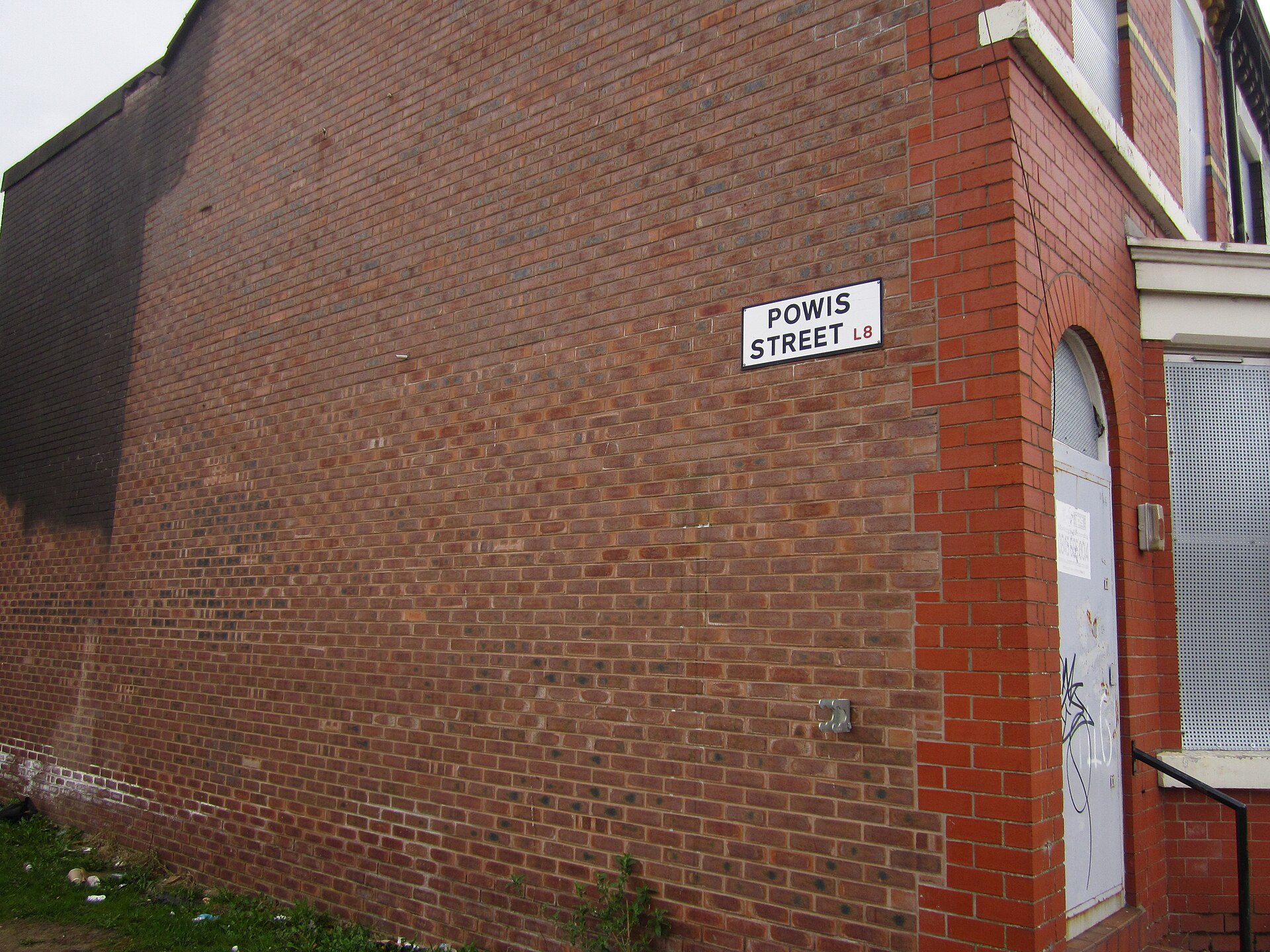
Powis Street is where Watery Lane was shot, starting with Series 1, Episode 1 and carrying on for the first few series. The Shelby family house, Aunt Polly’s kitchen table conversations through the front door, the illegal betting shop and the famous opening shot of Tommy on horseback all used this street or its immediate surroundings. If there’s one location fans want a photograph of, it’s this one.
It’s one of Toxteth’s Welsh Streets, a small grid of Victorian terraces built largely by Welsh builders and named after Welsh places. Ringo Starr was born at 9 Madryn Street, a couple of minutes away. At the time of filming much of the area stood empty and boarded, waiting on a long, contested fight over whether to demolish it. That emptiness is exactly what let a production take over whole streets. Since then the terraces have been refurbished and lived in again, which is good news for Toxteth and slightly less good news for anyone hoping to find the soot and gaslight.
What you’ll actually see
Tidy red-brick houses, parked cars, recycling bins and residents getting on with their day. Nothing is signposted and there’s no plaque. If you’ve rewatched the opening scenes recently, you’ll recognise the proportions of the street, the long straight run of terraced frontages and the way the rooftops line up, but you’ll need a bit of imagination to put the horse and the smoke back in.
Getting there
Powis Street is in Liverpool 8, roughly two miles south-east of Liverpool ONE. It’s about 35–40 minutes on foot, gently uphill, via Park Road or up through the Georgian Quarter and along Princes Road. Several buses run from the city centre towards Park Road and Princes Park, and routes change, so check Merseytravel’s journey planner on the day rather than trusting an old blog post (including this one). A taxi from Lime Street takes about ten minutes, traffic permitting.
The honest verdict
Go if you’re a proper fan and it’s the one photo you want. Pair it with Ringo’s birthplace on Madryn Street, which our Beatles childhood homes guide covers, so the detour does double duty. Don’t go expecting a visitor attraction. And please behave like a guest: no blocking doorways, no posing on people’s steps, no photographing residents or their windows, and keep the noise down. People who live on famous streets tolerate fans far better when fans remember that. If what you want is the atmosphere of the show rather than a specific address, Stanley Dock gives you far more of it and nobody lives in the frame.
Stanley Dock and the Tobacco Warehouse
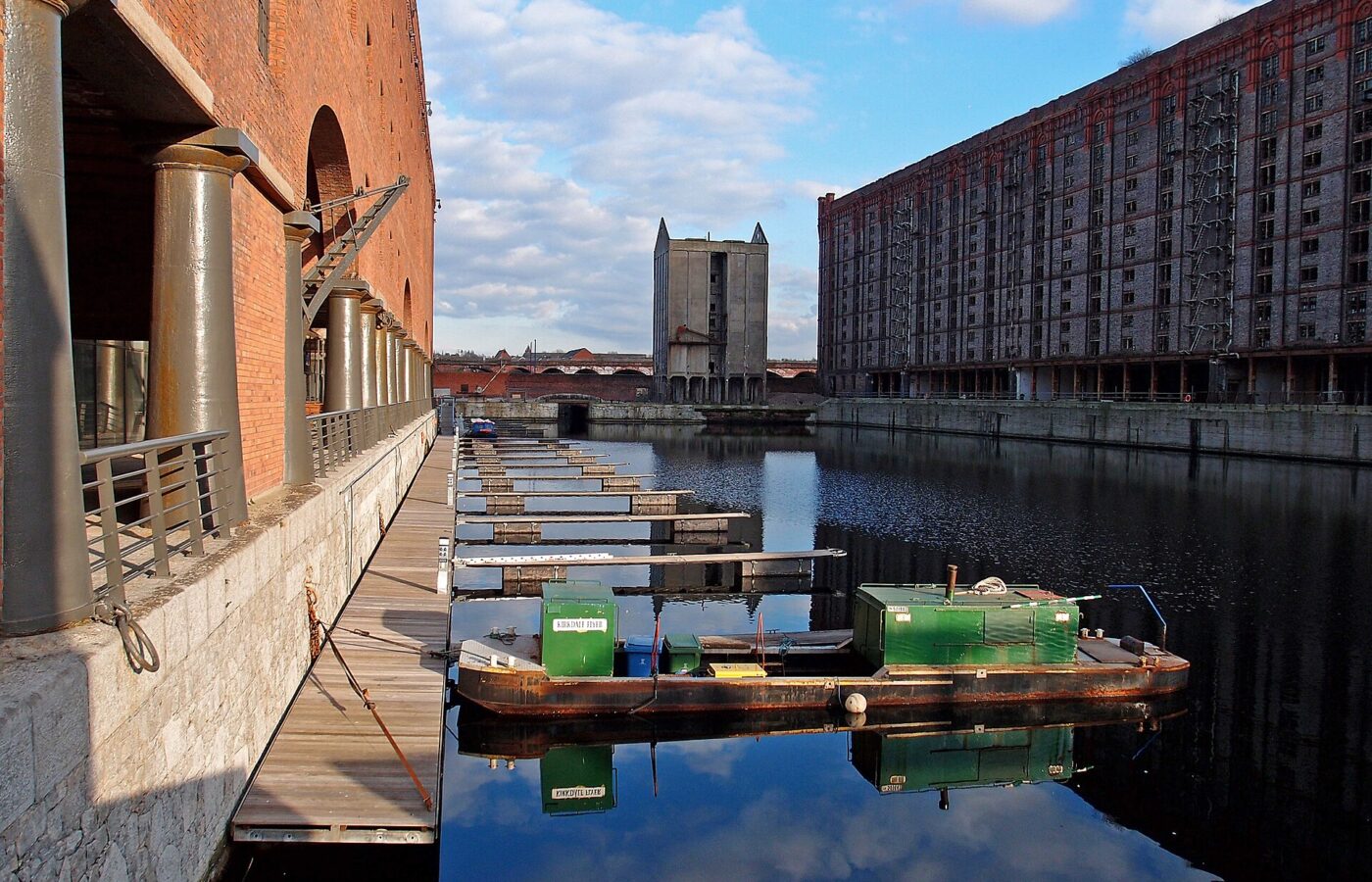
This is the location that feels most like Peaky Blinders, and if you only have time for one, make it this. Stanley Dock sits on the northern docks, where the Leeds and Liverpool Canal drops through a flight of locks into the dock system. It’s dominated by the Tobacco Warehouse, built in 1901 and long described as the largest brick warehouse in the world: fourteen storeys of blackened brick and iron-framed windows running the full length of the dock.
The series used the dock, the quaysides, the canal locks and the surrounding warehouses for industrial Birmingham: canal-side yards, factory exteriors and the grimy commercial world the Shelbys ran their business through. The same site turned into 1940s New York for Captain America: The First Avenger in 2011, when more than five hundred cast and crew worked here. That tells you how convincing the place is on camera.
What it’s like now
Very different from the derelict expanse of the early series, but still overwhelming. The Titanic Hotel occupies the smaller North Warehouse opposite, with a bar and restaurant open to non-residents and a waterside terrace. It’s the obvious place to sit with a drink and stare up at the Tobacco Warehouse, which is being converted into apartments. You can walk the public areas round the dock, look down the canal locks and see the long warehouse walls and cobbled setts that appear again and again in the show. Parts of the site may be fenced off while the building works carry on.
Getting there
It’s about a 25-minute walk north of the Pier Head along the waterfront, past Princes Dock and the cruise terminal, then inland at Collingwood Dock. The walk is flat but gets quieter and more industrial the further north you go. That’s fine in daylight, but after dark you may prefer a taxi back. A taxi from the city centre is a short hop.
Photography tip
Come on a grey day. A clear blue sky makes Stanley Dock look like a smart regeneration scheme. Low cloud and wet cobbles make it look like 1919. The best angle is from the southern quayside looking north-east along the length of the Tobacco Warehouse, with the water in the foreground.
St George’s Hall and William Brown Street
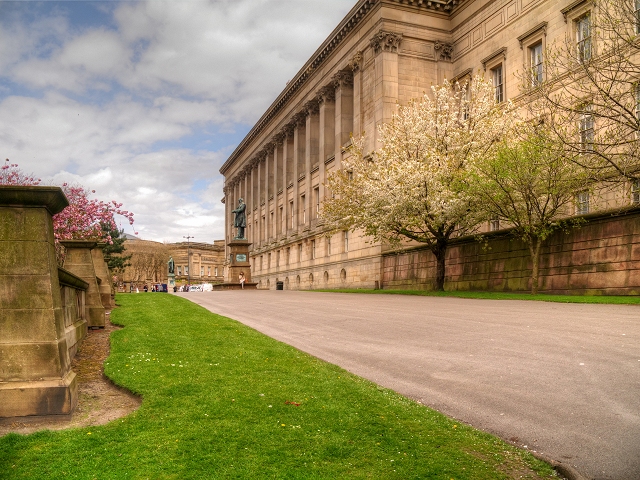
The neoclassical hall opposite Lime Street station is Liverpool’s most-filmed building, and it appears in both eras of Peaky Blinders. In the series it hosted pivotal Series 3 scenes, including the grand event where Grace is caught up in an attack meant for Tommy. Its colonnades, great doors and cavernous interiors are used to suggest wealth, power and institutional Birmingham.
For Peaky Blinders: The Immortal Man, which reached cinemas on 6 March 2026 and Netflix on 20 March 2026, the production went back to the hall and took over the elevation facing St John’s Gardens. That side was transformed into a wartime air-raid shelter, with stacks of sandbags, fake smoke, rain machines, orange lighting and the sound of bombs, for the film’s Second World War Birmingham. The neighbouring stretch of William Brown Street, the cobbled avenue lined by the World Museum, the Central Library and the Walker Art Gallery, was used for period street scenes too.
Visiting
You can see all of it from the street for nothing, and the gardens behind the hall are a public park. The best spot for recognising the film is the path through St John’s Gardens looking up at the colonnade. For interiors, St George’s Hall runs tours and a programme of events, including the Great Hall with its Minton tile floor when it’s uncovered. Check the hall’s own website for current days and prices. Our St George’s Hall guide has the details, and the Walker Art Gallery and World Museum next door are both free, so this corner of the city makes a good rainy-morning base whether you care about the Shelbys or not.
The Georgian Quarter and Liverpool Cathedral
The grid of Georgian terraces on the hill between the city’s two cathedrals has doubled for period London, Dublin and New York in dozens of productions. For Peaky Blinders it provided the smarter residential streets, the kind of addresses the Shelbys aspired to as the family climbed out of Small Heath. The production hasn’t published a street-by-street list, but the streets location scouts return to again and again are Rodney Street, Canning Street and Huskisson Street, with long, unbroken frontages, black railings and fanlights. With the cars moved and some straw on the road, they read as 1920s without much help.
Liverpool Cathedral, the vast sandstone Anglican cathedral at the southern end of Hope Street, supplied church interiors. You can’t miss it: it’s the largest cathedral in Britain, entry is free and donations are welcome. Even if the Peaky connection means nothing to you, go up the tower on a clear day if it’s open. Our Liverpool Cathedral guide covers the tower, the café and opening times, and the Georgian Quarter guide has a walking loop through the best streets.
The Georgian Quarter sits neatly between the city centre and Powis Street, so it’s the natural way to walk from one to the other.
Croxteth Hall and Knowsley Hall
When the Shelbys moved up in the world, the production needed country houses, and Liverpool has two of them on its doorstep.
Croxteth Hall
The former seat of the Earls of Sefton, in 500 acres of country park in the north-east of the city, has become one of the busiest period-drama locations in the North West. Peaky Blinders, Outlander and Netflix’s House of Guinness have all used it. Of all the locations on this page, it’s the one where you can really go inside and walk rooms the cameras used. The country park, walled garden and farm make it a proper day out rather than a box-ticking stop, especially with children. Our Croxteth Hall guide has opening times, prices and the buses from town.
Knowsley Hall
The Earl of Derby’s seat, just outside the city boundary, was used for country-house exteriors in Peaky Blinders, as well as in The Ipcress File and Fackham Hall. It’s a private family home, not a stately home with regular opening, so public access is limited to specific events. Don’t turn up at the gate expecting to be let in. The safari park on the estate is open to visitors, and our Knowsley Safari guide covers that, but a drive round the animals won’t show you the house.
Port Sunlight: Polly’s House
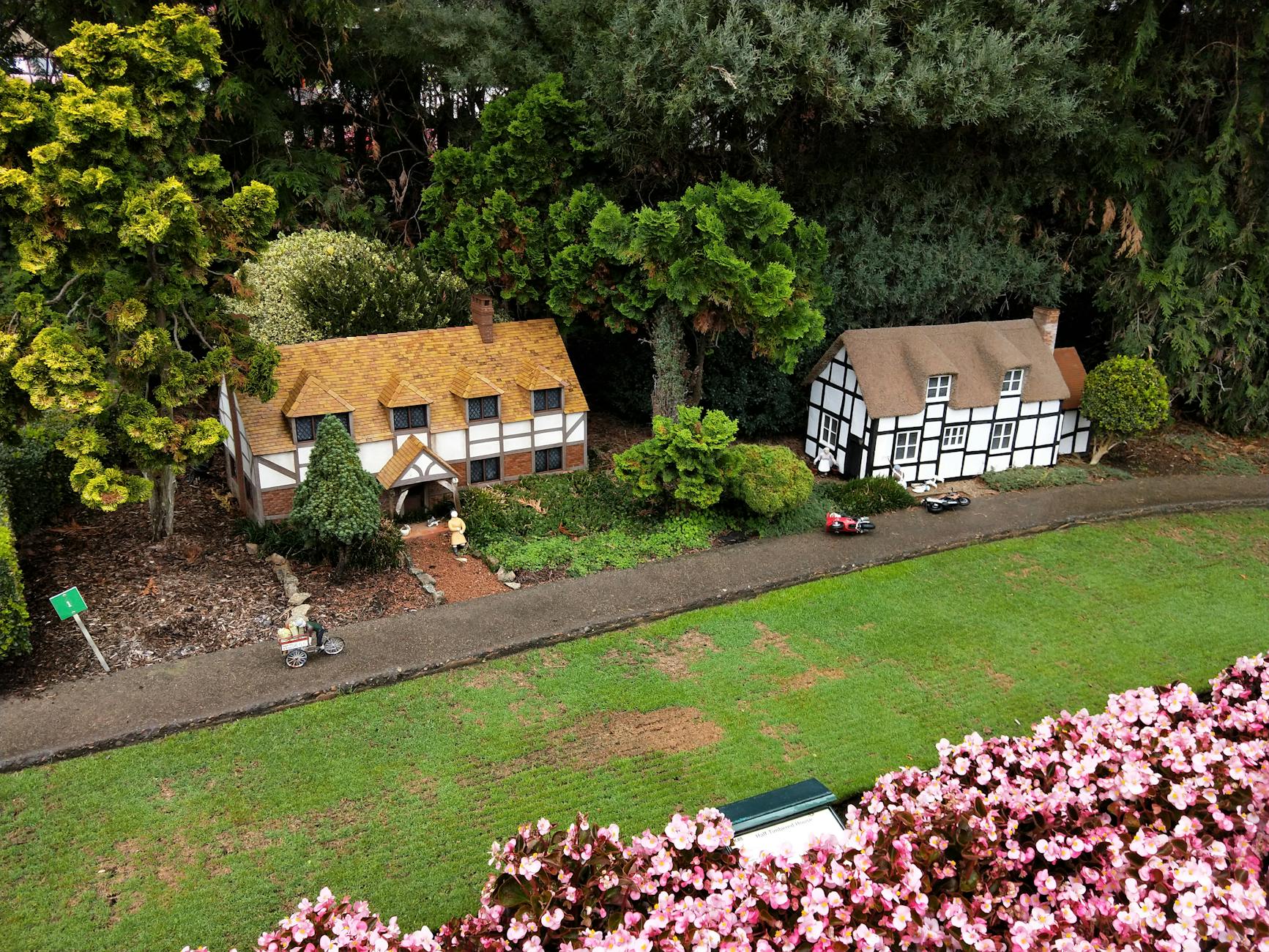
Across the Mersey on the Wirral, Port Sunlight is the model village William Lever built in the 1880s for the workers at his Sunlight soap factory. Almost every house was designed by a different architect, so the lanes are a showroom of Victorian and Edwardian Arts and Crafts styles: half-timbering, carved bargeboards, tall chimneys and long front gardens. For Peaky Blinders it provided Aunt Polly’s house once the family money started to show, along with village exteriors. More recently it played a part in the Brian Epstein biopic Midas Man.
It’s one of the most rewarding stops on this list, because the location is worth seeing even if you’ve never watched the show. Walk the lanes, then go into the Lady Lever Art Gallery, run by National Museums Liverpool and free to enter, for Pre-Raphaelite paintings, Wedgwood and Chinese porcelain. The Port Sunlight Museum tells the story of the village and has a restored worker’s cottage. Check its own site for prices.
Getting there
Merseyrail’s Wirral line runs from Liverpool Central, Lime Street, James Street and Moorfields under the river to Port Sunlight station on the Chester and Ellesmere Port branches, in about twenty minutes. The village starts as soon as you walk out. It’s covered by a Merseyrail Day Saver. Our Wirral Peninsula guide has more to add to the afternoon.
Formby Beach
The coastal scenes that needed wide, empty sand and grassy dunes were shot at Formby, about a dozen miles up the coast from the city. It’s one of the finest stretches of shore in the North West: the National Trust manages the dunes and pinewoods, and the woods are one of the last places in England where you have a decent chance of seeing red squirrels.
Take the Merseyrail Northern line from Liverpool Central towards Southport. Get off at Freshfield for the National Trust pinewoods and the beach, a walk of about twenty minutes through a residential area, or at Formby station for the village. The journey takes around 35 minutes and is covered by the Day Saver. If you’re driving, the National Trust car park fills early on sunny weekends and is free to members.
Honest verdict: you won’t find a Peaky Blinders spot to stand on, because sand dunes shift and a beach is a beach. Go because Formby is a glorious place to spend an afternoon, and enjoy the connection as a bonus. Our Formby beach guide covers tides, parking and the squirrel walk.
The Immortal Man: The Film’s Other Merseyside Locations
The 2026 film moved the story on to the Second World War, with Cillian Murphy back as Tommy alongside Rebecca Ferguson, Tim Roth, Barry Keoghan, Stephen Graham and Sophie Rundle, and it cast its net more widely across the Liverpool City Region. Besides St George’s Hall and William Brown Street, two industrial sites were used, and neither is somewhere you can visit.
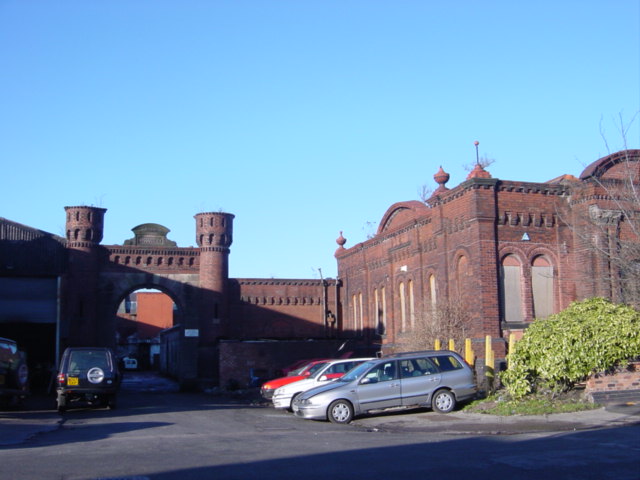
Hartley’s Village, Aintree
William Hartley opened his jam factory here in 1886 and built a small workers’ village alongside it, a sort of sweeter, smaller cousin of Port Sunlight. The Grade II listed factory buildings, with their castellated gateway and turrets, gave the film its period industrial setting. The site is not open to the public. Restoration is planned but hasn’t happened yet, and although you can see the gateway from the road, it isn’t worth a special journey. If you’re in Aintree for the Grand National anyway, it’s a curiosity to look out for. Otherwise skip it.
The Pilkington’s glass site, St Helens
St Helens was built on glass, and the old Pilkington’s works on Canal Street have become a regular filming location. Marvel’s Secret Invasion shot here as well. Again, it’s visible from the road only. The worthwhile alternative is The World of Glass in St Helens town centre, a museum about the industry with live glass-blowing demonstrations. Trains from Lime Street reach St Helens Central in under half an hour. It’s a reasonable half-day for anyone with an interest in industrial history, and not really a Peaky Blinders trip.
What Wasn’t Filmed in Liverpool
A lot of confusion comes from blogs that lump every location together, so it helps to know what isn’t on Merseyside before you plan round it.
- Canal and street scenes in the West Midlands. Several of the show’s Black Country canal and street scenes were filmed at the Black Country Living Museum in Dudley, near Birmingham, not here.
- Yorkshire and Greater Manchester. Other industrial streets and interiors came from Bradford and elsewhere in the North of England.
- Tommy’s country house. The grand estate the Shelbys acquire in later series drew on houses outside Liverpool as well as those above. Don’t assume every country-house scene was Croxteth.
- The Garrison pub. The Shelbys’ local was largely a built and dressed set. There’s no real Garrison in Liverpool to have a pint in, whatever a themed bar’s signage may suggest.
If a tour or listicle promises “the Garrison in Liverpool”, treat everything else it says with caution.
Two Self-Guided Routes
Half day: the city centre and docks (about 4 hours, free)
- Lime Street station → St George’s Hall. Start on the plateau, then walk round to St John’s Gardens for the Immortal Man air-raid elevation, and along William Brown Street. Allow 40 minutes, longer if you go inside the Walker.
- Down to the waterfront. Walk down Dale Street or Victoria Street to the Pier Head, about 15 minutes, and have a quick look at the Three Graces.
- North to Stanley Dock. Follow the river north past Princes Dock, about 25 minutes. Spend 45 minutes around the Tobacco Warehouse and the canal locks.
- Drink at the Titanic Hotel. Sit on the terrace or in the bar and look across at the Tobacco Warehouse. Then walk or take a taxi back to the centre.
Full day: add Powis Street, the Georgian Quarter and Port Sunlight
- Morning: St George’s Hall and William Brown Street, as above.
- Late morning: walk up Bold Street and into the Georgian Quarter: Rodney Street, then Canning Street and Huskisson Street. Duck into Liverpool Cathedral.
- Lunch: eat on Hope Street or Bold Street before heading south, because there’s very little around Powis Street itself.
- Early afternoon: walk to Powis Street via Princes Road, about 25 minutes from the cathedral, and take your photo quietly. Madryn Street is a couple of minutes away.
- Mid-afternoon: take a taxi or bus back to the centre and a Merseyrail train from Central to Port Sunlight. Walk the village and see the Lady Lever before it closes.
- Evening: back across the river for a drink at the Titanic Hotel, or save Stanley Dock for tomorrow.
If you have two days, give Croxteth Hall a morning of its own, and spend an afternoon at Formby on the other day if the weather’s kind. For a wider route through the city’s architecture, our self-guided walking tour overlaps nicely with the first half of the half-day route.
Are Peaky Blinders Tours Worth It?
Several operators sell Peaky Blinders filming-location tours that take in Liverpool, from private guided drives to larger multi-city packages that also visit Birmingham and the Black Country. There’s a place for them. If you want everything in one day without working out trains, or if you’re travelling as a group and splitting the cost of a private guide and vehicle, a good guide adds behind-the-scenes stories and knows where the cameras stood.
But be clear about what you’re paying for. The Liverpool locations that matter most, Stanley Dock, St George’s Hall, Powis Street and Port Sunlight, are all free to look at and can be reached on foot or with a £6.40 Merseyrail Day Saver. A private tour costs many times that. And since there’s nothing to go inside at most stops, a paid tour mostly buys you a driver and some anecdotes. For most visitors, this page and a pair of comfortable shoes do the same job.
The one place a tour or booked visit does add real value is Croxteth Hall, where you want the interiors. Book that directly with the hall rather than through a reseller.
Practical Tips
- Respect residents. Powis Street and the Welsh Streets are homes, not a set. The same goes for anywhere with a front door.
- Watch before you go. Rewatch Series 1, Episode 1 for Watery Lane and Series 3 for St George’s Hall. You’ll recognise far more.
- Filming is still happening. Liverpool hosts productions most weeks. If you come across a closed road with period cars, you can usually watch quietly from behind the cordon, but follow the marshals’ instructions and don’t photograph actors if you’re asked not to.
- Dress for the docks. The northern docks are exposed and the wind off the Mersey is sharp even in summer.
- Getting around. Our getting around Liverpool guide explains Merseyrail zones, buses and contactless fares.
Frequently Asked Questions
Where was Peaky Blinders filmed in Liverpool?
The main Liverpool locations are Powis Street in Toxteth (Watery Lane), Stanley Dock and the Tobacco Warehouse, St George’s Hall, the Georgian Quarter, Liverpool Cathedral, Croxteth Hall, Knowsley Hall, Port Sunlight on the Wirral and Formby beach. The 2026 film The Immortal Man added William Brown Street, Hartley’s Village in Aintree and the Pilkington’s site in St Helens.
Is Watery Lane a real street?
Not by that name. Watery Lane is fictional. The scenes were filmed on Powis Street, one of the Welsh Streets in Toxteth, Liverpool 8. It’s a residential street with no plaque or visitor facilities.
Was Peaky Blinders: The Immortal Man filmed in Liverpool?
Partly. The film shot across the Liverpool City Region as well as in Birmingham, Manchester, Yorkshire, Derbyshire and Oxfordshire. In Liverpool, St George’s Hall was dressed as a wartime air-raid shelter on the St John’s Gardens side, and William Brown Street was used for period street scenes.
Can you go inside any of the Peaky Blinders locations?
Yes, a few. St George’s Hall runs tours, Liverpool Cathedral is free to enter, and Croxteth Hall opens its house to visitors, making it the best bet for walking rooms the production used. Most of the other locations are streets, docks and exteriors you can look at but not go into.
How long does a Peaky Blinders locations walk take?
About four hours for the city-centre and docks route on foot. Add Powis Street, the Georgian Quarter and Port Sunlight and it becomes a full day.
Is there a Peaky Blinders museum or pub in Liverpool?
There’s no official museum. The Garrison pub from the show was a set, not a real Liverpool pub. For the flavour of the era, the Titanic Hotel’s bar at Stanley Dock sits in the right kind of building.
Is Powis Street safe to visit?
It’s an ordinary residential street and in daylight it’s as safe as anywhere else in the city. Use the same common sense you would anywhere, and be quiet and considerate because people live there. Our Liverpool safety tips cover the city more widely.
Do I need a car to see the locations?
No. Everything in the city centre is walkable, and Formby and Port Sunlight are on Merseyrail. Croxteth Hall is reachable by bus. Only Knowsley Hall and the Aintree and St Helens industrial sites are awkward without a car, and they’re the least rewarding stops anyway.
Related Liverpool Guides
- Liverpool Film & TV Locations: The Complete Guide
- St George’s Hall Guide
- Croxteth Hall Guide
- The Georgian Quarter
- Formby Beach Guide
- The Wirral Peninsula
- Liverpool Neighbourhoods & Districts
- Liverpool’s Hidden Gems
Photo Credits
Stanley Dock and the Tobacco Warehouse: Stanley Dock, Liverpool-geograph-4848048-by-wfmillar by wfmillar, CC BY-SA 2.0, via Wikimedia Commons.
Powis Street sign, Toxteth: Powis Street, Liverpool (1) by Rept0n1x, CC BY-SA 3.0, via Wikimedia Commons.
St George’s Hall from St John’s Gardens: Liverpool, St John’s Gardens and St George’s Hall – geograph.org.uk – 4454063 by David Dixon, CC BY-SA 2.0, via Wikimedia Commons.
Hartley’s jam factory, Aintree: Hartleys Jam Factory – geograph.org.uk – 105472 by Sue Adair, CC BY-SA 2.0, via Wikimedia Commons.