This article contains advertising. Our booking links are routed through a partner that adds commission tracking automatically, so if you book through one we earn a commission from the provider, at no extra cost to you. It never affects what we recommend. Affiliate disclosure
Most people arrive in Woolton looking for one headstone. It stands in St Peter’s churchyard, a few rows in from Church Road, weathered and slightly tilted, and halfway down the inscription is the name Eleanor Rigby. Across the road is the church hall where a sixteen-year-old John Lennon was introduced to a fifteen-year-old Paul McCartney on a July afternoon in 1957. Fans take their photographs, read the plaque, and usually get straight back in the taxi. That is a shame, because Woolton Liverpool’s old village is a good deal more than a footnote to the Beatles: a hilltop of red sandstone cottages, old coaching pubs, a 1920s cinema being brought back by its own neighbours, and a park with a fine view across the Mersey.
This guide covers where Woolton is and how to get there, St Peter’s and the 1957 meeting, the Picture House and its comeback, Camp Hill and Woolton Woods, Reynolds Park, the pubs, and the Beatles sites a short walk away at Strawberry Field and Mendips. There is a half-day route that strings them together and an honest view on which bits are worth your time. Prices and opening hours were checked in October 2026 against the operators’ own sites; check again before you travel, as both change.
Woolton at a Glance
| What | Detail (checked October 2026) |
|---|---|
| Where | South Liverpool, about six miles south-east of the city centre, on high ground above Allerton and Gateacre |
| Known for | St Peter’s Church and hall (Lennon meets McCartney, 6 July 1957), the Eleanor Rigby grave, sandstone village streets, Camp Hill views |
| Strawberry Field | Beaconsfield Road, L25 6EJ. Open daily 10:00–17:00. Adults £12.45, concessions £9.45. Café and shop free to enter |
| Mendips (Lennon’s childhood home) | National Trust tour only, combined with 20 Forthlin Road. Adults £37 (£13 for members), children 5–17 £18.50 (£6.50 members). Pre-book; tours leave from Liverpool South Parkway or Speke Hall |
| St Peter’s churchyard | Church Road, L25 5JF. The churchyard is outdoors; for the church itself, ring the office on 0151 428 6810 |
| Woolton Picture House | Community-run screenings while restoration is planned. Check wooltoncinema.com for what is on |
| Parks | Camp Hill and Woolton Woods (about 74 acres) and Reynolds Park (14 acres), both free |
| Time needed | Two hours for the village and churchyard; a full half day with Strawberry Field and Camp Hill |
Where Woolton Is, and Why It Looks Different
Woolton sits on a sandstone ridge in the south-east corner of Liverpool, about six miles from the Pier Head. Drive out through Wavertree and Allerton and the city thins into wide avenues, semi-detached houses and big Victorian villas, and then, quite suddenly, the road narrows and you are in something that looks more like a Cheshire village than a suburb of a port city. The houses are built of the local red and buff sandstone, the streets bend because they were laid out before anyone planned them, and the pubs are the kind that once served carters and quarrymen rather than commuters.
The stone is the reason for all of it. Woolton was a quarrying village, and its quarry supplied the red sandstone for Liverpool Cathedral, the vast Anglican cathedral on St James’s Mount that took most of the twentieth century to build. Standing in Woolton and then standing under the cathedral’s tower is a neat way to understand the city: the hill was quite literally carted into town.
Locally you will still hear “Much Woolton”, the old name for the village core, as distinct from Little Woolton further east. Today the area is a prosperous, quiet residential district with a proper high street, a cluster of independent shops round the junction of Allerton Road and Woolton Street, and a strong local identity. It is the kind of place where the community raised the money to save its own cinema, which tells you a lot.
Getting to Woolton from the City Centre
There is no train station in the village itself, so most visitors come by bus, taxi or car. Here are the realistic options.
By bus
Arriva’s 75 runs out from the city centre through Wavertree and Allerton to Woolton village and on to Halewood, and it is the simplest way in without a car. Routes and stop names change from time to time, so use the Merseytravel journey planner or the Arriva app on the day to check the current service and the stop nearest the part of the village you want. Ask for Woolton Village and you will be dropped within a few minutes’ walk of St Peter’s.
By train
Liverpool South Parkway is the nearest major station: the National Trust puts the journey from the city centre at about 13 minutes by train. It is also where the Beatles childhood homes tour starts, which matters if you are combining the two (see below). Hunts Cross, at the end of Merseyrail’s Northern line, is closer to Woolton on a map. From either, you need a bus or a taxi for the last stretch up the hill, or a fairly long walk.
By car or taxi
A taxi from Lime Street is the quickest door-to-door option if there are two or more of you sharing. Driving is easy and the village has on-street parking, but the streets round St Peter’s are residential and narrow, and on summer weekends Beatles tour groups fill them. Park considerately and do not block driveways on Church Road; people live there.
On a Beatles tour
If your main interest is the band rather than the village, a guided Beatles tour from the city centre takes the transport out of your hands. Our guide to the Magical Mystery Tour covers what a bus tour includes and what you see only from the window. The trade-off is time: tours keep moving, and Woolton rewards an unhurried hour.
St Peter’s Church and the 1957 Meeting
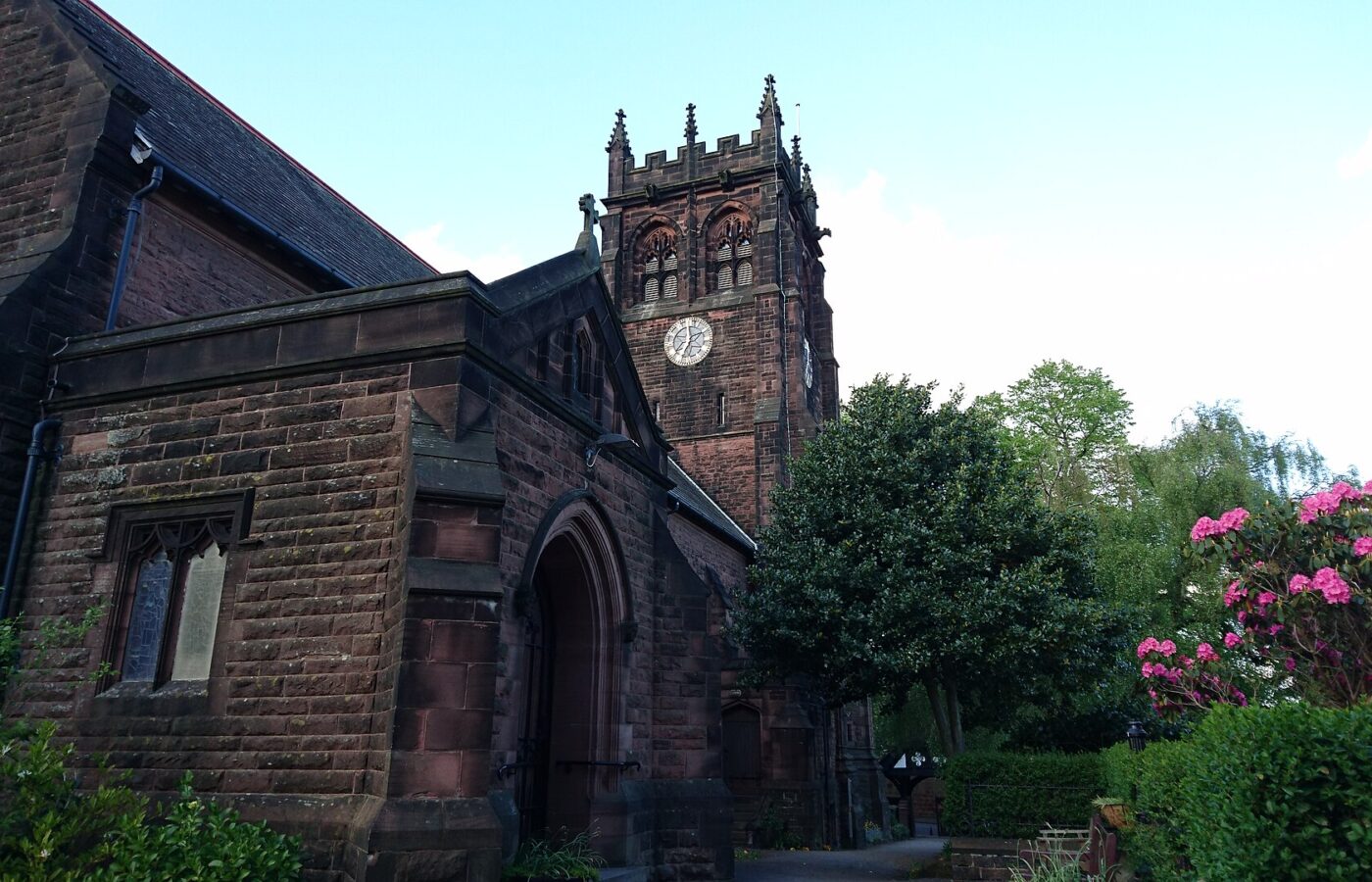
St Peter’s is a large red sandstone church with a tall square tower, set back from Church Road behind a wooden lych gate and a churchyard that slopes down towards the road. It is an active Anglican parish church, with regular services, and it is not a museum. That matters: the people who look after it are generous about visitors, but it is somebody’s church first.
What happened on 6 July 1957
On Saturday 6 July 1957 the church held its summer garden fete. Among the entertainment was a skiffle group called the Quarrymen, led by a local teenager named John Lennon, who lived round the corner on Menlove Avenue. They played on a makeshift stage in the field behind the church in the afternoon, then set up in the church hall across the road for the evening dance. A schoolfriend of Lennon’s, Ivan Vaughan, brought along a boy from Allerton he thought Lennon should meet. That boy was Paul McCartney, who impressed Lennon by playing “Twenty Flight Rock” and showing that he knew how to tune a guitar. Within weeks McCartney had joined the group.
The church hall still stands on the opposite side of Church Road from the church, and a plaque on its front marks the meeting. It is a plain, functional building, and part of its appeal is precisely that: there is nothing grand about the place where the Lennon–McCartney songwriting partnership began. The hall is used by the parish and community groups, so you will usually see it from the outside only.
The Eleanor Rigby grave
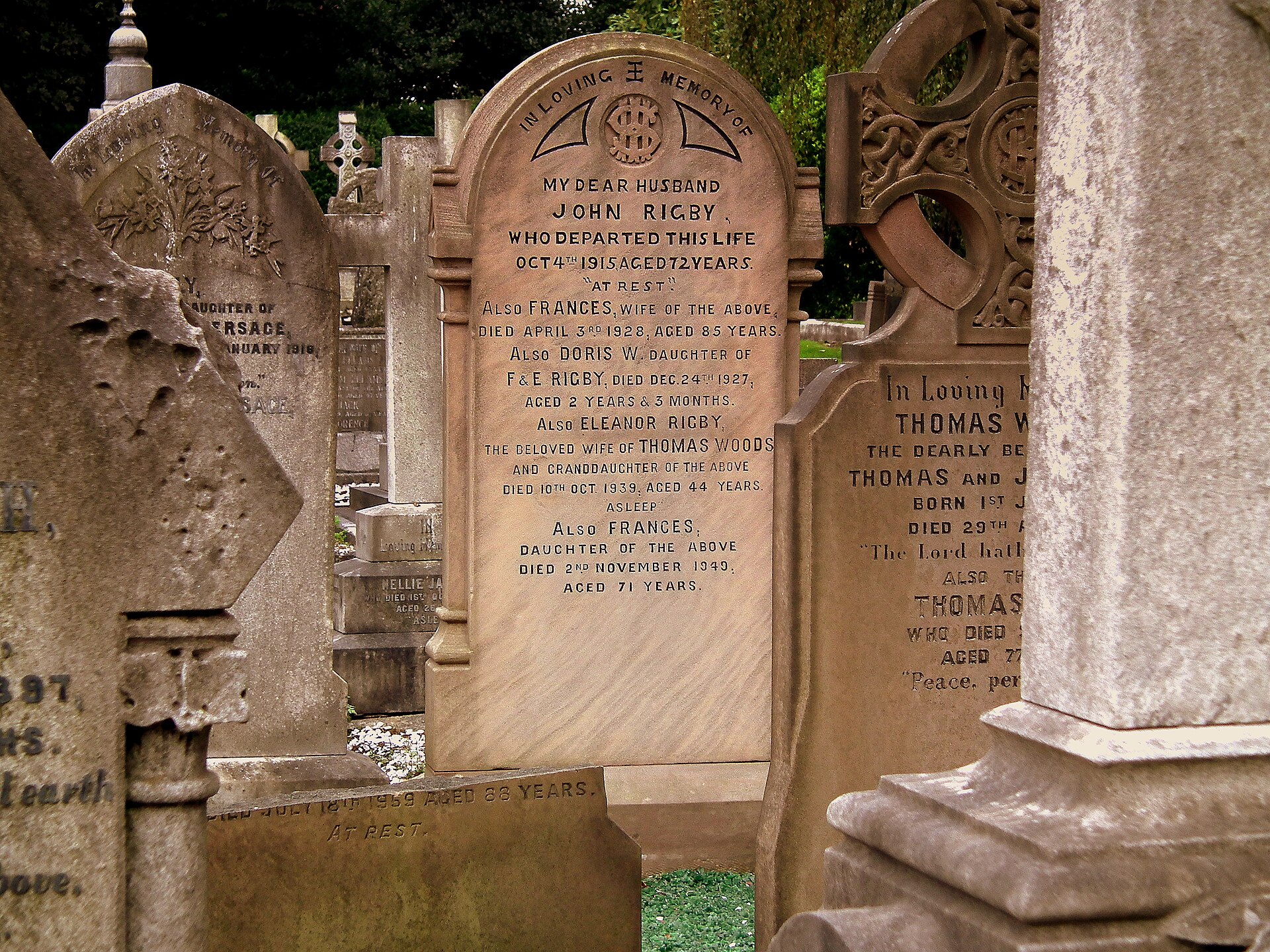
The grave is the main reason people walk into the churchyard, and it is easy to find. It stands to the left of the church as you face it from Church Road, a short way in from the path. The headstone belongs to the Rigby family, and Eleanor’s line reads that she was “the beloved wife of Thomas Woods” and died on 10 October 1939, aged 44. She was a local woman with no connection to the band. McCartney has said the characters in the 1966 song were invented, while accepting that he may have picked up the name subconsciously after years of walking through this churchyard with Lennon. Either way, it is one of those coincidences that has become part of the story, and the stone gets a steady trickle of visitors.
Please be respectful. This is a working churchyard with recent burials as well as old ones, and the Rigby stone sits among other families’ graves. Stay on the paths, do not climb on headstones for a better angle, and keep voices down if a funeral or service is going on. It is also worth knowing that Bob Paisley, the Liverpool FC manager who won three European Cups, is buried in the same churchyard. Football fans sometimes look for his grave too.
Can you go inside the church?
The churchyard is outdoors and you can walk round it during the day. The church itself is open for services, and at other times it depends on volunteers and events. If going inside matters to you, ring the parish office on 0151 428 6810 before you travel, or attend a service, which is the surest way in. Anniversary events round 6 July are sometimes held at the church and hall; check the parish’s own page nearer the time rather than relying on what happened in previous years.
The Woolton Picture House
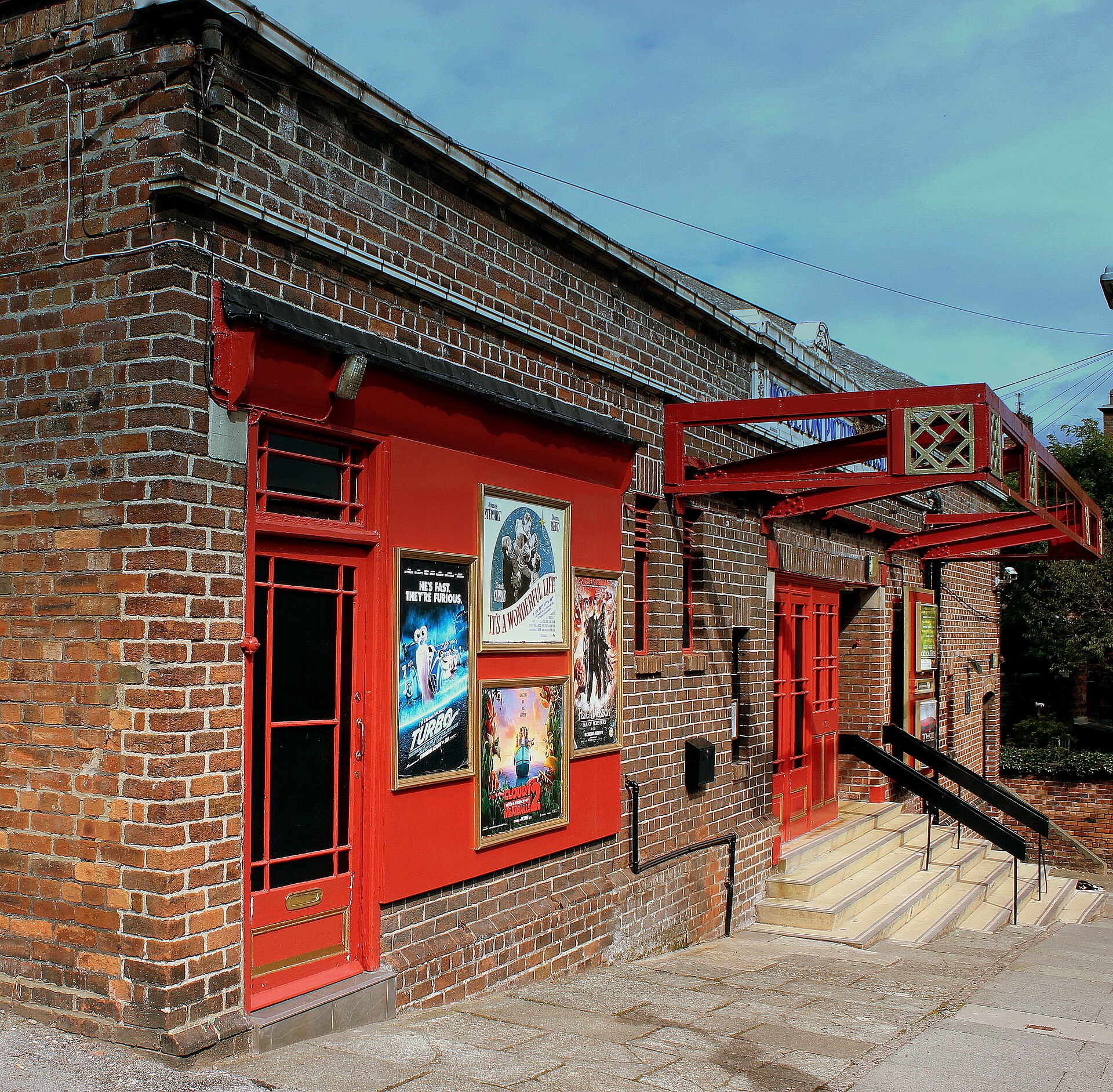
On Mason Street, a short walk from the high street, stands a small red-brick cinema with a red canopy. A blue plaque on the wall, put up in 1996 for the centenary of cinema, calls it the oldest surviving cinema in Liverpool and gives its opening date as 26 December 1927 (other sources put its design in 1926). It is a single-screen picture house of the kind that once stood in every suburb and has almost entirely vanished, and it played a small part in the Beatles story on screen: scenes for Nowhere Boy, the 2009 film about Lennon’s teenage years, were shot here.
It closed in 2020. For a while it looked as if that would be the end, but a local community interest company campaigned to save it, ran a short Christmas season in December 2025, and in June 2026 announced that it had secured a 101-year lease after an anonymous donation pushed its fundraising past the target. A programme of classic films was announced for 2026, with restoration work to follow.
What that means for you: do not expect a normal seven-day cinema yet. Check wooltoncinema.com for current screenings and news on the full reopening. If something is showing while you are in Woolton, book it. Watching an old film in a 1920s neighbourhood cinema that a village has just saved is a far better evening than another multiplex, and the money goes straight into the restoration.
Camp Hill and Woolton Woods
The best thing in Woolton for anyone who is not a Beatles fan is the view from Camp Hill. Camp Hill and Woolton Woods together cover about 74 acres on the ridge above the village, inside a conservation area. Liverpool City Council took them over in the 1920s, and the entrance is off Woolton High Street. You climb through mature woodland and then come out on to an open field that falls away to the south-west, and the whole of the Mersey estuary opens up in front of you, with the Wirral and, on a clear day, the hills of North Wales beyond.
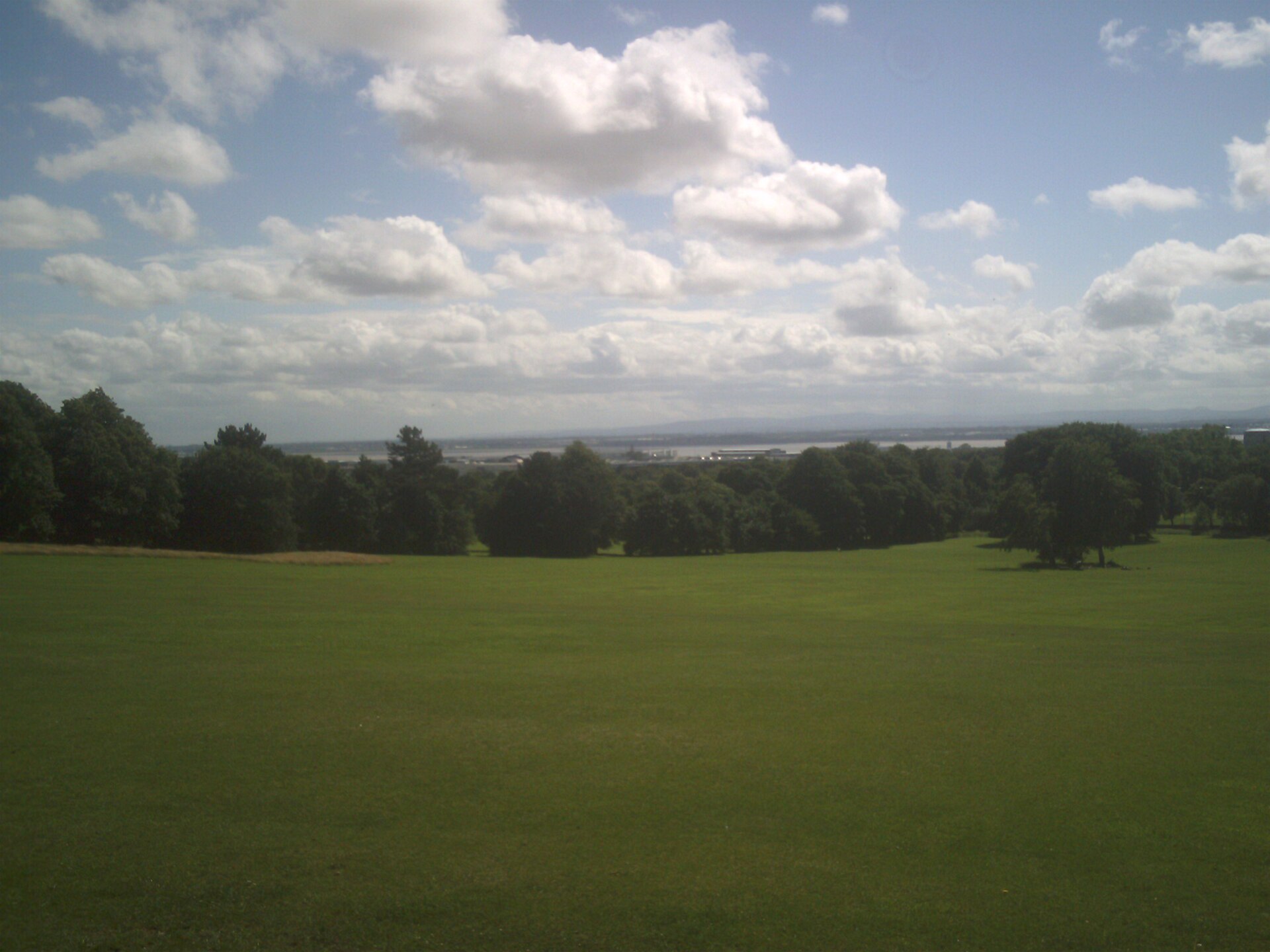
The name comes from an ancient earthwork on the hill, traditionally said to be an Iron Age camp, though very little of it is obvious on the ground today. What you notice instead is the space: big skies, dog walkers, and benches that face the river.
Down in the woods there is a walled garden and a sunken garden. The park is also known for its floral cuckoo clock, given in 1927 by the family of James Bellhouse Gaskell in memory of his long connection with Woolton Wood. Its condition has varied over the years and it has not always been working, so treat it as a curiosity if you find it planted up and ticking rather than a reason to make the trip.
Allow an hour to walk up, take in the view and come back through the woods. It is free, and the paths are mostly firm, though they are steep in places and muddy after rain. Wear proper shoes rather than the ones you walked round Mathew Street in.
Reynolds Park
On the other side of the village, Reynolds Park is smaller (14 acres) and more formal. James Reynolds, the last owner of the estate, gave it to the city, and his daughter carried on living there and helped turn it into a public garden. It has a walled garden that is at its best from spring to autumn, a topiary garden, a sunken garden, an arboretum, a wildflower meadow and a ha-ha, the sunken boundary wall Georgian landowners used to keep livestock out without spoiling the view.
It is a quiet, slightly hidden place, and on a weekday you may have the walled garden almost to yourself. It will not take more than half an hour, but if you have already seen Camp Hill and want a gentle second stop before the pub, it is ideal. Opening times for the gardens are set by the council; check Liverpool City Council’s parks pages before you go, especially in winter.
Woolton Baths and the Village Streets
On Quarry Street South you will pass a handsome small Victorian bathhouse. Woolton Baths were built in 1891–93, funded by Holbrook Gaskell, and opened in June 1893. They are Grade II listed, and the listing describes them as a rare example of a small village baths. It is a building to look at from the street, though, not a place to swim: it no longer runs as a public pool, so do not pack your trunks on the strength of an old guidebook.
The pleasure of the village streets is mostly in small things. Look at the stonework on the older cottages, where you can see the difference between the red and buff sandstone; at the way the roads curl round the hill; and at the run of independent shops, cafés and delis round the main junction. There is no single “sight” here, which is exactly why it is a nice place to wander after the intensity of the city centre.
Pubs and Places to Eat
Woolton is a good pub village, and an hour in one is part of the point. The best known are on or near the high street.
- The Elephant is a Grade II listed pub with a bakehouse, and the most obvious stop for food. It is popular at weekends, so book if you want to eat at a particular time.
- The White Horse, an old village local, is smaller and plainer and better for a pint than a meal.
- The Grapes is another traditional village pub and handy after a walk.
Pubs change hands and hours more often than churches do, so check each one’s own listing for current food times before you plan lunch round it. If you want something lighter, the cafés and bakeries round the main junction are good for coffee and a sandwich, and Strawberry Field has its own café, which you can use without buying an exhibition ticket.
For a wider choice of food and a livelier evening, Lark Lane in Aigburth is a short taxi ride away. Our Lark Lane guide covers its bars and restaurants, and the best pubs in Liverpool guide is there if you would rather head back into town.
The Beatles Sites Next Door
Woolton is where the two most famous Lennon locations outside the city centre are, and they are close enough to the village to combine on foot.
Strawberry Field
The Salvation Army children’s home whose garden Lennon played in as a boy, and which gave its name to “Strawberry Fields Forever”, is on Beaconsfield Road, on the edge of Woolton. The Salvation Army opened the site to visitors in 2019, with an exhibition about Lennon’s childhood and the song, gardens you can walk through, a café and a shop. Proceeds fund Steps at Strawberry Field, the Salvation Army’s programme there for young adults with learning disabilities.
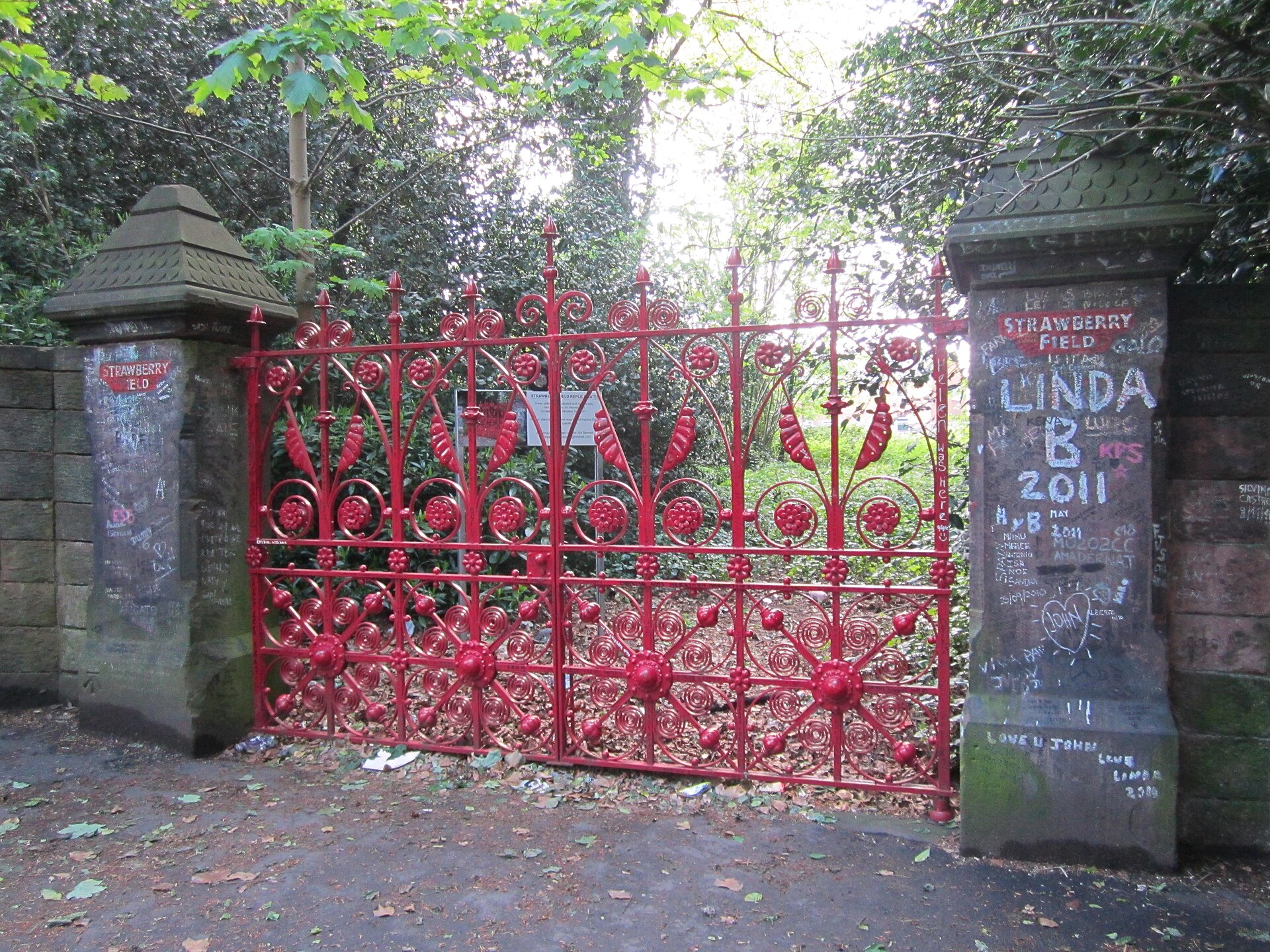
It is open every day from 10:00 to 17:00. Exhibition tickets cost £12.45 for adults and £9.45 for concessions, and the exhibition and gardens take about an hour. The red gates on the road are free to photograph, and the café and shop are free to enter, so if you are on a tight budget you can see the famous part for nothing. Check availability on the Strawberry Field website before you go. Our full Strawberry Field guide goes into the exhibition in more detail and whether it is worth the ticket.
Mendips, 251 Menlove Avenue
Lennon lived at Mendips, a 1930s semi-detached house on Menlove Avenue, with his Aunt Mimi through his childhood and teenage years. The National Trust now owns it, and it is furnished as it would have looked in the 1950s. It is the house he walked from to the St Peter’s fete.
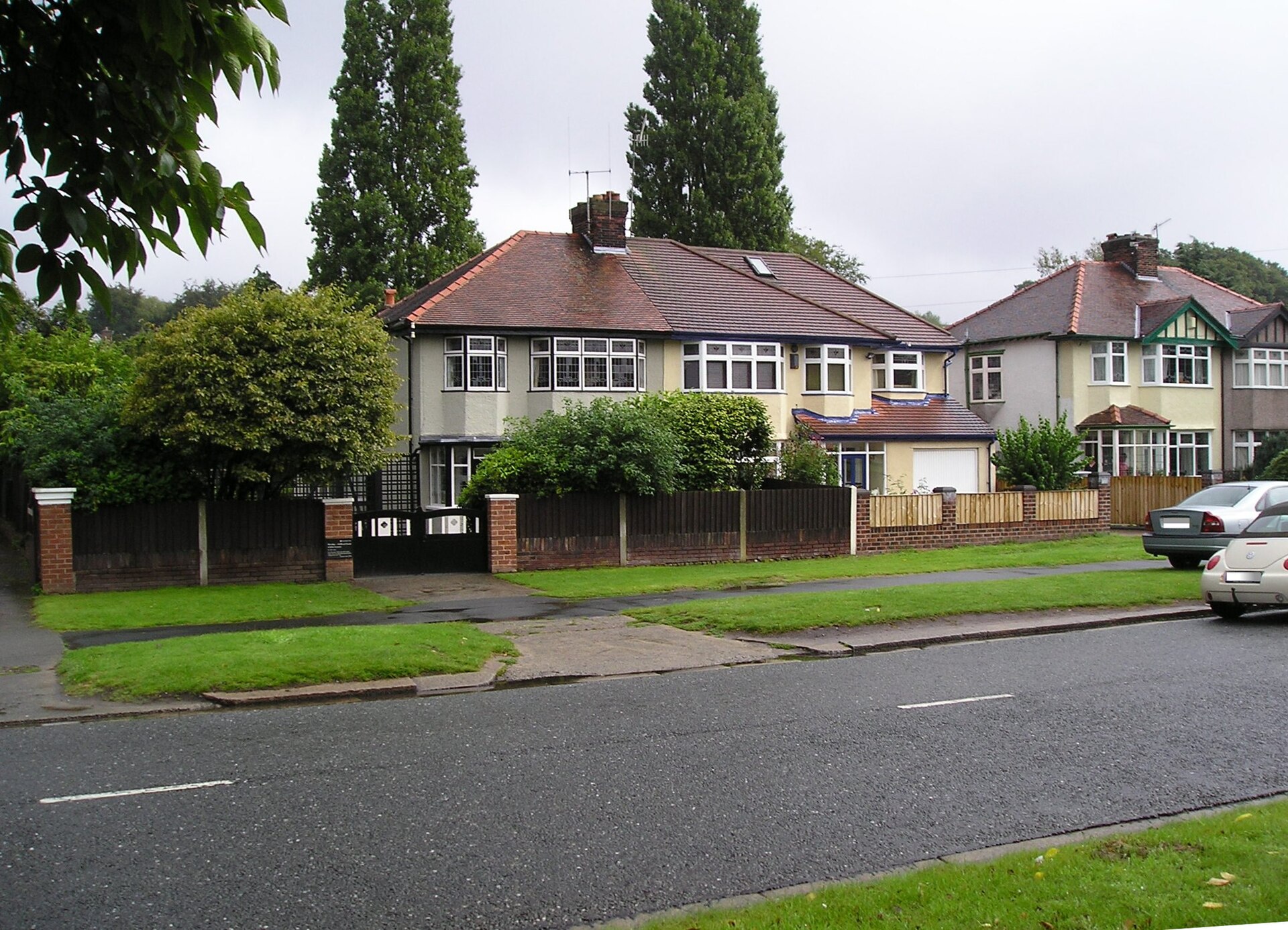
Here is the catch that confuses a lot of visitors: you cannot just walk up and go in. The only way inside is the National Trust’s pre-booked combined tour of Mendips and 20 Forthlin Road, McCartney’s family home in Allerton. Everyone arrives on the Trust’s minibus, which leaves from Liverpool South Parkway in the morning and from Speke Hall in the afternoon, not from Woolton. The tour takes about two hours. Tickets cost £37 for non-member adults and £13 for National Trust members (children 5–17: £18.50, or £6.50 for members); the Trust says prices vary in July and August.
Is it worth it? For a committed fan, yes: the custodians are excellent, and standing in McCartney’s front room where he and Lennon wrote early songs is genuinely moving. For a casual visitor, £37 is a lot for two hours in two ordinary houses, and you can see Mendips from the pavement for free on a walk from Woolton. If you do look from the street, remember it is a protected property in a residential road: stay on the pavement and don’t try the gate. Our guide to the Beatles childhood homes covers both houses and the tour in detail.
Penny Lane and beyond
Penny Lane is a few miles to the north-west, between Mossley Hill and Allerton, and most people who come to Woolton for the Beatles also want to see the street sign and the bus shelter. It is a separate trip by bus or taxi rather than a walk. Our Penny Lane guide covers what is actually there, and the Beatles in Liverpool hub ties all the sites together.
A Half-Day Route Round Woolton
This route works for a fan who wants the Beatles sites and a walk, and fits comfortably into a morning plus lunch. Use a route planner on your phone for the walking legs, since the roads curve and the most direct line is not always obvious.
- 10:00, Strawberry Field. Arrive at opening time, when it is quietest. Allow an hour for the exhibition and gardens, or 15 minutes if you only want the gates and a coffee.
- Mendips from the street. Walk to Menlove Avenue and look at 251 from the pavement. If you have booked the National Trust tour, do it on a different half day, since it starts from South Parkway or Speke Hall.
- St Peter’s Church and hall. Walk up into the village to Church Road. Find the Rigby grave, read the plaque on the hall, and if the church is open, look inside.
- Lunch in the village. The Elephant for a proper meal, or a café near the main junction for something quicker.
- Camp Hill. Walk off lunch with the climb through Woolton Woods to the viewpoint over the Mersey. Allow an hour.
- Optional: Reynolds Park or a film. Finish in Reynolds Park’s walled garden, or, if the Picture House has a screening on, stay for it.
If you have a full day, add Calderstones Park, the large park between Woolton and Allerton with its botanic garden, the Mansion House and the Calder Stones themselves, a group of neolithic carved stones. Our parks and gardens guide covers it alongside Sefton Park and the city’s other green spaces.
Gateacre: The Village Next Door
Just north of Woolton, Gateacre is a second sandstone village with a small green, a few old pubs and some handsome eighteenth- and nineteenth-century houses. It is quieter and smaller than Woolton which is part of its charm. If you have a car or are happy with a longer walk, it is worth twenty minutes to see how much of old south Liverpool survives in these two villages, a few miles from the docks.
When to Visit
Spring and early summer are the best times. The walled gardens in Reynolds Park and Woolton Woods are at their best from May to September, the view from Camp Hill is clearer after rain has cleared the haze, and the long evenings make a pub garden worthwhile. Midweek mornings are much quieter at Strawberry Field and St Peter’s than weekends, when tour groups arrive in waves.
Early July brings extra Beatles visitors, round the anniversary of the 6 July 1957 meeting, and late August brings fans in town for the city’s Beatles festival. If you want the churchyard to yourself, avoid those weeks. In winter the village is quiet and atmospheric but the gardens are bare, Camp Hill can be muddy and exposed, and the light goes early, so start by 10:00.
Is Woolton Worth Visiting?
For Beatles fans, yes, without question. St Peter’s churchyard and hall, Strawberry Field and Mendips are three of the most significant sites in the band’s story, and they are all within walking distance of each other. Seeing them together, in the quiet suburb where Lennon actually grew up, explains more about the early Beatles than any museum in town. Give it a proper half day rather than the ten-minute photo stop most tours allow.
For visitors with no interest in the band, Woolton is a pleasant village with a fine view, but it is not a reason to come to Liverpool on its own. If you are staying a few days and want a break from the city centre, the Camp Hill walk, a pub lunch and an old film at the Picture House make a very good afternoon. If you have one day in the city, spend it on the waterfront.
Where people go wrong is in expecting more than is there. The church hall is a church hall. The grave is a grave. Mendips is a semi on a main road. Their power is in the ordinariness, and if you arrive expecting a theme park you will be disappointed. Arrive expecting a village, and you will probably stay longer than you meant to.
Woolton is one of the districts covered in our guide to Liverpool’s neighbourhoods, which is the place to start if you are deciding which parts of the city to explore beyond the centre.
Frequently Asked Questions
Where did John Lennon and Paul McCartney meet?
At St Peter’s Church, Woolton, on 6 July 1957. Lennon’s group, the Quarrymen, played at the church’s garden fete, and a mutual friend, Ivan Vaughan, introduced McCartney to Lennon in the church hall across Church Road. A plaque on the hall marks the meeting.
Where is Eleanor Rigby’s grave?
In St Peter’s churchyard, Church Road, Woolton (L25 5JF), to the left of the church as you face it from the road. The headstone belongs to the Rigby family; Eleanor died in 1939, aged 44. McCartney has said the song’s characters were invented, though he may have absorbed the name from the stone.
Can you go inside St Peter’s Church?
The churchyard is outdoors and open to walk round. For the church itself, the simplest way in is a Sunday service; at other times ring the parish office on 0151 428 6810 to ask when it will be open.
Is Strawberry Field in Woolton?
Yes. Strawberry Field is on Beaconsfield Road, on the edge of Woolton, a short walk from Mendips on Menlove Avenue. It is open daily from 10:00 to 17:00, and exhibition tickets cost £12.45 for adults. The gates, café and shop are free.
Can I visit John Lennon’s house in Woolton?
Only on the National Trust’s pre-booked tour of Mendips and 20 Forthlin Road, which starts from Liverpool South Parkway or Speke Hall rather than from the house. Non-member adults pay £37. You can see the outside of Mendips from the pavement on Menlove Avenue at any time, but it is not open to walk-up visitors.
How do I get to Woolton from Liverpool city centre?
Arriva’s 75 bus runs from the city centre to Woolton village; check the Merseytravel journey planner for current times. Alternatively, take the train to Liverpool South Parkway and a short taxi ride, or a taxi all the way from Lime Street.
Is the Woolton Picture House open?
It closed in 2020 and is being revived by a community group, which secured a 101-year lease in 2026 and has been running classic-film screenings ahead of a full restoration. Check wooltoncinema.com for what is on.
Is Woolton worth visiting if I’m not a Beatles fan?
It is a pleasant half day rather than a must. Camp Hill’s view over the Mersey, the sandstone village streets and a pub lunch are the draw. If you only have a day or two in Liverpool, prioritise the waterfront and city centre.
For the rest of the Beatles sites outside the centre, including the Casbah Coffee Club in West Derby, see our guide to the Casbah and the Beatles sites beyond the city centre.
Related Liverpool Guides
- Liverpool Neighbourhoods & Districts
- Strawberry Field Liverpool
- The Beatles’ Childhood Homes
- Penny Lane
- The Beatles in Liverpool
- Liverpool Parks and Gardens
- Lark Lane
- Getting Around Liverpool
Photo Credits
St Peter’s Church, Woolton: St Peter’s Church, Woolton, Liverpool by James Pye, CC BY-SA 4.0, via Wikimedia Commons.
The Woolton Picture House: WOOLTON PICTURE HOUSE WOOLTON VILLAGE SOUTH LIVERPOOL SEP 2013 (9701867253) by calflier001, CC BY-SA 2.0, via Wikimedia Commons.
The Rigby family headstone: ELEANOR RIGBY,S GRAVE AT ST PETERS CHURCH YARD WOOLTON LIVERPOOL SEP 2010 (5013080952) by calflier001, CC BY-SA 2.0, via Wikimedia Commons.
The view from Camp Hill: Camphill view by Beno1000, CC BY-SA 3.0, via Wikimedia Commons.
The Strawberry Field gates: Strawberry Field, Liverpool, England (1) by Rept0n1x, CC BY-SA 3.0, via Wikimedia Commons.
Mendips, 251 Menlove Avenue: 251 Menlove Avenue Mendips – Liverpool by Lipinski, CC BY-SA 3.0, via Wikimedia Commons.