This article contains advertising. Our booking links are routed through a partner that adds commission tracking automatically, so if you book through one we earn a commission from the provider, at no extra cost to you. It never affects what we recommend. Affiliate disclosure
Most cruise ports make you work for the city. You come down the gangway into a container yard, queue for a shuttle and watch forty minutes of ring road go by before anything looks like a destination. Liverpool doesn’t do that. The ship ties up on the river wall at Princes Dock, you walk through a low terminal building, and within a couple of minutes you’re on a waterfront promenade with the Royal Liver Building in front of you. The liverpool cruise terminal is one of the few in Europe where the best thing to do on arrival is simply to start walking.
This guide is about the terminal itself: where it is, how it works for passengers on a day call and for those starting or finishing a cruise here, what’s inside and outside the building, how to get to and from it with luggage, parking, taxis, accessibility and the small things that go wrong. For what to actually do with a day ashore, and the Isle of Man and Ireland ferry picture, see our wider Liverpool cruise port and ferries guide. Details and fares were checked in September 2026. Operators change arrangements from season to season, so treat the specifics as the right order of magnitude and follow your cruise line’s port notes where they differ.
The Terminal at a Glance
| What | Detail (checked September 2026) |
|---|---|
| Address | Liverpool Cruise Terminal, Gate 2, Princes Parade, Liverpool L3 1DL |
| Operator | Global Ports Holding (GPH) |
| Type of calls | Transit (day) calls and turnaround calls (cruises starting and ending here) |
| 2026 season | A record year: 118 ships making around 135 calls, roughly 350,000 passengers |
| Shuttle bus | None, and none needed. The city centre starts about 50 metres away |
| Pier Head and Three Graces | About 5 minutes on foot, flat |
| Royal Albert Dock | About 15 minutes on foot, flat |
| Liverpool ONE shopping | About 15 minutes on foot |
| Lime Street station | About 20 minutes on foot, or a short taxi ride |
| Nearest Merseyrail stations | Moorfields and James Street, each about 10 minutes’ walk |
| Liverpool John Lennon Airport | About 15 km, typically 30–40 minutes by taxi |
| Manchester Airport | Direct train to Lime Street, hourly, about 1h21 |
| Isle of Man ferry terminal | Separate building nearby: 1 Triskelion Way, L3 1QW |
Where Exactly the Ships Berth
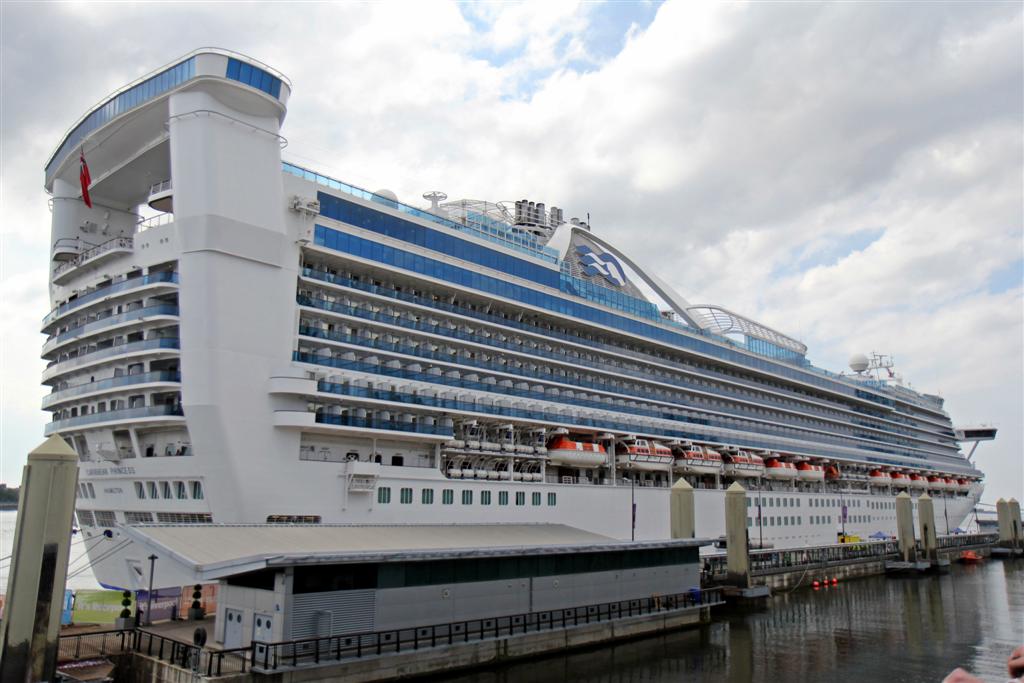
The terminal sits on the east bank of the Mersey at Princes Parade, the riverside road just north of the Pier Head. Ships don’t enter the enclosed docks. They moor on a berth built out into the river itself, so the ship lies parallel to the promenade with its bow usually pointing upriver or down depending on how the pilot brings it in. That’s why a cruise ship in Liverpool looks so enormous from the waterfront. It isn’t tucked behind a dock wall. It’s parked right next to the city’s most famous buildings.
Behind the berth is Princes Dock, one of the old enclosed docks, now surrounded by office blocks, apartments and two large hotels. The terminal building stands between the river berth and Princes Parade. You go from the ship along an enclosed walkway into the building, through the formalities, and straight out onto the street.
Why the berth floats
The Mersey has one of the largest tidal ranges in Britain, up to around ten metres on a big spring tide. A fixed quay would leave a ship’s gangway door metres above or below the land twice a day. The Liverpool berth is designed to rise and fall with the water, so the connection between ship and shore stays usable through the tide. You’ll still notice the walkway angle change a little over the course of a long day. It’s something to be aware of if you use a wheelchair or a mobility scooter (more below), but it’s rarely a real problem.
Two ships in one day
The current berth is designed around one large ship at a time. On the occasional day when two lines schedule Liverpool together, arrangements vary, and your cruise line’s port notes will tell you where your ship is going. GPH’s planned £25 million investment includes a new floating dock so that two 300-metre ships can berth at the same time, along with a new terminal building with shops and hospitality. At the time of writing that’s a plan, not something you’ll see, so don’t expect the new building on a 2026 or early-2027 call.
Inside the Terminal
The building is functional rather than grand, and it’s set up for the processing of thousands of people at once, not for lingering. What you’ll find:
- Check-in desks for turnaround passengers, run by or for the cruise line.
- Security screening, airport style, for everyone boarding: passengers returning from a day ashore go through it too.
- A customs and border control area, used when a ship arrives from outside the UK or ends an international itinerary here.
- A baggage hall where luggage is handed over at embarkation and collected at disembarkation.
- Seating, toilets and basic refreshments for waiting passengers.
- Coach bays and a taxi rank directly outside, plus a vehicle drop-off and pick-up point on Princes Parade.
- Cycle hire and a hop-on hop-off sightseeing bus within easy reach of the entrance.
What you won’t find: a shopping mall, a proper restaurant worth planning around, or much of a view of the city from inside. There’s no reason to stay in the terminal a minute longer than you have to. The waterfront outside has far better cafés, toilets and places to sit, and they’re mostly free.
Arriving on a Day Call
If Liverpool is one stop on your itinerary, here’s how the morning usually goes.
- The ship is cleared. Port and border formalities are completed on board or at the terminal before anyone is allowed off. On a busy itinerary this can take a little while after the ship is tied up. Your daily programme will say when disembarkation opens.
- Ship’s excursions go first. Passengers on organised tours usually meet in a lounge on board and are escorted off to coaches waiting in the bays outside. Independent passengers are typically let off shortly after or at the same time.
- You walk off. Take your cruise card and photo ID. The walkway leads through the building and out onto Princes Parade. Turn right (south) and follow the river, and the Royal Liver Building is almost immediately in front of you.
- You come back through security. Allow time for the queue, which can be long in the last hour before all-aboard as everybody returns at once. Aim to be back at least 45 minutes before all-aboard time, more on a big-ship day.
What’s within ten minutes’ walk
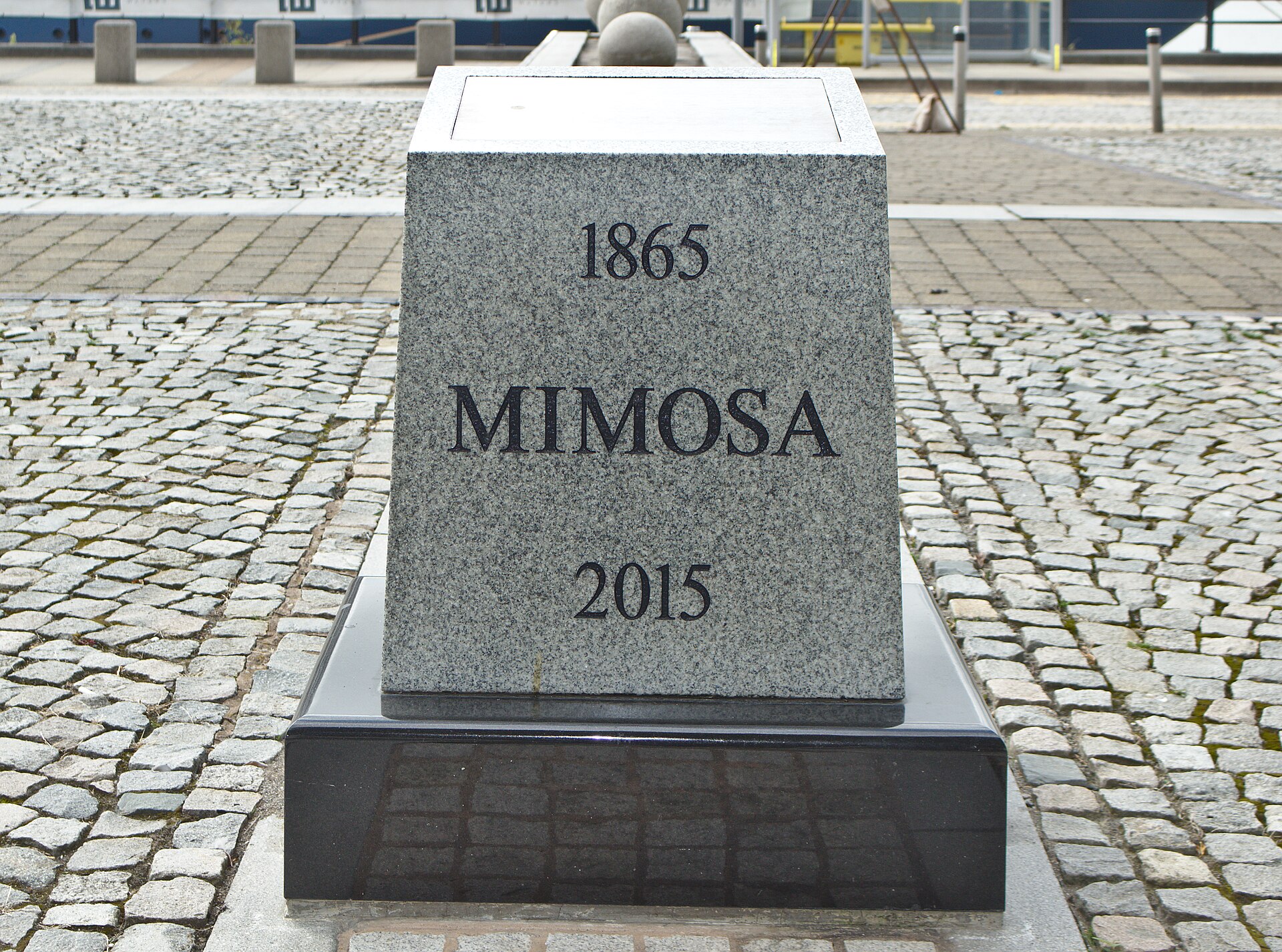
- The Mimosa memorial, a stone’s throw from the terminal, marks the sailing of the Mimosa from Liverpool in 1865, carrying the Welsh settlers who founded the colony in Patagonia. It’s a nice reminder of just how many journeys began on this stretch of river.
- The Three Graces: the Royal Liver Building, the Cunard Building and the Port of Liverpool Building, about five minutes south. Our Three Graces guide explains what’s inside and what you can visit.
- The Pier Head, with the Beatles statue, memorials to the merchant navy and the Titanic engineers, and the Mersey Ferry terminal.
- The Museum of Liverpool at Mann Island, free and one of the best introductions to the city you’ll get in an hour.
- The British Music Experience in the Cunard Building (paid).
Fifteen minutes gets you to the Royal Albert Dock (The Beatles Story, restaurants, shops) and to Liverpool ONE. Twenty minutes gets you to the Cavern Quarter and Mathew Street, or to St George’s Hall and Lime Street.
One important correction to older guides and some cruise-line port notes: the Merseyside Maritime Museum and the International Slavery Museum at the Albert Dock closed in early 2025 for redevelopment and aren’t due to reopen until 2028. Tate Liverpool‘s Albert Dock building is also closed, with the collection temporarily at RIBA North on Mann Island. If a shore excursion itinerary still lists them as stops, ask what’s replaced them.
Starting or Ending a Cruise in Liverpool
Turnaround days are when the terminal gets busiest and when a bit of planning pays off, because the building is compact and the roads around Princes Dock are city streets, not a purpose-built port approach.
Getting to the terminal
| From | Best option | Time | Notes |
|---|---|---|---|
| Liverpool Lime Street station | Taxi from the rank | About 10 minutes | Walkable in 20 minutes without luggage, but not with suitcases |
| Moorfields or James Street (Merseyrail) | Walk or taxi | About 10 minutes on foot | Fine with a single wheeled case; hard work with more |
| Liverpool John Lennon Airport | Taxi, or the Arriva 500 bus then a taxi | 30–40 minutes by taxi | The 500 runs up to every 15 minutes to Liverpool ONE; the England £3 bus fare cap does not apply to it |
| Manchester Airport | TransPennine Express train to Lime Street, then a taxi | About 1h21 plus 10 minutes | Hourly and direct. Coaches from about £4–5 take longer |
| London Euston | Direct train to Lime Street, then a taxi | About 2h15 plus 10 minutes | Roughly hourly. Book advance tickets and leave a buffer |
| By car | Drop at the terminal, then park | Varies | See parking below |
For the full picture on reaching the city, our how to get to Liverpool guide covers trains, coaches and flights, and the Liverpool John Lennon Airport guide has the airport details.
Parking
The drop-off area outside the terminal on Princes Parade is only for unloading. You can’t leave a car there. The process that has worked for turnaround passengers for several seasons is:
- Drive to the terminal and hand your luggage in at the baggage drop, with your passengers.
- Drive on to the designated cruise car park.
- Get back to the terminal on the transfer provided, or walk if the car park is close enough.
Cruise parking has been run in partnership with Q-Park, with number-plate recognition at the barriers and minibuses and luggage vans between car park and terminal. A few weeks before you sail, the terminal usually emails passengers with the current parking offer, often at a discount on the walk-up rate. Use that rather than a price you find on a forum, because it changes from season to season. If you’d rather arrange your own, several city-centre multi-storeys are within a few minutes’ drive, but check that the car park allows stays of a week or more before you book, and work out how you’ll get your bags to the terminal.
Arriving the night before
If you’re travelling from anywhere further than a couple of hours away, stay over. A delayed train or a closed motorway is a genuine risk on a UK turnaround day, and a cruise ship won’t wait. Liverpool is a good city to spend an evening in before a cruise, and there are two big hotels at Princes Dock itself, a few minutes’ walk from the terminal, plus plenty more around the Pier Head and the Albert Dock. Our hotels near the Albert Dock guide and best city-centre hotels list the options. Stay near the waterfront and you can walk to embarkation with your bags if the weather is kind.
Embarkation
- Stick to your check-in slot. Most lines now give you an arrival window. Turning up hours early doesn’t get you on the ship sooner and makes the queues worse for everyone.
- Tag your bags before you arrive. Print the cruise line’s luggage tags at home. Hand bags to the porters at the drop and they’ll be delivered to your cabin later in the day.
- Keep essentials with you. Medication, passports, chargers, a change of clothes and anything valuable should go in hand luggage, as your case may not reach the cabin until the evening.
- Have documents ready. Passport or accepted ID, booking confirmation, any health or visa documents required by your itinerary.
Disembarkation
On the last morning you’ll usually be given a colour or number group and a time to leave. Bags are put out the night before and wait for you in the baggage hall. If your cruise visited ports outside the UK you’ll go through border control. The two things that go wrong most often are booking a train too early and underestimating the taxi queue when a big ship empties. Don’t book a fixed-time train within about two hours of your disembarkation slot. Or if you’re not in a hurry, drop your bags at Lime Street station’s left luggage and have a morning in town before you head home.
Taxis, Buses and Getting Around From the Terminal
- Taxis: a rank outside the terminal is served on ship days. Black cabs (hackney carriages) can be hailed in the street, and Liverpool’s big private-hire firms and ride-hailing apps work too. A trip to Lime Street is short; to the airport budget roughly half an hour. Agree anything unusual, such as a long waiting time, before you set off.
- Merseyrail: Moorfields and James Street are the nearest stations, about ten minutes’ walk each. A Day Saver costs £4.80 for one area or £6.40 for all areas (checked September 2026) and is valid after the weekday morning peak. It’ll get you to Crosby’s Another Place, Port Sunlight or Chester.
- Buses: city buses don’t serve Princes Parade directly. Walk to Liverpool ONE bus station or Queen Square, both about 15 minutes away.
- Hop-on hop-off bus: the sightseeing bus has stops close to the terminal and on the waterfront. It’s useful if walking is difficult; otherwise the central loop is so compact that you’ll see more on foot.
- Mersey Ferry: the Pier Head terminal is a five-minute walk. The Mersey Ferry River Explorer cruise is a lovely way to see your own ship from the water.
For the whole network in one place, see our getting around Liverpool guide.
Accessibility at the Terminal
The terminal is one of the easier cruise ports in Britain for anyone with limited mobility, largely because there’s no shuttle bus to negotiate and the city around it is flat.
- Step-free from street to walkway. The pedestrian route from Princes Parade into the building and through to the ship is level or ramped.
- The walkway angle changes with the tide. Because the Mersey rises and falls so much, the slope between the berth and the ship may be steeper at some points in the day. Crew will assist, and if you use a heavy powered chair or scooter, tell your cruise line in advance and ask when the best time to go ashore is.
- The waterfront is flat. The promenade to the Pier Head and the Albert Dock is wide and level. Parts of the Albert Dock still have original cobbles, but there are smooth paving slabs down the middle of the walkways.
- Accessible attractions close by. The Museum of Liverpool has lifts and a Changing Places toilet. The Mersey Ferries are wheelchair accessible on the main decks. Lime Street station is fully step-free and also has a Changing Places toilet.
Our wheelchair-accessible Liverpool guide goes into much more detail on the city.
Right Outside: The Waterfront in Twenty Minutes

If your call is short, or you’re waiting for a later train after disembarkation, this is the loop to do. Leave the terminal and turn right along the river. In five minutes you’re under the Royal Liver Building, with the Cunard Building and the Port of Liverpool Building beyond it. Carry on past the Beatles statue to the Pier Head and the ferry terminal, then round the angular Museum of Liverpool at Mann Island. Pop in if you have an hour: it’s free. From there, a footbridge and the dockside take you into the Royal Albert Dock. Walk back along the river the way you came, or cut up through Liverpool ONE and down James Street. It takes twenty minutes without stopping, and a very pleasant two hours if you do stop.
If you want more structure, our Liverpool waterfront guide covers every building on the route, and the self-guided walking tour extends it up to the Cavern Quarter and St George’s Hall.
Honest Advice: Shuttles, Tours and Taxis Touting on the Quay
Because the terminal is so close to everything, a lot of what’s sold to cruise passengers here isn’t good value.
- You don’t need a transfer into town. Anything marketed as a “shuttle to the city centre” from this terminal is taking you somewhere you could walk to in five to fifteen minutes on a flat pavement.
- A walking tour of the waterfront doesn’t need booking through the ship. The Three Graces, the Pier Head and the Albert Dock are free to walk round. The city also has free and tip-based walking tours; see our free walking tours guide.
- Where a ship’s tour does make sense is further out: Chester, North Wales or the Lake District, where the line guarantees to get you back before sailing. On a short call, that guarantee matters more than the price.
- Taxis offering “Beatles tours” on the quay can be good, as Liverpool’s cabbies know their stuff, but agree the route, the time and the total price before you get in.
Weather and What to Bring Ashore
Liverpool’s weather changes quickly, and the waterfront is exposed to wind off the Irish Sea. Even on a warm day, bring a light waterproof and a layer. Comfortable shoes matter more than anything else, because the best of the city is walkable. The currency is the pound sterling. Contactless card payment is accepted almost everywhere, including on buses and Merseyrail, so you’ll rarely need cash. Check your phone plan before you use data if you’re not on a UK or EU tariff. Our weather and what to pack guide has month-by-month detail.
Frequently Asked Questions
Where is Liverpool Cruise Terminal?
At Princes Parade, Liverpool L3 1DL (Gate 2), on the river beside Princes Dock, just north of the Pier Head and the Three Graces. It’s right on the edge of the city centre.
Is there a shuttle bus from the cruise terminal to Liverpool city centre?
No, and you don’t need one. The city centre begins about 50 metres from the terminal entrance. The Three Graces are five minutes’ walk away, and the Royal Albert Dock and Liverpool ONE about fifteen, all on flat pavements.
How far is the cruise terminal from Lime Street station?
About 20 minutes on foot or roughly 10 minutes by taxi. With luggage, take a taxi.
Can you park at Liverpool Cruise Terminal?
You can drop off passengers and luggage outside, but not park there. Turnaround passengers use a designated cruise car park, with transfers back to the terminal. The terminal usually emails an offer a few weeks before you sail.
How early should I arrive for embarkation?
Use the check-in time or window your cruise line gives you. Arriving hours early generally just means waiting in the terminal. If you’re travelling a long way on the day, build in a generous buffer, or better still stay in Liverpool the night before.
How far is the cruise terminal from Liverpool airport?
About 15 km. Allow 30–40 minutes by taxi, more at rush hour. The Arriva 500 bus reaches Liverpool ONE, from where the terminal is a short taxi ride or a 15-minute walk.
Is the cruise terminal the same as the Isle of Man ferry terminal?
No. The Isle of Man Steam Packet uses its own terminal nearby at 1 Triskelion Way, L3 1QW. Stena Line’s Belfast ferries leave from Birkenhead, across the river.
Is there a ferry from Liverpool Cruise Terminal to Dublin?
No. The Liverpool–Dublin passenger ferry closed in December 2023. To reach Dublin by sea, go via Holyhead, or sail to Belfast from Birkenhead.
Is Liverpool Cruise Terminal wheelchair accessible?
Yes, it’s step-free from the street through the building, and the waterfront beyond it is flat. The angle of the walkway to the ship can change with the tide, so tell your cruise line in advance if you use a powered chair or scooter.
Once you’re through the terminal, the question is what to do with the hours you’ve got. Our guide to Liverpool on a cruise stop gives an honest verdict on each type of ship excursion, explains how to do the Beatles, the Mersey Ferry, Anfield and Chester yourself, and has timed plans for four, six and eight hours ashore.
Don’t confuse the cruise terminal with the Isle of Man Ferry Terminal nearby at 1 Triskelion Way, which handles the Steam Packet sailings to Douglas. If that’s your boat, our Isle of Man ferry from Liverpool guide covers check-in times, fares and the timetable.
If your cruise starts or ends in Liverpool, the practical questions come before the terminal itself: where to leave the car, which hotel to book the night before, and how to get here by train or plane. Our guide to Liverpool cruise parking and hotels covers all of it, including what to ask before you book parking for a fortnight.
Related Liverpool Guides
- Liverpool Cruise Port & Ferries: The Complete Guide
- Liverpool Waterfront Guide
- The Three Graces
- Museum of Liverpool Guide
- Mersey Ferry Guide
- Hotels Near the Albert Dock
- Getting Around Liverpool
- Wheelchair-Accessible Liverpool
Photo Credits
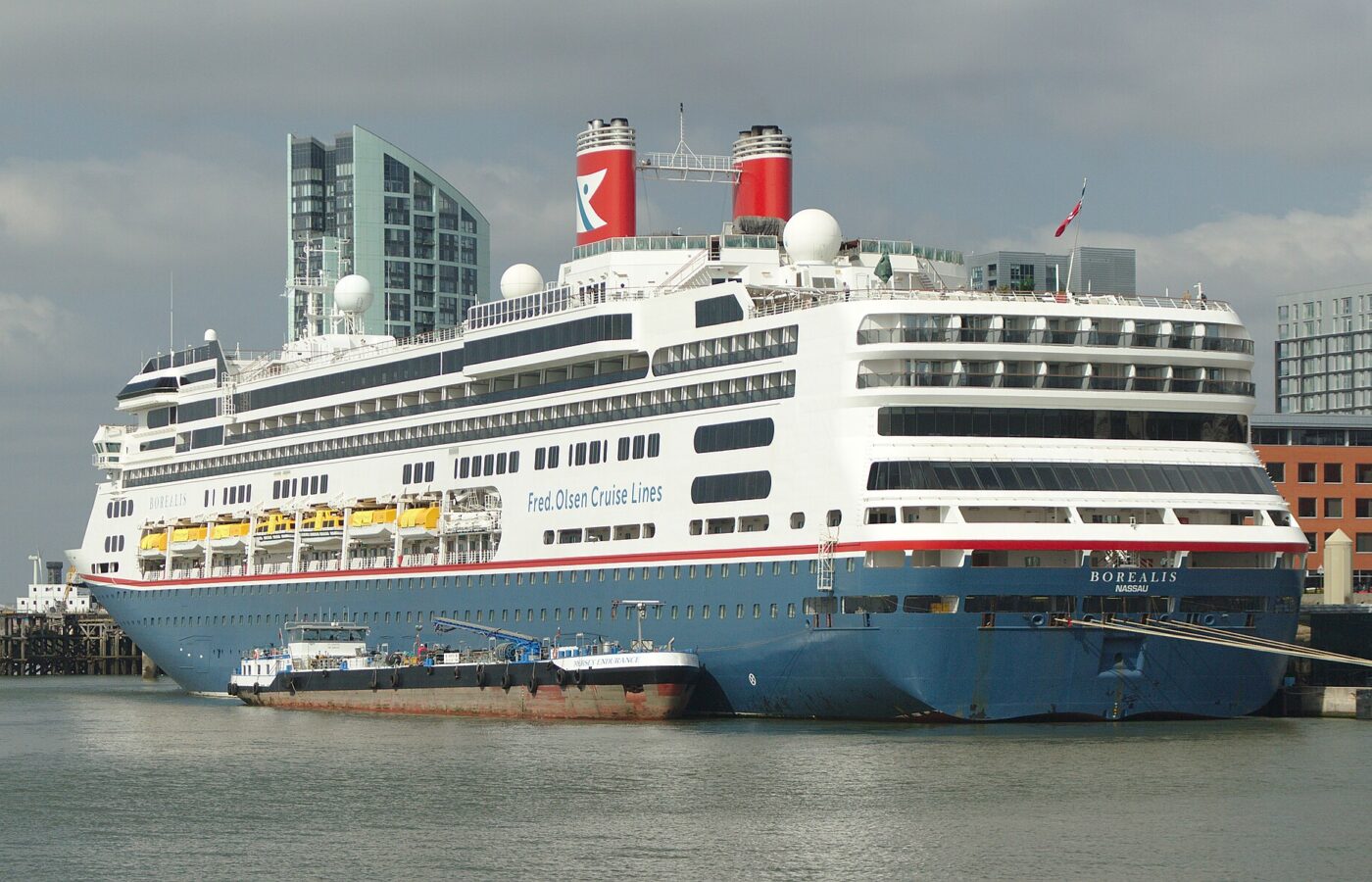
Borealis at Liverpool Cruise Terminal: Borealis (ship, 1997) at Liverpool Cruise Terminal 1 by Rodhullandemu, CC BY-SA 4.0, via Wikimedia Commons.
Caribbean Princess at the terminal: Caribbean Princess, Cruise Terminal, Liverpool (geograph 2977700) by El Pollock, CC BY-SA 2.0, via Wikimedia Commons.
Mimosa memorial, Princes Dock: Mimosa Memorial, Princes Dock 1 by Rodhullandemu, CC BY-SA 4.0, via Wikimedia Commons.