This article contains advertising. Our booking links are routed through a partner that adds commission tracking automatically, so if you book through one we earn a commission from the provider, at no extra cost to you. It never affects what we recommend. Affiliate disclosure
The Merseyside Maritime Museum has shaped how Liverpool tells its own story for nearly half a century — and right now, both it and the International Slavery Museum which sits in the same Albert Dock warehouse are closed for the most significant redevelopment in their history. If you’re researching maritime museum Liverpool visits for a 2026 or 2027 trip, the practical answer is honest and uncomfortable: the main galleries are shut, the doors are physically closed to the public, and the planned reopening date is 2028 at the earliest, subject to funding being confirmed. This guide explains what’s happening, what you can still see in the meantime, what the redeveloped museums will look like when they return, and how to experience Liverpool’s maritime and slavery history while the building itself is dark.
I’m going to be straight with you throughout. The closure has caught a lot of visitors off-guard because tour books and older travel sites still list the maritime museum Liverpool as a must-see free attraction. It is — when open — one of the strongest free museums in the UK, with four floors covering everything from Titanic and Lusitania to the slave trade Liverpool helped run. Right now though, the entire warehouse block is closed for what National Museums Liverpool has called a once-in-a-generation rebuild. There are still genuine ways to engage with the same stories elsewhere in the city, and the rebuild itself is worth understanding before you arrive.
https://www.liverpooltourism.org/wp-content/uploads/2026/05/p7c3-albert-dock.jpg
Maritime Museum Liverpool: Current Status (2026)
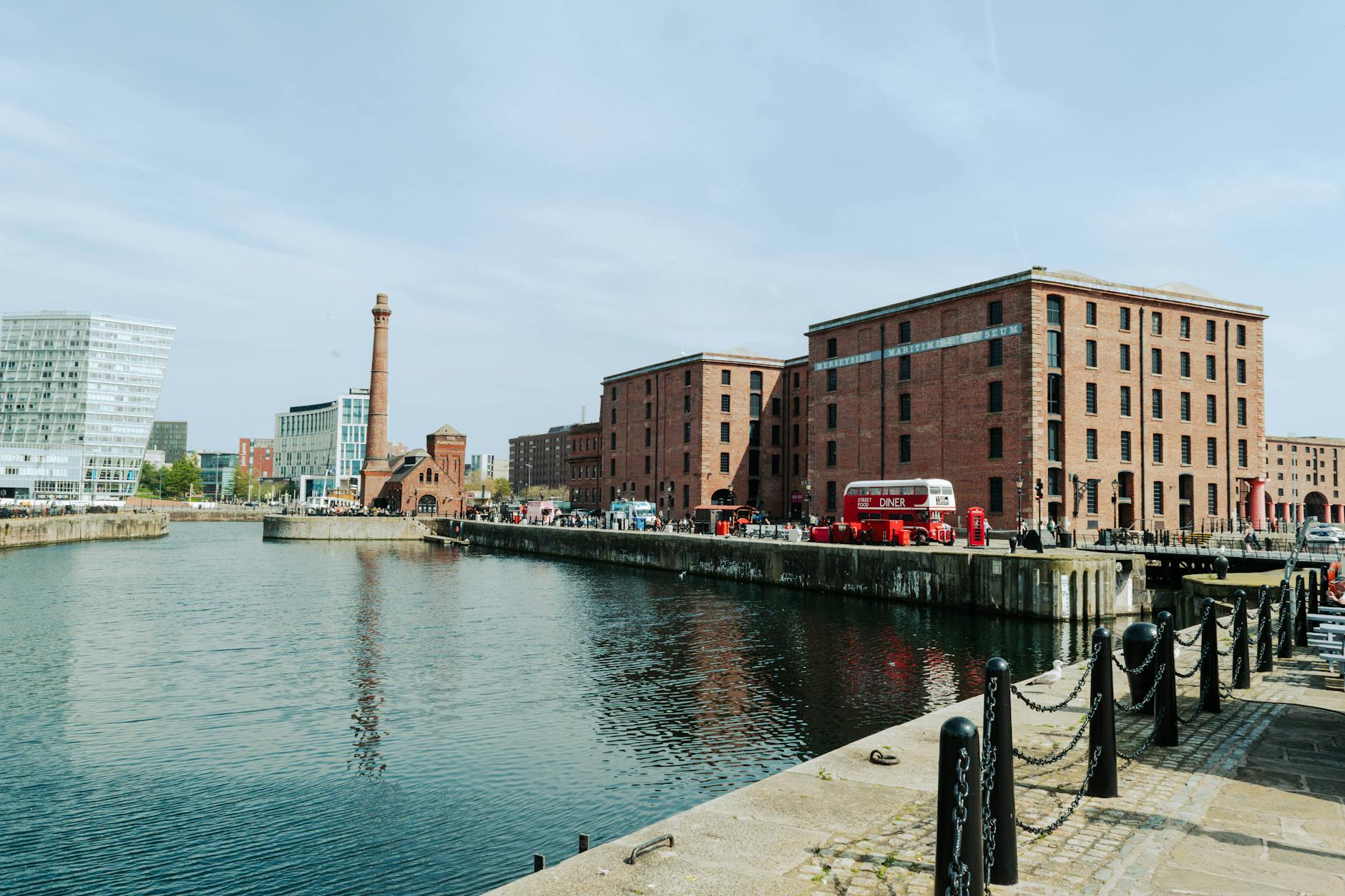
The Merseyside Maritime Museum closed in January 2025 for a multi-year redevelopment programme. The International Slavery Museum, which has occupied the third floor of the same building since 2007, closed at the same time. Both museums are part of National Museums Liverpool (the same body that runs Tate Liverpool, the Walker Art Gallery and the Museum of Liverpool) and both are housed inside Warehouse Block D of the Royal Albert Dock — the Grade I listed red brick complex that defines Liverpool’s UNESCO-recognised waterfront.
The current published target for reopening is 2028. That date is subject to the redevelopment being fully funded — at the time of writing, work is underway, the Wolfson Foundation has confirmed significant funding, planning permission has been granted, and the project has a clear creative direction. None of that guarantees the date holds. Major museum rebuilds routinely slip by a year or two, and visitors planning a 2027 trip should treat the maritime museum Liverpool as definitely closed and plan accordingly. For up-to-date status, the National Museums Liverpool website is the only authoritative source — newer tour-book editions and aggregator listings frequently still describe the museum as if it were open.
What the closure means in practice: you cannot walk into the warehouse, you cannot see the galleries, and the on-site shop and café are not operating. The temporary exhibition space, the Titanic and Lusitania gallery, the Battle of the Atlantic gallery, the Seized! customs gallery, and the entire International Slavery Museum collection are all inaccessible to walk-in visitors for the duration of the works.
What Was in the Maritime Museum Liverpool (and Will Return)
Understanding what’s been packed away helps explain why this museum matters so much to Liverpool’s identity — and what to look forward to when it returns. The Merseyside Maritime Museum opened in 1980 in the partially-restored Albert Dock warehouses. It tells the story of the port of Liverpool: the merchant ships, the customs men, the emigration boom, the wartime convoys, the great Atlantic liners, and the lives of the seafarers and dockworkers who built the city’s wealth.
The maritime museum Liverpool was organised across four floors of galleries. The Titanic, Lusitania and Empress of Ireland gallery is the one most visitors came specifically to see. Liverpool was the registered port of the Titanic — her name and “Liverpool” were painted across her stern — and 89 of the city’s crew died in the 1912 sinking. The gallery held survivors’ letters, personal effects recovered from the wreck site, the haunting violin case associated with bandmaster Wallace Hartley, and detailed models of all three ships. The Lusitania section covered the 1915 U-boat sinking that pulled the United States closer to entering World War One, with telegrams, ship models and newspaper coverage from the aftermath.
The Battle of the Atlantic gallery covered Liverpool’s role as the headquarters of the longest-running campaign of World War Two. The city was the operational nerve centre for the convoy battles against German U-boats — the gallery linked directly into the Western Approaches Museum story (which remains open). The Emigration gallery told the story of the nine million people who left Europe through Liverpool docks for North America and Australia between 1830 and 1930. Seized! handled the parallel history of customs, smuggling and border control. The Art and the Sea gallery showed maritime paintings from the city’s collection. There was also a working ground-floor exhibition with full-size lifeboats and ship’s gear.
The redevelopment will reorganise these collections rather than discard them. Curators have been clear that the key objects — the Titanic material, the Lusitania artifacts, the Battle of the Atlantic exhibits — will return in the reimagined museum. The redevelopment also creates space for new acquisitions and reinterpretation, particularly around uncomfortable histories that the original 1980s curatorial framing tended to soft-pedal.
https://www.liverpooltourism.org/wp-content/uploads/2026/05/p7c3-waterfront.jpg
International Slavery Museum: What’s Changing
The International Slavery Museum opened on the maritime museum’s third floor in 2007, on the 200th anniversary of the British abolition act. From the start, it was constrained by the building — it had no dedicated entrance, no public-facing front door, and visitors reached it through the maritime museum’s lifts and stairs. The closure now is partly to fix that. A new Entrance Pavilion, designed by Feilden Clegg Bradley Studios, will give the International Slavery Museum its own street-facing identity for the first time. The Pavilion features cast-iron panels whose artistic direction was awarded to digital sculptor Rayvenn Shaleigha D’Clark following a competitive commission.
The redeveloped museum will also become home to the National Centre for Teaching Black History — a permanent educational hub developed in partnership with universities and community organisations. The museum’s content will expand significantly. The original 2007 galleries covered the transatlantic slave trade, the lives of enslaved Africans, resistance and abolition, and the legacies of slavery in contemporary Britain. The new iteration will retain those themes but increase the space, deepen the contemporary-legacies content, and provide more room for changing exhibitions on Black British history and the global aftermath of slavery.
Public workshops in 2025 and 2026 have shaped the redevelopment. National Museums Liverpool has run consultations with descendants of enslaved people, community historians, artists, and academic specialists to inform how the new galleries handle the material. The museum’s location — directly inside Liverpool’s slave-trade-built dockside warehouses, less than a mile from the streets where slave-ship owners ran their businesses — makes the redevelopment more than a routine refurbishment. It’s an attempt to reset how Britain narrates its central role in the trade.
What You Can Still See During the Closure
The Archives Centre — which holds the maritime museum’s paper collection of ship’s logs, crew lists, customs records, family-history sources and original Titanic and Lusitania paperwork — has been reopening in a temporary space. This matters mostly for researchers, family historians and people tracing relatives who sailed from Liverpool, but it does mean the documentary collection isn’t sealed off. Check National Museums Liverpool’s current listings for opening hours and location; the temporary space has changed during the closure and is not at the Albert Dock.
Pop-up displays and off-site exhibitions are being developed throughout the closure period. These typically appear at the Museum of Liverpool (next door on Pier Head), the Walker Art Gallery, and at partner venues across the city — the National Museums Liverpool press office publishes these as they happen, often with short runs of a few weeks. If you’re visiting for a specific Maritime Museum collection, check before you travel: the Lusitania bell, for example, has appeared in temporary loan exhibitions during the closure.
The Albert Dock complex itself remains fully open. You can walk the entire perimeter, photograph the warehouses, see the maritime atmosphere, and visit the surviving open attractions in the dock — including the Beatles Story, Tate Liverpool (also undergoing capital works but partially open via The Light Hub), the dock’s bars and restaurants, and the Pumphouse pub. The dockside itself, the cobbles, the cast-iron columns and the Pier Master’s House are all part of Liverpool’s UNESCO-listed maritime heritage and walking the warehouses externally still gives a strong sense of the port’s scale.
Maritime Museum Liverpool: Where to Find the Stories Right Now
The single best alternative for the Battle of the Atlantic, U-boat warfare and Liverpool’s wartime convoy command story is the Western Approaches Museum on Rumford Street, ten minutes’ walk from the Albert Dock. This is the actual operations bunker where the convoy battles were directed — it survived intact after the war, sealed up and forgotten for decades, and is now run as a private museum (admission around £15 in 2026, indicative). The atmosphere is completely different from the polished maritime museum galleries — you walk through the original briefing rooms, the map plot, the typing pools and the dormitories. For naval and military-history visitors, Western Approaches alone justifies the trip.
For the Titanic story specifically, the city offers strong context even while the maritime museum is closed. The White Star Line headquarters at 30 James Street (now a hotel) bears Liverpool’s most direct Titanic connection — the building is from where the disaster was managed and where the first telegrams arrived. The Titanic Memorial outside the Pier Head, dedicated to the engineers who stayed at their posts to keep the ship’s lights on, is on the waterfront and free to visit. The Hotel 30 James Street Suite 7 retains some Titanic-themed decoration. Liverpool Cathedral’s memorial book of remembrance lists the crew lost. For a deeper Titanic itinerary, the maritime walk along the dock road and around the Pier Head still rewards the time even without the museum interior.
For the broader story of Liverpool as a port — the merchants, the warehouses, the docks system, the cotton trade, the emigration boom — the Museum of Liverpool next door at Pier Head is the strongest currently-open option. Its People’s Republic gallery and Global City gallery between them cover much of what the maritime museum’s Liverpool: World Gateway gallery used to handle, told from the perspective of working Liverpool families and the immigrant communities who shaped the city. Admission is free. See also our Liverpool maritime history guide for a self-guided dockside walking route covering the same ground without needing the museum interior.
For the International Slavery Museum’s subject matter, the alternatives are thinner. The Walker Art Gallery houses some relevant paintings and the city has a number of memorial sites — the International Slavery Memorial at the Museum of Liverpool’s exterior, the Eric’s Memorial to the abolitionist William Roscoe at St James’ Gardens, and the various street names that still encode the slave-trade connections (Roscoe Street, Penny Lane and the streets around Sir Thomas Street merchants’ quarter). Liverpool Black History Walking Tours, run by local historians, cover the ground in detail and are an excellent alternative while the museum is closed. Many self-guided routes are also documented online.
https://www.liverpooltourism.org/wp-content/uploads/2026/05/p7c3-warehouse.jpg
Royal Albert Dock: How to Plan a Visit Anyway
The Royal Albert Dock remains one of Liverpool’s most visited destinations even with the maritime museum closed. The dock complex opened in 1846 and was the world’s first non-combustible dock warehouse system — its cast-iron columns, brick warehouses and water-tight design made it revolutionary engineering for its time. The waterfront is best visited as a half-day or full-day trip combining whatever’s open with the architecture, the views, and the food.
A practical 2026 itinerary for a half-day at the Royal Albert Dock looks roughly like this: arrive at Pier Head via James Street Merseyrail station (5 minutes’ walk), start at the Museum of Liverpool for an hour or two (free, world-class), walk south along the dock front to the Albert Dock, see the Titanic Memorial and the Pier Head Three Graces in passing, visit the Beatles Story if Beatles interest is strong (around £20, allow 2 hours), have lunch at one of the dockside restaurants or at the Pumphouse pub, then walk the dock perimeter and visit Tate Liverpool’s Light Hub temporary space. Total cost: free to £30 depending on choices.
Getting there is straightforward. James Street is the closest Merseyrail station (5-minute walk). Liverpool Lime Street, the mainline rail station, is a 15-minute walk through the city centre. The 10A, 14, 14A and 17 buses all stop within a few minutes of the dock. The Liverpool ONE Q-Park and the Albert Dock car park both serve the area; expect £8-12 for a half-day’s parking in 2026. See our how to get to Liverpool guide for arrival options from further afield.
The Redevelopment: What’s Actually Happening
The current programme is one of the largest investments in UK museum infrastructure of the decade. Multi-million pound funding has come from the National Lottery Heritage Fund, the Wolfson Foundation, Liverpool City Council, central government, and private donors. The architectural lead is Feilden Clegg Bradley Studios, a London-based practice with a strong record of museum and gallery work. The construction is managed by National Museums Liverpool with specialist contractors handling the listed warehouse fabric, which requires careful conservation work as well as new-build elements.
The biggest physical change is the new Entrance Pavilion for the International Slavery Museum. This will be a contemporary structure attached to the existing warehouse, providing the museum’s first street-level public entrance. The Pavilion’s cast-iron panels — designed by Rayvenn Shaleigha D’Clark — will form a distinctive contemporary art installation as well as serving an architectural function. Inside, gallery space will be reorganised so the International Slavery Museum occupies a coherent block rather than the awkward third-floor footprint it inherited in 2007.
The Maritime Museum’s galleries will be reinterpreted with curators rebuilding the Titanic, Lusitania, Battle of the Atlantic, Seized! and World Gateway galleries. Expect more digital interpretation, more interactive content, more attention to the lived experience of seafarers and dockworkers, and more space for changing exhibitions. The Art and the Sea collection will be retained but probably re-presented.
Some of the redevelopment work is already visible from outside the warehouse — scaffolding and hoardings have appeared on the south end of the complex. Liverpool City Council’s planning documentation gives the most detailed view of what the finished works will look like. If you’re a heritage or architecture visitor, the redevelopment itself is a story of its own.
Frequently Asked Questions
Is the Merseyside Maritime Museum open in 2026?
No. The Merseyside Maritime Museum closed in January 2025 for a multi-year redevelopment and is not scheduled to reopen until 2028 at the earliest. The reopening date is subject to funding and may slip. The Royal Albert Dock complex itself remains open — only the maritime museum warehouse interior is closed.
Is the International Slavery Museum open?
No. The International Slavery Museum closed at the same time as the Merseyside Maritime Museum in January 2025. Both museums share Warehouse Block D and both are part of the same redevelopment. The International Slavery Museum will reopen with a dedicated new Entrance Pavilion designed by Feilden Clegg Bradley Studios, target date 2028.
How much does Merseyside Maritime Museum cost to visit?
When open, the Merseyside Maritime Museum is completely free — including all permanent galleries, the International Slavery Museum and the Battle of the Atlantic galleries. Some special exhibitions occasionally carry a charge (typically £5-10). The free admission policy is part of National Museums Liverpool’s core mission and is expected to continue after the 2028 reopening.
What can I see at the Albert Dock while the maritime museum is closed?
The Albert Dock remains fully open. Currently operating attractions include the Beatles Story, Tate Liverpool’s Light Hub temporary space, dockside restaurants and bars, the Pumphouse pub, and the dock perimeter walks. The neighbouring Museum of Liverpool at Pier Head is two minutes’ walk and free. See our Liverpool waterfront guide for a full itinerary.
Where can I see the Titanic exhibits while the maritime museum is closed?
The Titanic gallery’s contents are in storage during the closure. Pop-up loans of individual objects appear occasionally at the Museum of Liverpool and partner venues — check National Museums Liverpool’s news page before travelling. The Titanic Memorial at Pier Head and the White Star Line building at 30 James Street (now a hotel) are free outdoor sites worth visiting for Titanic context. The Liverpool Cathedral has a memorial book listing crew members lost.
Where is the Merseyside Maritime Museum?
The Merseyside Maritime Museum is in Warehouse Block D of the Royal Albert Dock, Liverpool Waterfront, postcode L3 4AQ. The closest Merseyrail station is James Street (5 minutes’ walk). The Albert Dock is approximately a 15-minute walk south from Liverpool Lime Street mainline station.
What was the best gallery in the Merseyside Maritime Museum?
Opinions varied, but the Titanic, Lusitania and Empress of Ireland gallery and the Battle of the Atlantic gallery were the most-discussed by visitors. The International Slavery Museum on the third floor was unique in the UK and frequently described as one of the most important museum experiences in the country. For a fuller tour of the city’s surviving museum offering, see our Liverpool museums and galleries pillar.
How long will the redevelopment take?
The current target is 2028 reopening, with a phased approach across the maritime and slavery museum spaces. Construction is already underway. The redevelopment includes structural conservation of the listed warehouse, new gallery fit-outs, the new International Slavery Museum Entrance Pavilion, and the relocation of the National Centre for Teaching Black History. Funding is largely secured but the timeline depends on the final phase of fundraising.
Final Thoughts: A Museum Worth Waiting For
The maritime museum Liverpool closure is genuinely frustrating for visitors planning a 2026 or 2027 trip. There’s no point pretending otherwise — two of the strongest free museums in the UK are not currently available to walk into, and any travel guide that suggests otherwise is out of date. But the closure isn’t a sign of decline. It’s a sign that National Museums Liverpool is investing seriously in giving these collections — and especially the International Slavery Museum — the spaces they deserve. The new Entrance Pavilion will fix the most awkward physical limitation the museum has had since 2007. The expanded galleries will give the curators room to deepen and update the storytelling. The National Centre for Teaching Black History will add a permanent educational dimension that the original museum couldn’t sustain.
In the meantime, the city tells these stories in other ways. The Museum of Liverpool covers much of the port history. Western Approaches covers the wartime convoy command. The waterfront walking routes connect the warehouse architecture to the slave-trade and emigration history. The Titanic Memorial at Pier Head and the White Star Building on James Street give physical anchor points for that story. Liverpool Cathedral’s memorial book of remembrance lists names. Walking the streets between the docks and the merchants’ quarter, with one of the city’s specialist guides or a self-guided historical route, gives a more honest sense of how the slave trade physically shaped Liverpool than even the museum interior did.
When the maritime museum reopens, plan a full day. Combine it with the Museum of Liverpool, the Tate, a Mersey Ferry crossing and a long walk along the docks. Until then, focus on what’s currently open and on the city’s outdoor maritime heritage. The maritime museum Liverpool will return, and when it does, it’ll likely be the strongest maritime and slavery history museum in the country. For now, the rest of Liverpool’s cultural offering is more than enough to fill a trip — see our Liverpool museums and galleries pillar for the full picture of what’s open, what’s closed, and what to prioritise.