This article contains advertising. Our booking links are routed through a partner that adds commission tracking automatically, so if you book through one we earn a commission from the provider, at no extra cost to you. It never affects what we recommend. Affiliate disclosure
The most common mistake people make booking a seat here is trusting a seating plan they found on Google. There is no such thing as the definitive m&s bank arena liverpool layout, because the room is reconfigured for every single show — full bowl end-on for a big arena tour, half-house with the upper tiers curtained off for a mid-size one, floor standing for a rock gig, fully seated in the round for something else entirely. Block A in one configuration is nowhere near the stage in the next.
This guide covers what the arena actually is, how to read a seating plan for a specific event, the bag policy that catches people out at the door, where to park, how to get there and away, and what to do about the fact that there is very little to eat within five minutes of the building. Details were checked against the venue’s own information in September 2026 — but policies vary by promoter as well as by venue, so always read the specific event page before you travel.
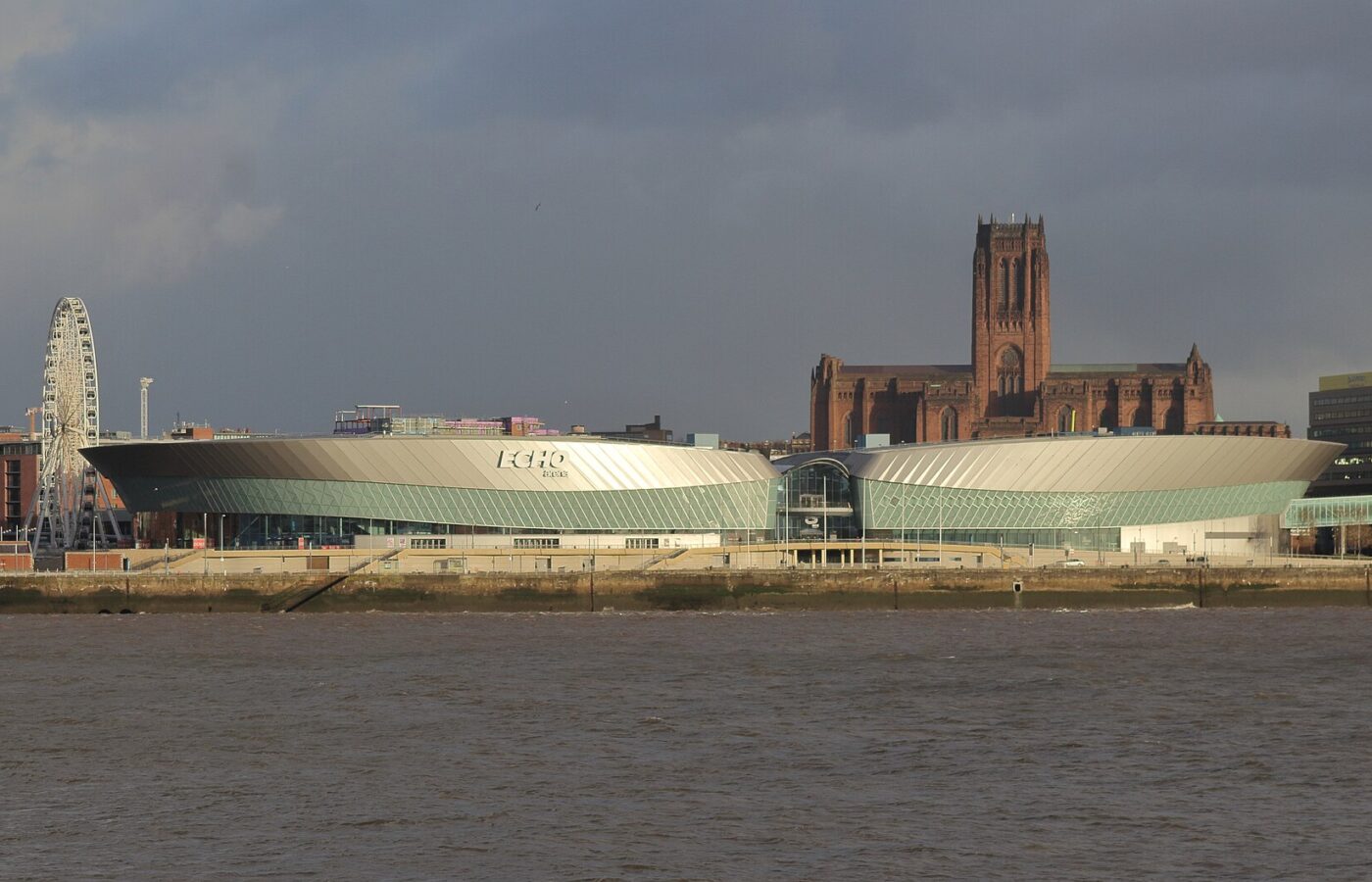
The Arena in Brief
| Detail | |
|---|---|
| Capacity | Around 11,000 |
| Opened | 2008, originally as the Echo Arena |
| Location | Kings Dock, on the Mersey waterfront |
| Nearest station | James Street (10 min walk) |
| From Lime Street | 20 minutes on foot, flat along the waterfront |
| Hospitality boxes | 22 |
| Sister venue | The Auditorium, 1,350 seated |
| Best known for | Hosting Eurovision in 2023 |
| On-site parking | Kings Dock Car Park, around 1,450 spaces |
By arena standards it is small, and that is genuinely to the visitor’s advantage: the back row is not a write-off, the acoustics do not collapse in the upper tier, and getting out afterwards is quicker than at the 20,000-seat venues.
Where to Sit
The rule that matters
Check the seating plan on the specific event listing. Any generic plan you find on a third-party site is describing one possible configuration out of many, and using it to choose a seat is how people end up behind the stage. The venue publishes a plan per show, and so does the promoter.
General principles, once you have the right plan
- Lower tier, side-on, level with the middle of the floor. The most consistently good area in the building. You are elevated enough to see over a standing floor crowd, close enough to see faces, and not so far to the side that the stage foreshortens.
- Floor standing is the best experience at a rock or pop show if you arrive early and the worst if you arrive late — there is no rake, so height matters enormously. If you are under about five foot six and arriving after doors, consider a seat instead.
- Upper tier is genuinely fine here and often very cheap. In a room this size the top rows still see the whole stage. The trade-off is the climb and a steeper rake than the lower tier.
- Behind or beside the stage is discounted for a reason. Acceptable for a music gig where you accept you are watching a back. Not acceptable for comedy or anything with a screen.
- The front block on the floor is the most expensive and, for a seated show, not the best — you are looking up at a steep angle for two hours.
- Aisle seats matter more than usual because the rows are long. If you expect to move during the show, pay attention to where the aisles fall.
Accessible seating
The arena is a modern build and is one of the most straightforwardly accessible venues in the city: accessible seating spaces, wide corridors and doors, accessible toilets and entrances, and an accessible drop-off point on the river side of the building. Access seats and companion tickets are booked through the venue’s access route rather than a general on-sale, and should be arranged in advance rather than on the night. There are 79 accessible parking spaces, though parking is not free for Blue Badge holders. Our accessible Liverpool guide covers the wider picture.
What the Room Is Actually Like
Worth setting expectations, because “arena” covers a very wide range of experiences in Britain and this one sits at a particular point on it.
- It is small for an arena. At around 11,000 it is roughly half the size of the biggest UK rooms. The practical effect is that the sightlines hold up much further back, the sound stays coherent in the upper tier, and the whole building empties faster.
- The acoustics are decent rather than exceptional. It is a modern arena with the usual hard surfaces, and a badly mixed show will sound badly mixed. But it does not suffer from the cavernous wash that afflicts the larger bowls.
- Sightlines to the screens are good from almost everywhere, which matters more than people admit at an arena show.
- The concourses are wide and the flow out is orderly. This is a genuine advantage over older venues.
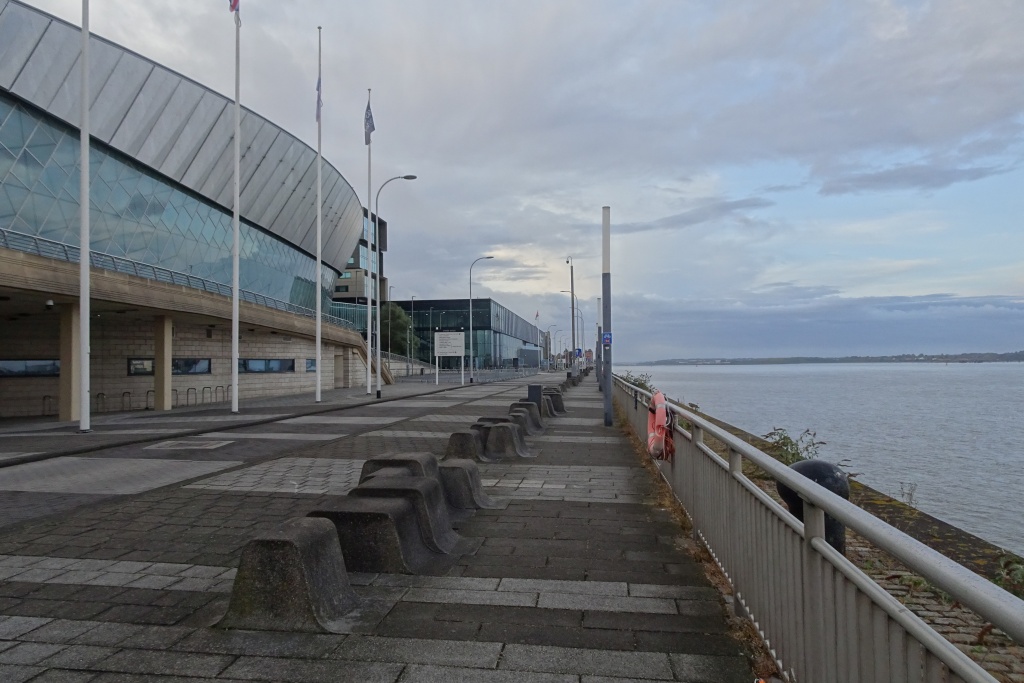
- It is warm inside and exposed outside. The queue before doors is on an open dock with nothing between you and the Mersey. Dress for the queue, not for the room.
Sound and standing
For a floor-standing show, the sweet spot is roughly a third of the way back, centre, where you are past the front crush and still inside the main speaker coverage. Right at the barrier you are often below the mix. Right at the back of the floor you are behind the mixing desk, which is a matter of taste — some people consider that the best sound in any venue, and they are not wrong.
Going With Children
- Age policies are set per event, not per venue. Many shows require under-14s or under-16s to be accompanied, and some floor-standing areas have a minimum age regardless of accompaniment. Check the specific event page.
- Do not put a child on a standing floor for a busy show. There is no rake, they will see nothing, and it is genuinely unpleasant in a crush. Seated lower tier is the answer.
- Changing bags are exempt from the bag policy, which is one of the few stated exemptions.
- Ear defenders are worth bringing for younger children. Arena volume is arena volume.
- The finish time is the thing to plan around. A show ending at 22:45 plus a walk plus a train is a very late night for a small child, and the free waterfront museums earlier in the day are a better use of the energy. See our Liverpool with kids guide.
Other Events Here
It is easy to think of this as a music venue, and a good deal of what fills the diary is not.
- Comedy tours at the scale that has outgrown theatres. These are seated, start earlier and finish earlier.
- Boxing and MMA, which use a central configuration and change the seating plan completely — the floor becomes the premium area rather than a standing pit.
- Netball, basketball and indoor athletics, which do the same.
- Awards ceremonies and conferences, often shared with the adjacent convention centre and the Auditorium.
- Eurovision in 2023, which remains the thing the venue is best known for internationally and which brought 54,417 attendees to the city, many of whom came back. Our events and festivals guide covers the wider calendar.
- Seasonal shows through December, when the arena, Liverpool Christmas Wonderland at the Pier Head and Skate St George’s all run at once and the waterfront is at its busiest. See the Christmas markets guide.
The Bag Policy — Read This Before You Leave
This is the single most common reason people have a bad start to an evening here.
- The venue asks customers not to bring bags at all. That is the stated position, not a suggestion buried in the small print.
- If a bag is genuinely necessary, one small bag no larger than A4 is permitted, and a clear bag will get you through security faster.
- Exemptions apply for medical needs and for changing bags for babies and young children.
- There is no left luggage on site and the venue cannot store bags for you. If you turn up with a rucksack you may simply not get in with it, and there is nowhere on the dock to leave it.
- If you are arriving straight from a train, use the left luggage facility at Lime Street before you walk down. This is the fix, and almost nobody thinks of it in advance.
What you cannot bring in
Smoke bombs, flares and anything pyrotechnic; streaming, video and audio recording equipment; and professional cameras with detachable lenses or tripods. Smoking anywhere inside the venue means being asked to leave without a refund, and that includes vaping in most configurations — check the event page.
Bag and security policies tighten further for certain shows at the promoter’s discretion, so the event page is the authority, not this page and not what happened last time you came.
Getting There
On foot
From Lime Street: about twenty minutes, flat, along the waterfront past the Pier Head and the Albert Dock. It is a genuinely pleasant walk in and a cold one out in January — the dock is fully exposed to the river wind, and it is meaningfully colder there than three streets inland.
From James Street Merseyrail station: about ten minutes, and this is the closest station. Liverpool Central is a similar distance and connects to more lines.
By train
Merseyrail runs to James Street, Liverpool Central and Lime Street. The critical thing to know is that last trains run earlier than a big-city visitor expects — broadly around midnight, earlier on Sundays. A show finishing at 22:45 gives you time, but not as much as you think once 11,000 people are moving in the same direction. Check the last train before you buy the ticket, not on the night. Our getting around guide has the network detail.
By car
The on-site Kings Dock Car Park holds around 1,450 spaces, with accessible bays and electric charging points on every floor, and there is additional pay and display parking in the area. Two practical notes: it empties slowly after a full house, and the exit queue can run to forty minutes. If you are driving and not in a hurry, that is fine. If you are, park further back towards the city centre in one of the multi-storeys and walk the extra ten minutes — you will get home sooner.
By taxi
Black cabs are plentiful in Liverpool and wheelchair accessible as standard, but the rank after an arena show is not a quick option. Walking five minutes north towards the Albert Dock and hailing there is consistently faster than queueing at the venue.
Eating Before a Show
The immediate area around the arena is the weakest thing about it: a handful of chain restaurants in the adjacent complex and some hotel bars. It is fine, and it is not why you came to Liverpool.
- Ten minutes north — the Royal Albert Dock. Waterfront restaurants, mostly mid-market, all with a view, and used to feeding people against a curtain time. Tell them you have a show.
- Fifteen minutes east — the Ropewalks and Bold Street. This is where the city actually eats. Independents, a strong Middle Eastern cluster, bakeries and food halls. See our Bold Street food guide.
- Ten minutes north-east — Castle Street and the business district. The better restaurants, in converted Victorian banking halls. See best restaurants.
- Food halls are the fastest option for a group with different tastes and a doors time. See street food markets.
- Inside the arena, expect standard arena catering at standard arena prices, and expect the bars to be very busy in the twenty minutes before the headline. Card only in most outlets.

Timings
- Doors are typically 18:00 or 18:30 for a music show. This is on the ticket and on the event page and is worth checking, because it moves.
- The headline is usually on somewhere between 20:45 and 21:15 for a standard two-act arena bill. The support act is often not announced until close to the date.
- Finish is generally between 22:30 and 23:00, which is set by the venue’s licence rather than the artist’s enthusiasm.
- Comedy and seated shows tend to start earlier and finish by 22:30.
- Arriving at doors is worth it for floor standing and pointless for a reserved seat, unless you want merchandise — the queues for that are longest right at the start and right at the end.
The Auditorium: The Other Room
In the same complex, and frequently confused with the arena when people are buying tickets. The Auditorium seats 1,350, or 850 when its two revolving 250-seat drums are rolled away. It takes the shows that are too big for a theatre and too small for the arena — mid-tier comedy tours, seated music, awards nights and conferences.
It is a comfortable, unfussy room with good sightlines throughout and no genuinely bad seats. Tickets are usually easier to get than the billing suggests. If your ticket says Auditorium rather than Arena, you are in the smaller room, and that is generally good news.
Where to Stay
You do not need to stay next to the arena — the whole city centre is within a twenty-minute walk — but proximity has value on a wet night.
| Area | Walk to the arena | Suits |
|---|---|---|
| Kings Dock / arena hotels | 2–5 minutes | Late finishes, bad weather |
| Albert Dock | 10 minutes | Eating and museums on the doorstep |
| Ropewalks | 15–20 minutes | Going out afterwards |
| Business district | 15 minutes | Value, especially midweek |
| Lime Street | 20 minutes | Early train the next morning |
Our where to stay by area guide and Albert Dock hotels cover the options. Note that arena nights push rates up across the waterfront, so if you are booking around a specific show, book both at the same time.
Buying Tickets Without Overpaying
- Buy from the venue or the official ticketing agent. The top search results for any arena show are resale sites, and resale listings routinely carry very large markups on shows that have not sold out.
- “Official partner” language on a resale site means nothing. It is not the same as being the primary seller.
- Check the venue’s own event page for the seating plan before you buy anywhere.
- Restricted view seats are sometimes genuinely restricted and sometimes mean a handrail. Read the venue’s own description of the specific block.
- Midweek shows are often cheaper than weekend ones for the same tour.
- Access tickets are booked through the venue’s access route, not the general on-sale, and the companion ticket is handled there too.
Making a Night of It
The advantage of an arena inside a walkable city centre is that the show does not have to be the whole evening.
- Late afternoon: the Museum of Liverpool is free and ten minutes away, though it closes in the late afternoon, so this only works for an early arrival. (The Maritime and International Slavery Museums nearby are closed, with no reopening date.) See free museums.
- 18:00: eat in the Ropewalks or at the Albert Dock.
- 19:30: walk down to the arena. Fifteen minutes, flat.
- 23:00: walk back up into the Ropewalks rather than queueing for a taxi. Seel Street and Castle Street are both still going, and our best bars guide covers where.
For the wider venue picture — the Empire, the Philharmonic, the Royal Court, the comedy clubs — see our Liverpool entertainment venues guide.
Frequently Asked Questions
What is the capacity of the M&S Bank Arena?
Around 11,000, with 22 hospitality boxes. It opened in 2008 as the Echo Arena and hosted Eurovision in 2023. Its sister venue in the same complex, The Auditorium, seats 1,350.
Where are the best seats at the M&S Bank Arena?
Lower tier, side-on, level with the middle of the floor is the most consistently good area — elevated over a standing crowd and close enough to see faces. But the arena reconfigures completely for each show, so always check the seating plan on that specific event listing rather than a generic one.
Can I bring a bag into the M&S Bank Arena?
The venue asks you not to bring one at all. If a bag is essential, one small bag no larger than A4 is permitted, ideally clear, with exemptions for medical needs and baby changing bags. There is no left luggage on site, so if you are coming straight from a train, leave your bag at Lime Street.
How do I get to the M&S Bank Arena from Lime Street?
Twenty minutes on foot, flat, along the waterfront past the Pier Head and the Albert Dock. James Street station is closer at about ten minutes. There is no need for a taxi in either direction unless the weather is genuinely hostile.
Is there parking at the M&S Bank Arena?
Yes — the on-site Kings Dock Car Park holds around 1,450 spaces with accessible bays and EV charging on every floor, plus additional pay and display nearby. It empties slowly after a sold-out show, so if you want to leave quickly, park further back towards the city and walk.
Is the M&S Bank Arena wheelchair accessible?
Yes, and it is one of the better venues in the city for this — accessible seating spaces, wide corridors and doors, accessible toilets and entrances, and a drop-off point on the river side of the building. There are 79 accessible parking spaces, though parking is not free for Blue Badge holders. Book access seats through the venue’s access route in advance.
What time do shows finish at the M&S Bank Arena?
Generally between 22:30 and 23:00 for a music show, set by the venue’s licence. Comedy and seated shows usually finish by 22:30. Merseyrail’s last trains run earlier than visitors expect — broadly around midnight and earlier on Sundays — so check your route before booking.
Where should I eat before a show at the arena?
Not next to it. The immediate area is chain restaurants and hotel bars. Walk ten minutes north to the Albert Dock or fifteen east into the Ropewalks and Bold Street, where the city actually eats. Tell the restaurant you have a curtain time.
What is the difference between the Arena and the Auditorium?
They are separate rooms in the same complex. The Arena holds around 11,000; the Auditorium seats 1,350, or 850 with its revolving drums rolled away. If your ticket says Auditorium, you are in the smaller, more comfortable room.
Related Liverpool Guides
- Liverpool Entertainment Venues — the arena alongside every theatre and comedy club.
- Live Music Venues in Liverpool — the small and mid-size rooms.
- Getting Around Liverpool — Merseyrail, last trains and fares.
- Liverpool Waterfront Guide — everything on the walk down.
- Best Areas to Stay in Liverpool — sleeping within walking distance.
- Accessible Liverpool — access provision across the city.
- Best Restaurants in Liverpool — where to eat before doors.
- Liverpool Nightlife — where to go afterwards.
Photo Credits
The arena and convention centre complex at Kings Dock seen from the Mersey: ACC Liverpool from the Mersey 2018-1 by Rodhullandemu, CC BY-SA 4.0, via Wikimedia Commons.
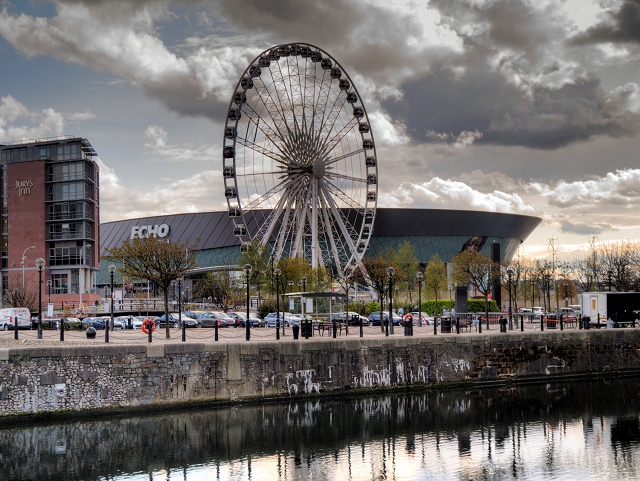
The arena seen across Dukes Dock with the Liverpool Wheel: Dukes Dock, Liverpool Wheel and Echo Arena – geograph.org.uk – 4457726 by David Dixon, CC BY-SA 2.0, via Wikimedia Commons.