This article contains advertising. Our booking links are routed through a partner that adds commission tracking automatically, so if you book through one we earn a commission from the provider, at no extra cost to you. It never affects what we recommend. Affiliate disclosure
Look at a street map of Liverpool city centre and one patch stands out. Between Hanover Street and the cathedral hill, the roads stop wandering and run in long, parallel, oddly straight lines. That pattern is three hundred years old. In the eighteenth century this was where rope for the port’s sailing ships was made, and rope makers needed long straight walks to lay out and twist their hemp. The trade is long gone, but the name stuck, and ropewalks liverpool is now the part of the city where most of its independent restaurants, bars, record shops, vintage stores and late-night venues are packed together.
This guide treats the Ropewalks as a district to spend a day in, not just a place to end up at midnight. It goes street by street through Bold Street, Seel Street, Duke Street, Wood Street, Slater Street and the squares, with what each one is like at different hours, what’s worth your money, where to stay and how it links up with Chinatown, the Baltic Triangle and the Georgian Quarter. For the nightlife side in more depth, our Concert Square and Ropewalks nightlife guide picks up after dark. Prices were checked in September 2026. Treat them as the right order of magnitude, and bear in mind that independent businesses open, move and close faster than any guidebook can keep up with.
The Ropewalks at a Glance
| Street | Character | Best time | Go for |
|---|---|---|---|
| Bold Street | The high street of the district: food, shops, people-watching | 10:00–18:00, and early evening for dinner | Independent cafés, world food, vintage, books, St Luke’s |
| Seel Street | Georgian terraces turned bars, clubs and restaurants | From 18:00; very late at weekends | Cocktail bars, live music, late nights |
| Duke Street | Wider, grander, quieter; merchant houses and restaurants | Lunch and dinner | Duke Street Market, sit-down restaurants |
| Wood Street and Fleet Street | Arts centre by day, bars by night | Afternoon at FACT, then evening | FACT cinema and galleries, bars |
| Slater Street and Concert Square | The loud end: bars in converted warehouses | Friday and Saturday nights | Big group nights out |
| Hanover Street edge | Where the Ropewalks meets Liverpool ONE | Any time | The Bluecoat, a quick route to the shops |
What things cost (checked September 2026)
| Item | Typical price |
|---|---|
| Pint in a Ropewalks pub or bar | About £5–5.50 |
| Cocktail in a good bar | Usually £9–13 |
| Coffee in an independent café | About £3–4 |
| Street-food main at Duke Street Market | Usually £10–15 |
| Bottomless brunch | About £35–40 a head, 90 minutes to 2 hours of drinks |
| Entry to St Luke’s grounds, FACT galleries | Free (ticketed events and cinema extra) |
That pint price is a big part of why Liverpool has become a favourite weekend city for groups. It’s noticeably cheaper than London, and the Ropewalks is where most of those groups end up.
A Short History: Rope, Merchants, Clubs
The district grew up in the 1700s on the edge of the expanding town, as Liverpool turned into one of the busiest ports in the world. Rope makers took the long thin plots. Merchants built tall brick houses on the new streets around them, with warehouses at the back so their goods sat close to the docks. You can still see that mix in the Georgian terraces of Seel Street and Duke Street, some with the old hoist doors and loading bays on the upper floors.
The Lyceum at the bottom of Bold Street, built in 1802, was a gentlemen’s news room and housed England’s first subscription library. It’s a reminder that Bold Street was once the smartest shopping street in the north of England, the place the wealthy came to be seen. When a 2001 renovation took place there, a well from the seventeenth century was found underneath.
As the port shrank in the twentieth century, the warehouses emptied and the area went quiet and shabby. The recovery began in the 1990s, when cheap space attracted artists, bars and above all clubs. Wolstenholme Square, a square of eighteenth-century merchant houses, became home to Nation, where the superclub Cream ran, and later the much-loved Kazimier. It set the tone for the district as the place Liverpool goes out. Concert Square opened as a bar courtyard in the same era, FACT opened on Wood Street in 2003, and the council has since backed the Ropewalks as the city’s creative and independent quarter. Wolstenholme Square has been redeveloped for apartments since 2016, which tells you something about where the district is heading: more people now live here, so the late-night noise is a bit more contested than it once was.
Bold Street

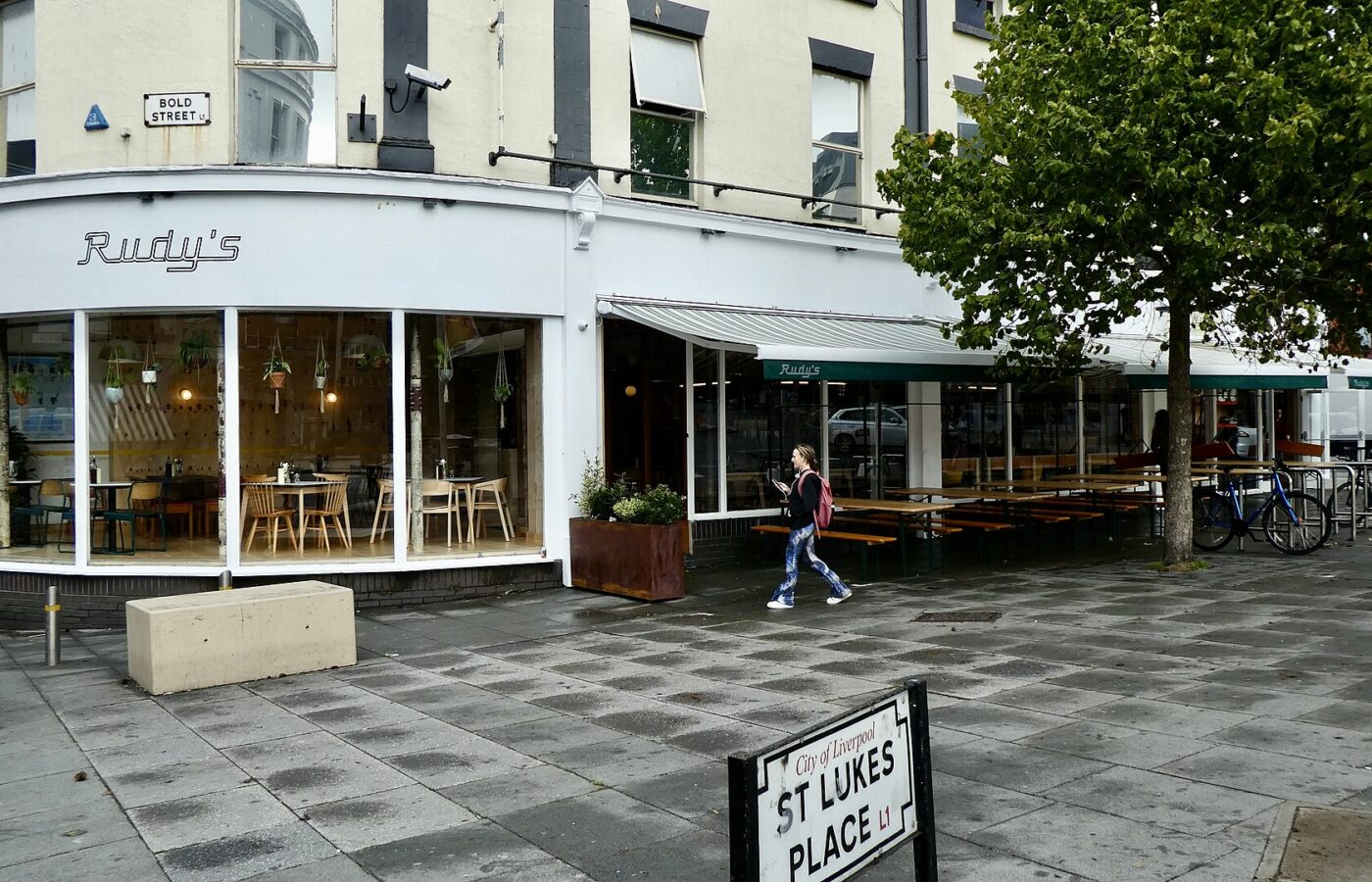
Bold Street runs uphill from Central station and Ranelagh Street to the ruined church of St Luke’s, and almost everyone who visits Liverpool ends up walking it at some point. It’s pedestrianised for most of its length, busy all day and at its best between about 11:00 and 19:00.
What makes it good
- Food from everywhere. Middle Eastern, Indian street food, Italian, Caribbean, Japanese, Lebanese mezze and brunch spots line both sides. Some famous names started here, and some of the best-value lunches in the city centre are here too. Our Bold Street food guide goes through it door by door.
- Independent shops. Vintage clothing, homeware, gift shops and specialist food stores. News From Nowhere, a long-running radical and independent bookshop run as a co-operative, is a proper Liverpool institution. Our independent shops guide and vintage shops guide have the full list.
- Cafés. LEAF, with its big tea menu and long tables, is the Bold Street café most visitors remember, and there are plenty of smaller coffee places in between.
- The international food shops. The top of the street has grocers and bakeries selling Middle Eastern and South Asian ingredients, and several halal restaurants. It’s where many of Liverpool’s newer communities shop, and it feels far less touristy than the bottom end.
St Luke’s, the Bombed Out Church
At the top of Bold Street stands the roofless shell of St Luke’s, built in 1832 and gutted by an incendiary bomb in the May Blitz of 1941. It was left as a ruin and now serves as a memorial and an outdoor venue. The grounds are free to walk into when open, and the church hosts markets, outdoor cinema, gigs and events through the warmer months, so it’s worth checking what’s on before you go. Opening times vary with the events programme. Even from the pavement, the sight of the Gothic windows with sky behind them is one of the most affecting things in Liverpool.
The honest verdict on Bold Street
It really is one of the best streets in the north of England for a wander and a meal. But it’s popular, and the most Instagrammed brunch places have queues at weekends that aren’t worth an hour of a short trip. If there’s a queue, walk thirty metres and eat somewhere just as good. Some of the lower end near Central station has become more chain-heavy and scruffier over the past few years. The interesting stuff is mostly in the middle and top sections and on the side streets.
Seel Street
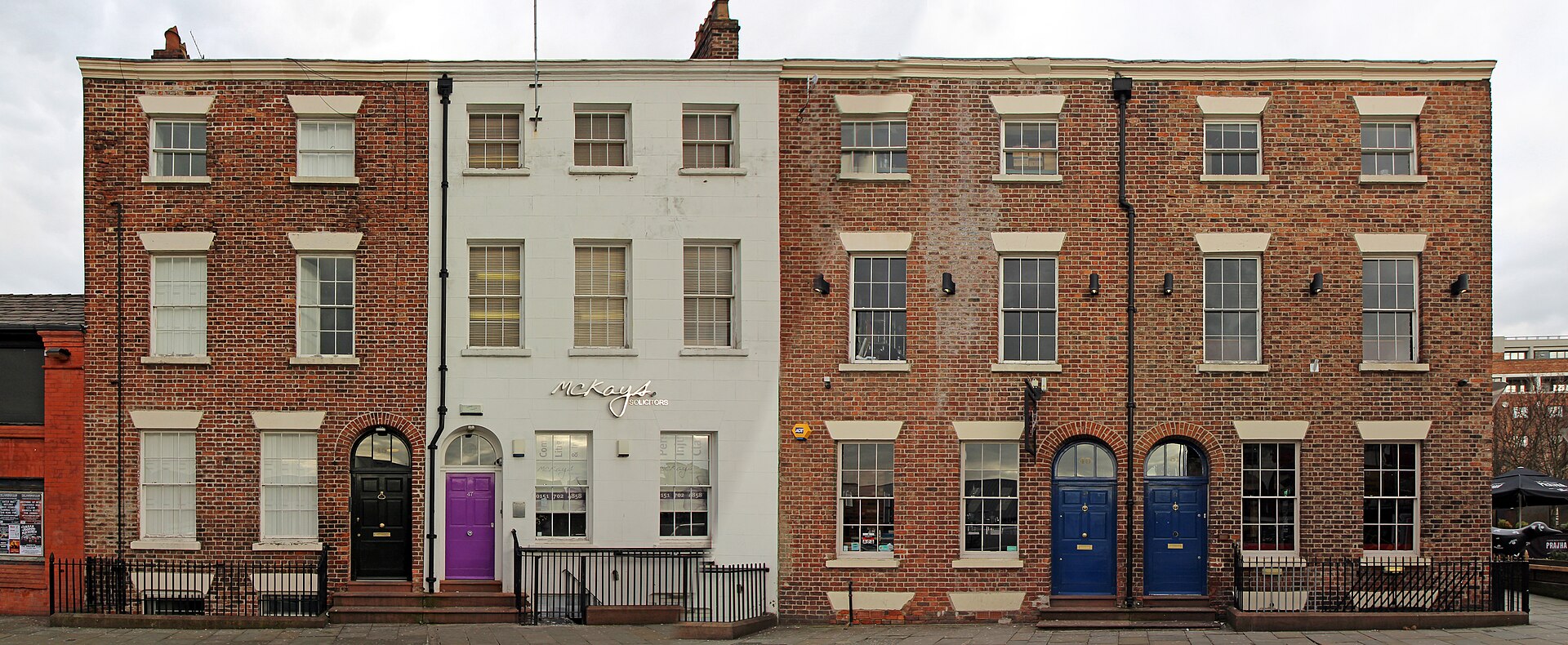
Seel Street runs parallel to Bold Street, one block south, and is where the Ropewalks’ day-to-night change is most obvious. At 11:00 on a Tuesday it’s a quiet street of Georgian terraces with a few cafés open and delivery vans parked outside the bars. At 23:00 on a Saturday it’s one of the busiest nightlife strips in the north of England.
What’s there
- Cocktail bars ranging from polished to scruffy-but-good. Overgrown does cocktails and DJ sets, and Mean Eyed Cat trades on a Deep South theme, with a tiki room out the back.
- Live music and clubs. Seel Street has a long history of small venues and late clubs. Line-ups and even venues change regularly, so our live music venues guide is the place to check what’s on.
- Restaurants with outdoor seating on the wider stretches, busy early evening before the bar crowd arrives.
- Beer gardens and courtyards hidden behind warehouse walls. The Ropewalks does a surprising number of these, and on a warm evening they’re the best places to be.
The architecture is worth a look in daylight. Some of the Georgian houses here are among the oldest surviving buildings in the city centre, and you can still see loading doors high up on warehouse walls where goods were hauled in from carts below.
Duke Street
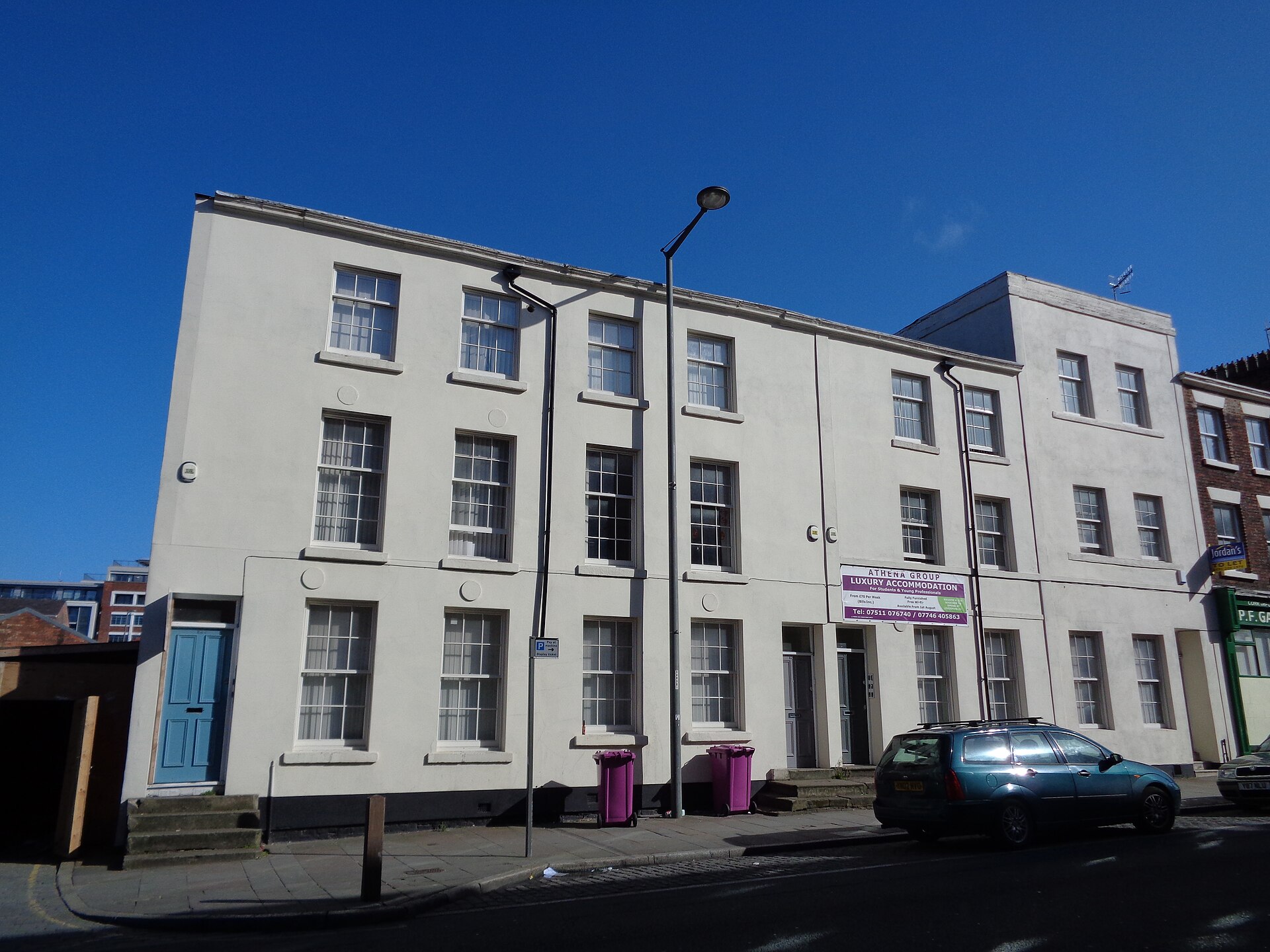
Duke Street forms the southern edge of the Ropewalks, climbing from near the Liverpool ONE end towards the Georgian Quarter and Chinatown. It’s broader than the streets to its north and a little more grown-up, with more sit-down restaurants, fewer shots bars, and some fine merchant houses and warehouses.
Duke Street Market
The anchor is Duke Street Market at number 46, a food hall in a converted building with six independent kitchens, a bar and a wine kiosk stocking over a hundred wines. It’s a good choice for a group that can’t agree on dinner, as everyone orders from a different kitchen and sits together. It’s open Tuesday to Sunday, roughly noon to 22:00 midweek and later on Fridays and Saturdays (checked September 2026; check before you go, as hours shift). There’s step-free access through the main entrance and an accessible toilet on the ground floor. Our street food markets guide compares it with Baltic Market and the city’s other food halls.
Upper Duke Street
Keep climbing and Duke Street becomes Upper Duke Street, bringing you out at the Anglican Cathedral with a view back over the Ropewalks and the river. It’s the most natural way to walk from the district into the Georgian Quarter, and a better one than the traffic of Hardman Street.
Wood Street, Fleet Street and FACT
FACT (Foundation for Art and Creative Technology), on Wood Street, opened in 2003 and was one of the buildings that turned the Ropewalks around. Inside are three galleries showing contemporary art, often built around film, digital media and technology, with many exhibitions free to enter. There’s also a four-screen Picturehouse cinema showing independent, foreign-language and mainstream films, plus a café-bar. It makes a very good rainy afternoon. Our FACT Liverpool guide has more detail.
Outside FACT is Ropewalks Square, a small public space. Fleet Street and the lanes around it fill up with bars by night, a little less frantic than Concert Square but on the same general wavelength.
Slater Street and Concert Square

Concert Square is a courtyard ringed by high-volume bars in old warehouses, with outdoor terraces that fill up the moment the weather allows. Slater Street and Wood Street around it carry on in the same way. It’s Liverpool’s answer to every British city’s main party strip: shots deals, loud chart music, hen and stag parties, students and big birthday groups.
Be honest with yourself about whether that’s your night. At 21:00 on a Saturday with a group, it’s a great laugh and very good value. At 15:00 on a weekday, it’s a quiet square of shuttered bars and sticky tables. If you’re after a drink with conversation, the cocktail bars of Seel Street and Bold Street or the pubs of the Georgian Quarter will suit you better. Our best bars guide and pub crawl routes sort the options by mood.
How to Spend a Day in the Ropewalks
Morning
Start at the Bluecoat on School Lane, Liverpool’s oldest surviving city-centre building, from 1717, now an arts centre with a café, garden and shops. Then cross Hanover Street to the bottom of Bold Street. Have breakfast on Bold Street before 10:00, when the queues start, and browse the shops as they open.
Midday
Walk to the top of Bold Street and spend twenty minutes at St Luke’s. Drop down Berry Street and turn along Seel Street to look at the Georgian terraces while they’re quiet. Lunch at Duke Street Market, or somewhere on Bold Street’s top end if you’d rather have Middle Eastern or South Asian food.
Afternoon
FACT for an exhibition or a film. Or, if the sun’s out, head into the Georgian Quarter or down to the Baltic Triangle, ten minutes south, for murals and street food.
Evening
Dinner on Duke Street or Seel Street from about 18:30. Cocktails on Seel Street. If you want the full late night, Concert Square and the clubs are right there. If you don’t, you’re a short taxi ride or a fifteen-minute walk from most city-centre hotels.
The Ropewalks on a Budget
The district has a reputation for spending money, but a lot of what makes it enjoyable costs nothing at all.
- Free culture. The galleries at FACT are usually free, and so are the Bluecoat’s exhibition spaces and garden. St Luke’s grounds are free to walk into when there isn’t a ticketed event.
- Architecture. The Georgian terraces of Seel Street and Duke Street, the Lyceum at the foot of Bold Street and the old warehouses with their loading doors make an excellent free walk. Do it before noon, while the streets are quiet and the light is kind.
- Cheap lunches. The top of Bold Street has some of the best-value food in the city centre, from falafel and shawarma to South Asian thalis. You can eat very well for under £10.
- Happy hours. Many Seel Street and Wood Street bars run early-evening deals on weekdays. Check the chalkboards as you walk past around 17:00.
- Window shopping. Browsing Bold Street’s vintage rails and bookshops is a perfectly good afternoon in itself.
For a whole trip done cheaply, our Liverpool on a budget guide and cheap eats guide have plenty more.
The Ropewalks With Children
Daytime Ropewalks is fine with children, and older kids and teenagers tend to love Bold Street’s food and vintage shops. The Bluecoat’s courtyard garden is a calm place to stop, FACT’s cinema shows family films, and St Luke’s is a striking piece of history to explain on the spot. A slice of pizza or a bowl of noodles on Bold Street keeps everyone happy.
Things change after about 20:00 on Fridays and Saturdays, when Seel Street, Wood Street, Slater Street and Concert Square fill with groups and the atmosphere turns boozy. It’s not dangerous, but it’s not where you want to be with a buggy. Eat early, or head for the waterfront or the Albert Dock for the evening. Our family restaurants guide has child-friendly options across the city.
A Rainy Day in the Ropewalks
Liverpool gets its share of rain, and the Ropewalks copes better than most districts because so much of it is indoors and close together. Start with a long breakfast on Bold Street, then take in an exhibition and a film at FACT. Graze through lunch at Duke Street Market, where you can sit under cover for as long as you like. Then browse the bookshops and vintage shops, which are rarely more than a minute’s dash apart. Finish with an early cocktail on Seel Street. You’ll barely get wet. Our rainy day activities guide covers the rest of the city.
Where the Ropewalks Meets Its Neighbours
- Chinatown sits just south, around Nelson Street and the southern stretch of Duke Street, with the Chinese arch gifted by Shanghai, the largest outside China. Europe’s oldest Chinese community is here.
- The Baltic Triangle is ten minutes’ walk south. It’s more industrial, with street-food halls, studios and big murals.
- The Georgian Quarter starts at the top of Bold Street and Duke Street, with Hope Street, the two cathedrals, the Philharmonic and some of the best pubs in the city.
- Liverpool ONE is directly across Hanover Street for mainstream shopping, and from there it’s a short walk to the Albert Dock.
Our Liverpool neighbourhoods guide explains how the districts fit together, which is useful if you’re choosing a base.
Staying in the Ropewalks
The Ropewalks is the most convenient base in Liverpool if you mean to eat and drink well and walk everywhere. Lime Street is fifteen minutes on foot, Central station is at the foot of Bold Street, and the waterfront is about fifteen minutes down through Liverpool ONE. There are boutique hotels, aparthotels, serviced apartments and hostels in and around the district, including the Ropewalks Hotel, as well as big-brand hotels just across Hanover Street.
The downside is noise. On Friday and Saturday nights, anywhere close to Seel Street, Slater Street, Wood Street or Concert Square can be loud until three or four in the morning, with bin lorries and street cleaners following on. If you’re a light sleeper, ask for a room at the back or on a high floor, or stay on the Bold Street side or in the Georgian Quarter and walk down. Group bookings and party apartments cluster here too, which is great if you’re the group and less so if you’re next door to it. Our best areas to stay guide compares the options.
Getting There and Getting Around
- Merseyrail: Liverpool Central station is at the bottom of Bold Street. A Merseyrail Day Saver costs £4.80 for one area or £6.40 for all areas after the weekday morning peak (checked September 2026).
- From Lime Street: about fifteen minutes’ walk via Renshaw Street or Ranelagh Street.
- Buses: Liverpool ONE bus station is two minutes from Hanover Street.
- Taxis: black cabs rank on Hanover Street and around Central station. Late on busy nights, queues build, so an app booking or a short walk to a quieter street helps.
- On foot: the district is small. You can walk from one end to the other in ten minutes, although the streets climb, so the top of Bold Street and Duke Street is a steady uphill.
Practical Tips
- Safety at night: the Ropewalks is busy, well lit and heavily policed at weekends, and street marshals often work the main strips. The usual rules apply: watch your drinks and your phone, and travel home in a group or by a licensed taxi. Our Liverpool safety tips cover the city more widely.
- Door policies: big groups, especially in matching outfits, may be turned away from smaller bars. Split up or book ahead.
- Sundays and Mondays: some independents close or open late early in the week, so check before you make a special trip.
- Accessibility: Bold Street is paved and mostly level along its length but slopes steadily uphill. Many older bars are in basements or up steps. Duke Street Market and FACT are good step-free choices.
Frequently Asked Questions
Where is the Ropewalks in Liverpool?
It’s the district in the south of the city centre, roughly between Hanover Street, Bold Street, Duke Street and the foot of the hill below the Anglican Cathedral. Central station is at its northern corner and Liverpool ONE is across Hanover Street.
Why is it called the Ropewalks?
Because rope for sailing ships was made here in the eighteenth and early nineteenth centuries. Rope makers needed long, straight “walks” to lay out and twist the strands, which is why the streets are so long and parallel.
Is the Ropewalks safe?
Yes, for a busy nightlife district. It’s lively and well policed at weekends. Take the normal big-city precautions late at night, particularly around closing time, when the crowds spill out.
Is the Ropewalks good during the day?
Very. Bold Street’s shops and cafés, St Luke’s, FACT and Duke Street Market make it one of the best daytime areas in the city. Only Concert Square and some of Slater Street are really night-only.
What’s the best street in the Ropewalks?
For daytime, Bold Street. For an evening out with good cocktails and food, Seel Street. For a calmer sit-down dinner, Duke Street.
Is the Ropewalks a good place to stay?
For eating, drinking and walking to everything, it’s the best location in the city. For a quiet night’s sleep at the weekend, it’s one of the worst unless you pick your room carefully.
How far is the Ropewalks from the Albert Dock?
About fifteen minutes on foot, through Liverpool ONE.
Related Liverpool Guides
- Liverpool Neighbourhoods & Districts
- Bold Street Food Guide
- Concert Square & Ropewalks Nightlife
- Independent Shops in Liverpool
- The Georgian Quarter
- The Baltic Triangle
- FACT Liverpool
- Best Bars in Liverpool
Photo Credits
Rudy’s on the corner of Bold Street and St Luke’s Place: Bold Street, Liverpool by LiverpoolJane, CC BY 4.0, via Wikimedia Commons.
Georgian terraces on Seel Street: 45 – 51 Seel Street, Liverpool stitch by Rodhullandemu, CC BY-SA 4.0, via Wikimedia Commons.
Merchant houses on Duke Street: 127-133 Duke Street, Liverpool by Rept0n1x, CC BY-SA 2.0, via Wikimedia Commons.